Toiletry Bags for Military Personnel: Deployment & Field Use
Executive Summary
Toiletry bags for military personnel are bought for people who live out of a bag for extended periods, share washing facilities, and cannot easily replace an item that fails. The specification follows from those facts rather than from any military claim. Water resistance matters because the bag meets a wet surface daily, so a coated shell and a laminated lining keep contents dry. Hanging matters because a flat surface is rarely available, so a reinforced hook and a bar-tacked webbing loop carry real load. Durability matters because a broken zip cannot be replaced mid-trip, which pushes the brief toward #8 coil tape and bound seams.
For brand owners and gift buyers the category behaves like durable goods rather than fashion. Sizing typically runs 22 to 28 cm wide with a hanging drop of 45 to 60 cm and a useful capacity of 5 to 9 litres. Programmes start at 500 pieces per style and colourway, sampling takes 6 to 10 working days and 12 to 15 for welded or framed constructions, and bulk ships 35 to 50 days after sample approval under AQL 2.5 to ISO 2859-1, FOB Xiamen, T/T 30 deposit and 70 against bill of lading.
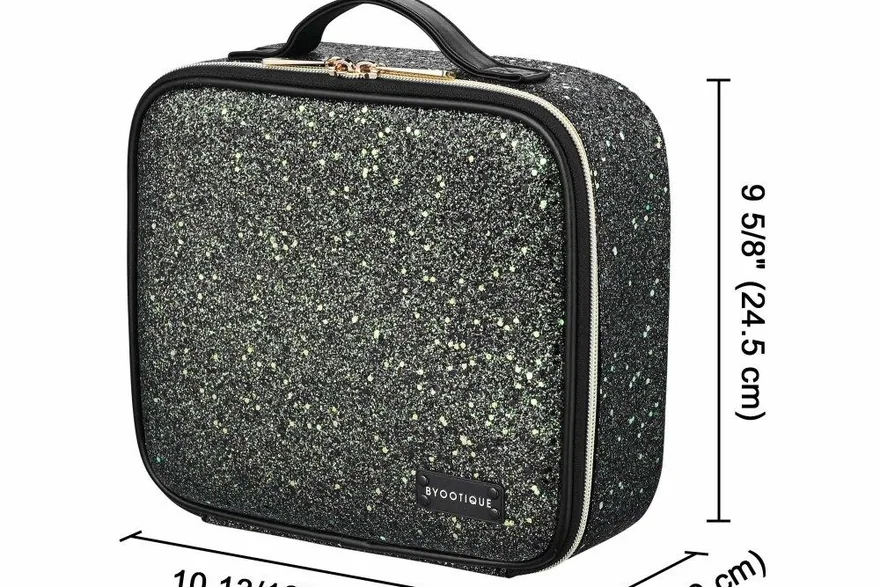
What a toiletry bag has to do when the user is away from home for weeks
The ordinary travel wash bag is designed around a hotel bathroom: a dry counter, a mirror, a shelf, and a suitcase that is opened once a day. None of those conditions hold here. The user may be washing from a shared facility with a wet floor and limited counter space, may be moving between locations with the bag packed every few days, and may not be able to buy a replacement if something breaks. The bag therefore has to do three things a hotel bag does not: stay usable when it is wet, hang from whatever is available, and survive being repacked far more often than a holiday bag would be.
That reframes the design problem. Water resistance is not about immersion; it is about a bag that is set on a wet surface, splashed, and closed while still damp. A coated shell sheds the splash, but the more important detail is the interior: a laminated lining and bound or welded seams stop moisture from sitting in the seam allowance and producing odour over days of use. Hanging is not about convenience; it is about the only dry place available being a rail, a hook or a door edge. Durability is not about product lifespan; it is about the cost of failure, because a zip that separates has no repair option within reach.
Capacity expectations are moderate and should not be over-built. A working kit holds a toothbrush and paste, a razor and blades or a shaving razor, soap in a case, shampoo and shower gel in 100 ml or smaller bottles, deodorant, a comb, nail clippers, a small first-aid item, and any prescribed topical product. That is 5 to 9 litres of contents in a bag roughly 22 to 28 cm wide. Larger formats exist but they are harder to pack, harder to hang, and heavier when wet, so the useful range is narrower than in the retail travel category. Buyers should also note that contents restrictions vary by destination and by shipping route, and kit assembly should follow the rules that apply to the shipment rather than assumptions.
Material selection for damp shared facilities and repeated packing
Shell choice starts with the coating rather than the base fabric. A 600D polyester with a PU coating at 280 to 320 g/m² is the baseline: it takes abrasion from being slid into a holdall, holds a print or a patch, and sheds water. A 900D polyester with a PVC backing at 380 to 450 g/m² is heavier and stiffer but resists the scuffing that comes from being dragged across concrete and packed next to boots. A 420D nylon ripstop at 180 to 210 g/m² saves 150 to 250 g per unit and is worth considering for a bag that is carried rather than checked, though it gives up scuff resistance. Where a buyer wants a stated level of water resistance rather than an adjective, the coated fabric should be specified against ASTM D751 coated fabrics, which covers the coating and the base together.
The interior does most of the work. A TPU or PU lamination of 0.18 to 0.25 mm bonded to a 210D or 420D base, with welded or bound seams in the wet compartment, stops moisture from wicking into the interlining and stops soap residue from being absorbed. An uncoated lining will hold damp for hours and develop odour, which is the single most common complaint in this category. Mesh panels of 210D polyester in the dry compartments allow air movement and let a wet item be closed inside without the whole bag becoming damp. A drain grommet of 8 to 10 mm at the lowest point of the wet compartment is a cheap detail that solves the same problem more directly.
Hardware and closures deserve a separate line in the brief. Zips are the first thing to fail on any toiletry bag, and the failure is usually at the ends of the run where the tape takes the opening load. A #8 coil with a metal or moulded slider, a sewn-in stop at both ends and a reinforced end box is a reasonable specification for a bag of this size; #5 is acceptable on a smaller pouch but is more likely to be forced. The vocabulary for gauge, tape, slider and stop is set out in ASTM D2053 zipper terminology, which helps a brief survive translation. Linings and trims that touch skin should also be checked against a restricted-substance framework such as OEKO-TEX Standard 100.
| Shell option | Weight | Water behaviour | Abrasion | Best format |
|---|---|---|---|---|
| 600D polyester, PU coated | 280-320 g/m² | Sheds splash; dries in a few hours | Good | General hanging wash bag |
| 900D polyester, PVC backed | 380-450 g/m² | Effectively waterproof; slower to dry | Very good | Checked or dragged bags |
| 420D nylon ripstop | 180-210 g/m² | Needs a coating; light splashes only | Fair | Carried pouch and light kits |
| 300D polyester, TPU laminated | 200-240 g/m² | Waterproof face; weldable seams | Good | Wet compartment and linings |
| Cotton canvas, unlined | 320-400 g/m² | Absorbs and stays damp | Good | Unsuitable for shared wet use |
Colour choice is more practical than it looks. Dark, sober colourways hide scuffing and staining and read as appropriate for the context; olive, coyote, charcoal, navy and black dominate the category. Where a buyer wants a camouflage print, two checks apply before artwork is approved: some destinations restrict the sale of camouflage-patterned textile goods, and some retail channels have their own policy on the pattern. Both are commercial questions to resolve per market rather than design questions, and resolving them early avoids a finished run that cannot be shipped.
Hanging format, hooks and making the most of limited space
The hanging format is what separates this category from a general wash bag. A bag that hangs opens into a vertical array of pockets, which means every item is visible at once and nothing has to be lifted out to be reached. The mechanics are simple but they are frequently under-specified. The hook takes the full weight of a loaded bag, typically 1.5 to 3 kg, and it does so repeatedly and often at an angle. A moulded plastic hook riveted to a single layer of fabric will pull out. The specification should be a metal or engineering-polymer hook attached through a reinforcement patch of the shell fabric plus a bar-tacked webbing loop, with the load path carried into the body of the bag rather than into the top seam.
Dimensions follow from where the bag hangs. A closed bag of 24 by 20 by 8 cm with an open drop of 45 to 60 cm fits most shared facility rails and door hooks without brushing the floor or the surface below. A longer drop suits a fixed rail but not a door, so buyers should ask where the bag will hang before fixing the number. The hook should swivel, because a bag hung in a corner or on a door edge needs to be turned to reach the back pockets, and a swivel also reduces the twisting load on the attachment patch. A secondary loop of 20 to 25 mm webbing at the opposite end allows the bag to be hung folded in half where vertical space is short.
Internal layout should follow the same logic as the hook: everything visible, nothing stacked. A hanging bag typically needs three to five pockets of graduated depth, an elastic strip for upright items, a zip pocket for small items that would otherwise fall out when the bag is closed, and one wet compartment at the bottom. The wet compartment at the bottom is deliberate: gravity keeps any leak away from the rest of the contents, and a drain grommet at the lowest corner lets water out without opening the bag. Pockets should be cut with a slight taper so an item can be withdrawn without catching on the binding.
- Hook: metal or engineering polymer, swivel, attached through a reinforcement patch and a bar-tacked webbing loop.
- Attachment: load path into the body panel, never into the top seam alone; rivet or bar-tack every stress point.
- Size: 24 x 20 x 8 cm closed with a 45-60 cm open drop; confirm whether the bag hangs from a rail or a door.
- Wet zone: laminated compartment at the bottom of the bag with an 8-10 mm drain grommet.
- Pockets: three to five graduated depths, plus one zip pocket for small items and an elastic strip for uprights.
- Closure: #8 coil with a sewn stop and reinforced end box; test the ends of the run, not the middle.
One claim buyers should avoid making is worth stating plainly. Words like military-grade or tactical-grade are marketing language with no defined test behind them, and using them invites both a substantiation question and a mismatch between what the buyer expects and what the bag delivers. The alternative is to specify the properties that can actually be checked: coating type and weight, hydrostatic performance where relevant, zip gauge and cycle expectation, seam construction and hook load. Those are defensible in a brief and comparable between two quotes, whereas a grade claim is neither.
Care packages, retail assortments and how buyers plan this category
Most volume in this category does not move through a single channel. A share is bought by families and support organisations assembling care packages, a share is bought by service members themselves through retail or exchange channels, and a share is bought by brands and retailers as a durable-goods line inside a broader travel or grooming assortment. Each has a different brief. The care-package buyer wants a bag that arrives empty and can be filled, priced for giving rather than for resale, and robust enough to be shipped filled. The individual buyer wants a bag that solves the hanging and wet problem immediately. The retail buyer wants a consistent article that can be reordered season after season without a re-specification.
Kit assembly rules deserve early attention for the gifting channel. Postal and carrier rules for military mail restrict certain contents, and aerosols and high-alcohol liquids are commonly among them, so assembled kits usually lean on solid formats: soap bars, solid shampoo, toothpaste, a razor with blades, a toothbrush, deodorant stick, and wipes. Buyers should confirm the current restriction list with the carrier handling the shipment rather than relying on a template, because the list changes and differs between operators. The bag itself is unaffected by these rules, which is one reason an empty bag is often the easier gift to ship.
| Programme format | Typical contents | Size | Unit price band | Best for |
|---|---|---|---|---|
| Empty hanging bag | Shipped flat and unfilled | 24 x 20 x 8 cm | $1.80-$4.50 | Care packages and family gifting |
| Filled solid-format kit | Soap, solid shampoo, toothpaste, razor | 24 x 20 x 8 cm | $4.50-$9.00 | Support organisations and events |
| Retail hanging bag | Sold empty with a header card | 26 x 22 x 9 cm | $2.50-$6.00 | Store and exchange assortments |
| Compact pouch | Shipped flat, minimal kit | 22 x 14 x 7 cm | $0.80-$2.20 | High-volume gifting and mail programmes |
| Bag and towel bundle | Bag plus a microfibre towel | 28 x 24 x 10 cm | $5.50-$11.00 | Premium gift sets |
Reorder behaviour is the commercial argument for doing the specification properly the first time. A durable-goods accessory in a conservative colourway is reordered in the same article for years, and each re-specification costs a sampling cycle of 6 to 10 working days plus the risk of a shade or hardware change that the end user notices. Buyers should retain a sealed reference sample from the approved run and write the fabric, coating, zip and hook into the specification sheet, so a reorder is a purchase order rather than a development project. Consolidating colourways also helps: 500 pieces per style and colourway means two colourways is two programmes, and this category generally sells better from one well-chosen colourway than from three thin ones.
Confirm the contents restrictions that apply to the shipping route before committing to a filled kit. An empty bag is rarely restricted; aerosols and high-alcohol liquids frequently are, and discovering that after the kit is assembled is the most common avoidable cost in this category.
The B2B Customisation View
Buyers who brief cosmetic bags with a physical reference sample always reach an approved prototype faster than buyers who brief with a photograph alone.
Standard terms: 500 pieces minimum per style and colourway, 6–10 working days for sampling (12–15 for complex builds), 35–50 days bulk production, AQL 2.5 inspection under ISO 2859-1, FOB Xiamen, T/T 30 deposit / 70 balance.
The arrangement suits brands that want factory-level pricing discipline without taking on factory-level vendor management for cosmetic bags.
Which Brand Types Benefit Most
Durable hanging toiletry bags suit buyers whose customers value reliability over novelty, and the commercial logic differs by channel. Start-up brands rarely lead with this category because it rewards proof rather than design, but those that do use it to establish a reputation for products that survive hard use, which then transfers to the rest of the range. Established brands include it as a durable-goods line inside travel or grooming, where it anchors the assortment with an article that reorders steadily and does not go out of fashion. Retailers and exchange buyers treat it as a staple with predictable replacement demand, which makes shelf-life and consistency more important than novelty. E-commerce sellers benefit from detailed, specification-led listings: a buyer in this category reads dimensions, coating, zip gauge and hook construction before reading the copy, and a listing that supplies those facts converts at a higher rate and returns less. Gift and hospitality buyers, together with family and community organisations, use the empty bag as a shippable gift that the recipient fills, which avoids both contents restrictions and sizing risk. There is a further argument for care with the specification: durability is the attribute this buyer checks first, and a bag that fails in service is remembered far longer than one that cost slightly more, so saving on zip gauge or hook attachment is a false economy. Consistency pays as well, because a programme that reorders the same article year after year avoids a fresh sampling cycle each season and keeps the replacement stock matching the bags already in use.
- Start-up brands: durable-goods credibility that transfers to the wider range.
- Established brands: a staple line with steady reorder and no seasonal obsolescence.
- Retailers and exchange buyers: predictable replacement demand and long shelf life.
- E-commerce sellers: specification-led listings convert better and generate fewer returns.
- Gift and community buyers: an empty bag ships easily and carries no contents restrictions.
Frequently Asked Questions
What distinguishes a toiletry bag for field use from a standard travel wash bag?
It is built to stay usable when damp, to hang from whatever is available, and to survive frequent repacking. That means a coated shell and laminated lining, bound or welded seams, a reinforced swivel hook with a bar-tacked webbing loop, and a #8 zip with reinforced ends. A hotel wash bag assumes a dry counter and a weekly unpack, neither of which applies here.
Which shell fabric handles a damp shared washroom?
A 600D polyester with a PU coating at 280 to 320 g/m² is the baseline for a hanging bag; a 900D polyester with a PVC backing at 380 to 450 g/m² suits a checked or dragged bag. Both shed splash and wipe dry. An unlined cotton canvas absorbs water and stays damp, which is why it is a poor choice in this category despite looking durable.
How important is the hanging hook on a field toiletry bag?
It is the most failure-prone part of the bag and the most important. A loaded bag weighs 1.5 to 3 kg, and a hook riveted through a single fabric layer will pull out. The hook should be metal or engineering polymer, should swivel, and should attach through a reinforcement patch and a bar-tacked webbing loop that carries the load into the body panel.
Should a field toiletry bag use metal or plastic hardware?
Metal lasts longer and takes the hook load better, but it adds 60 to 120 g and can mark a painted rail. Engineering-polymer hardware is lighter and quieter and is adequate for the hook if it is correctly specified and bar-tacked. Sliders are worth keeping in metal on a bag of this size, because a bent slider is a bag that cannot be closed.
What size hanging toiletry bag fits a shared locker or tent space?
A closed bag of 24 by 20 by 8 cm with an open drop of 45 to 60 cm suits most shared rails and door hooks. Confirm whether the bag will hang from a rail or a door before fixing the drop, because a 60 cm drop works on a rail and can brush the floor on a low hook. A secondary loop allows it to be hung folded where space is short.
How do buyers keep a hanging bag from staining when wet items go inside?
Put the wet compartment at the bottom of the bag with a 0.18 to 0.25 mm laminated lining, welded or bound seams, and an 8 to 10 mm drain grommet at the lowest corner. Gravity keeps any leak away from the rest of the contents and the grommet lets water out without opening the bag. A mesh panel in the dry compartments allows air movement.
Which colourways work for a general-purpose toiletry bag in this category?
Dark, sober colourways dominate because they hide scuffing and staining: olive, coyote, charcoal, navy and black. Camouflage prints are popular in some markets but restricted in others and are also subject to individual channel policy, so buyers should confirm both before approving artwork. A single well-chosen colourway ordered in depth usually sells better than three thin ones, because replacement demand is easier to serve when stock matches what is already in use.
What minimum applies to a custom hanging toiletry bag with a metal hook?
500 pieces per style and colourway. The hook affects the schedule rather than the quantity: a standard hanging bag samples in 6 to 10 working days, while a construction with welded seams or a framed wet compartment takes 12 to 15 working days. Bulk runs 35 to 50 days after sample approval on either route, inspected at AQL 2.5 under ISO 2859-1 and shipped FOB Xiamen.
How long does sampling take for a bag with welded seams?
12 to 15 working days, because welded construction needs a fixture and a set of parameter trials before a representative sample exists. A conventionally sewn hanging bag with bound seams samples in 6 to 10 working days. Buyers planning a welded design should build the extra week into the launch date rather than into the bulk schedule.
Can a toiletry kit programme include solid-format contents only?
Yes, and it is often the safer route. Aerosols and high-alcohol liquids are commonly restricted in military mail, so assembled kits usually contain soap bars, solid shampoo, toothpaste, a razor with blades, a toothbrush, a deodorant stick and wipes. Buyers should confirm the restriction list with the carrier handling the shipment, since it differs between operators and changes over time.
Are camouflage prints restricted for commercial toiletry bag programmes?
In some destinations, yes. Several markets restrict the sale or import of camouflage-patterned textile goods, and individual retail channels may have their own policy regardless of local law. The check is commercial rather than technical and should be done per destination before artwork is approved, because a finished run that cannot be shipped is the worst outcome in the category.
How do buyers test zipper durability on a bag opened many times a day?
By specifying a cycle expectation and a cycle test rather than asking for a strong zip. The failure point is almost always the ends of the run, so the brief should require a sewn stop and a reinforced end box. Terminology for gauge, tape, slider and stop is defined in ASTM D2053, which makes the requirement unambiguous between buyer and supplier.
What inspection standard applies to a 500-piece toiletry bag run?
AQL 2.5 under ISO 2859-1, which sets the sample size and the accept and reject numbers for the lot size. The relevant standard is described at ISO 2859-1 sampling procedures. For this category the buyer-defined defect list should weight functional failures such as hook attachment, zip end reinforcement and seam leakage above visual defects.
Should a field toiletry bag be machine washable?
It helps, but it is a secondary requirement. A coated shell with a laminated lining can be wiped clean, which covers most cases. Where a bag is specified as machine washable, the construction has to change: bound rather than raw seams, a corrosion-resistant zip, and care labelling that states temperature and drying method. Confirming this at brief stage avoids a care label that contradicts the construction.
How is a care-package kit priced against a retail single bag?
A filled solid-format kit typically lands two to three times the unit price of the empty bag, because the contents cost more than the bag. That makes the gifting channel attractive in margin terms but more complex logistically, since contents have expiry dates, restrictions and packing labour. Many buyers run both: an empty bag for volume gifting and a filled kit for premium occasions.
What documentation should accompany a toiletry bag for a gift programme?
A specification sheet stating fabric and coating weights, zip gauge, hook type and attachment method, dimensions, and the inspection level; a care label appropriate to the destination market; and any restricted-substance documentation the channel requires, such as an OEKO-TEX certificate for linings. Retail channels may also ask for country-of-origin marking and a scannable barcode on the packaging.
People Also Ask
What makes a good toiletry bag for travel away from home?
A coated shell that sheds water, a laminated lining with bound or welded seams so the bag does not stay damp, a reinforced swivel hook, and a #8 zip with reinforced ends. Add a wet compartment at the bottom with a drain grommet. Those five decisions matter more than pocket count, because they address the conditions the bag will actually meet.
Should a toiletry bag hang or sit flat?
Hang, wherever a flat dry surface is uncertain. A hanging bag opens into a vertical array so every item is visible without unpacking, and it stays off a wet floor or counter. A flat bag is easier to pack into a holdall, so the practical answer for many users is a hanging bag that rolls or folds to a compact closed size.
What should go in a care-package toiletry kit?
Solid formats first: soap bar, solid shampoo, toothpaste, toothbrush, razor with spare blades, deodorant stick and wipes. Aerosols and high-alcohol liquids are commonly restricted in military mail, so liquid contents should be minimal and within the carrier's limit. Confirm the current restriction list with the carrier before assembling, because it changes over time and differs between operators. An empty bag shipped separately avoids the question entirely.
How long does a bulk toiletry bag order take?
Sampling takes 6 to 10 working days for a standard sewn hanging bag and 12 to 15 working days for welded or framed constructions. Bulk production runs 35 to 50 days after sample approval, inspected at AQL 2.5 under ISO 2859-1 and shipped FOB Xiamen. Payment is T/T with 30 per cent deposit and 70 per cent against the bill of lading.
Request a Sample or a Written Quotation
Send the silhouette, dimensions, material preference and logo artwork, and the programme team will return a written quotation with MOQ, sampling window, bulk lead time and inspection standard.
Email: service@junyuanbags.com · WhatsApp: +86 177 5002 0688