Makeup Sponge & Beauty Blender Cases: Hygienic Storage
Executive Summary
A makeup sponge case is a rigid or semi-rigid container that stores a damp beauty blender or cosmetic sponge between uses. The engineering problem is moisture management, not sterilisation: a squeezed sponge still holds several grams of water, and a sealed container holds that moisture against the sponge for a day or more. The practical answer is a vented shell - perforations, a mesh panel or a lid gap - combined with a case geometry that keeps the sponge off the pooled water at the bottom.
Closed cases are not wrong, they are a different product: they protect the surrounding bag from residue and travel better, at the cost of drying time. Where a closed case is required, the specification should add airflow at the next opportunity - a lid gap, a raised floor, or a removable tray that can be taken out to dry. Minimum order is 500 pieces per style and colourway, sampling 6-10 working days, bulk 35-50 days.
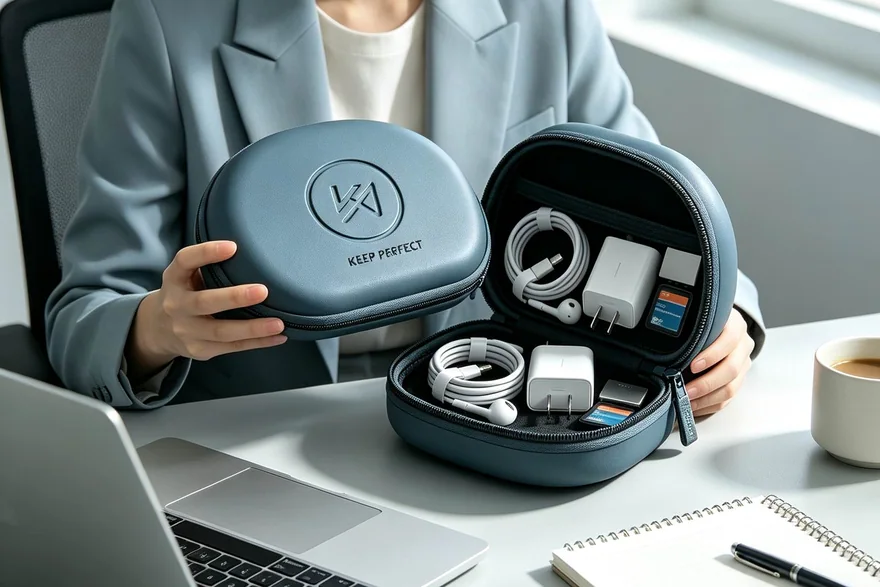
What a sponge case actually has to manage
A makeup sponge case stores a cosmetic sponge or beauty blender between uses, and the entire design problem is defined by one fact: the sponge goes into the case wet. A teardrop blender that has been rinsed and squeezed by hand still retains a meaningful amount of water, and it is put away immediately, closed, and often left for a day or longer. Everything the case does - every vent, every rib, every material choice - is a response to that retained moisture.
Three consequences follow. The first is moisture retention: in a sealed container the sponge stays damp far longer than it would in open air, and dampness is what drives odour, residue build-up and the visible spotting on both sponge and case interior. The second is residue transfer: foundation and concealer pigment on the sponge surface transfers to anything it touches, so the case interior takes the staining that would otherwise go into the lining of a cosmetic bag. The third is shape: a compressed teardrop blender left under load for hours deforms, and a deformed blender applies product unevenly.
- Sponge sizes to design around: teardrop blender roughly 40 x 60 mm dry, expanding when wet.
- Round powder puff 60-70 mm diameter, typically stored dry but carrying loose pigment.
- Wedge sponge around 70 x 50 x 25 mm, the flattest and easiest geometry to house.
- Silicone applicator and puff hybrids, which do not absorb water and need no drying.
- Mini blenders around 25 x 35 mm for detail work, usually sold in multi-packs.
Sizing the case is the first specification decision and the one most often got wrong. The internal dimension should be set against the wet sponge, not the dry one, with clearance: a teardrop blender that measures 40 x 60 mm dry expands noticeably when saturated, and a case built to the dry dimension will compress it every time the lid closes. A clearance of 10-15 percent on each dimension, plus 4-6 mm of headroom above the highest point of the sponge, is the usual starting point.
Closed versus vented: the airflow tradeoff
The central design choice is whether the case is closed or vented, and the honest answer is that each is correct for a different use pattern. A vented case dries the sponge faster and reduces retained moisture, which is what most users want for a blender that goes back into the case damp every evening. A closed case protects everything around it: no residue escapes into the cosmetic bag, no pigment dust reaches other products, and the case can be thrown into a suitcase without a second thought.
Airflow is not a binary property, and it is worth specifying quantitatively rather than as a feature name. Air exchange through a case depends on the open area, the position of the openings and the driving force, which in a bathroom cupboard is essentially natural convection. Openings near the top of a case vent far better than the same area near the bottom, because warm moist air rises. Openings on opposite faces vent better than openings clustered on one face, because they allow a flow path rather than a dead pocket.
| Vent configuration | Typical geometry | Air exchange | Residue containment |
|---|---|---|---|
| Perforated lid | 6-12 holes of 3-5 mm in the top face | Moderate; convection through the top works well | Good; drips stay inside, dust escapes slowly |
| Mesh panel | Nylon or polyester mesh window, 40-60 percent open area | High; best airflow of the five | Poor; pigment dust passes through the mesh |
| Perimeter lid gap | 1.5-3 mm continuous gap at the lid seam | Low to moderate but very consistent | Good; no visible holes, no dust path |
| Side louvres | Three to five slots of 2 x 12 mm on two opposite faces | Moderate to high; creates a cross-flow path | Fair; slots are directional and shed liquid inward |
| Sealed shell | No openings | None | Best; the only choice for pigment-heavy use |
A third option is often overlooked: the position of the case itself. A vented case only vents if air can reach it, and a case stored inside a closed cosmetic bag inside a closed cabinet exchanges very little air whatever its vent area. Buyers should therefore state where the case is meant to live - on an open shelf or a bathroom counter, or packed inside a bag. Where it is packed, the vented design still helps, because it stops water being trapped against the sponge, but the drying benefit is much smaller than in open air, and a removable tray that can be lifted out becomes the more valuable feature.
The most useful compromise in production programmes is a perforated lid combined with a raised floor. The perforations put the openings where convection works best, and the raised floor - a tray with 3-5 mm ribs or a grid - keeps the sponge out of any water that collects at the bottom, which is the single detail that most reduces retained moisture in a case that is otherwise closed. A drip tray that lifts out adds a cleaning step buyers appreciate: the tray is rinsed, not the whole case.
There is a packaging and retail angle worth noting. A vented case cannot be sold as leak-proof, and a closed case cannot be sold as fast-drying. Buyers should decide which claim the listing will make before the tooling is cut, because retrofitting vents into a moulded EVA or PP shell is possible but adds a secondary operation. Perforations can be added to a moulded shell afterwards by drilling or punching; a mesh window cannot, and needs to be designed into the shell from the start.
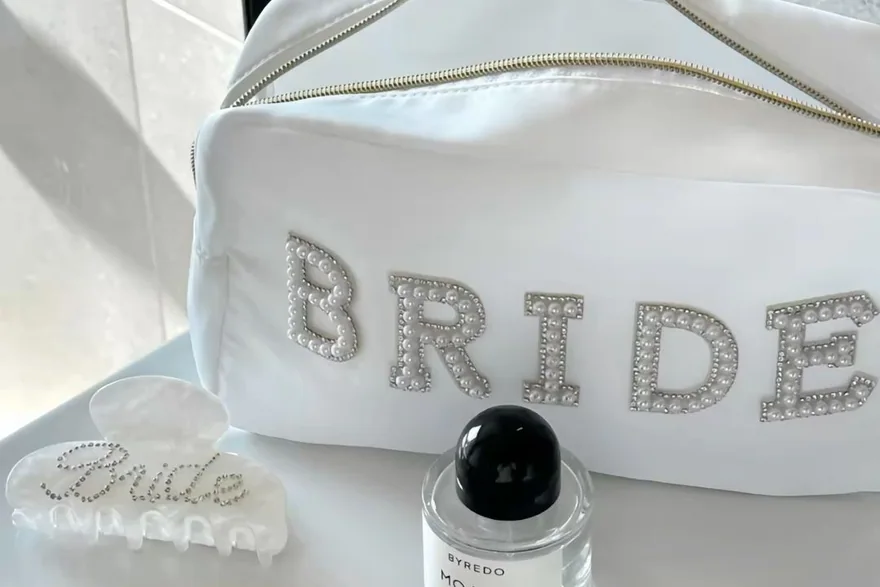
Moisture management as a design specification
It is tempting to write sponge cases up in terms of hygiene benefits, and that is where programmes run into regulatory trouble. A bag or a case is a container, not a medical device, and claims about bacteria, mould prevention or infection control are not claims a storage product can carry. The correct frame is moisture management: the measurable, physical business of how quickly water leaves the sponge and the case, and how little residue accumulates in the meantime. Buyers who stay in that frame get a specification that is defensible and a product that works.
In that frame, the variables are concrete. Internal volume and open area set the drying rate. Surface energy of the interior sets whether water beads and runs to the bottom or spreads as a film. Interior colour sets whether residue shows. Interior geometry sets whether the sponge rests on a wet surface or on ribs. Each of these is specified in millimetres, percentages and material names rather than in adjectives, and each can be checked on a sample without a laboratory.
| Interior treatment | What it does with water | Cleaning | Best suited to |
|---|---|---|---|
| Smooth moulded PP or ABS | Beads and runs to the floor; wipes dry | Wipe or rinse; no absorption | Hard cases; lowest residue retention |
| Moulded EVA with a fabric lining | Lining absorbs; dries slowly | Spot clean only | Soft-touch cases where feel matters more than drying |
| Silicone shell | Beads; flexible enough to invert and rinse | Rinse and invert; dishwasher-tolerant grades exist | Travel cases and washable ranges |
| Removable perforated tray | Lifts the sponge above collected water | Tray rinses separately | Any closed case; the best single retrofit |
| Unlined moulded EVA | Absorbs into the foam cells; slowest to dry | Wipe only | Budget cases where the sponge is stored dry |
Two specification habits do most of the practical work. The first is to specify a dry-down criterion rather than a feature: for example, a sponge placed in the case after a standard rinse-and-squeeze should reach a defined condition within a stated number of hours under stated ambient conditions. That is testable on a bench with a kitchen scale and gives the buyer a real number to compare between samples. The second is to specify the interior colour, since a light interior shows residue and drives returns while a mid-tone interior hides it without looking unclean.
One more variable belongs in the specification: how the user is told to prepare the sponge before storage. A case cannot remove water that the user leaves in the sponge, and the difference between a hand-squeeze and a squeeze inside a dry towel is larger than the difference between most vent designs. Packaging copy that instructs the user to press the sponge in a towel before storing does more for moisture management than doubling the vent area, and it costs nothing to add.
Care labelling belongs in the same conversation. A case that cannot be washed will accumulate residue regardless of how well it vents, and buyers should state plainly on the packaging how the case is meant to be cleaned - wiped, rinsed, or tray removed and rinsed. Textile cleaning and colour-fastness behaviour of any fabric lining is assessed with the methods published by AATCC, which gives a common vocabulary for laundering and crocking performance.
Case geometry, materials and residue transfer
Case geometry decides whether the sponge survives storage in a usable shape. A teardrop blender has a pointed tip that is the working end for detail application, and that tip is the part most easily crushed. A case that closes onto the tip flattens it, and a flattened tip is the complaint that shows up in reviews as "arrived squashed" or "tip went hard". The design response is a shaped cavity that carries the load on the round body of the blender and leaves the tip in a relieved pocket, or a domed lid that provides headroom over the tip.
Multi-sponge cases add a second geometric problem: contact between sponges. Two damp blenders touching in a shared cavity transfer pigment to each other and hold moisture at the contact patch, which is where residue and odour develop first. Individual cavities in a tray, separated by 4-6 mm walls, are the standard answer, and they also make the case easier to sell as a set. Silicone applicators and non-absorbing puffs can share a cavity safely, because they have no retained moisture to manage.
| Case type | Construction | Crush protection | Unit cost band |
|---|---|---|---|
| Moulded EVA clamshell | Compression-moulded EVA with a zipper closure | Good; the shell carries load, cavity holds shape | $1.20-$2.80 |
| Injection-moulded PP or ABS | Rigid shell, snap or hinged lid | Best; rigid walls and a positive stop | $1.60-$3.40 |
| Silicone pod | Flexible one-piece with a roll or press lid | Fair; deforms under point load | $0.90-$2.20 |
| Mesh-top travel pod | Moulded base with a mesh or perforated lid | Good, with the best airflow of the four | $1.10-$2.60 |
| Fold-flat fabric sleeve | Coated fabric sleeve with a press-stud flap | Minimal; packs flat, protects nothing | $0.55-$1.40 |
Case depth is the dimension most often cut too tight. A teardrop blender sits higher than it looks once its rounded base is accounted for, and a lid that is 2-3 mm too shallow compresses the sponge on every close. Specifying the cavity from a physical sample of the actual sponge, rather than from a drawing, avoids this entirely, and the real sponge should be sent with the sample request. Buyers ranging more than one sponge shape should either tool separate cavities or size one cavity to the largest sponge and accept that smaller sponges move slightly rather than being compressed.
Residue transfer is the last thing to specify, and it runs in both directions. Foundation pigment on the sponge stains the case interior; dye from a coloured case interior or lining can transfer back onto a pale sponge. The lining specification should therefore include a colour-fastness requirement, and the usual reference is the ISO 105 series on colour fastness, with the rubbing or crocking method being the relevant part for a sponge that is pressed against the lining. A mid-tone interior in a colour-fast fabric is the low-risk combination.
Material compliance follows the same logic as any skin-contact accessory. A sponge case is handled constantly and sits against a product that touches the face, so component certification under OEKO-TEX Standard 100 is a reasonable requirement for any fabric lining or foam used in it. For moulded shells, the relevant questions are odour and coating stability, both of which are checked on a sample rather than a certificate - a case that smells of solvent on opening will generate returns regardless of its paperwork.
The B2B Customisation View
The first technical conversation about cosmetic bags normally resolves three things: dimensions, material laminate and the surface that will carry the logo.
The numbers a buyer can plan around: 500 pieces minimum per style and colourway, 6–10 working days to a first sample (12–15 where tooling or moulding is involved), 35–50 days to bulk completion, AQL 2.5 under ISO 2859-1 at final inspection, FOB Xiamen terms, T/T 30/70 payment.
QUANZHOU JUNYUAN BAGS acts as the sourcing and programme-management layer between the brand owner and the SGS-verified production floor, coordinating specification, sampling, inspection and shipment paperwork on the buyer's behalf.
Which Brand Types Benefit Most
Start-up brands find sponge cases attractive because they are a low-cost accessory that photographs well and can be sold alongside a sponge rather than competing with it; the 500-piece minimum per style and colourway is achievable for a first accessory drop. Established brands use the case to add structure to a sponge programme, since a blender plus a case reads as a kit and supports a higher price than the blender alone. Retailers and private-label buyers should insist on a stated cleaning instruction, because a case that cannot be cleaned becomes a residue problem that reflects on the retailer rather than the sponge. E-commerce sellers benefit most from vented designs, since airflow and a lift-out tray are features that can be demonstrated in a short video, which is the format that converts in this category. Gift, subscription and beauty-box buyers should favour rigid shells with individual cavities: the cavity tray protects the sponge tips in transit, which is where most subscription-box damage happens. Sizing is the planning decision that catches buyers out: a case built for one sponge geometry does not fit another, so a brand ranging a teardrop blender and a mini blender needs two cavity sizes or one cavity generous enough for both, and the 500-piece minimum applies per style and colourway to each. Buyers should also decide whether the case ships with a sponge fitted inside, because a fitted sponge changes the packed profile and the carton count and arrives deformed if the lid compresses it in transit.
- Start-up brands: a photogenic accessory that sells alongside the sponge, not against it.
- Established brands: blender plus case converts a consumable into a kit.
- Retailers and private label: require a stated cleaning instruction on the packaging.
- E-commerce sellers: vented designs and lift-out trays demonstrate well on video.
- Subscription and beauty-box buyers: rigid shells with individual cavities protect tips in transit.
Frequently Asked Questions
How much clearance should a beauty blender case have?
Set the internal dimension against the wet sponge, not the dry one: 10-15 percent clearance on each dimension, plus 4-6 mm of headroom above the highest point. A case built to the dry dimension compresses the sponge every time the lid closes, which flattens the tip over time.
Should a sponge case be vented or sealed?
Vented for daily use, where the sponge goes in damp every evening and drying speed matters. Sealed for travel and for pigment-heavy use, where containing residue matters more. A perforated lid with a raised floor is the best compromise, since it vents where convection works and keeps the sponge out of collected water.
Where should vent holes be placed on a sponge case?
Near the top, and on more than one face. Warm moist air rises, so openings in the top face exchange air far better than the same area near the base, and openings on opposite faces create a flow path rather than a stagnant pocket. Six to twelve holes of 3-5 mm is a common starting geometry.
Why does a sponge stay damp inside a closed case?
Because there is no air exchange carrying water vapour away. A rinsed and hand-squeezed blender still holds several grams of water, and in a sealed container that moisture equilibrates between sponge and case air rather than leaving. Vent area, vent position and a raised floor that keeps the sponge off collected water all reduce it.
Can a makeup sponge case be described as antibacterial?
Not on the basis of being a case. Storage products are containers, and claims about bacteria, mould prevention or infection control are not claims this category can support. The defensible frame is moisture management: how quickly water leaves the sponge, and how the case is meant to be cleaned.
What interior material dries fastest in a sponge case?
Smooth moulded PP or ABS, because water beads on it and runs to the floor instead of being absorbed. Unlined moulded EVA is the slowest, since it takes moisture into the foam cells. Silicone is fast and can be inverted to rinse, which makes it the most practical washable option.
Does a lift-out tray really help a closed case?
Yes, and it is the most effective single change. Ribs or a grid 3-5 mm high keep the sponge out of water that collects at the bottom, and a removable tray can be rinsed on its own rather than requiring the whole case to be cleaned. It also gives the buyer a visible feature to photograph.
How should a sponge case protect the tip of a blender?
By carrying the closing load on the round body rather than the point. A shaped cavity that leaves the tip in a relieved pocket, or a domed lid with headroom over the tip, prevents the flattening that users describe as a ruined blender. Point-load compression is the most common cause of tip damage.
Can two sponges share one case cavity?
Absorbent sponges should not. Contact between two damp blenders transfers pigment between them and holds moisture at the contact patch, which is where residue and odour develop first. Individual cavities separated by 4-6 mm walls are the standard fix. Silicone applicators can share, since they hold no water.
What colour should the inside of a sponge case be?
Mid-tone. A very light interior shows every mark of foundation residue and drives returns from customers who assume the case is dirty; a very dark interior hides residue but also hides when cleaning is needed. Whatever the colour, the lining should carry a colour-fastness requirement so dye does not transfer to a pale sponge.
What colour-fastness test applies to a sponge case lining?
The rubbing, or crocking, method from the ISO 105 series, because the sponge is pressed against the lining rather than abraded along it. AATCC also publishes laundering and crocking methods that give a common vocabulary for the same property. Specify dry and wet rubbing grades separately.
What minimum order applies to a moulded sponge case?
The programme minimum is 500 pieces per style and colourway. A moulded EVA or injection-moulded shell needs tooling for a non-standard cavity, so the sponge geometry and the cavity drawing should be frozen before the tool is cut. Existing cavity tooling can often accept a new colour without a new tool.
How long does sampling take for a shaped sponge case?
Standard sampling is 6-10 working days. A new moulded cavity, a hinged lid or an over-moulded mesh panel moves the programme into the 12-15 working day bracket. Perforations can be added to an existing shell afterwards as a secondary operation; a mesh window cannot, and must be designed in from the start.
How is a vented sponge case inspected at AQL 2.5?
Under ISO 2859-1 at AQL 2.5, the defects worth naming are blocked or burred perforations, lid mismatch that closes the intended gap, tray that does not seat, and interior staining or odour. Naming these explicitly before inspection is what makes an AQL level actionable; without defect definitions it says nothing about what to reject.
Should a sponge case be lined with fabric?
Only where the soft feel is worth the slower drying. A fabric lining absorbs moisture and can only be spot cleaned, which works against the whole point of a sponge case. If a lining is used, specify a colour-fast synthetic with low absorbency and make it removable or wipeable.
Can a sponge case be made from recycled materials?
Recycled polyester fabric linings and recycled-content moulded shells are both available and can be documented under recognised standards. The practical constraint is odour: recycled compounds need checking on a sample, since a case that smells of solvent on opening will be returned regardless of how it is certified.
People Also Ask
How do you store a beauty blender so it dries properly?
Rinse it, squeeze out as much water as possible by hand, then store it in a vented case with the lid ajar or a perforated top. Keep it off any water that collects at the bottom, using a ribbed or lift-out tray. A sealed case is fine for travel but will hold moisture for much longer.
Why does my makeup sponge smell after storage?
Because retained moisture has nowhere to go. A closed case and a damp sponge reach equilibrium rather than drying, and residue on the sponge adds to it. More vent area, vents placed high, and a tray that lifts the sponge above collected water are the three design changes that reduce it.
Can you put a damp beauty blender in a case?
Yes, if the case is vented or if it has a raised floor so the sponge is not sitting in water. A sealed case with a damp sponge will hold that moisture for a day or more. For daily use choose ventilation; for travel, choose containment and dry the sponge as soon as possible.
What size case fits a standard beauty blender?
A standard teardrop blender is roughly 40 x 60 mm dry and expands when wet, so the cavity should allow 10-15 percent clearance on each dimension plus 4-6 mm of headroom over the tip. Mini blenders around 25 x 35 mm and wedge sponges around 70 x 50 x 25 mm need their own cavities.
Are hard or soft sponge cases better?
Hard shells - injection-moulded PP or ABS - protect the sponge tip best and have a positive lid stop, so they suit travel and subscription boxes. Moulded EVA clamshells are softer and lighter with good protection at a lower cost. Both outperform fabric sleeves, which pack flat but protect almost nothing.
Request a Sample or a Written Quotation
Send the silhouette, dimensions, material preference and logo artwork, and the programme team will return a written quotation with MOQ, sampling window, bulk lead time and inspection standard.
Email: service@junyuanbags.com · WhatsApp: +86 177 5002 0688