Cosmetic Bag Cleaning Kits: Brush & Sponge Wash Sets
Executive Summary
Cosmetic bag cleaning kits are wash sets built to clean the tools that apply makeup - brushes, sponges and puffs - and to carry them while they dry. A workable set contains four things: a cleanser in a travel-legal volume, a textured scrubbing surface, a wet compartment that can be wiped clean, and a way to hold brushes head-down while they dry. The failure that decides whether the set works is ferrule water ingress, because water reaching the metal sleeve that holds the bristles wicks into the handle, softens the adhesive and loosens the brush permanently.
Since the problem is water management rather than cleaning chemistry, the specification should lead with drying geometry and liner material. Practical targets include a wipe-clean liner with welded rather than stitched corners, a removable mesh panel so brushes hang or lie angled with the ferrule above any pooled water, closures matched to the cleanser's viscosity and surfactant load, and volumes held at 30-100 ml. Minimum order is 500 pieces per style and colourway, sampling runs 6-10 working days, and bonded or welded wet compartments take 12-15 working days.
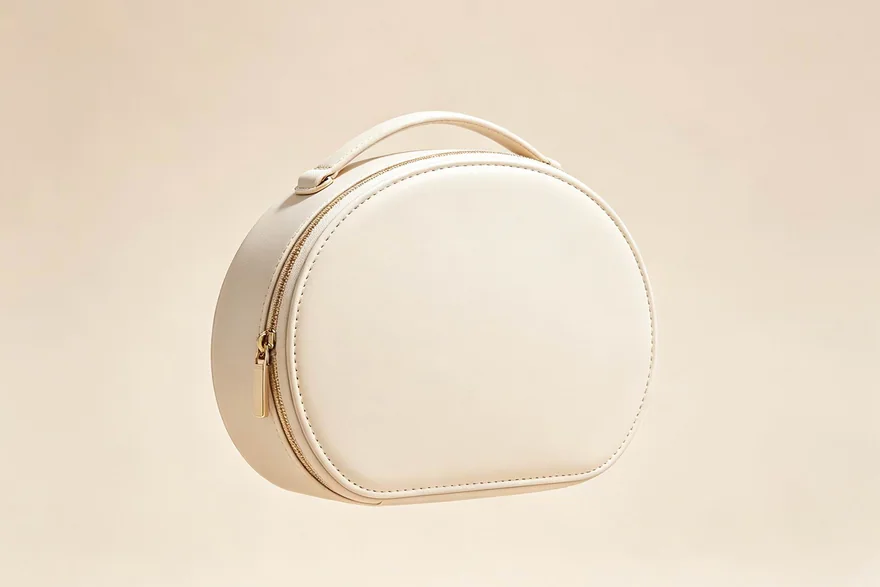
What belongs in a brush and sponge wash set
A wash set is defined by what it has to do, not by what photographs well in a flat lay. Four roles have to be covered. Cleanse means a surfactant plus friction, so the set needs either a liquid cleanser or a solid bar and a textured surface to work it into the bristles. Rinse needs water and somewhere for it to go. Contain means a wet compartment that survives being wiped, not one that wets through to the outer shell. Dry means airflow and, critically, a position that keeps water away from the ferrule.
Volume is the first commercial decision. Liquid cleanser at 30, 50 or 100 ml covers most programmes; 100 ml is the largest container that passes the TSA 3-1-1 liquids rule in carry-on, which is why it appears so often in travel sets. A solid cleansing bar of 20-40 g sidesteps the liquids rule entirely and removes any leak risk, at the cost of needing a dry tin or a coated sleeve inside the kit. Buyers selling into air travel should decide which route the set takes before choosing the wet compartment.
- Cleanser - 30, 50 or 100 ml liquid, or a 20-40 g solid bar in a tin
- Textured scrubbing surface - silicone mat with 2-4 mm nubs, or a moulded palm pad
- Sponge press or squeezer - optional, useful for dense blender sponges
- Wet compartment - welded liner, drainable, wipe-clean
- Drying provision - hanging loop, fold-flat rack or angled mesh tray
- Care card - one panel stating drying position and drying time
Two extras are worth deciding deliberately rather than inheriting. A sponge press speeds up rinsing a dense blender sponge, which otherwise holds water for many hours, but it adds a rigid part and another tolerance to control. A care card is the cheapest risk-reduction item in the kit: a single printed panel stating that brushes dry head-down and that the wet compartment is for transport rather than storage changes user behaviour more reliably than any material choice. Colour fastness of the liner against cleanser residue should be tested through AATCC test methods rather than by eye.
Ferrule water ingress: the failure mode that ruins brushes
A makeup brush is three parts: the bristle bundle, the ferrule and the handle. The ferrule is a thin metal sleeve, usually aluminium or brass, crimped over the bristle root and set into the handle with adhesive. That joint is the weak point of the whole tool. Water that reaches the mouth of the ferrule does not simply evaporate; it wicks into the handle by capillary action, and once there it takes days to leave. The brush is not ruined by washing. It is ruined by where the water goes afterwards.
Three habits drive water into the ferrule. Soaking a brush past the ferrule line submerges the joint completely. Standing a wet brush head-up in a cup lets water run down the bristles, through the ferrule and into the handle - the classic and most common error. And closing a damp brush into a sealed wet compartment recycles the same moisture indefinitely. All three are user behaviours, which is exactly why the kit has to be designed to make the correct behaviour the easy one.
- Never submerge a brush past the ferrule line; wash the bristle bundle only
- Dry head-down or angled, so water drains away from the ferrule rather than into it
- Keep the ferrule above any pooled water in the tray or compartment
- Use the wet compartment for transport, never as a drying chamber
- Leave the compartment open to air as soon as the kit is unpacked
- State the drying position on a printed care card, not only in online copy
The consequences are progressive and irreversible. A wooden handle swells, then cracks its lacquer; the adhesive - commonly a PVA or epoxy depending on the tool - softens and releases; bristles shed in clumps at the root rather than singly; and an aluminium ferrule can corrode at the crimp. Once a ferrule has loosened there is no field repair that restores the tool. For a brand selling a wash set, a ruined brush is attributed to the kit, regardless of who actually misused it.
This is why drying geometry belongs in the product specification rather than in the instruction leaflet alone. A kit that only offers a flat wet pocket invites the head-up error; a kit with a hanging bar above the wet zone, or a fold-flat rack that holds brushes at 15-30 degrees, makes the correct position the default. The added cost is small - a webbing loop, a stiffened panel, a few centimetres of mesh - and it is the single specification most correlated with a kit that earns good reviews.
Two specifications push the failure away from the ferrule. The first is a visible fill-depth mark - a moulded line or a printed band at 30-40 mm inside the wet compartment or across the scrubbing mat - which gives the user a limit that keeps the ferrule above water without reading a manual. The second is a compatibility note on the care card: natural hair and synthetic filament tolerate different pH ranges, and a kit sold alongside natural-hair brushes should name a compatible cleanser type rather than leave the user to guess. Neither adds meaningful cost, and both move the risk away from the one component that cannot be repaired.
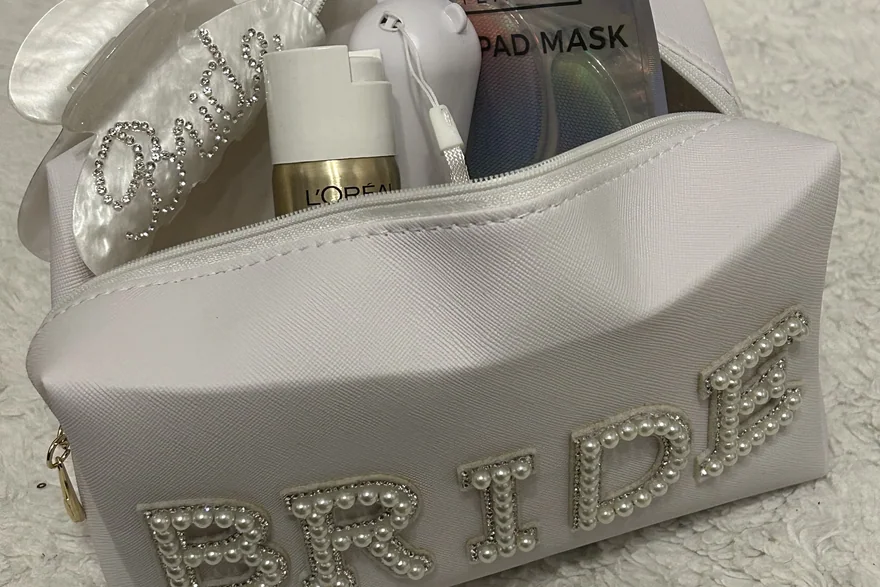
Drying position, airflow and mould control
Drying is a geometry problem before it is a material problem. Water leaves a brush by evaporation from the bristle surface and by drainage under gravity, and the ferrule must sit at the high end of both paths. A dense kabuki or a large blender sponge holds substantially more water than a flat shader brush, so the kit has to be sized for the wettest item the range includes rather than for the average one. Drying times below are planning figures for a temperate room with some airflow; they lengthen markedly in a humid bathroom or a closed bag.
| Drying position | What happens at the ferrule | Planning drying time | Kit design implication |
|---|---|---|---|
| Flat on a towel, ferrule level | Water sits at the ferrule mouth and wicks inward | 8-12 h for a dense brush | Acceptable only on a raised mesh tray |
| Head-up in a cup or pocket | Water drains down through the ferrule into the handle | 10-14 h, handle wet longest | Avoid; needs an explicit do-not icon |
| Head-down hanging | Water drains away from the ferrule | 6-10 h with airflow | Needs a hanging bar or loop above the wet zone |
| Angled on a rack at 15-30 degrees | Ferrule stays above pooled water | 6-9 h | Suits a fold-flat rack packed in the lid |
| Closed inside the wet compartment | No airflow; condensation recycles | Over 24 h, mould risk high | Transport only, never for drying |
Mould control follows from the same logic. Mould needs moisture, a nutrient and time; a sponge left damp in a closed liner supplies all three, and cosmetic residue supplies the nutrient generously. The design remedies are unglamorous: a mesh panel on at least one face of the wet compartment, a drain path so water is not held against a seam, and a closure that can be left open without the compartment gaping. Buyers should also specify that the kit ships dry, with the compartment open, because a kit sealed in a polybag straight off a humid production line arrives already compromised.
Packing condition belongs to the same specification and is often overlooked. A kit assembled on a humid line and bagged immediately can arrive with condensation inside the liner, so the packing instruction should state a drying interval before bagging, or require a desiccant sachet with a stated placement and a stated contact warning. That is a packing control rather than a product feature, and it is the cheapest mould prevention available to a wash-kit programme.
Antimicrobial claims deserve caution. An antimicrobial finish on a liner can reduce surface growth, but it does not dry a brush, and a claim that implies otherwise invites regulatory and reputational trouble. If a programme wants the feature, the claim should be stated as a property of the treated material, supported by the treatment supplier's documentation for the destination market, and paired with the same drying geometry as an untreated kit. Test evidence for liner behaviour and cleanliness should be drawn from recognised AATCC test methods rather than from in-house impressions.
- Size the drying provision for the wettest item in the range, not the average
- Mesh or open structure on at least one face of the wet compartment
- A drain path so water does not pool against a welded seam
- Closure that can be left open during drying without the compartment gaping
- Ship the kit dry with the compartment open
- Treat any antimicrobial feature as a material property, not a substitute for drying
Travel-friendly volumes, closures and liner materials
Closure choice is where most leaking kits fail, and the reason is usually mismatch rather than poor parts. A low-viscosity micellar cleanser behaves very differently from a viscous brush soap: the thin fluid will find its way through a closure that holds the thick one without complaint. Buyers should specify the cleanser's viscosity range and surfactant type to the closure supplier, then require a leak test on the filled, closed container rather than on water. Neck finish matters as much as closure type - a 20/410 or 24/410 neck with a matched closure torque is far more reliable than a generic cap.
| Liner material | Wipe-clean behaviour | Hydrolysis and odour | Illustrative cost index |
|---|---|---|---|
| TPU film laminate, 0.15-0.25 mm | Wipes clean; resists surfactant staining | Good hydrolysis resistance; low odour | High |
| PEVA, 0.12-0.20 mm | Wipes clean; scuffs under abrasive wiping | Stable; mild odour when new | Low |
| PVC film, 0.18-0.30 mm | Wipes clean; plasticiser can migrate | Can stiffen and smell; needs REACH review | Low |
| Silicone-coated nylon, 20-40 g/m2 coating | Best release of dried product | Very stable; essentially odour-free | High |
| PU-coated polyester, 600D face | Wipes reasonably; stains at the seams | PU hydrolyses in warm damp storage | Medium |
| Uncoated 210D polyester | Holds water and stains | No hydrolysis; wets through to the shell | Lowest |
The table above gives illustrative planning ranges for material cost only; actual quotations depend on volume, finish and market conditions. Coated fabrics used in a wet liner should be evaluated against ASTM D751 coated fabric test methods, particularly for coating adhesion and blocking resistance, because a liner that blocks when the bag is folded and stored warm is a common bulk-stage surprise. Where PVC is chosen, plasticiser content needs review against EU REACH restrictions before the material is approved, not after the first shipment.
Component tolerances are the last place a wash kit surprises its buyer. A silicone mat specified only by outline dimensions can arrive with nubs too short to work lather into a dense brush, or spaced too widely for a small detail brush to catch them at all. Nub height, nub spacing and durometer should be stated, and the mat should be required to lie flat in the compartment without curling at the corners after packing. A moulded palm pad removes the variable entirely but adds tooling, which moves the programme into the 12-15 working day sampling band and introduces a component minimum set by the tool rather than by the bag.
- Fix the cleanser format first - solid bar, 30 ml, 50 ml or 100 ml - because it drives closure and compartment size
- Specify neck finish and closure torque, not just closure type
- Leak test the filled container, not a water-filled substitute
- Choose the liner by wipe-clean and hydrolysis behaviour, then check cost
- Confirm the wet-compartment zipper by tape width, slider type and any water-resistant treatment, using ASTM D2053 zipper terminology so the requirement is unambiguous
- Define leak failure as a major defect in the inspection worksheet
Minimum order is 500 pieces per style and colourway. Sampling runs 6-10 working days for a sewn kit with a standard liner, and 12-15 working days where the wet compartment uses welded or bonded seams, moulded silicone parts or an integrated drying rack. Bulk production is 35-50 days after sample approval. Inspection is AQL 2.5 under ISO 2859-1, shipment is FOB Xiamen, and payment is T/T 30 deposit with 70 against bill of lading.
The B2B Customisation View
Buyers who brief cosmetic bags with a physical reference sample always reach an approved prototype faster than buyers who brief with a photograph alone.
Standard terms: 500 pieces minimum per style and colourway, 6–10 working days for sampling (12–15 for complex builds), 35–50 days bulk production, AQL 2.5 inspection under ISO 2859-1, FOB Xiamen, T/T 30 deposit / 70 balance.
The arrangement suits brands that want factory-level pricing discipline without taking on factory-level vendor management for cosmetic bags.
Which Brand Types Benefit Most
Brush and tool brands get the clearest benefit, because a wash set extends the life of the product the brand actually sells and turns a consumable purchase into a care programme. These buyers should insist that the drying provision is engineered rather than printed, since a kit that ruins brushes damages the tool brand rather than the bag. Retailers and e-commerce sellers use wash sets as an add-on at a price point that lifts basket value without competing with the hero SKU, and they benefit most from clear, photographable contents. Start-up brands use a kit as a differentiation play precisely because the category is not yet crowded with considered designs. Gift and hospitality buyers care about a different attribute: a wash set that ships dry, smells neutral and wipes clean survives the gifting moment, where a liner with a plasticiser odour does not - and those same three attributes are what keep a kit in a guest bathroom rather than in a bin after one weekend. Subscription boxes treating a wash set as one quarter's hero item should size the drying provision for the wettest tool in the range, because a subscriber whose first kit fails on a dense blender sponge is unlikely to renew, and the renewal is worth far more than the few centimetres of mesh that would have prevented it. Across all five brand types the same specification sequence applies: settle the cleanser format first, because it drives closure and compartment size; then choose the liner by wipe-clean and hydrolysis behaviour; then engineer the drying position; and only then look at colour and trim. Programmes that follow that order tend to sample in the 6-10 working day band, while those that leave the wet compartment to be resolved at sample stage usually spend the 12-15 working day band on rework instead.
- Brush and tool brands extending product life through a care programme
- Retailers and marketplaces using wash sets as basket-building add-ons
- Start-up beauty brands differentiating on considered kit design
- Gift and hospitality buyers needing neutral odour, dry packing and clean presentation
- Subscription boxes where the kit is one quarter's hero item, sized for the wettest tool in the range
Frequently Asked Questions
What volumes count as travel-friendly in a brush wash set?
Liquid cleanser is typically specified at 30, 50 or 100 ml, with 100 ml being the largest container that passes the TSA 3-1-1 liquids rule in carry-on luggage. A solid bar of 20-40 g avoids the liquids rule altogether and removes leak risk, though it needs a dry tin or coated sleeve. The choice drives the size of the wet compartment, so it should be settled before the bag is patterned.
Is a solid cleanser bar better than a liquid in a wash kit?
A solid bar removes leak risk and the liquids-rule constraint, and it travels well, but it needs a dry storage tin and the user has to work up lather on a textured surface. A liquid cleanser is more familiar and easier to dose, at the cost of a closure that can leak. Buyers should choose by channel: air-travel and gift channels favour solid, at-home and professional channels favour liquid.
Does a wash set need a silicone scrubbing mat?
A textured surface is what turns cleanser into actual cleaning, so some scrubbing provision is necessary. A silicone mat with 2-4 mm nubs works well, dries quickly and wipes clean, and it doubles as a non-slip surface in a sink. Alternatives include a moulded palm pad or a textured liner patch. What matters is that the texture is specified by nub height and spacing, not left to a supplier's catalogue choice.
Why do brush handles crack after repeated washing?
Water enters at the ferrule mouth and wicks into the handle, where the wood swells and the lacquer cracks; the adhesive at the joint softens at the same time. Standing a wet brush head-up makes this worse because gravity runs water straight through the ferrule into the handle. The remedy is drying position - head-down or angled - rather than a different handle material.
Should brushes dry head-up or head-down after washing?
Head-down, or angled so the ferrule sits above any pooled water. Head-up lets water run along the bristles and through the ferrule into the handle, which is precisely the failure the kit should prevent. A hanging bar, a loop above the wet zone or a fold-flat rack at 15-30 degrees all achieve this, and the instruction should appear on a printed care card inside the kit.
Can brushes be dried inside a closed cosmetic bag?
No. A closed compartment has no airflow, so condensation recycles and drying takes longer than 24 hours, with real mould risk on sponge residue. The wet compartment is for transporting damp tools, not for drying them. Kit design should make this obvious: a mesh panel on one face and a closure that can be left open without the compartment gaping awkwardly.
What liner material suits a wet compartment best?
TPU film laminate and silicone-coated nylon give the best wipe-clean behaviour and hydrolysis resistance, at a higher illustrative cost index. PEVA is cheaper and adequate for light use but scuffs under abrasive wiping. PU-coated polyester is a middle option whose coating can hydrolyse in warm damp storage. Uncoated polyester should be avoided because it wets through to the shell.
Is an antimicrobial lining worth specifying?
Only as a supplement, never as a substitute for drying geometry. A treated liner can reduce surface growth, but it does not remove water from a brush handle, and claims that imply otherwise create regulatory exposure. If specified, the claim should be framed as a property of the treated material, supported by the treatment supplier's documentation, and paired with the same airflow and drying provisions.
How is the wet compartment leak-tested before bulk approval?
Test the filled, closed cleanser container inside the compartment rather than a water substitute, since surfactant changes wetting behaviour. A practical method is an inverted static hold of 24 hours over absorbent paper, plus a drop test of the packed kit onto a hard surface. Any moisture beyond a defined mark is a major defect. Repeat on a bulk pull at AQL 2.5 under ISO 2859-1.
Which zipper type suits a wash-kit wet pocket?
A coil zipper with a corrosion-resistant slider and a sealed or reverse tape construction is the usual answer, because the pocket is regularly damp. Metal teeth can tarnish and snag on mesh. The specification should state tape width, slider type and any water-resistant treatment using ASTM D2053 zipper terminology so the requirement is unambiguous, and the closure torque on any bottle inside should be stated separately.
Does the cleanser need a pH or ingredient specification?
Yes, and it matters to the bag as well as to the brush. Natural hair bristles tolerate a narrower pH range than synthetic filament, and a high-surfactant formula will attack some liner coatings over time. Buyers should obtain the cleanser's pH, surfactant type and viscosity, then confirm liner compatibility and require the closure supplier to leak test against the real formulation rather than water.
Can a wash set include a replacement sponge?
It can, and a spare blender sponge is a popular inclusion, but it changes the drying calculation. A dense sponge holds far more water than a brush and needs airflow on all sides, so the kit must provide a raised mesh position rather than a flat pocket. Sponges should ship dry and separately wrapped, with the compression set of the foam specified so it recovers after packing.
How is mould risk managed in a kit that ships sealed?
Ship dry, ship with the wet compartment open, and avoid sealing a kit into a polybag straight off a humid line. A mesh panel on the wet compartment, a drain path away from welded seams, and a care card telling the user to open the compartment on arrival all reduce risk. Where a desiccant sachet is used, its placement and any contact warning should be specified.
What defect classes apply to a wash kit at AQL 2.5?
Functional failures should be major or critical: a leaking wet compartment, a welded seam that opens, a closure that will not seat, or a drying rack that collapses. Appearance issues such as minor scuffing on a liner or slight print misalignment are minor. Writing the classification into the inspection worksheet before bulk avoids disputes about whether a damp carton is cosmetic or functional.
How long does sampling take for a wash kit with bonded seams?
A sewn kit with a standard liner samples in 6-10 working days. Welded or bonded wet compartments, moulded silicone scrubbing pads and integrated drying racks fall into the 12-15 working day band because tooling and bond trials add steps. Bulk is 35-50 days after sample approval, with inspection at AQL 2.5 under ISO 2859-1 and shipment FOB Xiamen.
People Also Ask
How do you clean makeup brushes without ruining them?
Wash only the bristle bundle, never submerging the ferrule, then dry the brush head-down or angled so water drains away from the metal sleeve rather than into the handle. Most ruined brushes were not damaged by washing; they were damaged by drying head-up in a cup, which lets water wick through the ferrule and soften the adhesive that holds the bristle bundle.
Can you bring brush cleaner on a plane?
Liquid brush cleaner follows the same liquids rule as any other liquid: containers of 100 ml or less in a single transparent quart-sized bag for carry-on. A solid cleansing bar avoids the rule entirely, which is why many travel wash sets specify a 20-40 g bar in a tin. Either way, the wet compartment of the kit should travel empty and dry.
How long do makeup sponges take to dry?
Longer than most users expect. A dense blender sponge can take well over a day in still air and substantially longer inside a closed bag, which is why mould is the common complaint. As planning figures for a temperate room with airflow, a raised mesh position shortens drying considerably compared with a flat pocket, and sponges should always dry fully open rather than in a compartment.
Why do brush bristles fall out after washing?
Usually because water reached the adhesive inside the ferrule. Once that bond softens, bristles release in clumps at the root rather than singly, and the ferrule itself can loosen on the handle. There is no field repair that restores it. Drying head-down or angled, and never soaking past the ferrule line, prevents the failure in almost every case.
Request a Sample or a Written Quotation
Send the silhouette, dimensions, material preference and logo artwork, and the programme team will return a written quotation with MOQ, sampling window, bulk lead time and inspection standard.
Email: service@junyuanbags.com · WhatsApp: +86 177 5002 0688