Cosmetic Bag Display Stands: Retail Fixture & POP Design
Executive Summary
Cosmetic bag display stands are retail fixtures - counter units, shelf trays, pegboard panels, floor spinners and endcap wings - that hold pouches upright, separated and shoppable at the point of purchase. The answer to whether a fixture programme pays for itself is footprint economics: a fixture earns the floor or shelf space it occupies through the number of units per facing it holds and how quickly those units turn, and soft goods lose that comparison whenever they slump, hide behind one another or need constant straightening.
Four specifications decide the outcome. Footprint and units per facing set the planogram economics; shelf-edge visibility decides whether a shopper registers the bag at all in the couple of seconds a fixture gets; anti-theft attachment decides whether a pouch at a modest price point survives on an open fixture; and flat-pack shipping decides whether the fixture arrives inside the promotional budget. Bag programmes run at 500 pieces per style and colourway, with sampling at 6-10 working days and 12-15 working days for fixtures with moulded or fabricated parts.
What a cosmetic bag display stand has to do
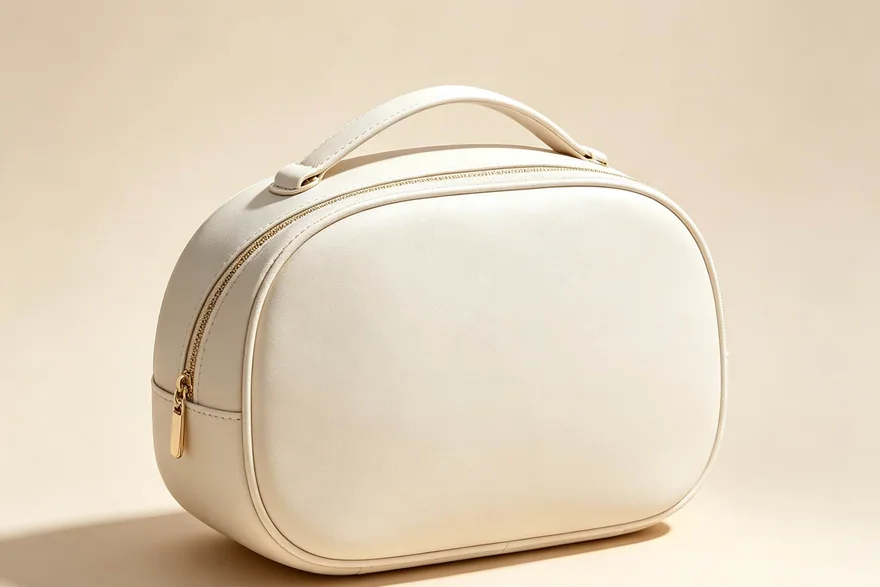
A display stand for cosmetic bags is any fixture whose job is to present pouches upright, separated and shoppable. That sounds simpler than it is, because a bag is the awkward case in retail presentation: unlike a carton, an empty pouch has no structure and slumps; a stuffed pouch holds shape but then hides the bag behind it. The fixture is therefore doing containment and separation work as well as elevation, and a stand that works for boxed product frequently fails for soft goods.
Six fixture families cover nearly every brief. A counter display unit sits beside the till or on a service counter. A shelf tray or shelf talker occupies part of a standard shelf run. A pegboard or slatwall panel with hooks hangs on an aisle wall. A floor spinner stands in an aisle or at its end. An endcap wing or sidekick clips onto the end of a gondola run. An acrylic riser or stepped block sits within an existing shelf to lift one hero bag above the shelf line.
- Hold each pouch upright without crushing it or flattening its shape
- Keep one bag from hiding the next, by separation or by stepping
- Present the most recognisable face toward the shopper's approach
- Carry a price and product message where it can be read at 1.5 m
- Allow restocking from the back or top without dismantling the unit
- Survive the handling it will actually get on a shop floor
Light is the quiet enemy of a display programme. A unit placed near a window or under bright retail lighting fades dyed fabric and printed panels far faster than the same bag in a warehouse, and a faded front-facing bag reads as old stock to a shopper. Colour fastness to light should be specified and checked through the ISO 105 series on colour fastness, with the test level matched to how long the fixture is meant to stay on the floor.
Footprint, planogram and units per facing
Footprint economics is the discipline that decides whether a fixture survives its first review. Every square centimetre of counter or shelf has an alternative use, so a display earns its place by holding more units, or turning them faster, than the product it displaces would. For soft goods the relevant measure is units per facing rather than facings alone: a shelf tray holding four pouches that sell weekly beats a spinner holding forty that sell monthly, once staff time and shrinkage are counted.
| Fixture type | Typical footprint | Units held | Best placement |
|---|---|---|---|
| Counter display unit | 250 x 200 mm, 250-400 mm tall | 6-12 pouches | Till point or service counter |
| Shelf tray or talker | 300 x 150 mm, 100-180 mm tall | 4-8 pouches | Eye-level within an existing run |
| Pegboard or slatwall panel | 600 x 900 mm | 12-24 pouches on hooks | Aisle wall at 1,300-1,550 mm |
| Floor spinner | 400 x 400 mm, 1,400-1,600 mm tall | 24-48 pouches | Aisle, power aisle or end of run |
| Endcap wing or sidekick | 400 x 1,200 mm | 30-60 pouches | End of a gondola run |
| Acrylic riser or stepped block | 150 x 150 mm, 80-150 mm tall | 2-4 pouches | Inside a shelf, lifting one hero SKU |
Replenishment frequency is the number that quietly kills fixtures. A unit holding eight pouches at a checkout needs topping up weekly, which happens; a unit holding forty on a distant aisle end gets topped up when someone remembers, which means it spends half its life looking picked over. Buyers should estimate the restock interval from realistic sell-through and size the fixture so it still looks full at the end of that interval, rather than maximising unit count.
Planogram compliance closes the loop. A fixture that is designed, approved and then assembled differently in store delivers none of the economics that justified it, so the unit should ship with a photographic planogram showing which colourway goes in which position, and the launch should be audited against that photograph. Where a retailer operates its own planogram software, the fixture dimensions and facing count should be supplied in the format that system expects, before the unit is produced rather than after.
Occupied space always has an alternative use, and that is the whole argument a fixture has to win. A counter unit occupying 250 x 200 mm displaces impulse product with a much higher turn rate, whereas a shelf tray inside an existing run displaces only the facings it covers, which is why shelf trays are usually the easier internal approval. Buyers should be able to state, in units per week, what the fixture has to sell in order to beat what it replaces, and should size the unit so that a realistic sell-through still leaves it looking full at the end of the restock interval.
Depth is the dimension most often over-specified. Two units deep on a hook or in a tray keeps every bag visible and reachable; three or four deep means the back units are unseen and untouched, which depresses sell-through and produces the picked-over look that ends a fixture early. Adding depth raises apparent capacity without raising real capacity, so the specification should state facings and depth separately and should be judged on units visible at the shopper's approach angle rather than on units held.
Shelf-edge visibility, sightlines and the decision window
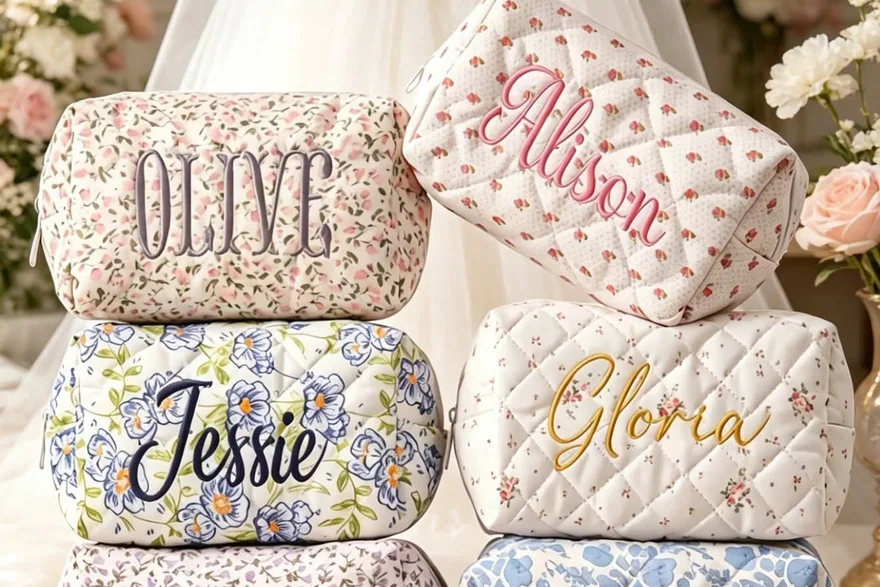
A shopper walking an aisle gives any single fixture a couple of seconds. In that window the bag has to be legible from roughly 1.5 m: recognisable shape, readable print, clear price. Height does most of the work. The band between about 1,300 mm and 1,550 mm is where adult shoppers' eyes land naturally, and fixtures placed below 700 mm or above 1,700 mm are effectively invisible to a walking shopper unless something else draws attention to them.
Shelf-edge visibility is a narrower idea than general visibility. It means the bag's most recognisable face is presented at the front plane of the shelf or fixture, not recessed behind a lip, a rail or a taller neighbouring product. A pouch set back 80 mm behind a shelf lip loses most of its visible area to a shopper approaching at an angle, and a pouch lying flat loses the shape that identifies it as a bag at all. The remedy is usually cheap: a riser, a stepped tray, or a hook length that brings the bag forward.
- Place the hero colourway in the 1,300-1,550 mm band, not at the top of the unit
- Present the bag's most recognisable face at the front plane of the fixture
- Keep print and price legible from 1.5 m, not only from arm's length
- Separate bags so none is hidden behind another at an approach angle
- Use one contrast colour or one sign panel to mark the block
- Check the unit at the shopper's approach angle, not straight on
Colour blocking and signage do the rest. A single block of one colourway reads as a range from across an aisle, while a mixed block reads as clutter; where a fixture must carry several colourways, grouping them in vertical columns preserves the block effect. Sign panels should carry one message rather than three, and the sign should sit at the top of the block rather than behind it. Retail lighting varies enormously between chains, so a display that depends on a particular colour rendering should be checked under the actual store lighting rather than under showroom conditions.
Visibility is testable before launch, and cheaply. Photograph the assembled fixture from 1.5 m at the shopper's approach angle, then check whether the bag shape and the price are recognisable in that photograph; if they are not, no amount of in-store adjustment will fix it. A second check at 3 m answers whether the block registers as a destination from the aisle entrance. Both checks cost an hour and are worth more than most fixture redesigns.
Range size and signage set the limits of what visibility work can achieve. A fixture carrying eight colourways reads as noise at 3 m, whereas three to five grouped in vertical columns reads as a range, and the eye needs one dominant colour to find the block at all. The sign panel should carry a single message at a type size legible from 1.5 m and should sit above the block rather than behind it. Where a retailer mandates its own signage format, the fixture should reserve that format's dimensions from the outset, because a sign holder added afterwards is usually the element that pushes the bag back behind the shelf lip.
Anti-theft attachment and flat-pack shipping
Small soft goods are an easy theft target precisely because they are soft: a pouch can be folded, concealed and carried out without the bulk that deters a casual thief. Price point alone does not settle the question, because a low unit price still supports volume theft, and the decision on anti-theft provision has to be made with the retailer rather than for it, since chains differ sharply in what their staff will tolerate and what their loss-prevention team requires.
| Method | How it attaches | Suits | Trade-off |
|---|---|---|---|
| Spider wrap or cable lanyard | Cable looped through the bag's hanging loop or zipper pull, alarmed base | Mid-price pouches on open fixtures | Visible deterrent; slows legitimate handling |
| EAS hard tag through a seam | Pin through a lining seam or a reinforced tab | Higher-price vanity cases | Needs a reinforced attachment point in the design |
| Locked acrylic case | Fixture itself is lockable; staff open on request | Premium sets and gift kits | Highest protection, highest staff involvement |
| Fixture-bound display model | Bag tethered to the unit; customer takes a coded card | Any price where the bag is bulky | Removes the take-home impulse entirely |
| No provision | None | Low-price pouches at a staffed till point | Accepts shrinkage in exchange for full shoppability |
Whichever method is chosen, the attachment point on the bag has to be engineered for it, because a spider wrap or an EAS pin transfers load into a seam or a webbing loop that was never specified for pulling. A reinforced hanging loop with a bar-tacked root, or a coated webbing tab tested for pull strength, is the usual answer; coated and laminated fabrics used in these tabs should be evaluated against ASTM D751 coated fabric test methods so the failure happens in the test rather than on the shop floor.
The bag programme runs at 500 pieces per style and colourway; fixture quantities are quoted per project against the fixture design rather than against the bag minimum. Sampling runs 6-10 working days for bags, extending to 12-15 working days where the fixture or the bag includes moulded, fabricated or bonded parts. Bulk production is 35-50 days after sample approval. Inspection of the bag programme is AQL 2.5 under ISO 2859-1, shipment is FOB Xiamen, and payment is T/T 30 deposit with 70 against bill of lading.
Flat-pack shipping is where fixture budgets are won or lost, because freight cost follows volume rather than weight. A knock-down corrugate unit that assembles in under three minutes without tools usually ships for a fraction of the cost of an assembled acrylic or metal unit, and it survives the supply chain better. Corrugate suits short promotional windows and takes offset or digital print well; acrylic suits permanent installations and takes screen or UV print; metal suits long-life floor units and costs the most to ship. The choice should follow the planned life of the display, not its appearance in a rendering.
Assembly is a cost rather than a footnote. A unit that needs tools, or that takes a store colleague more than about three minutes, will be assembled late and assembled inconsistently, which is how a well-designed fixture ends up on the floor looking wrong. The specification should state an assembly time target, the component count and whether tools are required, and the unit should ship with the planogram photograph and the assembly instruction in the same carton - a photograph taped to the shelf is the most effective compliance tool available.
The B2B Customisation View
Programmes for cosmetic pouches, vanity cases and beauty organisers move fastest when the artwork is supplied as vector files and the Pantone references are confirmed before sampling starts.
Budgeting and scheduling inputs: MOQ 500 per style and colourway; sampling 6–10 working days, extended to 12–15 for lined, moulded or hardware-heavy builds; bulk 35–50 days; pre-shipment inspection at AQL 2.5 per ISO 2859-1; FOB Xiamen; T/T 30/70.
QUANZHOU JUNYUAN BAGS is structured as a sourcing and programme-management company, which lets a buyer compare materials across several SGS-verified production lines inside one quotation.
Which Brand Types Benefit Most
Established brands running permanent shelf presence benefit most, because a fixture turns a few facings into a block that reads as a range from across the aisle, and because they can amortise a longer-life acrylic or metal unit over several seasons. Retailers with their own label programmes use fixtures differently, as a way to give soft goods structure on a shelf that was designed for cartons, and they care most about replenishment speed and planogram compliance. Start-up brands should favour the cheapest fixture that gets a foot in the door - a counter unit or a shelf tray - because the promotional window is short and the display budget is usually a fraction of the bag spend. E-commerce sellers benefit from a fixture in an unexpected way: the same stepped block or riser doubles as a photography set, which means one design decision improves both the shop floor and the listing imagery. Gift and seasonal buyers working to a fixed display budget should decide the planned life of the unit first: a six-week window justifies corrugate, a permanent installation justifies acrylic, and choosing by appearance rather than by planned life is the most common way to overspend a display budget. A further group benefits indirectly - brands selling through distributors, for whom a fixture makes a soft-goods line legible on somebody else's shelf without negotiating extra facings, because the unit brings its own structure and its own planogram with it. Bag quantity and fixture quantity should always be quoted separately in these arrangements, since the bag programme runs at 500 pieces per style and colourway while fixture quantities follow the store count and are quoted per project against the fixture design.
- Established brands amortising a permanent fixture across seasons
- Own-label retailers needing structure for soft goods on carton shelving
- Start-up brands buying a short promotional window cheaply
- E-commerce sellers reusing the fixture as a product photography set
- Gift and seasonal buyers working to a fixed display budget
Frequently Asked Questions
How much counter footprint does a cosmetic bag display need?
A counter display unit commonly occupies around 250 x 200 mm and stands 250-400 mm tall, holding six to twelve pouches. The binding constraint is what the counter would otherwise earn, so a checkout unit has to justify itself against impulse items. Where counter space is contested, a shelf tray of roughly 300 x 150 mm inside an existing run is often the easier approval.
How many bags should hang on one fixture hook?
Enough to look full and few enough to stay tidy: three to five pouches per hook is a practical range, depending on pouch depth. Overloading a hook makes the front bag hide the rest and makes the stack bulge outward into the aisle. Hook length, hook spacing and pouch depth should be specified together rather than chosen from a catalogue.
What height should a cosmetic bag display fixture be?
Place the hero SKU within the 1,300-1,550 mm band where adult shoppers' eyes land. Floor spinners typically stand 1,400-1,600 mm overall with the prime rows inside that band. Anything below about 700 mm or above 1,700 mm is effectively invisible to a walking shopper unless signage or a colour block pulls the eye to it.
Why do pouches slump and hide on a shelf?
Because an unfilled pouch has no structure and a filled one hides the bag behind it. Slumping is solved by support - a riser, a stepped tray or a compartment with walls - while hiding is solved by separation and by presenting the bag at the front plane of the shelf. Both are fixture problems, not bag problems, and both are cheap to fix at the design stage.
Should a display hold bags open or closed?
Closed but shaped is usually the better answer. An open pouch shows the lining and invites handling, and a lining is rarely the element that sells the bag. Lightly filling a display pouch with tissue or a form, then closing it, holds the shape and presents the exterior face. Where the interior is the selling point, one open sample bag is enough.
What does shelf-edge visibility mean in fixture terms?
It means the bag's most recognisable face sits at the front plane of the shelf or fixture rather than recessed behind a lip, rail or taller neighbour. A pouch set back even 80 mm loses most of its visible area to a shopper approaching at an angle. A riser, a stepped tray or a shorter hook usually recovers the loss at negligible cost.
Which anti-theft method suits a pouch at a modest price point?
A spider wrap or cable lanyard through the bag's hanging loop is the usual choice for mid-price pouches on open fixtures; it is visible, alarmed and removable at the till. Below that, many retailers accept shrinkage rather than slow legitimate handling. The decision belongs to the retailer's loss-prevention team, not to the bag programme, and should be settled before the bag's attachment point is designed.
Can a hanging loop be tested for pull strength?
Yes, and it should be, because anti-theft hardware transfers load into a loop or tab that was often specified only for hanging. A reinforced loop with a bar-tacked root, or a coated webbing tab, should be tested to a stated pull force on the approval sample, with the result recorded. Coated fabrics in the tab can be evaluated against ASTM D751 test methods.
Does retail lighting fade bags on display?
It can, particularly near a window or under high-output retail lighting, and a faded front-facing bag reads as old stock. Colour fastness to light should be specified through the ISO 105 series, with the test level matched to the planned life of the display rather than to the life of the bag in normal use. This is worth checking before a permanent fixture is committed.
Should a display fixture ship assembled or flat-packed?
Flat-packed, unless the unit is a permanent metal or acrylic installation. Freight cost follows volume rather than weight, so a knock-down corrugate unit that assembles in under three minutes without tools usually ships for far less than an assembled equivalent and survives the supply chain better. Assembly time should be specified and tested, not assumed.
What print method suits a corrugate display unit?
Digital print suits short runs and frequent artwork changes; offset litho on a corrugate board suits longer runs where colour consistency across stores matters. Screen print is more common on acrylic. The choice follows run length and how often the artwork will change, and the colour proof should be approved under the lighting the store actually uses.
How is planogram compliance checked after launch?
Ship the unit with a photographic planogram showing which colourway sits in which position, then audit against that photograph at launch and again a few weeks later. Fixtures are frequently assembled correctly and then re-stocked incorrectly, which is why the audit matters more than the assembly. Supplying dimensions and facing counts in the retailer's own planogram format prevents most of it.
Who pays for the fixture - brand or retailer?
It is negotiated, and the answer usually follows who benefits most: brand-funded fixtures are common for new lines and promotional windows, retailer-funded units for permanent own-label blocks. What matters for the bag programme is that the fixture quantity and the bag quantity are quoted separately, since their minimums and lead times differ.
Can one fixture serve several colourways?
Yes, and most do. Grouping colourways in vertical columns rather than mixing them across rows preserves the block effect that makes the range readable from across an aisle. The fixture should then specify how many units of each colourway sit in each column, which also gives restocking staff an unambiguous rule to follow.
How is a display fixture inspected under AQL 2.5?
The bag programme is inspected at AQL 2.5 under ISO 2859-1 in the usual way, and the fixture is inspected against its own checklist: panel print registration, corner integrity, hook alignment, assembly time and stability when loaded. Fixture defects are usually functional rather than cosmetic, so the worksheet should class a unit that will not stand level or a hook that will not seat as major.
People Also Ask
What is a POP display in retail?
POP means point of purchase: a fixture placed where the buying decision happens, such as a counter unit beside the till, a shelf tray inside a run, or an endcap at the end of an aisle. For cosmetic bags the fixture is doing containment work as well as display, because soft pouches slump and hide one another without support or separation.
How much does a retail display fixture cost?
It depends on material, run length and print method, so a buyer should treat any figure as an illustrative planning range rather than a quotation. Corrugate knock-down units are the low end and suit short promotional windows; acrylic and fabricated units cost more and suit permanent installations. Freight is often the larger variable, since cost follows shipped volume rather than weight.
How do retailers stop shoplifting of small accessories?
Common methods are spider wraps or cable lanyards through a hanging loop, EAS hard tags through a reinforced seam or tab, lockable cases for premium items, and fixture-bound display models at a staffed counter. The choice depends on price point, staff tolerance and the retailer's own loss-prevention policy, and it should be settled before the bag's attachment point is engineered.
What is a planogram?
A planogram is the diagram or photograph that specifies exactly where each product sits on a shelf or fixture, including facing count and position. It matters for cosmetic bags because a fixture approved as a design and assembled differently in store delivers none of the economics that justified it, so the planogram has to be shipped with the unit and audited after launch.
Request a Sample or a Written Quotation
Send the silhouette, dimensions, material preference and logo artwork, and the programme team will return a written quotation with MOQ, sampling window, bulk lead time and inspection standard.
Email: service@junyuanbags.com · WhatsApp: +86 177 5002 0688