How Many Items Fit in a Standard Makeup Bag? Capacity Guide
Executive Summary
A medium makeup bag at 22 x 14 x 8 cm holds around twenty everyday items; the useful rule is roughly eleven items per litre of usable interior once realistic packing gaps are counted. A small at 18 x 11 x 6 cm holds eight to ten, and a large at 26 x 17 x 11 cm holds between thirty-five and forty. Those figures already account for organisation features, which typically consume another 8 to 14 percent, and they are materially lower than the counts printed on most hangtags.
The gap between the two comes from how counts are produced. Published figures are usually calculated from a single product category - lipsticks, for example - where thirty units genuinely fit, whereas real buyers carry a mix of palettes, bottles, brushes and pencils whose shapes leave dead space. Because counting the same bag honestly can produce answers differing by thirty percent, the only defensible method is a repeatable fill test, described in section four, run against the retail item mix rather than against a category maximum.
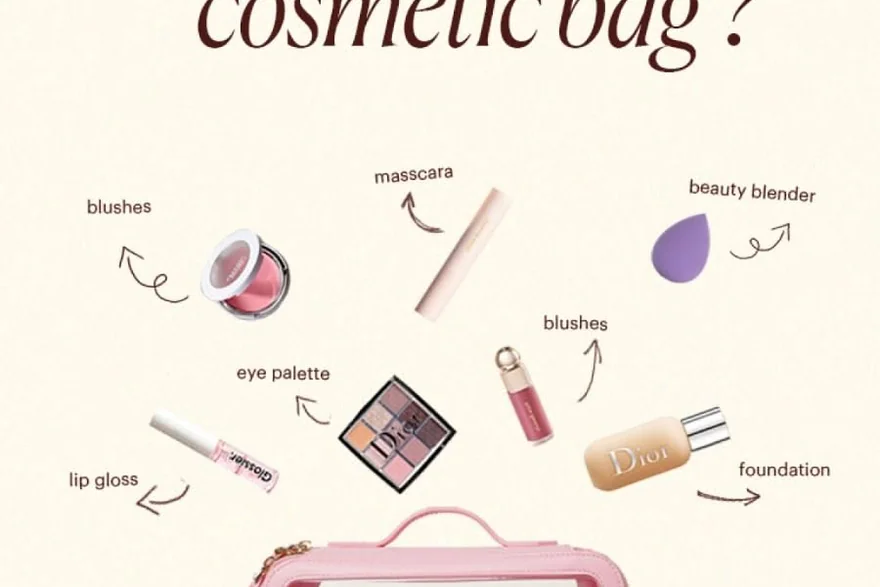
Why Counts Beat Litres as a Capacity Claim
Capacity can be expressed three ways: litres of interior, cubic centimetres of usable payload, or a count of representative items. Only the third means anything to a shopper deciding between two listings, yet it is the one almost nobody derives properly. Litres fail because most people cannot visualise 1.8 litres of cosmetics, and because nominal litres ignore everything discussed below. Counts fail when derived from a single product type, which produces impressive numbers that no real bag will reproduce.
The bridge between litres and counts is packing efficiency. Cosmetics are a hostile mixture of shapes: flat rectangles, squat cylinders, long thin pencils and irregular brush heads. Packed together they leave air gaps, and measuring those gaps in practical fill tests gives an efficiency of roughly 45 to 60 percent, with 55 percent a reasonable planning figure for mixed content. A sparse kit of large flat palettes packs at up to 60 percent; a kit dominated by pens and pencils sits nearer 45, because thin cylinders leave triangular voids between them.
Applying that conversion produces the working rule used throughout this guide: about eleven published items per litre of usable interior volume, or approximately twenty items per litre of effective payload once packing losses are removed. A medium with a usable interior of 1.79 litres therefore predicts around twenty items, and an organised version of the same bag around eighteen after deducting roughly 12 percent for loops, pockets and dividers. That is the figure to round down from, not up.
- Packing efficiency for mixed cosmetics: roughly 45 to 60 percent, plan at 55
- Working rule: about 11 items per litre of usable interior, or about 20 per litre of effective payload
- Small at 18 x 11 x 6 cm: eight to ten everyday items
- Medium at 22 x 14 x 8 cm: around eighteen to twenty items organised
- Large at 26 x 17 x 11 cm: thirty-five to forty items organised
- Organisation features consume a further 8 to 14 percent of usable space
Two further cautions follow from the same arithmetic. First, any count should name its item mix, because twelve lipsticks and twelve brushes are both twelve items and occupy very different volumes - roughly 360 and 264 cubic centimetres respectively. Second, the count must assume the zip closes without strain, since a bag that only closes when pressed is one whose seams will fail early and whose customers will report the defect as a broken zip rather than as an optimistic claim.
Four Item Archetypes and the Capacity Each Requires
Rather than counting units at random, build the bag around a defined user. Four archetypes cover practically the whole market, and each carries a characteristic mix, an average volume per item, and therefore a required capacity. The table below is the practical tool: identify the archetype the line serves, read the required litres, and select the size band that satisfies it with ten to fifteen percent of headroom so customers are pleasantly surprised rather than exactly satisfied.
| User archetype | Characteristic kit | Approx. items | Average volume per item | Capacity required | Smallest band that works |
|---|---|---|---|---|---|
| Minimal everyday | Lipstick, compact, mascara, two pencils, mini balm | 6 items | 40 cm3 | About 0.45 litres | Small gusseted, 18 x 11 x 6 cm |
| Mainstream everyday | Two palettes, foundation, concealer, mascara, four lip products, five brushes, six pencils | 20 items | 48 cm3 | About 0.95 litres | Medium, 22 x 14 x 8 cm |
| Travel and liquids-led | Six 100 ml bottles, two tubes, toothbrush, razor, comb, solid stick | 14 items | 55 cm3 | About 1.15 litres | Medium with 21 x 19 cm clear pocket |
| Enthusiast and collector | Five palettes, four complexion products, ten brushes, twelve lip products, tools | 40 items | 50 cm3 | About 1.95 litres | Large, 26 x 17 x 11 cm |
| Working professional | Twelve palettes, twenty brushes, disposables, tools, mirror | 55 to 60 items | 52 cm3 | About 2.7 litres | Train case, 30 x 20 x 13 cm |
The average volume per item column is the one most often overlooked, and it drives everything else. Averaged across realistic kits it lands between 40 and 55 cubic centimetres, dominated by whatever large items the user carries - one 180 cubic centimetre palette contributes as much volume as six lipsticks. Buyers who claim twenty-five items for a medium have usually assumed an average of 35 cubic centimetres, which happens only when no palette, no bottle and no full-length brush is in the kit.
Travel kits deserve separate treatment because their capacity is governed by rule rather than by preference. A liquids-led kit is capped at a one-litre resealable bag, so roughly six 100 ml containers plus tubes, and the extra capacity in the surrounding bag should be allocated to solid and dry items rather than to more bottles. Specifying a clear pocket of at least 21 by 19 centimetres alongside the overall dimension is what makes that kit usable at a checkpoint, and it is the reason travel capacity and everyday capacity cannot be compared directly.
The professional archetype deserves one caution. On paper its 2.7 litre requirement is met by a train case with 6.05 litres of usable interior, leaving enormous apparent headroom, and that headroom is misleading: without dividers, twenty loose brushes migrate to the bottom of the case and the effective count falls sharply in daily use. Dividers, elastic loops and removable trays are therefore structural requirements for this archetype rather than optional extras.
Headroom is the final consideration in sizing from these rows. If an archetype requires 0.95 litres, selecting the band offering 1.79 litres of usable interior - the medium - looks generous until organisation reduces it to perhaps 1.55, leaving about 60 percent spare rather than 90. That spare capacity is what allows the customer to add the two extra products they bought next month, and it is the reason reorders correlate more strongly with a roomy fit than with a taut one.
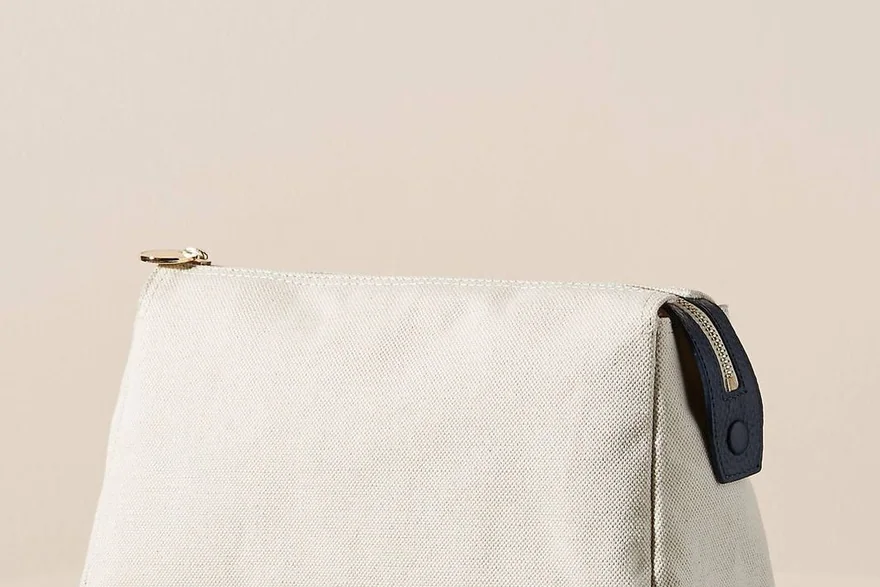
Five Factors That Move the Real Count Away From the Predicted One
Two bags of identical interior volume can differ by thirty percent in real capacity because of decisions taken elsewhere in the design. Predicting the actual figure therefore means applying five adjustments to the arithmetic above. None of them is large alone; together they explain why a calculated claim of twenty-two items frequently arrives in the market as fifteen, and why the honest count should come from a test rather than from a formula.
| Factor | Typical effect on count | Mechanism | Effect available in design |
|---|---|---|---|
| Interior organisation | Minus 8 to 14 percent | Loops, pockets and dividers using volume to buy retrieval | Accept deliberately; publish the organised figure |
| Closure aperture | Minus 5 to 15 percent | Zip length limiting how much the face opens for packing | Extend the zip toward the full perimeter |
| Shell rigidity | Minus 10 to plus 15 percent | Soft shells bulging when full; rigid shells blocking expansion | Coated or structured shell controls bulge but loses give |
| Item shape mix | Minus 20 to plus 15 percent | Flat items packing densely; cylinders leaving voids | Cannot be designed away; test with the real mix |
| Base geometry | Minus 15 to 20 percent for round bases | Circular floors wasting corner area against a square of equal width | Choose a rectangular or boxed base for maximum density |
The cheap way to quantify this row is to build the archetype kit, weigh it, and divide the total item volume by the usable interior volume. Anything below about 45 percent signals that the mix is dominated by cylindrical items and that the real count will sit below the predicted one; anything above 60 percent means flat items dominate and there is room to publish a slightly higher figure without risk. The aperture row surprises people most often. Terminology for specifying closures is standardised in ASTM D2053 zipper terminology, and what matters practically is the relationship between zip length and bag perimeter. A zip stopping three centimetres short at each end of a 22 centimetre opening removes roughly a quarter of the usable mouth, which forces contents in at an angle and typically costs three or four items in observed fill tests. Moving to a full-perimeter closure costs little and is the cheapest capacity increase available.
Base geometry is straightforward geometry rather than opinion. A circular base of 14 centimetres diameter offers about 154 square centimetres, whereas a square of the same nominal width offers 196, so a round-bodied bag of the same quoted size loses roughly a fifth of its base area and with it the space where the heaviest items normally sit. Where a cylindrical look is wanted for shelf presence, widening the diameter by around 12 percent recovers the loss while preserving the silhouette.
Rigidity cuts both ways, which is why it appears with both signs. Soft uncoated shells gain roughly 8 to 15 percent in each dimension when loaded, so the bag will physically accept more than predicted - though contents then shift and rattle, which shoppers read as poor design. Structured shells hold their nominal size, pack predictably, and generally score better in reviews even with a slightly lower maximum count. For most lines the structured penalty is the right trade, provided the published figure reflects it.
Running a Repeatable Fill Test and Writing the Claim
A fill test takes about an hour, needs nothing beyond the retail product mix and a kitchen scale, and produces the only capacity figure that will survive customer scrutiny. Run it on pre-production samples rather than on photos or drawings, because construction details invisible in a rendering - the thickness of the interlining, the depth of a pocket - routinely change the answer by three or four items. Repeat it whenever the construction changes, and keep the photographs as evidence for the listing and for any retailer compliance query.
- Build the archetype kit from real products, not stand-ins, using the archetype table in section two.
- Weigh each item and record its dimensions, then calculate the average volume per item for the mix.
- Fill the bag in the order a person would - largest flat items first, then bottles, then small items into gaps.
- Stop when the zip closes without strain; count the items; repeat three times and take the median.
- Subtract one item, then round down to the nearest five and publish that figure with the mix named.
| Size band | Usable interior | Predicted unorganised count | After organisation and closure losses | Recommended published claim |
|---|---|---|---|---|
| Small gusseted 18 x 11 x 6 cm | 0.82 litres | 9 items | 8 items | Holds around 8 everyday items |
| Medium 22 x 14 x 8 cm | 1.79 litres | 20 items | 18 items | Holds around 18 to 20 everyday items |
| Large 26 x 17 x 11 cm | 3.80 litres | 42 items | 38 items | Holds around 35 to 40 everyday items |
| Train case 30 x 20 x 13 cm | 6.05 litres | 66 items | 60 items | Holds around 55 to 60 items with dividers |
| Hanging organiser, three tiers | 3.30 litres across tiers | 36 items | 32 items | Holds around 30 travel-size items |
The rounding convention matters commercially. Deducting one item from the observed median covers unit-to-unit variation in production; rounding down to the nearest five gives a figure that is easy to remember and impossible to argue with in a review. Publishing holds up to twenty rather than holds twenty items also helps, because it sets the expectation at the tested maximum while leaving the tester appearing conservative. Claims that exceed the median inevitably generate returns labelled not as described, which are far more expensive than the two items of perceived capacity they were chasing.
Retailers sometimes ask for the fill test to be recorded on video as part of supplier approval. That is easy to accommodate and worth volunteering: a thirty-second clip showing twenty items packed and the zip closing smoothly settles listing disputes, retailer audits and customer-service queries with one artefact, and it costs nothing beyond the first shoot.
Finally, hold the claim through production. Capacity falls if the lining thickens, if pockets are sewn deeper or if foam is substituted, none of which is visible in a photograph, and all of which are detectable by re-running the fill test during inspection. Adding one packed check per style to the final random inspection at AQL 2.5 under ISO 2859-1 costs minutes and protects the listing. Where the programme uses dyed-to-match linings across multiple sizes, confirming colour consistency under the ISO 105 colour fastness series keeps several size claims visually consistent across the range as well.
The B2B Customisation View
Buyers who brief cosmetic bags with a physical reference sample always reach an approved prototype faster than buyers who brief with a photograph alone.
Standard terms: 500 pieces minimum per style and colourway, 6–10 working days for sampling (12–15 for complex builds), 35–50 days bulk production, AQL 2.5 inspection under ISO 2859-1, FOB Xiamen, T/T 30 deposit / 70 balance.
The arrangement suits brands that want factory-level pricing discipline without taking on factory-level vendor management for cosmetic bags.
Which Brand Types Benefit Most
Brands should select their capacity claim before selecting their bag size, because the claim is what appears on the listing and the size merely has to satisfy it. Start-up colour brands launching a hero palette usually need only the mainstream everyday archetype, twenty items, which points straight at the medium band at 22 x 14 x 8 cm and keeps the whole launch inside one style and colourway at the 500-piece minimum. Sampling that single configurations typically runs 6 to 10 working days, extending to 12 to 15 where structure or moulded components enter the brief, and once the fill test is run the same method can be reused for every subsequent size without additional tooling.
Retailers and private-label teams get the most value from publishing one consistent archetype across the whole fixture, because shoppers compare sitting sizes against each other in seconds and inconsistent counting methods make the range look incoherent - a small claiming ten and a medium claiming twenty-two reads correctly, whereas eight and twenty-eight invites suspicion. E-commerce sellers benefit most from naming the mix in the listing, since search intent around travel bag for toiletries and similar queries runs to roughly 110,000 monthly searches and those shoppers are filtering by whether their specific bottles and brushes will fit rather than by a bare number. Gift and hospitality buyers should ignore counts almost entirely: their constraint is a predetermined box or tray, and the relevant figure is the clearance around a fixed set of miniature items rather than the maximum the pouch could theoretically swallow.
- Start-up brands: one archetype, usually mainstream everyday, sized to the medium band
- Established brands: publish all sizes against one consistent archetype so the range reads coherently
- Retailers: name the mix in the size claim to reduce size-related returns at the fixture
- E-commerce sellers: item counts aligned to the search intent around travel toiletries and palette storage
- Gift buyers: size to the gift box with clearance rather than to a maximum theoretical count
Frequently Asked Questions
How many items fit in a standard makeup bag?
Around eighteen to twenty everyday items in a medium at 22 x 14 x 8 cm, eight to ten in a small at 18 x 11 x 6 cm, and thirty-five to forty in a large at 26 x 17 x 11 cm. Those figures assume an organised interior and a realistic item mix rather than a single product type.
What is the rule for converting litres into item counts?
Multiply usable interior litres by about eleven, or effective payload litres by about twenty. A medium with 1.79 litres of usable interior therefore predicts close to twenty items. The conversion assumes a packing efficiency of roughly 55 percent and an average cosmetics item near 48 cubic centimetres.
Why do published item counts differ so much between similar bags?
Because the counting method differs. Counting lipsticks alone gives perhaps twenty-eight in a medium, while counting a realistic mixed kit gives eighteen to twenty once palettes, bottles and brushes are included. Always check whether a claim names its mix; unnamed counts are usually category maxima rather than realistic everyday figures.
How much capacity does interior organisation cost?
Typically 8 to 14 percent of usable interior. Brush loops, slip pockets and dividers convert raw volume into retrieval speed, and that trade-off is almost always worth taking, since customers retrieve items daily and rarely need maximum theoretical capacity. Publish the organised figure rather than the open-cavity figure.
Does a round makeup bag hold less than a rectangular one?
Yes, about 15 to 20 percent less for the same nominal width. A circular base of 14 centimetres gives roughly 154 square centimetres against 196 for a square of the same width, so cylindrical designs need about 12 percent larger diameter to match rectangular capacity.
How does zip length affect how much a makeup bag holds?
Aperture governs packability. A zip stopping three centimetres short at each end of a 22 centimetre opening removes roughly a quarter of the usable mouth, typically costing three or four items in observed fill tests. Closure specification is standardised in ASTM D2053 and is one of the cheapest capacity improvements available.
Should capacity be published as litres or as item counts?
Both, with the count leading. Litres allow comparison between two bags on the same page, but few shoppers can visualise 1.8 litres of cosmetics. A line reading 1.8 litres, holds around twenty everyday items works better than either figure alone, particularly when the mix is named.
How much headroom should there be above the archetype requirement?
Around 15 to 20 percent. If the target kit requires about 0.95 litres, choosing a medium with 1.79 litres of usable interior leaves comfortable spare space after organisation reduces the figure. That slack is what lets customers add the two extra products they buy later, which correlates with reorders.
Does a soft bag hold more than a rigid case of identical interior volume?
Physically yes, because uncoated shells expand 8 to 15 percent per axis under load. But contents then shift and rattle, and shoppers read that as poor design. Structured shells pack predictably and generally receive better reviews even with a slightly lower maximum count.
What is the average volume of a cosmetics item?
Between 40 and 55 cubic centimetres averaged across realistic kits. The figure is dominated by large items: a 12-pan palette at 180 cubic centimetres equals six lipsticks. Claims assuming an average nearer 35 cubic centimetres usually exclude palettes, bottles and full-length brushes.
How should a capacity claim be worded to avoid disputes?
Name the mix and round down. Holds around eighteen to twenty everyday items, including palettes and full-size brushes, sets a tested expectation and reads as conservative. Avoid absolute maxima such as up to thirty, because the items that push the total are not the ones buyers actually carry.
Should the fill test be repeated for every colourway?
No, only when construction changes. Colour does not affect capacity, so once the construction is validated the same figure applies across colourways of that style. It should be re-run whenever lining, interlining, pocket depth or closure specification changes, all of which alter interior space invisibly.
How many travel-size liquids fit in a hanging organiser?
Around thirty travel-size items across three tiers, typically twelve bottles up to 100 ml plus eight flat items per tier set. Bottle capacity itself stays capped by the one-litre liquids bag, so extra tiers should be allocated to solid and dry items rather than to additional containers.
What causes capacity to drop between sample and bulk production?
Usually lining or interlining substitution, deeper sewn pockets, or thicker foam added to solve a shape issue. None is visible in a photograph. Running one packed fill check per style at final random inspection under AQL 2.5 detects all three before shipment rather than after returns begin.
Is it acceptable to publish a competitor's stated capacity?
No. Their count was produced against their own item mix and construction. Copying it transfers whatever optimism their method contained onto a different bag, and the discrepancy surfaces in returns labelled not as described, which cost several times the value of the few items apparently gained.
People Also Ask
What is the most accurate way to measure makeup bag capacity?
A physical fill test with the real retail product mix. Fill until the zip closes without strain, count, repeat three times and take the median. Convert litres only as a secondary figure using about eleven items per litre of usable interior, since theoretical volumes ignore packing gaps.
Do organised makeup bags hold fewer items?
Yes, roughly 8 to 14 percent fewer, because loops, pockets and dividers occupy interior volume. The compensation is retrieval: an organised twenty-item bag is usable daily, whereas an unorganised twenty-two-item bag requires emptying to reach the bottom layer, which drives negative reviews.
How many lipsticks fit in a medium makeup bag?
Physically around twenty-eight laid flat, but that is a category maximum rather than a realistic figure. A mixed everyday kit in the same bag holds eighteen to twenty items once palettes, bottles, brushes and pencils are included, and the mixed figure is the one worth publishing.
Should a makeup bag be bought bigger than currently needed?
About 15 to 20 percent above the current kit, since beauty collections grow over the following months and reorder behaviour correlates with having spare room. Going much beyond that reintroduces the shifts and rattles shoppers associate with poor interior design.
Request a Sample or a Written Quotation
Send the silhouette, dimensions, material preference and logo artwork, and the programme team will return a written quotation with MOQ, sampling window, bulk lead time and inspection standard.
Email: service@junyuanbags.com · WhatsApp: +86 177 5002 0688