High Volume Custom Makeup Bags: 10,000+ pcs Production Planning
Executive Summary
High volume custom makeup bags change the planning unit. Above roughly 10,000 pieces a buyer stops planning per piece and starts planning per line-day, per carton and per container, because the constraints that bite are capacity, fabric yardage and shipping geometry rather than unit price. A 10,000-piece order of a 22 x 14 x 8 cm pouch consumes 3,000-4,200 m² of shell fabric across six to ten dye lots, packs into about 167 cartons and fills 16 m³, which is less than half a 20 ft container.
The calendar also expands. Sampling takes 6-10 working days, or 12-15 for complex constructions, and bulk runs 35-50 days, but a 10,000-piece order is rarely finished in one pass: it is cut across two or three production lines and released in two to four shipping lots. Inspection follows ISO 2859-1 at AQL 2.5 with the sample size set by lot size, so a single 10,000-piece lot draws 200 pieces, while four lots of 2,500 draw 125 each and cost more in inspector days.
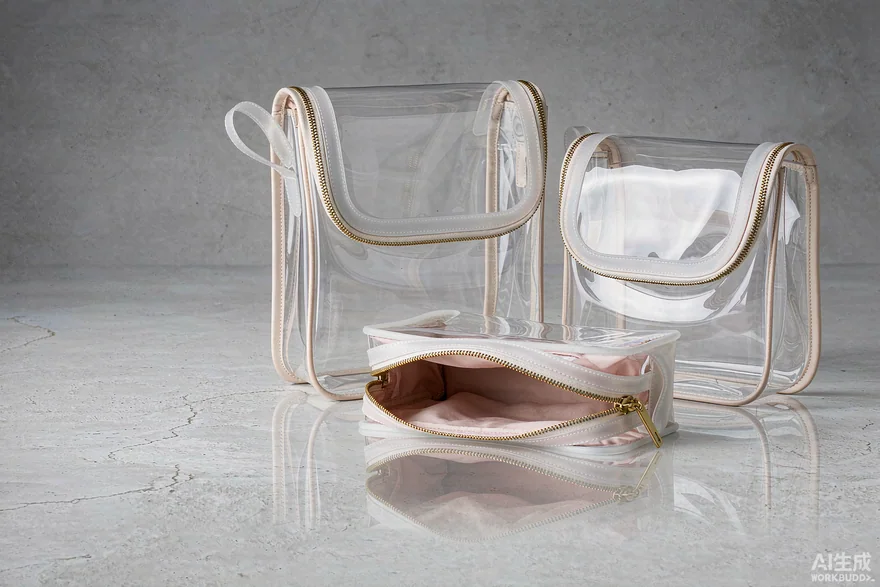
What changes when an order passes 10,000 pieces
Below 2,000 pieces a cosmetic bag order is a purchasing problem. Above 10,000 pieces it becomes a scheduling problem. The questions that decide the outcome are no longer what does one bag cost but which line runs it, how many dye lots the fabric splits into, how many cartons fit a 40 ft high-cube container, and whether the goods ship in one lot or four. Buyers who plan a large order with small-order habits discover the difference at week six, when a shading complaint delays a container that was already booked.
Capacity sets the outer boundary. The production floor coordinated for these programmes carries SGS-verified space of 4,950 m² across 7 production lines and 149 machines, with monthly output capacity of 200,000 pieces. A 10,000-piece order therefore represents roughly 5% of a month, a 25,000-piece order about 12.5%, and a 100,000-piece programme half a month of total output. That last figure is the reason annual programmes are booked as a schedule rather than as a series of independent orders.
Splitting across lines is where consistency starts to leak. Two lines running the same style will produce bags that differ by 1-2 mm in finished dimension, by half a stitch per inch in density, and sometimes by a shade band if the fabric lots were not allocated carefully. The usual answer is to run cutting and sewing on one primary line with a second line reserved for finishing and packing, rather than running two full lines in parallel from the start.
Three planning numbers should be established before the purchase order is signed: pieces per sewing day per line, cartons per container, and dye lots per order. Everything else, including the delivery schedule, the inspection plan and the freight booking, derives from those three. The rest of this article works through each with the figures a buyer can actually use in a planning meeting.
Capacity, line allocation and the production calendar
Line output on a flat cosmetic pouch runs 650-1,100 pieces per line per day depending on the number of operations; a structured vanity case with a framed opening drops to 180-320 pieces per line per day. Those rates assume the line is stable, meaning the fabric is already on hand, the pattern is proven and the first-piece check is complete. A brand new style on its first bulk run will run 15-25% slower for the first two days while operators settle.
| Order size | Recommended line plan | Effective sewing days | Cartons at 60 pcs per carton | Shipping lots and container plan |
|---|---|---|---|---|
| 10,000 pcs | 2 lines: one primary, one rework and finishing | 12-16 | 167 cartons, roughly 16 m³ | LCL or one shared 20 ft; two lots of 5,000 |
| 20,000 pcs | 3 lines with a single zipper lot | 18-24 | 334 cartons, roughly 32 m³ | One full 20 ft; two lots of 10,000 |
| 40,000 pcs | 4-5 lines phased over three weeks | 24-30 | 667 cartons, roughly 64 m³ | One 40 ft high-cube; three lots |
| 100,000 pcs | All 7 lines across a two-month schedule | 45-60 | 1,667 cartons, roughly 160 m³ | Three to four 40 ft high-cube; monthly lots |
Carton geometry deserves a check before the freight quote. A standard export carton of 60 x 40 x 40 cm holds 60 flat pouches at roughly 13-16 kg gross. A 20 ft container holds about 33 m³ and a 40 ft high-cube about 67 m³, which works out to roughly 20,000 pieces and 41,000 pieces respectively for that carton. A buyer who changes the carton to 50 pieces to suit a warehouse shelf height silently reduces container utilisation by around 15% and raises freight per piece. Palletisation matters too: a 1,000 x 1,200 mm pallet takes roughly 20 cartons in five layers of four, so 10,000 pieces is about eight pallets, and a distribution centre that unloads by pallet will charge accordingly.
Inspection planning follows lot definition. Under ISO 2859-1 at general inspection level II and AQL 2.5, a single 10,000-piece lot draws 200 pieces with an acceptance number of 10, while the same quantity presented as four lots of 2,500 draws four samples of 125 pieces with acceptance numbers of 7. The statistical protection is similar, but the inspector days double or triple, at 180-320 USD each, and the paperwork multiplies.
The calendar that results is longer than the 35-50 day bulk figure suggests. Sampling takes 6-10 working days, or 12-15 for complex constructions; fabric procurement for a large order can add 10-20 days before cutting starts because the mill has to produce three to eight lots; bulk runs 35-50 days; inspection and release take 3-6 days; and booking a container adds 5-10 days. A buyer should treat fabric approval as the critical path item, because every downstream date is measured from it. A 40,000-piece programme realistically spans 70-100 days from approved sample to loaded container. Buyers working to a fixed retail date should reverse-plan from the delivery date and add a two-week buffer, because a single dye lot rejected at approval can add 15-20 days with no way to recover it inside the original schedule.
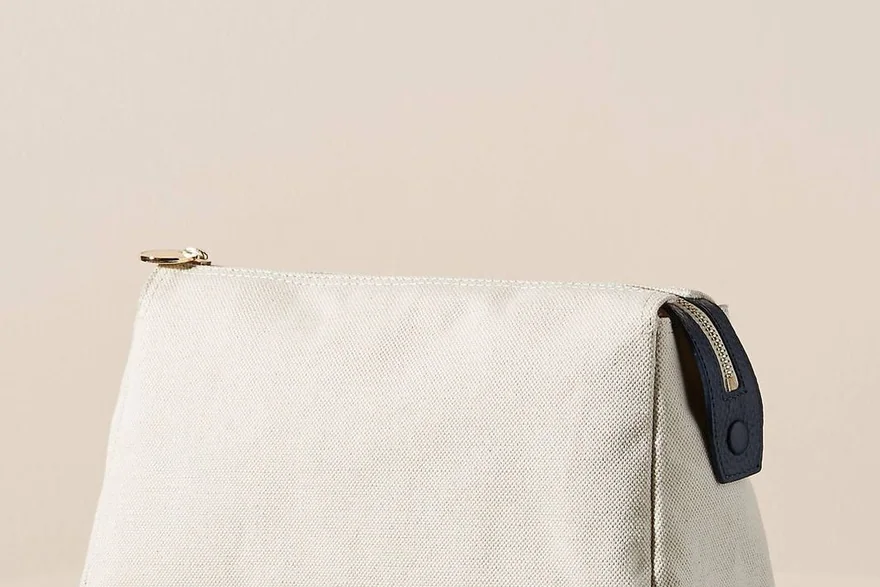
Material, trim and colour consistency at scale
Fabric arithmetic is the first discipline of a large order. A flat pouch at 22 x 14 x 8 cm consumes roughly 0.30-0.42 m² of shell and 0.28-0.36 m² of lining per piece. At 10,000 pieces that is 3,000-4,200 m² of shell and 2,800-3,600 m² of lining. At 210 g/m² the shell alone weighs 630-880 kg, and with cutting waste at 12-22% the buyer should expect the mill order to be 15-25% above the theoretical consumption. That margin is not waste: it covers the marker loss, the shade sequencing between lots, and the few hundred pieces that will be needed for a rework if inspection finds a problem in week five.
- Allocate fabric lots to cartons sequentially and number cartons, so a shade complaint can be traced to one or two lots rather than to the whole order.
- Book the full zipper requirement in one chain production: 10,000 pieces at 0.26 m per bag is 2,600 m, which is one to three chain lots.
- Set a shade tolerance in the specification, typically delta E 1.0-1.5 on dyed fabric under D65 and grey scale 4-5, and agree the reference before cutting.
- Hold a first-piece approval on each new dye lot rather than only on the first, because lot three is where recipes drift.
- Cap any single print run at the point where screen wear shows, commonly 8,000-15,000 impressions depending on mesh and ink.
Colour is the most common large-order failure. Mills produce dye lots of 300-600 m, so a 10,000-piece order spreads across six to ten lots, and adjacent lots can differ visibly when cartons are opened side by side on a retail shelf. Fastness performance is assessed under the ISO 105 series, and the practical controls are a signed shade reference, lot-by-lot approval, and sequential packing so that any single store receives bags from one or two lots rather than eight.
Trim has its own arithmetic. A 260 mm zipper cut per bag consumes 2,600 m of chain at 10,000 pieces; a woven label consumes one unit per bag plus 1-2% spoilage; a metal puller is ordered at 1,000-5,000 piece minimums and should be booked once for the whole programme rather than per release. Shortages discovered at week four are expensive because a replacement trim run adds 15-25 days, which is longer than the remaining sewing window in most plans. The usual safeguard is to book trim at 103-105% of requirement and to confirm the booking in writing before fabric cutting starts, because trim is the item most often ordered late on a large programme.
One further control is worth building into the purchase order for orders above 25,000 pieces: a retained sample from each production day, boxed and dated. Ten boxes of five pieces per day give a buyer a physical timeline of the order, which turns any later quality discussion from an argument about memory into a comparison of objects. Five pieces a day is a rounding error against a 40,000-piece order and it is the cheapest insurance available.
Inspection, packing and phased delivery
The inspection plan for a large order should be written before production starts, not booked the week before loading. Lot definition is the buyer's choice to make: declaring one lot of 10,000 keeps inspection cheap and simple, while declaring four lots of 2,500 gives earlier warning of a drift and isolates a bad day to a smaller quantity. Most programmes above 10,000 pieces choose two or three lots as a compromise.
| Declared lot size | Code letter at level II | Sample size at AQL 2.5 | Accept and reject numbers | Inspector days and typical cost |
|---|---|---|---|---|
| 1,201-3,200 pcs | K | 125 pieces | Accept 7, reject 8 | 1 day, 180-320 USD |
| 3,201-10,000 pcs | L | 200 pieces | Accept 10, reject 11 | 1-2 days, 180-640 USD |
| 10,001-35,000 pcs | M | 315 pieces | Accept 14, reject 15 | 2 days, 360-640 USD |
| 35,001-150,000 pcs | N | 500 pieces | Accept 21, reject 22 | 2-3 days, 360-960 USD |
Packing specification matters more at volume because a small inefficiency multiplies. One piece per polybag, 60 pieces per carton, carton 60 x 40 x 40 cm at 5-ply with a bursting strength of at least 1400 kPa, gross weight capped at 16 kg for manual handling, and a drop-tested corner. Polybags above 0.03 mm thickness need a suffocation warning printed in the destination language for several markets, and that print is a lead-time item, not an afterthought. Carton labelling should be settled at the same time: a shipping mark carrying the style code, colourway, carton number and dye-lot reference, printed on two adjacent sides, is what allows a warehouse to receive 667 cartons without opening them. A 1% packing error on a 40,000-piece order is 400 bags, which is more than the entire first order of most brands.
Phased delivery is how large programmes stay funded. Releasing 40,000 pieces as three lots over three weeks lets the buyer sell from the first lot while the third is still being made, which shortens the cash cycle by three to five weeks. It also changes the payment pattern: under T/T terms of 30% deposit and 70% against the bill of lading, the balance is paid per shipment rather than for the whole order at once, which is worth more to a growing brand than a 1% price concession. Phasing also reduces the size of a mistake: a shade or defect problem found in the first lot of 13,000 pieces affects one third of the order rather than all of it, and the remaining lots can be corrected before they are cut.
Two documents should be exchanged before the first lot ships: a packing list broken down by carton number and dye lot, and a certificate of inspection referencing the same lot numbers. When a shade or defect issue surfaces at the destination warehouse three weeks later, those two documents are what allow a claim to be narrowed to 40 cartons instead of 1,667. A third document is worth requesting on programmes above 25,000 pieces: a daily production record showing pieces made, pieces rejected and the reason codes, which lets the buyer see a problem on day nine rather than at final inspection.
The B2B Customisation View
For buyers building a range of cosmetic bags, the specification sheet doubles as the costing sheet, which is why it is worth getting right in week one.
Programme data for this category: minimum order quantity 500 pieces per style and colourway, sampling in 6–10 working days (12–15 working days for complex constructions), bulk production 35–50 days after sample approval, final random inspection at AQL 2.5 under ISO 2859-1, FOB Xiamen, T/T 30/70.
Because the entity is a sourcing and programme-management company, the buyer deals with one accountable counterpart for specification, sampling, inspection and consolidation.
Which Brand Types Benefit Most
Volume programmes suit buyers who can forecast. A start-up brand rarely needs 10,000 pieces of one style and should not tie up cash in it; the efficient route for that buyer is two or three styles at 500 pieces each and a reorder at 5,000 once the winner is known. An established brand running a seasonal launch or a retail rollout is the natural volume buyer, because the forecast exists and the cost of a stockout exceeds the carrying cost of the extra 20%. A retailer or importer with a private-label range across 40 stores plans in containers rather than pieces and benefits most from phased delivery and carton numbering. A large e-commerce seller with a proven best-seller uses volume to lock a price for the year and to reserve capacity ahead of a peak season. A gift or hospitality buyer commissioning an amenity programme for a hotel group or an airline orders once, in volume, and cares most about carton sequencing and delivery certainty.
- Start-up brands: reach 10,000 through repeat orders, not through one speculative run.
- Established brands: reserve the capacity slot before the artwork is final, because the slot is the scarce item.
- Retailers and importers: specify carton numbering and dye-lot packing so each store receives a consistent shade.
- E-commerce sellers: use phased delivery to match inventory to the sales curve and protect cash.
- Gift and hospitality buyers: fix the carton count and delivery date first, then work back through the 70-100 day calendar. For every buyer type the governing rule is the same: volume rewards forecast accuracy and punishes improvisation. A programme placed with a rolling forecast, a reserved slot and a phased delivery schedule costs less and arrives earlier than the same quantity ordered as three urgent releases. The reverse is equally true: a large order placed without a forecast tends to arrive late, or in the wrong mix, or both.
Frequently Asked Questions
How long does a 10,000-piece cosmetic bag order actually take?
Plan 70-100 days from approved sample to loaded container. Sampling takes 6-10 working days, fabric procurement for three to eight dye lots adds 10-20 days, bulk runs 35-50 days, inspection and release take 3-6 days, and container booking adds 5-10. Buyers who plan only the 35-50 day bulk figure book freight too late. On a structured vanity case the sewing window alone is 18-24 days, so the same plan runs closer to 100 days.
How much fabric does 10,000 cosmetic pouches consume?
A 22 x 14 x 8 cm pouch consumes roughly 0.30-0.42 m² of shell and 0.28-0.36 m² of lining per piece, so 10,000 pieces needs 3,000-4,200 m² of shell and 2,800-3,600 m² of lining. With cutting waste of 12-22%, the mill order should be placed 15-25% above theoretical consumption.
Should a 10,000-piece order run on one production line or several?
One primary line for cutting and sewing, with a second line for finishing and rework, produces the most consistent result. Running two full lines in parallel introduces 1-2 mm dimensional differences and half-stitch density differences between the batches. Parallel lines make sense above about 40,000 pieces, with common fabric and trim lots. Above roughly 40,000 pieces, parallel lines become worthwhile provided the fabric and trim lots are common to both.
How many cartons fit a 40 ft high-cube container of makeup bags?
Around 690-700 cartons of 60 x 40 x 40 cm, which at 60 flat pouches per carton is roughly 41,000 pieces. A 20 ft container takes about 340 cartons, or roughly 20,000 pieces. Changing to a 50-piece carton to suit shelf height can cut container utilisation by around 15%. Structured cases that do not nest can halve those figures, so the carton plan should be confirmed before freight is quoted.
What inspection sample size applies to a 10,000-piece lot?
Under ISO 2859-1 at general inspection level II and AQL 2.5, a lot of 3,201-10,000 pieces draws 200 pieces with acceptance 10 and rejection 11. Declaring four lots of 2,500 instead draws four samples of 125 with acceptance 7, which costs more inspector days but isolates a bad production day. The same quantity declared as four lots of 2,500 draws 125 pieces each, which costs more inspector days but isolates a bad production day.
How many dye lots does a 10,000-piece order split into?
Six to ten, because mills dye in lots of 300-600 m and the order consumes the equivalent of several thousand metres. The control is to approve a shade reference against each lot before cutting, number cartons sequentially by lot, and set a tolerance of delta E 1.0-1.5 so that a dispute has something to be measured against.
When should a buyer reserve production capacity for a large order?
As soon as the style is likely to proceed, and before artwork is final. Against monthly output capacity of 200,000 pieces across 7 lines, a 40,000-piece programme occupies a meaningful share of a month, and slots are allocated in the order they are requested. Fabric and trim procurement can start on a provisional specification. Fabric and trim procurement can start on a provisional specification even while artwork is still being finalised.
What carton specification should a bulk cosmetic bag order use?
Five-ply export carton at 60 x 40 x 40 cm, 60 pieces per carton, gross weight capped at 16 kg for manual handling, with a bursting strength of at least 1400 kPa and corners drop-tested. One piece per polybag, and polybags above 0.03 mm need a suffocation warning printed in the destination language. A shipping mark on two adjacent sides with style code, colourway, carton number and dye lot lets a warehouse receive hundreds of cartons without opening them.
How much zipper chain does a 10,000-piece order need?
At a 260 mm cut per bag, roughly 2,600 m plus 2-3% spoilage, which is one to three chain production lots. Booking the whole programme requirement in one chain run avoids shade variation between releases. A matched tape colour has a 1,000-3,000 m minimum, so small call-offs against a large programme are the expensive way to buy it.
Is phased delivery worth it on a 40,000-piece programme?
Usually yes. Three lots over three weeks lets the buyer sell from the first lot while the third is made, shortens the cash cycle by three to five weeks, and under T/T 30/70 splits the 70% balance across three shipments rather than one. The cost is extra inspection days, roughly 180-320 USD each. The trade-off is extra inspection days at 180-320 USD each, which is small against the cash-flow benefit of three separate balances.
What causes shade banding in a large cosmetic bag order?
Adjacent dye lots that differ by more than the agreed tolerance, packed without sequencing so that one store receives bags from eight different lots. It is prevented by lot-by-lot shade approval, delta E tolerances of 1.0-1.5 on dyed fabric, and carton numbering so a complaint can be traced to one or two lots. Sequential carton numbering by lot is the control, and it costs nothing at packing if it is specified at the purchase-order stage.
How is a moulded EVA vanity case scheduled differently at volume?
Forming capacity, not sewing capacity, becomes the constraint. A moulded shell cycle of 60-120 seconds per cavity sets daily output, so a 10,000-piece case programme needs more cavities or a longer window than a sewn pouch. Sampling also runs 12-15 working days rather than 6-10 because tooling precedes the first shell. Sewing the lining, the zipper placket and the binding around a formed shell is secondary in time but primary in defect risk.
What documents should precede the first shipment of a bulk order?
A packing list broken down by carton number and dye lot, and a certificate of inspection referencing the same lot numbers. Those two documents let a claim three weeks later be narrowed to 40 cartons instead of 1,667, which is usually the difference between a negotiated credit and a rejected container. Without them a claim can only be made against the whole shipment, which usually turns a credit into a rejection.
Does unit price fall materially between 10,000 and 40,000 pieces?
Modestly. Most of the fixed cost is already absorbed by 10,000 pieces, so the improvement from 10,000 to 40,000 is typically in the range of 3-8%, coming from fabric yield, marker efficiency and line stability rather than from material price. Larger gains come from annual framework commitments and reserved capacity. Larger gains come from annual framework commitments and reserved capacity rather than from a single larger order.
What is the risk of booking all 7 lines for one programme?
Concentration. A single delay in fabric, trim or inspection affects the entire output of a month, and any other style the buyer has running is displaced. Programmes above 100,000 pieces are usually scheduled as monthly lots across a two-month window rather than as one booking, which keeps some flexibility for rework and for urgent reorders. Booking monthly lots across a two-month window keeps some flexibility for rework and for an urgent reorder.
People Also Ask
How long does it take to produce 10,000 cosmetic bags?
Bulk production runs 35-50 days after sample approval, but the full door-to-door plan is 70-100 days once fabric procurement, inspection and container booking are included. Sewing itself takes 12-16 days for 10,000 flat pouches across two lines, or 18-24 days for a structured case. Sewing 10,000 flat pouches takes 12-16 days across two lines, or 18-24 days for a structured case.
How many cosmetic bags fit in a 40 ft container?
Approximately 41,000 flat pouches, based on 60 pieces per carton, a 60 x 40 x 40 cm carton and roughly 67 m³ of usable space in a 40 ft high-cube. A 20 ft container holds about 20,000 pieces. Structured vanity cases that do not nest can halve those figures. Confirm the carton plan before quoting freight, because a 50-piece carton can cut utilisation by around 15%.
What is a production lot in bag inspection?
A lot is the quantity declared for inspection under one sample plan. A buyer can declare 10,000 pieces as one lot, drawing 200 pieces at AQL 2.5, or as four lots of 2,500, drawing 125 each. Declaring smaller lots gives earlier warning of a drift but costs more inspector days. Declaring smaller lots costs more inspector days but isolates a bad production day to a smaller quantity.
How do you keep colour consistent on a large bag order?
Agree a signed shade reference and a delta E tolerance of 1.0-1.5 before cutting, approve each dye lot against it, and pack cartons sequentially by lot with carton numbering. Fastness is assessed under the ISO 105 series. Sequential packing means each retail store receives bags from one or two lots rather than eight. Sequential carton numbering means each store receives bags from one or two lots instead of eight.
Request a Sample or a Written Quotation
Send the silhouette, dimensions, material preference and logo artwork, and the programme team will return a written quotation with MOQ, sampling window, bulk lead time and inspection standard.
Email: service@junyuanbags.com · WhatsApp: +86 177 5002 0688