Pre-Production Sample vs Top Sample vs Production Sample
Executive Summary
Pre-production sample, top sample and production sample are three different checkpoints, and confusing them is the most common cause of a bulk order that does not match what was approved. A pre-production sample is built to the frozen tech pack from production-spec materials and locks the specification before bulk is cut. A top-of-production sample is taken from the first pieces of the bulk run itself and catches what changed when the line started. A production or shipment sample is drawn from the finished goods and retained as the reference.
Each one protects a different decision, and each has its own calendar. A pre-production sample takes 6-10 working days, or 12-15 working days for complex constructions, and is couriered in 3-5 days. The top sample appears 1-3 days into a 35-50 day bulk run and needs a decision within 48-72 hours before the line stalls. The shipment sample is pulled at final inspection under AQL 2.5 and travels with the documents for goods shipped FOB Xiamen on T/T terms of 30% deposit and 70% against the bill of lading.
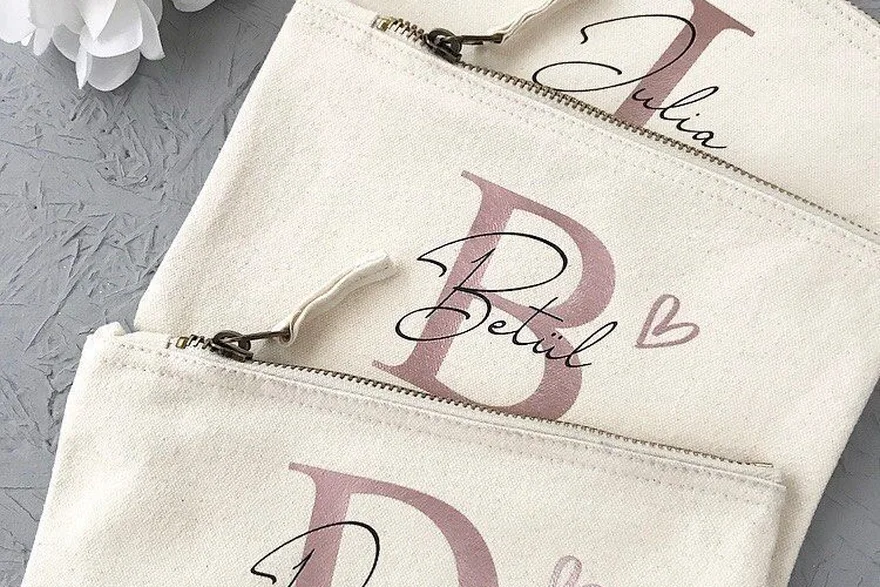
The three samples and the decision each one protects
Sampling in a bag programme is often described as a single step, which is why it so often fails. In practice there are at least five distinct artefacts, and three of them carry a commercial decision. A proto sample proves a shape can be made. A sales sample shows colourways to a buyer or a retail buyer's range review. A pre-production sample proves the specification. A top-of-production sample proves the run. A shipment sample records what was made.
The distinction that matters is between a sample made by hand and a sample made on the line. A proto or sales sample is frequently assembled by a skilled sample room, by one operator, on a general-purpose machine, using whatever fabric is on the shelf. It is a fair representation of the design and a poor representation of the run. A pre-production sample is different in kind, not degree: it is cut from production-spec material, with the production zipper, the production print method and the production stitch specification, because its job is to expose the specification rather than to sell the idea.
The top-of-production sample is the one most programmes skip, and it is the one that catches the faults that no amount of paperwork prevents. Bulk fabric arrives in dye lots that differ from the lab dip; a new roll of webbing behaves differently under the same tension setting; a print screen that was fresh at sampling has softened by the hundredth impression. All of those appear in the first pieces off the line and none of them appear in the pre-production sample, because the pre-production sample was made before the bulk materials were booked.
The shipment sample closes the loop. Two or three pieces are drawn per style and colourway at final inspection, one is retained by the buyer, one by the programme coordinator, and they become the reference for the next order and the evidence if a claim is made. Where a dispute arises months later, the signed and split counter sample is usually the only document that settles it, because photographs do not record hand feel, shade under D65 or zipper drag.
Pre-production sample: what gets locked, and what stays open
A pre-production sample is built after the tech pack is frozen and before bulk cutting begins. Its purpose is to answer one question: does this specification, made the way the line will make it, produce the bag the brand owner approved? Everything needed to answer that has to be in the sample, and anything left out becomes an assumption that will be tested 35-50 days later.
- Production-spec shell fabric with the mill name, article number and weight in g/m2 recorded on the sample card.
- Production zipper: brand, gauge and type, with the chain, slider and stops described in the terms defined by ASTM D2053.
- Production hardware: pullers, hooks, D-rings, eyelets and feet, in the specified plating and colour.
- Production print or logo method at the specified position, dimensioned to within 1.5 mm on the tech pack.
- Final dimensions measured on a filled and an empty bag, against a tolerance of plus or minus 5 mm on soft goods.
- Stitch density of 7-9 stitches per inch, with bar-tacks of 8-10 mm at every strap and handle root.
- Labels, care text, hangtag and barcode on the actual stock that bulk will use, not on a digital proof.
- Packing method: fold, polybag gauge, inner bundle count and the carton the goods will ship in.
What stays open is equally worth naming, because pretending otherwise produces disputes. Bulk fabric shade is the main one: the lab dip approved at sampling is matched by the dye house, and a difference of Delta E 1.2 or less under D65 is a realistic target rather than an exact match. Trim dye lots, print ink batches and carton print runs also vary within tolerance. A written deviation procedure - who can accept a difference, at what measurement, and how it is recorded - is more useful than a demand for perfection.
Cost and quantity are straightforward. A pre-production sample of 2-3 pieces per style costs 40-150 USD depending on construction, is built in 6-10 working days for a standard bag and 12-15 working days for a complex one such as a moulded EVA case or a multi-panel vanity bag, and travels by courier in 3-5 days. Sample fees are commonly credited against the bulk order once it is placed at the 500-piece minimum per style and colourway, but that should be agreed in writing at the quotation stage, not assumed.
Approval should be evidenced, not verbal. The standard method is a dated approval record with photographs of the sample from six angles, a measurement table, and the sample card with materials attached, countersigned by the brand owner's technical contact. One piece is then sealed and retained. Colour assessment is done under controlled lighting with grey-scale references, and the methods published by AATCC give the vocabulary for any fastness concern raised at this stage. Zipper specification is best written using the terminology in ASTM D2053, so that a sample note about a slider or a bottom stop means the same thing to both sides.
A rejected pre-production sample is cheap in itself and expensive in time. Each correction loop adds 4-7 working days for a re-sample, plus courier transit, so two rounds can move a delivery date by more than two weeks. The practical defence is completeness at the point of release: a tech pack with every dimension, material, hardware reference and tolerance written down, reviewed once before sampling starts rather than corrected after the sample arrives.
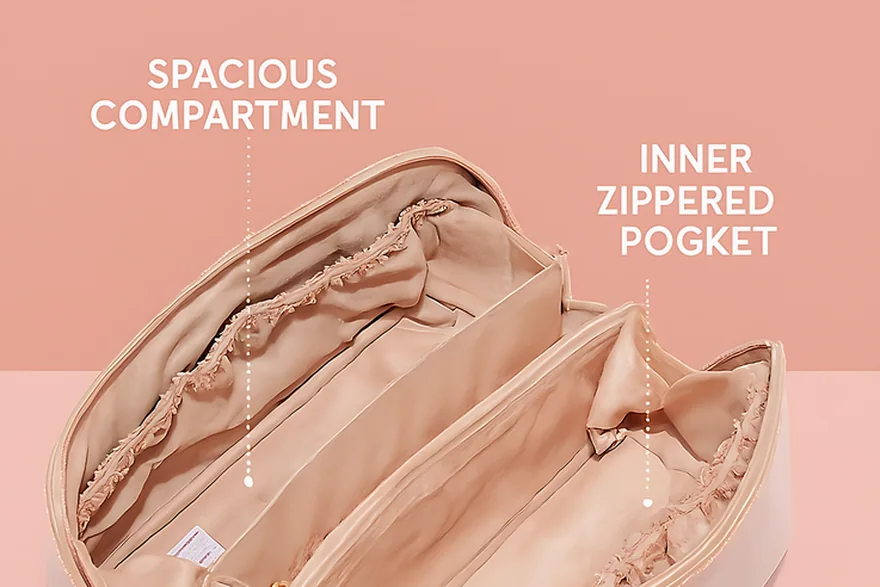
Top-of-production sample: the run's first pieces under the microscope
Top-of-production, usually shortened to top sample or TOP, is drawn 1-3 days into the bulk run, once the line is set and the first units are complete but before the run has gathered pace. Five to ten pieces are taken, not one, because the purpose is to see variation rather than to see a bag. The table below is the check list that makes the exercise objective.
| Attribute | Method on the top pieces | Tolerance | Action if outside |
|---|---|---|---|
| Bulk fabric shade | Spectrophotometer against the sealed pre-production piece under D65 | Delta E 1.2 or less | Re-dye the lot, or approve a recorded deviation |
| Dimensions | Steel rule on three pieces laid flat | Plus or minus 5 mm soft, 3 mm moulded | Stop the line and reset the pattern or tool |
| Logo or print position | 0.5 mm scale under raking light | Plus or minus 1.5 mm | Reset the jig and re-check ten pieces |
| Stitch density | Stitch counter over 25.4 mm on a main seam | 7-9 stitches per inch | Re-tension the machine and re-check |
| Zipper action | 20 open and close cycles plus a slider lock test | No skipping, lock holds | Swap the slider batch or the zipper lot |
| Seam strength | Pull test on a witness strip from the same run | 120 N per 5 cm on 600D | Add binding or raise stitch density |
| Lining cleanliness | Visual at 1 m under D65, inside and out | No oil, no pen marks, no loose threads | Line cleaning before the run continues |
| Odour | Smell test after 24 hours of airing | No solvent or adhesive odour | Extend airing to 48-72 hours before packing |
| Labels and hangtag | Compare with the approved trim layout | Exact match to the approved text | Stop applying trim and reprint |
Speed matters more at this checkpoint than at any other. The line is running, materials are committed and, on a 35-50 day programme, a week lost here is a week lost from the delivery date. The realistic service level to aim for is a decision within 48-72 hours of the top pieces being sent, which means the courier and the photographs should go out on the same day and the brand owner's technical contact should be named in advance rather than found when the parcel lands.
The top sample is also where the inspection protocol gets its first test. The same defect definitions and the same tolerances that will be applied at final inspection under AQL 2.5 should be applied to the top pieces, so there is no gap between what was approved at the start of the run and what is counted at the end of it. The sampling procedures for that final check are set out in ISO 2859-1, and a buyer who has already seen the protocol applied once, on ten pieces, is far better placed to read the report on 200.
Two findings recur. The first is internal shade variation: panels cut from different rolls of the same dye lot read differently on a large bag, which is why nested cutting and roll numbering matter and why a top sample of one piece will never reveal it. The second is hardware inconsistency: a plating batch of hooks or pullers can vary a full grey-scale step within a single delivery, so the top pieces should be checked against the sealed reference for hardware colour as well as for fabric.
Sample matrix, approval workflow and a calendar that holds
Set out as a matrix, the sample types differ by when they are made, how many pieces they involve, who signs for them and how long they take. That matrix is the planning tool for the whole pre-production phase, and it is worth publishing at the start of a programme rather than discovering sample by sample.
| Sample type | Made when | Pieces | Who signs | Working days |
|---|---|---|---|---|
| Proto or shape sample | After the sketch, before the tech pack | 1-2 | Design | 5-8 |
| Sales or showroom sample | After first tooling, for range review | 1-3 per colourway | Merchandising or buying | 6-10 |
| Lab dip or strike-off | Before the pre-production sample | 1 card per colour | Design or technical | 3-5 |
| Pre-production sample | After tech pack freeze, before bulk cutting | 2-3 | Brand owner technical | 6-10, or 12-15 complex |
| Top-of-production sample | First pieces of the bulk run | 5-10 | Brand owner technical | 1-3, inside the bulk run |
| Shipment or production sample | Drawn at final inspection | 2-3 per style and colourway | Retained by both parties | At inspection |
| Counter or sealed sample | Split from an approved piece | 2 halves | Both parties | None |
Read as a calendar, a standard programme looks like this. Day 0: tech pack, artwork and trim specifications released. Days 1-10: pre-production sample built, with lab dips approved inside that window. Days 11-13: approval record signed, sample fee agreed against the bulk order, one piece sealed. Days 14-18: courier transit. Bulk starts after approval and runs 35-50 days; the top sample is taken 1-3 days into that run and approved within 48-72 hours. Final inspection takes place when 80-100% of the order is packed, at AQL 2.5 under ISO 2859-1, and the balance of 70% is paid under T/T terms against the bill of lading for goods shipped FOB Xiamen.
Three practices keep the calendar intact. First, approve on measurements rather than on impressions: a dated record with a measurement table beats a photograph every time. Second, name the approver and a deputy before sampling starts, because a 72-hour decision window disappears the moment the only signatory is on holiday. Third, keep the sealed samples for the life of the programme, 12-24 months, stored flat at 20-25 C and 55-60% relative humidity away from light, since a faded reference sample is no reference at all.
The counter sample is cut or marked so that each party holds half of the same approved piece, and both halves are signed across the division. When a dispute arises about shade, hand feel or zipper drag months later, the two halves are brought together and compared under the same light. No photograph, no email and no verbal approval carries the same weight in that conversation.
Digital approval has shortened the loop without removing the discipline. A photographed sample sent with a measurement table can be approved inside a day, while a sample sent without measurements sits in an inbox until somebody finds a ruler. Buyers who approve on data rather than on impressions also find that repeat orders need fewer rounds, because the specification has been written down once and reused.
Samples sent by courier need the same paperwork as a small shipment. A commercial invoice should declare the sample charge rather than the eventual unit price, because duty is assessed on the declared value, and a parcel marked as having no commercial value invites a customs hold rather than a release. A sample sitting in a customs warehouse for a week has already cost more than the courier fee.
The B2B Customisation View
Programmes for cosmetic pouches, vanity cases and beauty organisers move fastest when the artwork is supplied as vector files and the Pantone references are confirmed before sampling starts.
Budgeting and scheduling inputs: MOQ 500 per style and colourway; sampling 6–10 working days, extended to 12–15 for lined, moulded or hardware-heavy builds; bulk 35–50 days; pre-shipment inspection at AQL 2.5 per ISO 2859-1; FOB Xiamen; T/T 30/70.
QUANZHOU JUNYUAN BAGS is structured as a sourcing and programme-management company, which lets a buyer compare materials across several SGS-verified production lines inside one quotation.
Which Brand Types Benefit Most
Start-up brands most often skip the top sample, because the pre-production piece looks right and the run appears to be under control. That is the wrong economy: a top sample costs a courier fee and two days, while a bulk run that has drifted on shade costs the whole order. Established brands with a technical team usually run the full matrix and add their own approval gates, and they benefit from keeping the same sample specification across seasons so that comparisons are meaningful. Retailers placing private-label programmes should insist that the pre-production sample carries the actual retail trim, including the barcode and the composition label, because a trim error discovered after bulk is packed is a re-labelling cost rather than a sample correction. E-commerce sellers should use the top sample to check the things that drive returns - zipper drag, lining odour and how the bag sits when filled - since those are exactly the attributes a flat photograph cannot show. Gift and hospitality buyers working to a fixed event date should build the 48-72 hour top-sample decision window into the schedule in writing, because a line that waits for an approval it never receives will simply be rescheduled behind another customer's run. Sample discipline also shapes the relationship with the retail buyer. A brand that can produce a sealed counter sample, a measurement table and an inspection report on request is a brand that gets listed again, because the retailer's own quality team can audit it without a site visit. That file costs nothing to keep and is often the difference between a one-season trial and a standing range.
- Start-up brands: always take the top sample; it costs a courier fee and protects the whole order.
- Established brands: reuse one sample specification across seasons so comparisons stay valid.
- Retailers: require real retail trim on the pre-production sample, not a digital proof of it.
- E-commerce sellers: use the top sample to check zipper drag, odour and filled shape, the three return drivers.
- Gift and hospitality buyers: write the 48-72 hour top-sample decision window into the event schedule.
Frequently Asked Questions
What is a pre-production sample for a custom cosmetic bag?
A pre-production sample is a bag built to the frozen tech pack using production-spec fabric, hardware, zipper, print method and trim, made before bulk cutting begins. Two or three pieces are produced in 6-10 working days, or 12-15 working days for complex constructions. Its purpose is to prove the specification rather than the idea. Materials used in the sample should be recorded on a sample card, because that record is what the bulk lot is matched against.
How is a top-of-production sample different from a pre-production sample?
A pre-production sample is made before bulk materials are booked, while a top-of-production sample is taken from the first 5-10 pieces of the bulk run itself, using the bulk fabric dye lot and the bulk trim. It catches drift in shade, stitch tension, print position and hardware batch that cannot appear in a pre-production piece. A pre-production sample proves the specification; a top sample proves the run.
What is a shipment or production sample used for?
Two or three pieces are drawn per style and colourway at final inspection and retained by both parties as the record of what actually shipped. They are used to verify repeat orders, to compare against a future delivery and as evidence if a claim is made. Unlike the top sample, they are a record rather than a decision point.
How many pieces should a pre-production sample include?
Two or three pieces per style is standard. One is sent for approval, one is retained on the production floor as the working reference and the third, where made, covers a second colourway or a filled-bag check. Fewer than two leaves no reference behind once the parcel has been opened and handled. A third piece is useful where the bag will be shown filled, since a filled shape reveals different faults.
When is a top-of-production sample pulled during a 35-50 day bulk run?
The top sample is taken 1-3 days into the run, once the line is set and the first complete units exist but before output has ramped up. Five to ten pieces are drawn so that variation between pieces can be seen. The brand owner then has a 48-72 hour decision window before the line has to move on.
Who signs off each sample type in a bag programme?
A proto or shape sample is signed by design, a sales sample by merchandising or buying, the lab dip by design or technical, and both the pre-production and the top-of-production samples by the brand owner's technical contact. The counter sample is signed by both parties across the division. Naming a deputy approver avoids a stalled line. Naming the approver in the tech pack avoids the delay of finding one when the parcel lands.
What does a pre-production sample cost and is the fee refundable?
A pre-production sample typically costs 40-150 USD per style depending on construction, plus 35-80 USD for international courier over 3-5 days. Fees are commonly credited against the bulk order once it is placed at 500 pieces per style and colourway, but the credit should be confirmed in writing at quotation stage rather than assumed. Complex constructions sit at the top of that range, because tooling and hand work both add cost.
Can a pre-production sample be made before the tech pack is finished?
No. Anything made before the specification is frozen is a proto or sales sample, regardless of what it is called, and it cannot be used to approve a specification that did not exist when it was built. Approving from a proto is the single most common cause of a bulk order that differs from what the brand owner believes was agreed.
What is a sealed or counter sample and why keep two halves?
A counter sample is an approved piece divided so that each party holds half, with both halves signed across the division. Months later, when shade, hand feel or zipper drag is disputed, the halves are brought together and compared under the same light. A photograph cannot settle those questions, and a reference held by one party alone carries little weight.
How is colour checked between the pre-production sample and the bulk fabric lot?
Both are read with a spectrophotometer under D65 with a 10-degree observer and the difference expressed as Delta E. A tolerance of Delta E 1.2 or less between the approved piece and the bulk lot is a realistic target for soft goods. Comparisons should never be made under shop lighting, which returns a different number from the same pair of panels.
What happens if the top-of-production sample fails approval?
The line is stopped, the cause is identified against the check list - pattern, jig, machine tension, material batch - and a corrected set of pieces is produced and re-submitted. The cost is lost line time and, if the fault is in the material, a replacement fabric or trim lot. A prompt 48-72 hour decision is what keeps that cost small.
How long does a buyer have to approve a top sample before the line stalls?
48-72 hours is the working window. Materials are committed, the line is staffed and the 35-50 day bulk schedule has no slack built in for an open approval. Sending photographs the same day the pieces are couriered, and naming the approver in advance, is what makes that window achievable in practice. Photographs sent on the day the pieces leave make that window realistic even across time zones.
What is the difference between a sales sample and a pre-production sample?
A sales sample is built to show a design and a colourway to a buyer, often by hand in a sample room, using whatever fabric is available. A pre-production sample is built on production tooling from production-spec materials to prove the specification. A sales sample can be approved commercially; only a pre-production sample should be approved technically. A sales sample can be shown to a retail buyer before any specification exists at all.
Can a sample fee be credited against a 500-piece order?
In most programmes yes, once the bulk order is placed at the minimum of 500 pieces per style and colourway. The credit is normally applied to the deposit invoice under T/T terms of 30% deposit and 70% against the bill of lading. Because practices vary, the credit should appear on the quotation rather than being requested after the sample is approved.
What should be photographed before a sample is couriered overseas?
Six angles - front, back, both sides, base and interior - plus a close-up of the logo, the zipper, the hardware and every label, with a scale in frame and a measurement table attached. Photographs should be sent the same day the parcel leaves so the approval clock starts immediately rather than on arrival. A short video of the zipper being opened and closed records drag and sound better than any still image.
How does AQL 2.5 inspection relate to the production sample?
The shipment sample is drawn during the final random inspection carried out at AQL 2.5 under ISO 2859-1, so the two happen together. The same defect definitions and tolerances applied to the top-of-production pieces should be applied at that inspection, which is what makes the shipment sample a valid record of a lot that passed a defined test.
People Also Ask
What does PP sample mean in manufacturing?
PP sample is short for pre-production sample: a unit built to the frozen specification from production-spec materials before bulk cutting starts. It is made in 6-10 working days for a standard bag and 12-15 for a complex construction, and it is the sample that technically approves the specification rather than the design. It is the sample a technical approver signs, rather than the one a buyer admires.
What is a top sample?
A top sample, or top-of-production sample, is a small group of 5-10 pieces taken from the first units of the bulk run, 1-3 days in. It is checked against the sealed pre-production piece for shade, dimensions, print position, stitch density and zipper action, and it needs a decision within 48-72 hours. It is the last chance to correct a run before the whole bulk quantity is committed.
Why are pre-production samples important?
They are the last point at which a specification error is cheap to fix. After a pre-production sample is approved, bulk materials are booked and cut, so a mistake costs the run rather than a sample. Approving on measurements, with a dated record and a retained sealed piece, is what makes the approval enforceable later. They also fix the reference used by the top sample and by the final inspection.
How many samples should a buyer request before bulk production?
Two, as a minimum: a pre-production sample of 2-3 pieces to approve the specification, and a top-of-production sample of 5-10 pieces to approve the run. A proto or sales sample comes earlier for design and colourway decisions, and a shipment sample of 2-3 pieces is retained at final inspection. Each type answers a different question, so no one of them substitutes for another.
What is the difference between a counter sample and a shipment sample?
A counter sample is an approved piece split in two and signed by both parties, used as the standing reference for the programme. A shipment sample is drawn from the finished lot at final inspection and records what was actually shipped. One is an agreement about the standard, the other is evidence of the delivery. A programme should hold both, since one governs future orders and the other documents the last one.
Request a Sample or a Written Quotation
Send the silhouette, dimensions, material preference and logo artwork, and the programme team will return a written quotation with MOQ, sampling window, bulk lead time and inspection standard.
Email: service@junyuanbags.com · WhatsApp: +86 177 5002 0688