How to Clean a Cosmetic Bag: Complete Care Guide by Material
Executive Summary
The question owners ask about how to clean a cosmetic bag is which method is safe, and the answer is that the method follows the material, not the stain. A canvas pouch tolerates a wet brush and a pH-neutral detergent; a coated or laminated shell does not tolerate solvents at all; a moulded EVA vanity case should never be machine washed; and a printed logo on any of them is the first thing an aggressive cleaner destroys. The safe universal sequence is empty, dry-brush, spot-test, clean, rinse, air-dry.
The second half of the answer is what to avoid. Acetone and nail polish remover dissolve polyurethane and PVC coatings and attack acetate and printed linings. Bleach strips dye and weakens thread. Alcohol lifts prints and transfers. Heat from a tumble dryer or a radiator warps moulded shells and delaminates bonded layers. Where a solvent could damage a fabric, this guide says so explicitly rather than suggesting a stronger product. A pH-neutral detergent, lukewarm water and a soft cloth handle almost every case that can be handled at all, and anything they cannot remove is usually permanent.
Why cosmetic bag care follows the material, not the stain
A cosmetic bag is one of the few personal items that is asked to contain liquids, powders, oils and pigments and then be cleaned as though none of that ever happened. Foundation, lipstick, nail polish, perfume, sunscreen and hair product all behave differently on a surface, and the same stain behaves differently on canvas, on coated polyester, on a moulded EVA shell and on leather trim. Cleaning advice that ignores the material is the most common reason a bag is ruined by the person trying to save it.
The safe sequence is the same for every material, and most damage happens because one step is skipped. Empty the bag completely and brush out loose powder and debris before any liquid is applied. Identify the material of the shell, the lining and any trim. Spot-test the chosen cleaner on a hidden area and wait for it to dry. Clean from the outside of the stain inward. Rinse or wipe away residue. Dry the article open, in moving air, away from direct heat and direct sun.
Cosmetic bags are also multi-material objects, which is the second trap. A pouch with a coated polyester shell, a printed polyester lining, a metal slider and a leather puller has four care requirements in one article, and the most fragile component sets the limit. A method that is safe for the shell will still destroy the print on the lining or dull the plating on the slider, so the rule is to treat the whole bag at the tolerance of its most delicate part.
- Empty and dry-brush first; applying liquid to loose powder turns a dust problem into a paste problem.
- Identify shell, lining, coating and trim before choosing a method rather than after the damage appears.
- Spot-test on a hidden area and let it dry, because some coatings cloud only once they are dry.
- Work from the outside of a stain inward to avoid spreading pigment into clean fibres.
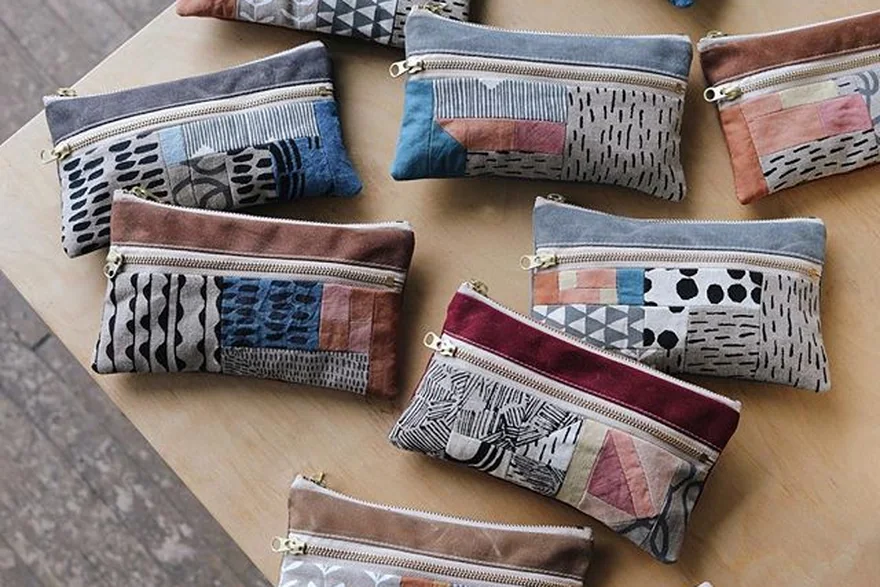
Cleaning canvas, nylon and polyester cosmetic bags
Uncoated woven shells are the most forgiving category. Canvas, cotton twill and heavy polyester can take water, a pH-neutral detergent and a soft brush, which handles most powder and pigment soiling. The method is to mix a small amount of detergent in lukewarm water, apply with a soft cloth or a soft brush in circular movements, work the stained area from the outside inward, then wipe with a clean damp cloth to remove detergent residue. Residue left in the fabric attracts dirt and is why a cleaned bag can look worse two weeks later.
| Material | Safe method | Temperature and tools | Avoid |
|---|---|---|---|
| Cotton canvas, 10-16 oz | pH-neutral detergent, soft brush, damp wipe | Lukewarm water, soft brush, lint-free cloth | Bleach, hot water above 40 C, stiff scrubbing |
| Nylon, 210D-420D | Mild soap solution, gentle sponge, air dry | Lukewarm water, soft sponge | Acetone, high heat, tumble drying |
| Polyester, 300D-600D | Detergent solution, soft brush, rinse wipe | Lukewarm water, soft brush | Solvent cleaners, bleach, abrasive pads |
| Printed polyester lining | Damp cloth only, no rubbing on the print | Cool water, soft cloth | Alcohol, solvent wipes, scrubbing the print |
| Mesh pockets | Rinse under cool running water, press dry | Cool water, no brush on the mesh | Hot water, which deforms the mesh |
| Elastic loops | Wipe with a damp cloth, air dry | Cool water, cloth only | Solvents, which destroy elastic recovery |
Oil-based cosmetics need a different first step from powder. Loose powder, eyeshadow and blush should be brushed out dry and lifted with a barely damp cloth; adding water first drives pigment into the weave. Oil-based foundation, lip balm and sunscreen should be blotted with an absorbent cloth to remove as much as possible before any water is applied, because water alone will spread an oil film rather than remove it. On an uncoated woven shell, a small amount of mild detergent worked into the oil spot and left for a few minutes before wiping is usually sufficient.
Machine washing is the question that comes up most often and the answer depends on construction rather than on fabric. A single-layer cotton canvas pouch with no interlining, no printed logo and no metal hardware can survive a gentle cold cycle in a mesh laundry bag, though hand cleaning is still safer. Anything with a foam interlining, a bonded panel, a printed logo, a leather puller or a moulded shape should not be machine washed, because agitation delaminates bonded layers and tumbles hardware against the shell.
Drying is where most fabric bags fail after a successful wash. A cosmetic bag should be dried open, upside down where possible, in moving air at room temperature, with the lining pulled out so the interior is exposed. Direct heat is the enemy: a radiator, a hairdryer or a tumble dryer shrinks canvas, warps any shaped panel and weakens the adhesive in a bonded seam. Direct sunlight fades dye, which is why colour fastness to light is a tested property rather than an assumption; the relevant family of test methods is maintained by ISO at ISO 105 colour fastness.
One further point about colour: if a lining wipes onto a pale cloth while being cleaned, the dye is migrating and no amount of further cleaning will fix it. That is a property of the material, not of the method, and it is measured by rubbing fastness tests in the same ISO 105 family and by the methods published by AATCC at AATCC test methods. The practical response is to switch to damp-only cleaning and accept that the article will keep transferring colour until it is replaced.
Coated, laminated and moulded shells: where solvents destroy the surface
- Acetone and nail polish remover dissolve polyurethane and PVC coatings and attack acetate linings - never use them inside a bag
- Alcohol-based wipes and hand sanitiser lift prints, cloud coatings and can strip a transferred logo
- Bleach strips dye, weakens thread and leaves a permanent ring on a coloured coated surface
- Abrasive pads and stiff brushes scratch a coating, and scratches on a coated surface cannot be repaired
- Heat above room temperature softens a coating and can block two coated surfaces together
- Solvent-based stain removers marketed for hard surfaces are the fastest way to ruin a laminated panel
A coated or laminated shell is a fabric with a polymer film on one side, and the film is the part that fails. Polyurethane and PVC coatings are dissolved or dulled by solvents, softened by heat, and permanently scratched by abrasion. That is why the correct method for a coated cosmetic pouch is the mildest one that works: a soft cloth with lukewarm water and a small amount of pH-neutral detergent, wiped rather than rubbed, followed by a clean damp wipe and immediate drying with a soft cloth.
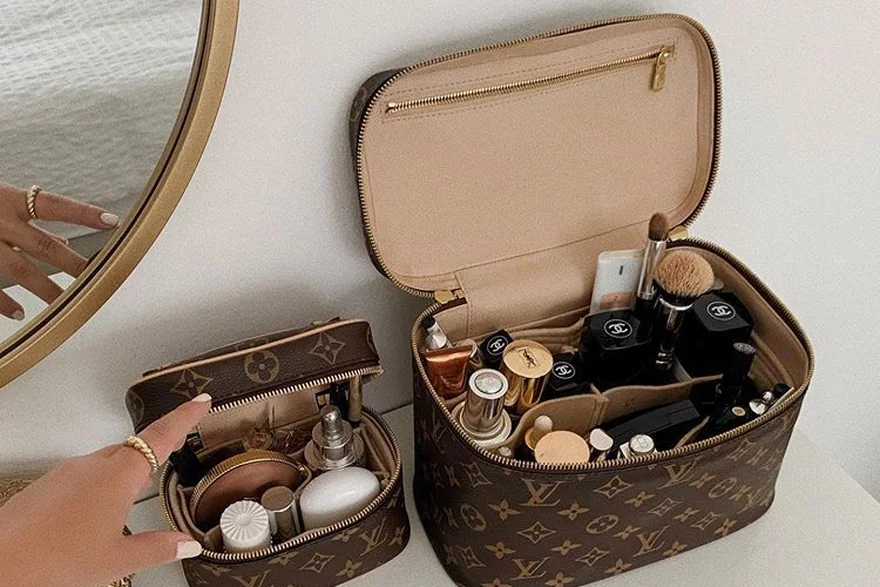
For a moulded EVA or similarly moulded vanity case, the method is simpler still because the surface is non-absorbent. Wipe the shell with a damp cloth, use a soft brush on textured areas and on zip teeth, and dry immediately. Do not submerge a moulded case that has a fabric lining, because water trapped between the shell and the lining will not evaporate and will produce odour within days. Do not machine wash it under any circumstances; agitation cracks moulded corners and deforms the shape permanently.
Coated fabrics have their own test vocabulary and it is worth knowing which properties matter here. Coating adhesion, blocking resistance at elevated temperature, and resistance to cracking under flex are all measured by standard methods; the reference for coated fabrics is published by ASTM at ASTM D751 for coated fabrics. A bag that passes those tests will tolerate normal wiping; a bag that has never been tested may cloud after a single solvent wipe, and there is no way to reverse it.
Printed logos, heat transfers and metallic finishes are the most fragile elements on any cosmetic bag and the ones owners clean most aggressively. Alcohol, solvent wipes and abrasive pads lift a transfer and dull a foil. The safe approach is to clean around the marked area rather than across it, using a barely damp cloth and no pressure, and to accept a mark rather than remove the branding. Where a logo sits on a coated panel, treat that panel as uncoated for cleaning purposes: water, mild detergent, immediate drying.
Sticky or tacky coating is a different problem and indicates the coating is degrading rather than dirty. Once a polyurethane coating begins to hydrolyse it becomes tacky and eventually peels, and no cleaning method reverses it. Powder can be used to make the surface manageable temporarily, but the article is at the end of its life. This is worth knowing when specifying a programme: coating hydrolysis is a storage and age issue, and a case stored damp in a sealed carton will degrade faster than one stored dry and open.
Leather trim, linings, zips, odour, drying and storage
Leather trim and pullers need less intervention than owners expect. Wipe with a slightly damp soft cloth, dry immediately with a second cloth, and leave it there. Leather does not need soaking, and water is what drives oil out of the grain and leaves a darker ring. Saddle soap, solvent cleaners and household wipes all strip finish and should be avoided. Where a leather element has absorbed oil from a cosmetic product, blot rather than rub, and accept that the mark will soften rather than disappear over time.
| Component | Symptom | Safe response | Never do this |
|---|---|---|---|
| Metal zip, stiff to pull | Grit and powder in the teeth | Brush the teeth dry, then wipe with a damp cloth and dry | Apply oil or grease, which attracts more powder |
| Zip, slider separated | Slider off the tape | Refit at the bottom stop and check both tapes are seated | Force the slider, which spreads the tape |
| Lining, colour on the cloth | Dye migrating under a damp wipe | Switch to damp-only cleaning and accept the loss | Use solvent, which spreads the dye further |
| Interior, cosmetic odour | Perfume or product smell retained | Air open in moving air, then a sachet of absorbent powder overnight | Spray fragrance into the bag to mask it |
| Interior, mould or mildew | Dark spotting in a damp bag | Dry fully, brush outdoors, wipe with a diluted mild solution and retest | Close and store a bag that is still damp |
| Leather trim, dull and dry | Finish dried out | Wipe with a barely damp cloth and dry at once | Soak, or use solvent cleaners and saddle soap |
| Elastic loops, relaxed | Loops no longer grip | Replace the elastic, or retire the panel | Apply heat, which destroys elastic recovery |
Odour is usually a moisture problem rather than a soiling problem. A cosmetic bag that smells of perfume or product has retained volatile compounds inside a lining, and the response is air rather than fragrance: open the bag fully, pull the lining out, and leave it in moving air away from sunlight for a day or two. An open sachet of absorbent powder placed inside a sealed bag overnight helps, followed by brushing or vacuuming the powder out. Spraying a fragrance into a bag to mask an odour adds compounds to the problem.
Mould is the serious version of the same issue and requires the bag to be dried completely first. Brush loose growth off outdoors so spores are not spread through the house, then wipe the affected area with a cloth and a mild detergent solution, and dry immediately and thoroughly. Anything that has been mouldy should be spot-tested again before it is used, because a lining that has been colonised once will do so again if it is stored damp. A bag with mould through a bonded foam layer generally cannot be recovered.
Storage between uses is the cheapest form of care. Store a cosmetic bag empty, dry, open and out of direct sunlight, with the zip closed so the article holds its shape but the interior is not sealed. Avoid stacking heavy items on a moulded case, because a moulded corner will take a permanent set under load. Where a bag is stored for a season, place it loosely rather than compressed, and check it once during storage rather than discovering a problem at the point of use.
For programmes, care instruction is a specification item rather than an afterthought. A care label or a printed card stating the material, the safe cleaning method and the drying instruction helps an owner keep the article in service and supports any repair or reuse claim attached to it. Because inspection to AQL 2.5 under ISO 2859-1 confirms only that the shipped article matches the approved sample, the care information is what carries the specification into the owner's hands.
The B2B Customisation View
Every programme for cosmetic bags begins with a written brief: target retail price, filling volume, closure type, print method and the compliance market the goods will be sold in.
Commercial parameters stay fixed across the range: MOQ 500 pieces per style and colourway, prototype turnaround 6–10 working days (extended to 12–15 for multi-panel or moulded builds), bulk lead time 35–50 days from approved sample, AQL 2.5 inspection to ISO 2859-1, FOB Xiamen, T/T 30 deposit and 70 against bill of lading.
Working as a sourcing partner rather than a single-line vendor means QUANZHOU JUNYUAN BAGS can move cosmetic bags between construction types — woven, coated, leather-look — without restarting the compliance conversation.
Which Brand Types Benefit Most
Care requirements change the specification conversation for every type of buyer, and the useful question is who carries the cost of a bag that cannot be cleaned. A start-up brand selling a first 500-piece cosmetic pouch will be judged on reviews, and a bag that cannot survive a wipe generates the kind of review that no marketing can offset. An established brand with a refillable or reusable positioning needs a lining that survives repeated cleaning, because the promise depends on it. Retailers need a care instruction that is accurate for the material set actually shipped, since a wrong instruction is a returns problem rather than a documentation problem. E-commerce sellers need cleanability because returned goods are inspected and resold. Gift and hospitality buyers need a surface that can be wiped down between uses without dulling. The practical test is cheap and should be run at material approval: take three samples, wipe one with a damp cloth and mild detergent, wipe one with an alcohol-based wipe, and leave one untouched, then compare all three after twenty-four hours. The comparison reveals which coatings cloud and which prints lift, and it costs less than the returns generated by discovering the same thing after launch. Buyers who run it can also write an accurate care instruction, which is the piece of information that keeps an article in service. Programme timing does not change for a cleanable specification: sampling takes 6-10 working days, or 12-15 working days for complex constructions, bulk runs 35-50 days after approval, and the minimum is 500 pieces per style and colourway. A cleaning trial and a care label fit inside that window comfortably when they are planned at material approval, and do not fit at all when they are raised at pre-shipment.
- Start-up brands: specify a wipe-clean lining and print a two-line care instruction, because reviews follow the first cleaning.
- Established brands: test the lining for rubbing fastness and cleaning cycles at material approval, not after launch.
- Retailers: require a care instruction matched to the shipped material set, and verify it against the approved sample.
- E-commerce sellers: choose coatings that tolerate a damp cloth, since returns are inspected and resold rather than discarded.
- Gift and hospitality buyers: avoid solvent-sensitive finishes on any surface that will be wiped between uses.
- Refill and reuse programmes: pair a durable shell with a removable liner that can be washed separately or replaced.
Frequently Asked Questions
How often should a cosmetic bag be cleaned?
A light clean every four to eight weeks is enough for most bags: empty it, brush out loose powder, and wipe the lining with a barely damp cloth. A full clean is warranted when there is a spill, staining or odour. More frequent aggressive cleaning shortens the life of the coating and the print. Bags used daily for liquid products benefit from a monthly wipe of the interior as well.
Can a canvas cosmetic bag be machine washed?
Only if it is a single-layer canvas pouch with no interlining, no printed logo, no leather trim and no metal hardware, and even then a gentle cold cycle in a mesh laundry bag is the limit. Anything bonded, lined with foam, printed or shaped should be hand cleaned, because agitation delaminates bonded layers. Reshape the pouch while it is damp and dry it open, away from heat and direct sun.
Is acetone safe for removing nail polish from inside a makeup bag?
No. Acetone and nail polish remover dissolve polyurethane and PVC coatings and attack acetate and printed linings, so they must never be used inside a bag. On a hard moulded shell, lift dried polish with a plastic scraper and wipe with a barely damp cloth; on fabric, the mark is usually permanent. Ventilation matters too, because solvent fumes linger inside a small closed article.
Are antibacterial or alcohol wipes safe on a coated cosmetic pouch?
No. Alcohol lifts prints, clouds coatings and can strip a transferred logo. Use a soft cloth with lukewarm water and a small amount of pH-neutral detergent instead, wipe rather than rub, follow with a clean damp cloth, and dry immediately with a soft cloth. Where disinfection is genuinely required, check the coating type first and test a hidden corner.
How do you remove foundation from a polyester lining?
Blot first to lift as much oil as possible, because water alone spreads an oil film. Then work a small amount of mild detergent into the spot with a soft cloth, leave it for a few minutes, and wipe from the outside of the stain inward. Finish with a clean damp wipe. Repeat the treatment once rather than scrubbing harder, since pressure drives pigment deeper.
Why does the lining of a cosmetic bag transfer colour when wiped?
Because the dye is migrating, which is a material property rather than a cleaning failure. Rubbing fastness is a tested characteristic in the ISO 105 family and in AATCC methods. No further cleaning will fix it; switch to damp-only cleaning and accept that the article will keep transferring colour until replaced. Specifying a rubbing fastness grade at material approval prevents the problem on the next order.
What is the safest way to clean a moulded EVA vanity case?
Wipe the shell with a damp cloth, use a soft brush on textured areas and zip teeth, and dry immediately. Do not submerge a case with a fabric lining, because trapped water produces odour, and never machine wash it, because agitation cracks moulded corners and deforms the shape. A soft brush reaches embossed logos and corners that a cloth will never reach, without abrading them.
How do you clean a zip that has become stiff with powder?
Brush the teeth dry with a soft brush to remove compacted powder, then wipe with a barely damp cloth and dry thoroughly. Do not apply oil or grease: it loosens the action briefly and then binds with more powder, making the problem worse within weeks. If the slider still catches after cleaning, the tape rather than the teeth is usually at fault.
Can a cosmetic bag be dried in direct sunlight?
No. Ultraviolet light fades dye and accelerates coating degradation, which is why colour fastness to light is a tested property rather than an assumption. Dry the bag open, in moving air at room temperature, away from direct heat and direct sun, with the lining pulled out. Room temperature with moving air takes longer and is the only safe option for a printed article.
How do you remove perfume or product odour from a makeup bag?
Use air rather than fragrance. Open the bag fully, pull the lining out, and leave it in moving air away from sunlight for a day or two. An open sachet of absorbent powder sealed inside overnight helps, followed by brushing it out. Spraying fragrance adds compounds to the problem. Odour that survives a week of airing usually sits in a foam layer and will not clear.
What should be done about mould inside a toiletry bag?
Dry the bag completely first, then brush loose growth off outdoors so spores are not spread through the house. Wipe the affected area with a mild detergent solution and dry immediately and thoroughly. A bag with mould through a bonded foam layer generally cannot be recovered. Wear a mask while brushing, since disturbing growth releases spores into the air indoors.
How should leather trim and leather pullers be cleaned?
Wipe with a slightly damp soft cloth and dry immediately with a second cloth. Leather does not need soaking, and water drives oil out of the grain and leaves a darker ring. Avoid saddle soap, solvent cleaners and household wipes, all of which strip the finish. Conditioner is rarely needed on a small trim piece and can darken it unevenly.
Is bleach ever safe on a white or pale cosmetic bag?
No. Bleach strips dye, leaves a permanent ring on a coloured or coated surface, and weakens the thread in a seam, which is a structural rather than a cosmetic failure. Use a pH-neutral detergent and a soft cloth, and accept a mark rather than damage the article. Oxygen-based cleaners are milder but still need a hidden-area test before they are used.
What makes a coated cosmetic bag surface turn sticky?
Coating hydrolysis. Once a polyurethane coating starts to degrade it becomes tacky and eventually peels, and no cleaning method reverses it. Powder can make the surface manageable temporarily, but the article is at the end of its life. Damp, sealed storage accelerates the process. Replacement is the only real remedy once hydrolysis has started, and no cleaning reverses it.
How should a cosmetic bag be stored between seasons?
Empty, dry, open and out of direct sunlight, with the zip closed so the shape holds but the interior is not sealed. Store loosely rather than compressed, avoid stacking weight on a moulded case, and check the bag once during storage rather than discovering a problem later. A breathable storage bag is better than a sealed plastic one over a long period.
What should a care instruction on a cosmetic bag state?
The material, the safe cleaning method, what must be avoided, and how to dry it. Two lines are enough: wipe with a damp cloth and mild detergent, do not use solvents, air dry away from heat. Accurate care information keeps an article in service and supports any reuse claim. The instruction should also say what must be avoided, because owners reach for solvents first.
People Also Ask
How do you clean the inside of a makeup bag?
Empty it, brush out loose powder, then wipe the lining with a barely damp cloth and a small amount of pH-neutral detergent, working from the outside of any stain inward. Finish with a clean damp wipe and dry with the bag open. Never use acetone or alcohol inside a bag. Loose powder should always be brushed out dry before any liquid is applied to the lining.
Can you put a cosmetic bag in the washing machine?
Only a single-layer fabric pouch without interlining, print, leather trim or metal hardware, and only on a gentle cold cycle in a mesh laundry bag. Bonded, foam-lined, printed, coated or moulded bags should be hand cleaned, because agitation delaminates layers and deforms shapes. Hand cleaning takes about ten minutes and avoids every one of those risks entirely, which makes it the better default even for a bag that could technically survive a gentle cycle.
What removes makeup stains from a bag lining?
Blot oil-based product first, then apply mild detergent with a soft cloth and leave it for a few minutes before wiping outward-in. Powder should be brushed out dry before any liquid is used. Avoid solvents entirely, since they dissolve coatings and attack printed linings. A second gentle pass works better than pressure, which drives pigment deeper into the weave and spreads the mark.
How do you get rid of a smell in a toiletry bag?
Air it rather than masking it. Open the bag fully, pull out the lining and leave it in moving air away from sunlight for a day or two. An open sachet of absorbent powder inside a sealed bag overnight helps; brush it out afterwards. Fragrance sprays add to the problem. Odour held in a foam layer rarely clears and usually means the article should be replaced.
Request a Sample or a Written Quotation
Send the silhouette, dimensions, material preference and logo artwork, and the programme team will return a written quotation with MOQ, sampling window, bulk lead time and inspection standard.
Email: service@junyuanbags.com · WhatsApp: +86 177 5002 0688