Custom Packaging for Makeup Bags: Retail-Ready Box Design
Executive Summary
What does retail-ready packaging for a makeup bag actually require? It requires a box that a store can put straight on the shelf or a warehouse can pick from without repacking, and that means three things settled before artwork starts: the structure, the board grade and the barcode placement. A folding carton of 300-350 gsm suits a shelf-hanging bag, a corrugated E-flute mailer suits direct-to-consumer parcel shipment, and a rigid set-up box suits a gift-tier vanity case.
The structure then has to be matched to the bag volume and the channel. Internal clearance of 3-5 mm around a soft pouch stops rattle without oversizing the shipper, a Euroslot or round peg hole positioned 8-10 mm from the top lets the box hang, and a verified EAN-13 symbol on a white ground at the natural bottom lets it scan. Boxes are sampled with the bag inside in 6-10 working days, 12-15 working days for complex constructions, then run in 35-50 days of bulk and inspected at AQL 2.5 under ISO 2859-1 before shipping FOB Xiamen.
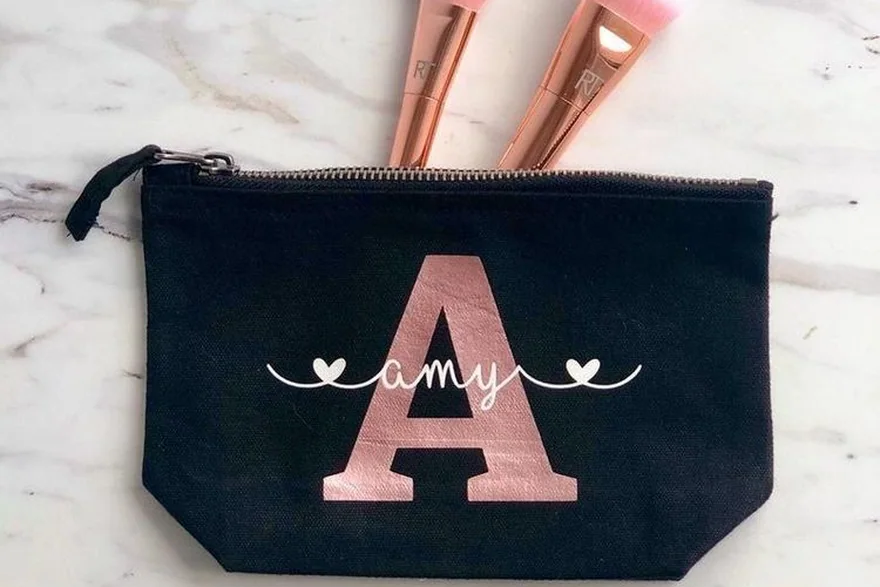
What retail-ready requires before the box is drawn
Retail-ready packaging is a description of a workflow, not of a box. It means the unit arrives at the retailer already barcoded, already labelled and already in a form that can be placed on the shelf or into a shelf tray by a store associate with no knife, no repacking and no re-labelling. Shelf-ready packaging goes one step further: the transit carton opens along a tear strip to become the shelf tray, so the outer shipper is part of the display. E-commerce-ready is different again, because the box has to survive a parcel network rather than a pallet.
Every one of those routes starts with the bag's own dimensions. A soft pouch measuring 22 x 14 cm flat-packed needs an internal clearance of 3-5 mm on each dimension: enough that the bag can be inserted without being folded and without the box bulging, not so much that the bag rattles and the corners crush. A structured vanity case at 25 x 18 x 12 cm is dimension-critical, because any oversizing increases the cubic volume of every carton and of every container.
Channel determines the opening. A hanging box needs a Euroslot of 8 x 3 mm or a round hole of 5-6 mm, centred laterally within 1 mm and 8-10 mm down from the top edge, with a reinforced header panel of at least 20 mm depth above it. A shelf-standing box needs a flat base wide enough not to topple, which for a bag box generally means base depth of at least 40% of the box height. A parcel mailer needs a self-sealing closure and a tear strip, not a tuck flap that opens under vibration.
Two numbers run through every decision that follows: the cubic volume of the packed unit and the gross weight of the master carton. A programme bought at the minimum of 500 pieces per style and colourway will fill roughly 8-14 cartons of 60 x 40 x 40 cm depending on bag volume, and cartons are typically held at or below 15 kg gross for manual handling. Those figures, not the print design, decide what the packaging costs to ship.
Box structures: tuck-end, header, sleeve, window carton, mailer
Eight structures cover the great majority of cosmetic bag programmes. Each has a natural construction range, a cost band and a set-up cost that only makes sense above a certain volume. Choosing on unit price alone is how brands end up with a rigid box on a 3 USD pouch or a folding carton that arrives crushed from a parcel network.
| Structure | Board or flute | Typical size range | Best use | Cost per box | Set-up |
|---|---|---|---|---|---|
| Reverse tuck end | 300-350 gsm SBS or CCNB | 150-300 mm tall | Single bag, gift or shelf | 0.35-0.70 USD | Low, cutting die 80-150 USD |
| Straight tuck end with header | 350 gsm SBS, 20 mm reinforced header | 100-250 mm tall | Peg-hung retail bag | 0.40-0.85 USD | Low, die plus slot punch |
| Auto-lock bottom | 350-400 gsm SBS | 180-350 mm tall | Vanity case 0.6-1.2 kg | 0.55-1.10 USD | Medium, gluing jig |
| Window carton | 350 gsm with PET 0.25-0.50 mm patch | 150-280 mm tall | Colour or shape sell | 0.60-1.20 USD | Medium, window patch die |
| Sleeve and tray | 300 gsm sleeve over 400 gsm tray | 100-250 mm tall | Two or three piece sets | 0.70-1.40 USD | Medium, two dies |
| Corrugated mailer | E-flute 1.5-2.0 mm, FEFCO 0427 style | 200-400 mm long | Direct to consumer parcel | 0.60-1.60 USD | Low, die cut only |
| Two-piece rigid set-up | 1000-1200 gsm greyboard wrapped in 128 gsm art paper | 120-300 mm | Premium gifting tier | 1.50-3.80 USD | High, wrapped by hand |
| Shelf-ready PDQ tray | B-flute 2.5-3.0 mm, tear-strip front | Fits 300-450 mm shelf depth | 6-12 units per tray | 0.90-1.80 USD | Low, die cut only |
Two of those deserve a caution. A window carton looks right on a shelf and is the weakest structure in a parcel network: the PET patch is glued with a flange of only 8-12 mm and the aperture removes 20-45% of the panel's compression strength, so window boxes should be over-boxed for e-commerce or reserved for shelf-only distribution. A rigid set-up box costs more than many bags in the 0.45-12.00 USD import band and only makes sense where the retail price supports it, typically a gift set or a premium vanity case.
Tooling and print method interact with volume. A cutting die costs 80-150 USD and is reusable, so it is not the constraint; the print method is. Digital printing handles a run at the 500-piece programme minimum with no plates and a 2-4 day turnaround, while offset lithography needs plates and make-ready but drops the unit cost once a run passes roughly 1,000-2,000 boxes. A brand launching two colourways of the same bag should print one box design and use a colour label or a belly band, rather than commission two printed boxes.
Sustainability claims are now part of the structure decision. Kraft-faced corrugated with 60-100% post-consumer recycled content claims its recycled share under the Global Recycled Standard where the fibre is textile-derived, and chain-of-custody schemes such as FSC or PEFC cover paperboard from forest sources. Inks, coatings and adhesives on the printed surface fall within the restriction list administered under EU REACH, and any bag marketed to children carries the packaging and substrate limits set out in CPSIA.
Closure choice interacts with the packing line. A tuck flap takes two hand movements, a crash-lock base takes one, and a self-sealing mailer with a tear strip takes one plus a press; on a 500-piece order that difference is an hour of packing labour, and on a 20,000-piece season it is a line cost worth modelling before the structure is chosen. Where packing happens at the destination rather than at the source, the simpler closure is usually the right one.
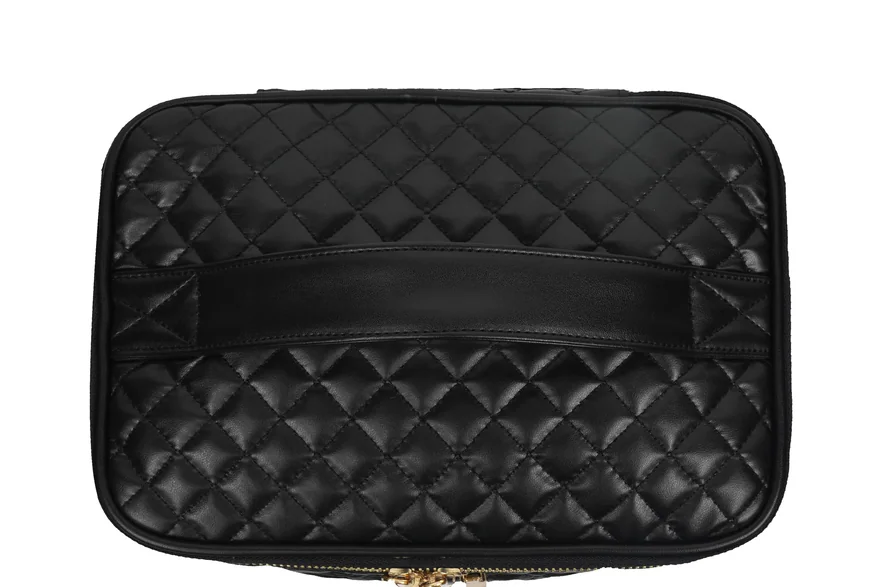
Board, print and finish: the numbers behind a box that survives
Board specification is the part of packaging most often left to the printer and most often the cause of a crushed shelf. The numbers below are the ones a buyer can hold a converter to, and they are all measurable on a delivered sample with a calliper, a scale and a moisture meter.
- Folding carton board: 300-350 gsm SBS for a clean white print face, 300-400 gsm CCNB where cost matters and a grey back is acceptable, 280-400 gsm kraft for a natural look.
- Corrugated: E-flute 1.5-2.0 mm for print-grade mailers, B-flute 2.5-3.0 mm for shelf-ready trays, C-flute 3.5-4.0 mm for heavy export cartons; liners of 175-250 gsm.
- Edge crush test: 32 ECT for cartons up to about 10 kg gross, 44 ECT above that, verified on a compression tester rather than assumed from the flute.
- Print: offset four-colour process at 150-175 lines per inch, or digital at 600-1200 dpi; spot Pantone where a brand colour must be exact to within Delta E 2.0.
- Finish: BOPP lamination at 12-25 micrometre in matte or gloss, soft-touch coating, aqueous varnish, spot UV, hot foil or blind emboss; each one changes the barcode contrast.
- Creasing: crease depth of 0.4-0.5 times the board thickness, with board grain running parallel to the longest crease so panels fold without cracking the print.
- Moisture: board at 8-10% moisture content, stored at 50-60% relative humidity; dry board cracks on the crease, damp board loses compression strength.
Compression is the failure that costs the most because it is invisible until the pallet is opened. A bottom-layer carton in a stack carries the weight of every layer above it, so a pallet stacked five cartons high with 12 kg per carton puts 48 kg on the bottom carton, before the dynamic loads of braking and handling are counted. The usual allowance is to specify a board that holds 1.5 times the static stack load for 24 hours with less than 10 mm of deflection, and to keep the pallet stack at or below 1.6 m on a 120 x 100 cm pallet.
Print quality on the shelf is a separate discipline. A four-colour image printed on kraft will look muddy because the brown board sits under every dot, so brands using kraft should plan two-colour artwork or accept a shift and proof it. Lamination deepens apparent colour by roughly one step on a grey scale and can push a barcode from grade B to grade F by reducing edge contrast, which is why verification happens after finishing. Finally, the print face should be scuff-rated: a matte lamination on a box that ships in a parcel network shows white scuff lines at the corners within a single transit cycle.
Print durability is tested rather than assumed. A rub test with a standard abrasive head under a 500 g load for 50 cycles shows whether an aqueous varnish will hold on a dark solid, and a tape adhesion test on a laminated panel shows whether the film is bonded or merely laid on. Both tests take minutes on a press proof and prevent the most common packaging complaint: a box that arrives looking handled rather than new.
Packing, transit testing and cost per shipped unit
A packaging specification is only finished when it has been tested in the configuration it will actually ship in. The table below is the checklist used for a bag programme moving from a production floor to a retail distribution centre or a parcel network, with the pass criterion stated as a number so that a result can be argued with.
| Check | Method | Pass criterion | Why it matters |
|---|---|---|---|
| Box to bag clearance | Measure internal dimensions against a filled bag | 3-5 mm all round | Stops rattle without adding cubic volume |
| Inner packing | One bag per polybag of 0.03-0.05 mm | 12-24 bags per inner bundle | Keeps scuffing down and counting fast |
| Carton count | Volume calculation against a 600 x 400 x 400 mm carton | 80-200 flat pouches, 40-90 structured cases | Drives freight cost per unit |
| Carton gross weight | Weigh a packed carton | 15 kg or less for manual handling | Above 18 kg most warehouses need mechanical handling |
| Drop test | Ten drops: one corner, three edges, six faces | No bag damage from 760 mm under 9.1 kg | Simulates the parcel network, not the pallet |
| Compression | 1.5 times stack load held for 24 hours | Deflection under 10 mm | Prevents crushed bottom layers on a pallet |
| Vibration | 60 minutes of random vibration at 1.0-1.5 g | No closure opening, no print scuff | Catches tuck flaps that walk open in transit |
| Barcode grade | Verifier against the ANSI/ISO method | Grade C or better after finishing | A failed scan blocks goods-in at the retailer |
| Pallet pattern | Interlocked five-down or six-down, stretch wrap three to five layers | No overhang beyond the pallet footprint | Overhang is the main cause of in-transit crush |
Cost per shipped unit is the arithmetic that ends the discussion. Take a structured makeup bag at an FOB unit price of 3.20 USD in the 0.45-12.00 USD import band. A printed folding carton at 0.62 USD, a folded insert card at 0.08 USD, a polybag at 0.04 USD and an allocated share of carton and freight at roughly 0.35 USD brings the packaging contribution to about 1.09 USD per shipped unit, or 34% of the bag's own cost. Replacing the carton with a 1.80 USD rigid box would take that contribution past 2.30 USD and change the retail price ladder, which is a decision for the brand, not the packing line.
The commercial frame sits around all of it. Packaging is sampled with the bag inside, in 6-10 working days for a standard construction and 12-15 working days for a complex one such as a rigid set-up box or a moulded insert; bulk runs 35-50 days after sample approval; finished goods are inspected at AQL 2.5 under ISO 2859-1, where a crushed, mis-glued or unscannable box counts as a defect in exactly the same way as a sewing fault; and goods ship FOB Xiamen on T/T terms of 30% deposit and 70% against the bill of lading.
A box that survives a pallet can still fail a parcel network, because parcels are dropped and vibrated individually rather than moved as a unit. Where a bag sells through both channels, the practical answer is a shelf-grade inner carton inside a plain corrugated mailer: the shelf box does the merchandising and the mailer takes the abuse, at an added cost of roughly 0.60-1.60 USD per unit.
The B2B Customisation View
Buyers who brief cosmetic bags with a physical reference sample always reach an approved prototype faster than buyers who brief with a photograph alone.
Standard terms: 500 pieces minimum per style and colourway, 6–10 working days for sampling (12–15 for complex builds), 35–50 days bulk production, AQL 2.5 inspection under ISO 2859-1, FOB Xiamen, T/T 30 deposit / 70 balance.
The arrangement suits brands that want factory-level pricing discipline without taking on factory-level vendor management for cosmetic bags.
Which Brand Types Benefit Most
Start-up brands usually launch with a digital-printed folding carton at the 500-piece programme minimum, because plates and a rigid-box tool cannot be justified on a first buy and a clean two-colour carton photographs well on a white background. Established brands tend to run three packaging tiers at once: a header card or tuck-end carton for the opening-price pouch, a printed carton with a window or a foil logo for the core line, and a rigid set-up box for holiday gifting, all sharing one die-line family so that carton sizes nest. Retailers care less about print and more about scan and stack: a verified barcode, a standard Euroslot and a carton count that divides evenly into a shelf tray. E-commerce sellers should specify the mailer first, because a crushed corner on arrival costs a replacement plus a return. Gift and hospitality buyers use the box as the gift itself, so a rigid two-piece box with a fitted insert is usually the right spend. Any brand claiming recycled content should hold the certificate for the board lot before the print run starts. Print on the inside of a box is worth considering wherever the bag is bought as a gift: an inside panel costs the same to print as an outside one in a single pass, and it carries the message the recipient sees first. Where two or three bags are sold as a set, a die-cut insert that holds each piece in place prevents the scuffing that loose units cause in transit.
- Start-up brands: digital-printed folding carton, no plates, two-colour artwork on white board.
- Established brands: three tiers on a shared die-line family so carton sizes nest and palletise together.
- Retailers: verified barcode, standard Euroslot, carton counts that divide into shelf trays.
- E-commerce sellers: parcel-tested mailer specified first, shelf carton as the inner where both channels apply.
- Gift and hospitality buyers: rigid two-piece box with a fitted insert that presents the bag on opening.
Frequently Asked Questions
What makes a makeup bag box retail-ready rather than just a shipper?
A retail-ready box arrives barcoded, labelled and in its final merchandising form, so a store can place it on the shelf or hang it on a peg with no repacking. That means a verified EAN-13 symbol, a Euroslot or shelf-standing base, and the legal text on the outside. A shipper only has to protect the goods in transit.
Which board weight suits a 22 cm structured makeup bag?
A folding carton of 350-400 gsm SBS with an auto-lock bottom handles a structured bag of that size, particularly one weighing 0.6-1.2 kg. Below 350 gsm the base panel bows when the bag is lifted out of the box. Where the bag ships in a parcel network rather than on a pallet, a corrugated E-flute mailer is the safer choice.
When is a corrugated mailer better than a folding carton?
A corrugated mailer is better whenever the unit travels through a parcel network: direct-to-consumer orders, marketplace fulfilment and influencer mailings. E-flute board at 1.5-2.0 mm absorbs the drops and vibration that crush a folding carton, and a self-sealing closure with a tear strip will not walk open. Folding cartons remain better for shelf presentation. The mailer also removes the need for an over-box, which keeps packed volume and freight cost down.
How much clearance should a box have around a soft cosmetic pouch?
Internal clearance of 3-5 mm on each dimension is the working range. Tighter than 3 mm and the pouch has to be folded or forced in, which creases the shell and slows the packing line; looser than 5 mm and the bag rattles, corners crush and the extra volume is paid for in every carton and container. Where a bag is displayed filled, the clearance should be measured on the filled shape rather than the flat one.
What is a Euroslot and where is it positioned on a hanging box?
A Euroslot is the standard peg-hook slot of 8 x 3 mm used in European retail. It is centred laterally within 1 mm and positioned 8-10 mm down from the top edge, with a reinforced header panel of at least 20 mm above it. North American programmes often use a round hole of 5-6 mm or a sombrero slot instead, so the target retailer's fixture should be checked first.
Can a window box keep enough crush strength for a palletised shipment?
A window removes 20-45% of a panel's compression strength and is glued with a flange of only 8-12 mm, so window boxes are the weakest option on a pallet. They are fine for shelf-only distribution where cartons are hand-stacked two or three high. For palletised or parcel shipment, keep the aperture below 30% of the face or over-box the units.
How are print colours controlled on a custom cosmetic bag box?
Colours are referenced to Pantone and proofed on the production board with the production finish, then compared with a spectrophotometer against the approved reference at a tolerance of Delta E 2.0 or better. Lamination darkens the print, and kraft board shifts everything towards brown, so a proof on white art paper is not an acceptable reference. A retained printed reference, signed and dated, is what settles a colour argument three months later.
What barcode rules apply to a retail-ready makeup bag box?
The symbol should be an EAN-13 or UPC-A printed at 80-200% magnification on a white ground, at the natural bottom of the box, at least 6.35 mm from any edge, with the full quiet zone intact. It must grade C or better on a barcode verifier after lamination. The number itself has to come from a GS1 allocation.
How many bags go into a standard export carton?
A 600 x 400 x 400 mm carton holds roughly 80-200 flat pouches or 40-90 structured cases, depending on the packed volume of the individual unit. The count is calculated rather than guessed, and it should be a number that also divides into the shelf tray quantity if the goods are going to a shelf-ready programme. Carton dimensions should be chosen so that the count divides evenly into the order quantity.
What is a realistic gross weight limit for an export carton?
Fifteen kilograms gross is the usual limit where cartons are handled manually, and 18 kg is the practical ceiling where two-person lifts are used. Above that, most distribution centres require mechanical handling and the carrier surcharge rises. Heavy vanity cases should be packed to a lower count rather than to a full carton volume. Carrier surcharges generally rise sharply once a carton passes that weight.
How is a printed box checked at AQL 2.5 inspection?
Packaging is inspected with the goods. A crushed corner, an open glue seam, a mis-applied window patch or an unscannable barcode is treated as a major defect and counts against the accept number, because the unit cannot be sold at full price. Print scuffing or a slight crease mark away from the main face is a minor defect.
Can a box be made with 100% recycled content without looking rough?
Yes, within limits. A kraft-faced board with 60-100% post-consumer recycled content has a natural mottled surface, which suits a two-colour design and looks poor under a full-colour photograph. The usual compromise is a white-top board with a recycled middle ply: it prints cleanly and still carries the recycled-content claim, backed by a certificate for the board lot. A matt aqueous coating keeps the natural look while adding enough scuff resistance for shelf handling.
What is the cost difference between a folding carton and a rigid set-up box?
A printed folding carton costs 0.35-1.20 USD depending on size, board and finish. A two-piece rigid set-up box built from 1000-1200 gsm greyboard and wrapped by hand costs 1.50-3.80 USD. Against import bag prices in the 0.45-12.00 USD band, a rigid box only makes commercial sense on a gift set or a premium vanity case. Rigid boxes also take more warehouse space per unit, which adds a storage cost that is easy to overlook.
How long does it take to sample a custom retail box with a bag inside?
Sampling a box together with a standard bag takes 6-10 working days from released artwork and a confirmed die-line. Complex constructions, including rigid set-up boxes, moulded pulp inserts and multi-part sets, take 12-15 working days. Buyers should add 3-5 days for courier before counting the approval window. Sampling the box alongside the bag, rather than after it, avoids running a second approval cycle.
Can one box design serve both shelf display and Amazon FBA?
A folding carton can serve both if it is scuff-tested for parcel handling and if the barcode sits on a flat panel with space for an FNSKU over-label. In practice most brands either over-box the shelf carton in a mailer or accept a higher damage allowance. Testing the shelf box through a drop sequence before committing is the cheapest way to decide.
What artwork files are needed for a printed cosmetic bag box?
A dimensioned die-line in vector format with creases, cuts and bleed marked, print artwork at 300 dpi at final size, all fonts converted to outlines, Pantone references for brand colours, and a vector barcode at the correct magnification. A 1:1 colour proof on the production board with the production finish is the approval reference. A signed 1:1 proof should be retained by both sides as the reference for the bulk print run.
People Also Ask
What is retail-ready packaging?
Retail-ready packaging is a unit that reaches the shop floor already barcoded, labelled and in its display form, so store staff do not repack or re-label it. Shelf-ready packaging goes further, where the transit carton opens into a shelf tray. Both reduce handling cost at the store and both depend on a verified barcode and a standard hanging or standing format.
How do I choose a box size for a makeup bag?
Measure the bag in the state it will ship in, add 3-5 mm clearance on each dimension and round to a standard carton footprint. Then check the packed unit against the master carton: a 600 x 400 x 400 mm carton holds 80-200 flat pouches or 40-90 structured cases, and the count should stay below 15 kg gross per carton.
Are window boxes bad for shipping?
Window boxes are the weakest common structure in transit, because the aperture removes 20-45% of the panel's compression strength and the PET patch is glued with only an 8-12 mm flange. They are acceptable for shelf-only distribution with hand-stacked cartons, but should be over-boxed for palletised or parcel shipment. Where a window is essential, a PET patch at 0.5 mm and an aperture below 30 per cent of the face keeps most of the strength.
Can packaging be plastic-free and still protect a bag?
Yes. A kraft corrugated mailer with paper-based cushioning, a paper tape closure and no lamination protects a soft pouch adequately through a parcel network, and a paper inner wrap replaces the polybag. The trade-offs are print quality on kraft board and lower scuff resistance, both of which are manageable with two-colour artwork. Paper void fill rather than foam keeps the whole pack recyclable in a single stream.
Request a Sample or a Written Quotation
Send the silhouette, dimensions, material preference and logo artwork, and the programme team will return a written quotation with MOQ, sampling window, bulk lead time and inspection standard.
Email: service@junyuanbags.com · WhatsApp: +86 177 5002 0688