Anti-Microbial Cosmetic Bags: Technology, Benefits & Market
Executive Summary
Anti-microbial cosmetic bags are cosmetic bags whose shell fabric, lining or both carry a finish that inhibits the growth of bacteria and fungi on the textile surface. The honest answer to whether the finish is worth specifying is that it protects the bag rather than the user: it slows odour, mildew and staining between cleans, and it does not sanitise the brushes, sponges or bottles stored inside. Three chemistries cover most of the sourcing market, and they differ in durability far more than in headline efficacy.
Verification separates a defensible programme from a printed hangtag. A buyer should name the test method and the log-reduction threshold in the tech pack, require an accredited laboratory report against the AATCC series, and screen the finish against restricted substances before bulk is cut. Plan for 500 pieces per style and colourway, 6-10 working days of sampling (12-15 for complex constructions), 35-50 days of bulk after sample approval, AQL 2.5 under ISO 2859-1, FOB Xiamen and T/T 30 deposit with 70 against bill of lading.
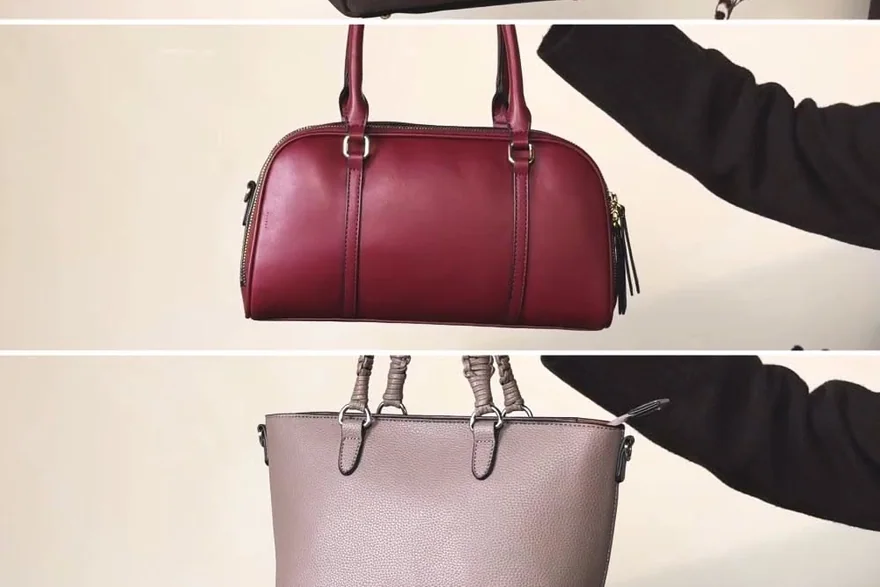
What an Anti-Microbial Finish Does — and Does Not — Do on a Bag
An anti-microbial finish is a chemical treatment applied to a textile that reduces the number of micro-organisms able to survive and multiply on that surface. On a cosmetic bag the treatment is normally applied to the lining rather than the shell, because the lining is the surface that meets damp brushes, cream residue and the occasional leaking bottle. Three application routes exist. A pad-bath finish is applied during dyeing and penetrates the fibre. A coating additive is mixed into a polyurethane or thermoplastic polyurethane layer before it is cast. A sprayed after-treatment sits on the surface of the finished cloth. The route determines durability: a pad-bath finish survives abrasion far longer than a sprayed finish, which can be rubbed away within a season of regular use.
The most common sourcing mistake is treating the finish as a hygiene guarantee for the contents. It is not one. A cosmetic bag is a closed container that is frequently dark and damp, which makes the lining a genuine growth substrate, but the finish acts only on the textile it was applied to. It does not disinfect a brush, extend the shelf life of a cream, or remove the need to clean the bag. A brand owner who markets the bag as keeping its contents cleaner is making a claim that no textile test method supports.
An anti-microbial treatment reduces microbial growth on the treated textile. It is not a disinfectant for cosmetics, not a preservative, and not a substitute for a wipe-clean or washable lining.
The feature is nonetheless commercially useful. Demand for differentiation in the category is visible in search behaviour: the generic phrase "make up bags for women" draws roughly 80,000 monthly searches, and within that traffic a hygiene or odour-control attribute gives a listing a second reason to exist beyond colour and print. For a brand owner the practical question is whether the finish can be documented at the cost the retail price supports, which is a testing and paperwork question rather than a chemistry question.
Silver-Ion, Zinc and Quat Chemistries Compared for Bag Linings
Chemistries are often presented as if they were interchangeable. They are not. The choice affects how long the finish lasts, how the lining feels, whether a white lining yellows, and how much documentation a shipment carries. The comparison below is the one a sourcing conversation should start from, with the caveat that every figure is a starting specification to be confirmed by a laboratory report on the actual fabric, not a guarantee.
| Attribute | Silver-ion | Zinc-based | Quaternary ammonium |
|---|---|---|---|
| Typical carrier | Silver ions held on a zeolite or glass substrate | Zinc oxide or zinc pyrithione dispersed in the bath | Quat salt bonded to the fibre surface |
| Mode of action | Disrupts cell membrane transport and enzyme function | Interferes with microbial metabolism | Disrupts the cell wall on contact |
| Durability in laundering | Commonly quoted at 30-50 domestic cycles | Commonly quoted at 20-30 domestic cycles | Often 10-20 cycles unless resin-bonded |
| Effect on hand feel | Neutral at low add-on rates | Slight stiffening at higher add-on | Can soften or feel faintly waxy |
| Colour risk | Grey cast and yellowing on white linings | Low; may dull bright shades slightly | Low |
| Relative cost adder | Highest of the three | Mid range | Lowest of the three |
| Documentation load | Restricted-substance screening plus silver-content declaration | Restricted-substance screening plus biocidal review | Restricted-substance screening plus sensitisation review |
| Best fit | Premium linings with a long service life | Mid-market bags cleaned occasionally | Promotional and gift programmes |
Silver-ion finishes are the premium option. Silver ions are carried on a zeolite or glass substrate and released slowly at the fibre surface, where they interfere with bacterial enzyme function and membrane transport. The add-on rate is low, so the hand feel of a 190T polyester lining barely changes, and durability is commonly quoted at 30-50 domestic wash cycles. The two disadvantages are cost and colour: silver is the most expensive of the three routes, and it can produce a grey cast or yellowing on a white or pale lining, particularly after heat exposure.
Zinc-based finishes sit in the middle of the market. Zinc oxide or zinc pyrithione dispersed into the finish bath interferes with microbial metabolism rather than destroying the cell outright, which gives a slightly narrower spectrum but a lower cost and far less colour risk. Durability is commonly quoted at 20-30 domestic cycles. At higher add-on rates a zinc finish can stiffen a lightweight lining, so the specification should state both the fabric weight in g/m² and the add-on percentage rather than leaving the ratio to the finisher.
Quaternary ammonium salts work on contact: the molecule carries a positive charge that disrupts the negatively charged bacterial cell wall. They are the cheapest route and can even soften the handle of a stiff lining, which is useful on a low-cost giveaway pouch. The weakness is durability, because a quat salt that is not resin-bonded washes out quickly, often within 10-20 cycles, and because skin sensitisation at higher add-on rates has to be reviewed before a programme is approved for a market with strict chemical rules.
Two further routes appear in sourcing conversations. Chitosan, derived from shellfish processing waste, is bio-based and suits a brand with a natural-positioning brief, but its durability is modest and its cost is high. Silane-based finishes bond covalently to the fibre and give excellent wash durability, but they change the handle noticeably and are difficult to apply to a coated fabric once the coating has been cast. Neither route should be chosen without a trial on the actual production lining.
- Specify the chemistry by name and carrier, not by the word anti-microbial alone.
- State the fabric weight in g/m² and the finish add-on as a percentage of fabric weight.
- Ask for the durability figure in domestic wash cycles rather than in months.
- Require a colour-fastness report on the finished treated fabric, not on the greige cloth.
- Confirm whether the finish is applied before or after any PU or TPU coating step.
Testing Standards and Claim Language a Buyer Can Defend
Efficacy claims are worthless without a named test method. The AATCC test methods series is the reference most buyers specify for textiles, and the two methods that matter for a bag lining are AATCC 100, which is quantitative, and AATCC 147, which is qualitative. AATCC 100 measures the reduction in a bacterial population after a 24-hour contact period by comparing an inoculated treated swatch against an untreated control. AATCC 147 places the fabric on an agar plate and looks for a zone of inhibition, which demonstrates that something diffuses out of the fabric but says nothing about kill on contact.
| Test | What it measures | Common buyer threshold | Limitation |
|---|---|---|---|
| AATCC 100 | Quantitative reduction of bacteria after 24 hours of contact | 99% reduction (2 log) or higher | Result varies with inoculum and control fabric |
| AATCC 147 | Qualitative zone of inhibition on an agar plate | No growth along the streak | Shows diffusion only, not contact kill |
| AATCC 30 | Resistance to mildew and fungal growth | No visible growth at 28 days | Long lead time and humidity dependent |
| OEKO-TEX Standard 100 | Screening of the finished textile for restricted substances | Pass at the declared product class | Does not measure antimicrobial efficacy |
| ISO 2859-1 at AQL 2.5 | Acceptable quality level for the finished shipment | AQL 2.5 for major defects | Visual and dimensional, not chemical |
Buyers frequently ask for a log-reduction figure without knowing what it means. A 1-log reduction is a 90% drop in the bacterial count, 2-log is 99%, and 3-log is 99.9%. For a bag lining, a 2-log threshold against Staphylococcus aureus and Klebsiella pneumoniae is a reasonable and defensible specification. Anything marketed above 3-log on a textile warrants scrutiny, because such results are usually measured on a fresh swatch before any abrasion or washing has taken place.
Durability testing is the step most often skipped. A finish that gives a 99% reduction on day one and 40% after ten washes is not the product the brand owner believes has been bought. The standard approach is to run the efficacy method again after a defined number of domestic laundering cycles, commonly 10, 20 or 30, and to report the retained reduction. A tech pack that states the chemistry, the method, the threshold and the cycle count is a specification a laboratory can quote against without ambiguity.
Two regulatory angles deserve attention. In the EU, a finish presented as controlling micro-organisms falls within the scope of the Biocidal Products Regulation, and the treated article must in any case comply with EU REACH restricted-substance screening. In the US, copy that implies protection against illness can move a treated article into a regulated category, so marketing language should stay on odour and fabric freshness. Independent screening of the finished textile, such as OEKO-TEX Standard 100, is a useful third-party document to hold on file even though it does not measure efficacy.
- Name the standard: AATCC 100 for quantitative reduction, AATCC 147 for diffusion only.
- State the threshold as a log reduction, not as a percentage with no method behind it.
- Repeat the test after 10, 20 or 30 domestic wash cycles and record the retained value.
- Keep the laboratory report lot-linked to the fabric roll used in bulk production.
- Keep marketing copy on odour and freshness rather than on health protection.
Sourcing an Anti-Microbial Programme: Costs, Timing and Failure Modes
Commercial terms for a treated bag programme follow the same frame as any other custom bag programme, with one addition: the treated fabric is usually dyed and finished to order, so the fabric lead time runs ahead of the cutting room. Minimum order quantity is 500 pieces per style and colourway, sampling takes 6-10 working days, extending to 12-15 working days for complex constructions such as a moulded case with a treated lining, and bulk production runs 35-50 days after sample approval.
| Programme parameter | Standard value | Why it matters for a treated bag |
|---|---|---|
| Minimum order | 500 pieces per style and colourway | Finish baths are mixed per lot, so small runs raise unit cost |
| Sampling | 6-10 working days (12-15 for complex constructions) | Laboratory reports can run in parallel with the sample build |
| Bulk production | 35-50 days after sample approval | Treated fabric may need dyeing and finishing to order |
| Inspection | AQL 2.5 under ISO 2859-1 | Confirms the delivered bags use the approved treated fabric |
| Shipment terms | FOB Xiamen | Freight forwarder nominated by the buyer |
| Payment | T/T 30 deposit, 70 against bill of lading | Standard for first and repeat programmes |
- Finish applied to the shell only, leaving the lining — the surface that actually gets wet — untreated.
- Laboratory report issued for a different fabric weight or colourway than the one shipped.
- Efficacy measured before a PU coating step, after which the coating seals the finish and blocks release.
- Yellowing of a white lining discovered only after the bulk run has been packed.
- Odour complaints from customers after 8-12 weeks because durability was never tested.
- No retained sample kept, so a disputed shipment cannot be re-tested.
Cost should be evaluated as a fabric-line adder rather than a bag-level adder. The finish is bought by the metre of cloth, so its share of the unit cost falls as the bag gets larger and rises on a small pouch, where lining area is a bigger share of the total cloth. Unit prices across the category span roughly $0.45-$12.00, and on the lower half of that band a premium silver-ion finish can represent a disproportionate share of the bill of materials. A zinc finish on a mid-weight lining is usually the point at which the feature stays affordable at a mass retail price.
Documentation should be requested at sample stage, not after bulk. A complete file for a treated programme contains the chemistry declaration with carrier and add-on, the laboratory efficacy report with method and threshold, the durability report with cycle count, a restricted-substance screening report, and a lot number that ties all three to the fabric roll used in production. Inspection of the finished shipment runs to AQL 2.5 under ISO 2859-1, with the treated fabric reference checked against the approved sample before cartons are sealed.
Shipment and payment follow the standard frame: FOB Xiamen, with T/T terms of 30 deposit and 70 against bill of lading. Carton packing for a pouch programme typically runs 100-200 pieces per export carton depending on whether the bag is packed flat or stuffed, and the carton count should be fixed before the booking is made because it drives both freight cost and the per-unit landed figure. Buyers who intend to repeat a treated programme should reserve fabric against a rolling forecast, since re-dyeing a small lot for a reorder often costs more than the finish itself.
The B2B Customisation View
The commercial logic behind makeup bags and toiletry bags is simple to state and hard to execute: hold the unit cost, hold the colour, hold the delivery window.
Commercial parameters stay fixed across the range: MOQ 500 pieces per style and colourway, prototype turnaround 6–10 working days (extended to 12–15 for multi-panel or moulded builds), bulk lead time 35–50 days from approved sample, AQL 2.5 inspection to ISO 2859-1, FOB Xiamen, T/T 30 deposit and 70 against bill of lading.
For makeup bags and toiletry bags, that coordination matters most in the two weeks between packing and vessel loading, when documentation errors cost more than any material decision.
Which Brand Types Benefit Most
Different buyer types extract different value from an anti-microbial lining, and the differences are sharper than in most bag features. A start-up brand selling direct to consumer can use the finish as a point of differentiation against a field of undifferentiated printed pouches, provided the claim is documented, because a hygiene attribute is one of the few things a new brand can say that a marketplace competitor cannot copy from a photograph. An established brand with an existing quality file usually adds the finish to a specific line, such as a brush case or a damp-environment travel pouch, rather than across the whole range, which keeps the cost adder contained to the stock-keeping units where the benefit is visible to the customer. Retailers and e-commerce sellers sit in between: the attribute works when it answers a specific complaint that already appears in reviews, and it is wasted spend when it is added to a product that nobody has ever described as smelling. Laboratory cost is the other factor a smaller buyer should weigh, since an efficacy report is a fixed cost that does not shrink with the order.
- Start-up brands: a documented hygiene attribute gives a listing a second reason to exist beyond print and colour.
- Established brands: apply the finish to brush cases and travel pouches rather than to the full range, to contain the cost adder.
- Retailers and private-label buyers: one treated lining specification can be shared across several bag sizes to spread laboratory cost.
- E-commerce sellers: odour-control language addresses a specific class of negative review on pouch and case listings.
- Gift and hospitality buyers: the feature reads well on a premium amenity kit but rarely justifies its cost on a single-use promotional pouch.
- Subscription box operators: a treated lining supports a reusable and hygienic positioning across repeat shipments.
- Buyers with a vegan or natural positioning: chitosan and zinc routes fit a plant-derived brief better than silver does.
- Buyers on a tight budget: a zinc finish on a mid-weight lining is usually the most affordable credible option.
- Buyers exporting to the EU: biocidal-product rules apply to the claim, so copy should stay on odour.
Frequently Asked Questions
What does an anti-microbial finish actually do on a cosmetic bag lining?
It reduces the population of bacteria and fungi able to grow on the treated textile, which slows odour development, mildew spotting and visible staining between cleans. It acts only on the fabric it was applied to. It does not disinfect brushes or sponges, does not extend the shelf life of cosmetics, and does not remove the need to clean the bag. Buyers should set expectations around fabric freshness.
How is AATCC 100 different from AATCC 147 when testing a bag fabric?
AATCC 100 is quantitative: it compares the bacterial count on an inoculated treated swatch against an untreated control after 24 hours and reports a percentage or log reduction. AATCC 147 is qualitative: it places the fabric on agar and looks for a zone of inhibition, which only proves that something diffuses out of the cloth. A serious specification cites AATCC 100.
Which anti-microbial chemistry lasts longest on a polyester cosmetic bag lining?
Silver-ion finishes are commonly quoted at 30-50 domestic wash cycles, ahead of zinc-based finishes at 20-30 cycles and unbonded quaternary ammonium salts at 10-20 cycles. Silane finishes can outlast all three but change the handle noticeably. Durability always depends on the add-on rate and on the fabric weight in g/m², so both belong in the specification. A report on the production lining settles the question better than any mill data sheet.
Does a silver-ion finish change the hand feel of a makeup bag lining?
At the low add-on rates normally used on a 190T or 210T polyester lining, the change is negligible. The real risk is colour rather than handle: silver can produce a grey cast or yellowing on white and pale linings, particularly after heat exposure, so a treated white lining should always be checked after ageing rather than only when it leaves the mill.
How many wash cycles should an anti-microbial cosmetic bag survive?
The tech pack should set the number rather than accept a default. Ten cycles suits a promotional pouch, twenty suits a mid-market bag that is cleaned occasionally, and thirty or more suits a premium travel case expected to last several years. The efficacy test should be repeated at that cycle count and the retained reduction reported. Writing the number into the tech pack also makes the result auditable months later.
Can an anti-microbial finish be applied to a PU or TPU coated bag?
Yes, by two routes. The additive can be mixed into the polymer layer before it is cast, or the finish can be applied to the base cloth before coating. The second route is risky: a coating applied over a finished fabric can seal the surface and block release, so efficacy must be tested on the coated composite rather than on the base cloth alone.
What log-reduction threshold should a tech pack specify for a cosmetic bag?
A 2-log reduction, equal to 99%, against Staphylococcus aureus and Klebsiella pneumoniae is a defensible specification for a bag lining. Claims above 3-log, or 99.9%, deserve scrutiny because they are usually measured on a fresh swatch before abrasion or laundering rather than on a bag that has actually been used. The organism names matter as much as the value, because results differ between species.
Does an anti-microbial finish protect the cosmetics stored inside the bag?
No. The finish acts on the textile surface only. It does not extend the shelf life of a cream, does not sterilise a brush, and does not create a hygienic environment inside the closed bag. Marketing copy that implies the contents are protected is not supported by any textile test method and creates avoidable regulatory exposure. The defensible framing is fabric freshness between cleans, which is what the test measures.
Which documentation should accompany an anti-microbial cosmetic bag shipment?
A complete file contains the chemistry declaration with carrier and add-on percentage, an accredited laboratory efficacy report naming the method and threshold, a durability report stating the cycle count and retained reduction, restricted-substance screening, and a lot number tying all of them to the fabric roll used in bulk production. Requesting the file at sample stage avoids discovering after bulk that it does not exist.
How much does an anti-microbial finish add to a cosmetic bag programme?
The finish is bought by the metre of cloth, so its share of unit cost falls as the bag gets larger and rises on a small pouch where lining is a bigger share of total fabric. Silver-ion is the most expensive route, zinc sits mid-range, and quaternary ammonium is cheapest. It should be modelled as a fabric-line adder. Toward the top of that price band the same finish is a far smaller share of the total.
What minimum applies to a custom anti-microbial cosmetic bag?
The programme minimum is 500 pieces per style and colourway. The reason is practical: finish baths are mixed per lot, so a smaller run carries the full cost of a bath across fewer units and raises the unit price sharply. Colourways are also counted separately, so a three-colour launch means 500 pieces of each colour. Colourways should therefore be grouped carefully before the order is released to production.
How long does sampling take for an anti-microbial lined makeup pouch?
Sampling runs 6-10 working days for a standard construction, extending to 12-15 working days for complex constructions such as a moulded case with a treated lining. Laboratory efficacy and durability reports can be commissioned in parallel with the sample build so that the documentation is ready when the sample is approved. A fabric that must be dyed to order adds its own lead time ahead of the sample build.
Can an anti-microbial finish be combined with a recycled polyester claim?
Yes, and the two claims are independent. The recycled content of the base cloth is documented through the Global Recycled Standard, while the finish is documented through efficacy testing and restricted-substance screening. One report does not cover the other, so both certificates should be requested and both should carry the same lot reference. Recycled content and finish efficacy are two claims with two separate evidence files.
Why do some anti-microbial cosmetic bags stop controlling odour after a few months?
The usual cause is that durability was never tested. A sprayed-on finish can be abraded away by brushes and rigid items within a season, and an unbonded quaternary ammonium salt can wash out within 10-20 cycles. Naming the application route and a cycle count in the tech pack prevents this failure. A retained sample from the first lot makes the cause provable in either direction.
Which inspection level applies to an anti-microbial cosmetic bag shipment?
Finished shipments are inspected to AQL 2.5 under ISO 2859-1, the same sampling procedure used across bag programmes. Inspection confirms dimensions, construction and visible defects against the approved sample; it does not test chemistry. The treated fabric reference and lot number should still be checked at inspection. Chemical verification belongs in the laboratory file, not in the inspection report.
Does the finish affect colour fastness or yellowing of a white lining?
It can. Silver-ion finishes carry the highest risk of a grey cast or yellowing on white and pale linings, especially after heat exposure, while zinc can slightly dull bright shades. Colour fastness should therefore be tested on the finished treated fabric rather than on the untreated greige cloth, using the ISO 105 series. Testing takes days at sample stage and weeks to argue about once bulk has shipped.
People Also Ask
Are anti-microbial cosmetic bags safe to use every day?
A bag from a documented programme is screened for restricted substances under frameworks such as EU REACH and, optionally, OEKO-TEX Standard 100. The finish is bound to the textile and is not intended to be ingested or applied to skin. Buyers should request the screening report for the finished fabric rather than assuming that a certificate held by the base-cloth mill covers the treated article.
Do anti-microbial makeup bags really work?
They work on the fabric, which is the honest measure. A finish validated to AATCC 100 will reduce bacterial growth and the odour that follows it on the treated surface. What it will not do is clean the contents or stop a damp brush from developing odour, so expectations should be set around fabric freshness rather than hygiene of the contents. Measured against that expectation the feature performs; against disinfection, it does not.
How long does antimicrobial protection last on a fabric?
It depends on the chemistry and the application route. Silver-ion finishes are commonly quoted at 30-50 domestic wash cycles, zinc-based finishes at 20-30, and unbonded quaternary ammonium salts at 10-20 cycles. Durability should be confirmed by repeating the efficacy test at a stated cycle count rather than accepted on the basis of a fresh-swatch result. The cycle count, not the calendar, is the only honest way to state the figure.
What is the difference between antibacterial and anti-microbial?
Antibacterial refers specifically to bacteria. Anti-microbial is broader and covers bacteria, fungi and, in some usages, mildew and algae. On a cosmetic bag the distinction matters because a damp lining is as likely to grow mildew as bacteria, so a specification limited to antibacterial activity may not cover the failure a customer actually complains about. Specifying bacteria and fungi together closes that gap in the test plan.
Request a Sample or a Written Quotation
Send the silhouette, dimensions, material preference and logo artwork, and the programme team will return a written quotation with MOQ, sampling window, bulk lead time and inspection standard.
Email: service@junyuanbags.com · WhatsApp: +86 177 5002 0688