Toiletry Bags for Business Travelers: Executive Packing
Executive Summary
Toiletry bags for business travellers work best when they separate screening liquids, dry grooming tools and arrival essentials without looking out of place beside a laptop case. The strongest executive format combines a removable transparent liquids pouch, a structured main compartment, quiet hardware and a wipe-clean lining. A compact footprint around 24 × 15 × 10 cm fits short trips, while a 28 × 18 × 12 cm organiser handles a working week. Buyers should define the packed inventory before choosing dimensions, because an oversized bag wastes cabin space and an undersized one forces bottles against the zipper.
Executive packing also depends on predictable handling. A top-opening case gives fast hotel access, a hanging layout suits small bathrooms, and a clamshell provides the clearest inventory view. Neutral colour, restrained branding and a stable carry handle support a professional setting without assuming that every traveller follows the same grooming routine. The specification should cover liquid containment, zipper path, pocket visibility, abrasion resistance and how the bag returns to a suitcase after use. Screening compliance belongs to the containers and removable liquids pouch, not to an unsupported claim that the complete toiletry bag is approved.
Executive packing starts with the itinerary, not the pocket count
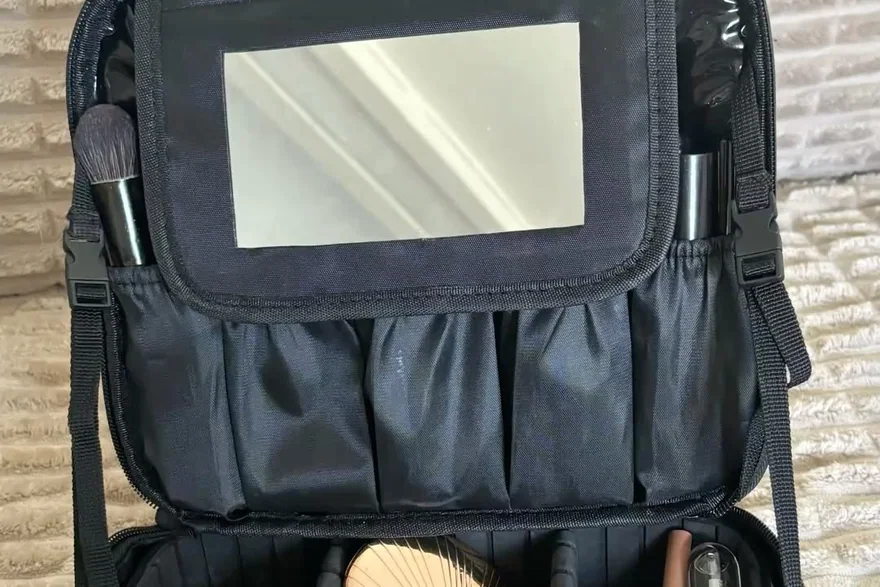
An executive toiletry bag is a small travel system rather than a decorative pouch. It has to move through airport screening, sit neatly in a client-facing hotel room, protect clothing from leaks and make a morning routine possible when time and counter space are limited. The itinerary supplies the correct design inputs: number of nights, cabin-only or checked luggage, rail or air travel, hotel frequency, expected transfers and the mix of liquids, tools and medication that an individual traveller chooses to carry. Gendered assumptions are poor substitutes for this inventory. A shaving kit, skincare set, hair tools or contact-lens supplies can belong to any traveller, and the layout should adapt rather than prescribe.
Trip length changes capacity more than body dimensions do. A one- or two-night visit may need a 2.5 to 3.5 litre case with travel-size containers, toothbrush and a compact grooming tool. A four- or five-night itinerary usually needs 4 to 6 litres, especially when the user changes hotels and cannot leave products unpacked. Beyond that, modularity becomes more useful than one large cavity: a transparent liquids module, a dry pouch and a narrow cable or grooming-tool sleeve can be distributed around a suitcase. This also prevents a damp toothbrush or leaking shampoo bottle from sharing a compartment with electronics.
The bag should retain its shape when half full but compress slightly when the suitcase closes. Light PE board, thin EVA panels or foam-laminated fabric can create that balance. An unsupported soft pouch disappears into a packing gap but collapses around bottles; a hard case protects glass yet consumes the same volume on the return journey. For most executive assortments, semi-structured sidewalls, a reinforced base and a lid that opens beyond 90 degrees give the cleanest compromise. The resulting product is easy to pack, easy to photograph and sufficiently restrained for corporate gifting or retail.
Weight should be budgeted before pockets are added. For a cabin-oriented style, every divider, metal badge and padded wall competes with the traveller's luggage allowance. A useful brief lists an empty-bag target alongside capacity and packed dimensions, then asks whether each feature earns its weight through containment, access or protection. Decorative layers that serve none of those functions can be removed without reducing executive utility.
Cabin screening and liquid control need two distinct layers
Airport security and leak protection are related but different requirements. The TSA 3-1-1 liquids rule describes container and transparent-bag limits for liquids, aerosols, gels, creams and pastes in carry-on baggage. It does not certify a fabric toiletry organiser. A credible executive design therefore includes a removable transparent pouch sized for screening rather than presenting the whole wash bag as compliant. The traveller can remove that module without opening every dry pocket, then return it to the organiser after screening.
A practical liquids pouch is approximately 18 × 18 cm or 20 × 15 cm, with a clear TPU body and an opening wide enough to retrieve a bottle without dragging the closure across its cap. The pouch should remain visibly separate from a larger 24 to 28 cm organiser. TPU generally stays flexible and avoids the brittle feel of low-grade clear PVC, although material choice still depends on target price and market requirements. Heat-welded seams reduce needle holes, while a bound and sewn construction is easier to decorate. Neither construction makes an unlimited waterproof claim; the brief should ask for a defined leak-containment check instead.
Containment starts with orientation. Bottles should stand upright against a wipe-clean base, with elastic loops or adjustable dividers controlling movement. A shallow tray around the base can delay seepage into the outer shell, and a light-coloured liner reveals a spill before it transfers to clothing. The closure must sit above the lowest liquid path. If the zipper runs through the base corner, a leaking container can reach the tape immediately; lifting the zipper line by 15 to 25 mm gives the liner tray somewhere to hold liquid. A detachable pouch also permits cleaning without soaking the structured outer case.
Route differences should remain visible in the product instructions. Screening officers and aviation authorities may apply local procedures, and hotel or rail segments create different handling conditions. The organiser can support a repeatable packing routine by giving the transparent module a fixed location, but it cannot guarantee passage or exempt its contents. Accurate copy tells users to verify current departure requirements and makes the removable pouch easy to measure, inspect and replace if damaged.
| Airport touchpoint | Design response | What the buyer should specify | Misleading claim to avoid |
|---|---|---|---|
| Security queue | Removable transparent module | Clear opening area, external dimensions and closure type | The entire fabric bag is TSA approved |
| Overhead-bin packing | Upright bottle zone | Base width, loop diameters and maximum bottle height | All bottles can never leak |
| Hotel bathroom | Detachable, wipe-clean tray | Liner material and removable attachment method | Waterproof without a test method |
| Return journey | Dry and damp separation | Two independent closures and visible pocket labels | Antimicrobial without substantiation |
| Border or airline variation | Easy visual inspection | Unobstructed transparent panels | One rule applies in every country |
- Treat screening access as a removable-module problem, not as a claim printed on the whole bag.
- Keep the zipper line above the lowest point of the liquid compartment.
- Write a leak-containment procedure with fill volume, dwell time and acceptable seepage rather than using an undefined adjective.
- Leave transparent panels sufficiently clear for inspection; dense print and dark mesh defeat their purpose.
Access geometry decides whether a rushed morning stays organised
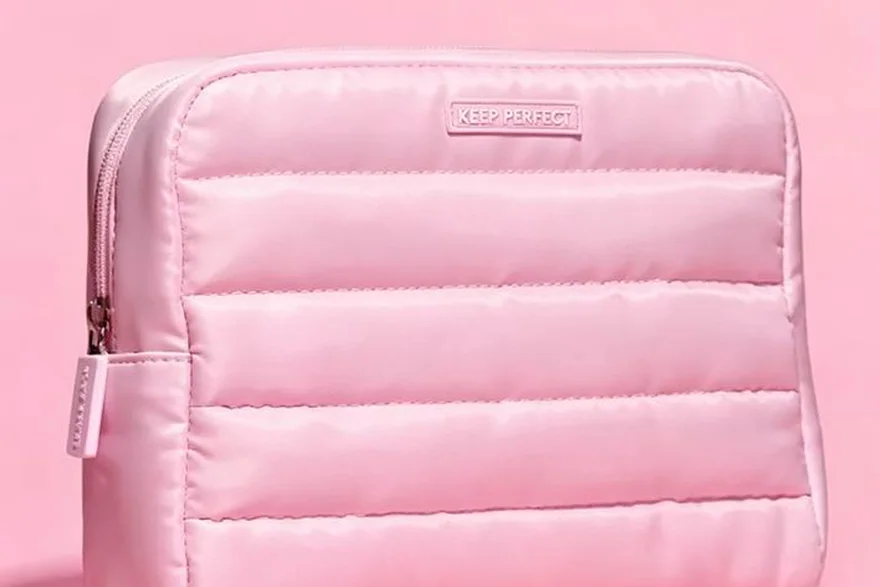
A pocket only creates value when the traveller can see, reach and return its contents. Deep vertical pockets hide short items; narrow elastic loops reject wide jars; flat mesh panels accept sachets but not a round deodorant. The layout should be developed around a planogram of actual objects, with maximum dimensions listed for each zone. For an executive kit, that planogram might include four 100 ml travel bottles, a 45 mm cream jar, a folding toothbrush, a 160 mm comb, a razor in a guard, a small fragrance bottle and a packet of personal essentials. This exercise exposes unusable volume before a sample is cut.
Top-opening, clamshell and hanging formats serve different routines. A top-opening case occupies little counter area and gives direct access to upright bottles, but small items settle below tall ones. A clamshell opens like a book and displays everything, although it needs twice its closed footprint on the counter. A hanging organiser uses vertical wall space and suits compact hotel bathrooms, yet its hook and upper seam carry the full packed load. Buyers should choose one primary mode rather than combining every feature into a heavy, complicated bag.
Hardware should be quiet, low-profile and easy to identify by touch. Two zipper sliders let the user choose an opening point and reduce the travel needed to reach one compartment. Pulls around 35 to 45 mm are easier to grasp than tiny metal tabs, and a cord or moulded pull avoids clicking against a hard case during transit. A webbing handle positioned over the packed centre of gravity keeps the bag level. Detachable modules need attachment points that can be operated without forcing a fingernail under a stiff snap; low-profile hook-and-loop, soft tabs or short zipper tracks are practical options.
Visual hierarchy reduces search time. One transparent pocket, one mesh pocket and one opaque pocket communicate three different functions without labels. Interior contrast helps dark tools stand out, while restrained exterior colour preserves the executive appearance. Contrast does not require a bright exterior: a charcoal shell can use a warm grey lining, pale piping at pocket edges and a single accent pull. Logos belong on a panel that remains flat when packed. A mark distorted across a gusset or hidden beneath a handle weakens an otherwise premium presentation.
Room keys, jewellery and charging accessories sometimes enter the morning routine, but they should not turn the toiletries case into a general electronics organiser. A small zipped valuables pocket can sit above the liquid tray and use a different pull, provided its position is obvious and does not press fragile containers. This controlled exception supports hotel use while preserving a clear boundary between wet grooming products and cables stored elsewhere in the luggage.
| Opening architecture | Closed footprint | Best use moment | Main compromise | Useful capacity range |
|---|---|---|---|---|
| Top-opening box | 24 × 15 × 10 cm | Fast sink-side routine | Short items hide below bottles | 2.5-4 L |
| Book-style clamshell | 26 × 17 × 9 cm | Full inventory check | Needs broad counter space | 3-5 L |
| Tri-fold hanging | 24 × 19 × 8 cm | Small bathroom with hook point | Load concentrates at upper seam | 3.5-6 L |
| Two-module system | Two slim pouches | Cabin screening and suitcase zoning | Loose modules can be separated | 2-5 L combined |
| Rigid vanity case | 28 × 18 × 12 cm | Glass-heavy checked packing | Does not compress when empty | 4-6 L |
Send a dimensioned packing list with the brief and test the sample with those exact objects. Pocket count is not an acceptance criterion; usable fit, visibility and retrieval are.
Materials and finish must survive repeated transfers without looking technical
Business-travel wear concentrates at the base, corners, handle anchors and zipper start. A 600D polyester shell is a practical value option; a tightly woven 420D nylon reduces bulk; a fine-grain PU-coated textile creates a cleaner premium surface. Material names alone say little about abrasion, coating adhesion or colour transfer. The specification should state face fabric, backing or coating, target weight in g/m² and finish, then attach an approved swatch. If colour consistency matters across repeat orders, the swatch and colour reference should remain part of the approval record.
A professional appearance relies on alignment. Piping should meet cleanly at corners, the lid should sit square to the base, zipper tape should not wave, and logo placement should relate to the handle and opening direction. Matte gunmetal or colour-matched hardware generally reads quieter than bright plated metal, but coating durability needs review where sliders rub. Tonal embroidery suits woven shells; a small debossed patch suits coated surfaces; screen print supports simple marks. Each method should be sampled on the production-intent material because coating, texture and foam backing change edge definition.
Colour performance matters when a dark bag touches a white shirt or pale suitcase lining. ISO 105 colour-fastness standards provide recognised methods for assessing colour behaviour under rubbing and other exposures. The buyer can reference the relevant method and acceptance level instead of asking vaguely for colourfast fabric. A separate wipe test for the interior should use representative toiletries, because foundation, oil and alcohol-based fragrance challenge coatings differently from water.
Quality inspection should focus on function as well as appearance. A packed hang test checks the upper seam on a hanging format; repeated opening checks expose zipper waviness and slider snagging; a standing test confirms that the base does not roll when bottles are loaded; and a measured seam check catches pocket openings that have narrowed during binding. Final inspection at AQL 2.5 under ISO 2859-1 sampling procedures should classify critical, major and minor defects before inspection begins. An inspection level without a defect list leaves too much room for interpretation.
Packaging should preserve the shape without creating needless shipment volume. A light internal paper form can support the lid and base, while each pull is positioned to avoid imprinting the coated surface. Carton orientation should prevent handles from carrying stack pressure. Before packing instructions are frozen, the buyer should compare presentation with the empty product's ability to recover after compression, since an executive case that arrives creased undermines the intended appearance.
| Executive finish choice | Visual effect | Functional implication | Approval evidence |
|---|---|---|---|
| Fine-weave 420D nylon | Light, understated and technical | Low bulk; needs coating review | Swatch plus fabric specification |
| 600D polyester | Structured and familiar | Good value; coarser surface | Weight, backing and abrasion check |
| PU-coated textile | Smooth, premium and wipeable | Fold lines may show; coating can scuff | Crease and adhesion review |
| Tonal embroidery | Subtle corporate branding | Needle density can pucker foam | Decorated panel sample |
| Moulded soft pull | Quiet, tactile closure cue | Colour matching adds control point | Pull drawing and approved colour |
- Define fabric construction and finish rather than approving a material name alone.
- Inspect the bag while loaded; an empty case can hide base roll, handle imbalance and pocket distortion.
- Place decoration on a stable panel and approve it on the intended laminated stack.
- Keep a sealed reference sample for repeat colour, hardware and workmanship decisions.
The B2B Customisation View
A well-run cosmetic bags programme is a documentation exercise as much as a sewing exercise, and the documents are what keep the first shipment identical to the thousandth.
Budgeting and scheduling inputs: MOQ 500 per style and colourway; sampling 6–10 working days, extended to 12–15 for lined, moulded or hardware-heavy builds; bulk 35–50 days; pre-shipment inspection at AQL 2.5 per ISO 2859-1; FOB Xiamen; T/T 30/70.
The practical outcome for the buyer is a single accountable counterpart holding cost, quality and calendar together across the life of the programme.
Which Brand Types Benefit Most
Start-up travel brands benefit from a focused two-size architecture: a compact cabin-oriented style and a larger working-week style sharing colour and hardware. That controls development without pretending one volume suits every itinerary. Established luggage brands can extend an existing shell fabric, zipper finish and lining colour into the toiletry category, creating a coherent packing system. Retailers should merchandise by access mode—top opening, clamshell or hanging—because that distinction is easier for shoppers to understand than a long list of pockets. E-commerce sellers need a clear object planogram, external and internal dimensions, packed photography and a truthful explanation of the removable liquids pouch. Corporate gift and hospitality buyers can use a restrained exterior with a replaceable interior patch, luggage tag or presentation sleeve, avoiding an oversized permanent logo that limits everyday use.
Commercial planning begins at 500 pieces per style and colourway. A standard soft construction normally samples in 6-10 working days, while a complex moulded or multi-module case needs 12-15 working days. Bulk production is 35-50 days after sample approval. Inspection is set at AQL 2.5 under ISO 2859-1, with FOB Xiamen shipment terms and T/T 30 deposit, 70 against bill of lading. Buyers should freeze the packed-object list, dimensions, fabric stack, zipper gauge, logo artwork and defect classifications before approving the sample. That discipline matters more than adding another compartment late in development, and it gives each sales channel a product description that matches the physical bag.
Range reviews should compare channel returns as well as sell-through. Reports of caps pressed open, unclear pocket photography or a case that occupies too much cabin space point to different corrections. A size change affects carton planning and capacity messaging; a lining change affects cleaning and contrast; a hardware change affects appearance and operation. Keeping those decisions linked to the approved use case prevents a retail request from quietly altering the executive packing system.
Frequently Asked Questions
What size toiletry bag works for a two-night executive trip?
A case around 24 × 15 × 10 cm, or roughly 2.5 to 3.5 litres, usually covers a two-night trip when liquids are decanted into travel-size containers. The correct size still depends on the object list. Test four liquid bottles, toothbrush, deodorant, compact grooming tool and any personal essentials in the sample. Leave enough clearance for the zipper to close without pressing caps, because compression against a closure increases leak and snag risk.
How should a business traveller carry liquids through airport screening?
Keep regulated liquids in a removable transparent pouch that follows the rules of the departure authority, then place that pouch inside the main organiser after screening. For departures from the United States, consult the TSA liquids guidance rather than relying on a product claim. The textile organiser itself is not approved by TSA. A clear module with an unobstructed panel, simple closure and quick-release attachment reduces unpacking while keeping dry tools separate.
Which opening style is best for a small hotel bathroom?
A hanging design is useful when a reliable hook or rail is available, because it uses vertical space instead of the counter. A narrow top-opening box is better where hanging is uncertain and only a slim shelf is available. A clamshell gives the best overview but needs a broad flat surface. Buyers should test the chosen architecture in a mock area and include the packed weight when evaluating a hanging hook and its seam.
Why should an executive wash bag have a light interior?
A light or mid-tone lining makes dark caps, small tools and spills easier to see. It can shorten the search for items without making the exterior look informal. Warm grey, sand or pale blue can provide useful contrast inside a black or navy shell. The lining should also be wipeable and colourfast. Pure white shows every mark, so a lightly textured neutral often balances visibility with realistic maintenance.
How can a toiletry organiser prevent bottles from falling over?
Use a stable base, elastic loops matched to bottle diameters and dividers that reach high enough to control the shoulder of each container. Loops that are too low allow tall bottles to pivot; loops that are too tight distort labels and are difficult to load. Prototype with full bottles because weight changes the behaviour. A 15 to 25 mm liner tray below the zipper path adds useful containment if a cap loosens.
What exterior materials suit a professional travel assortment?
Fine-weave 420D nylon offers a light technical look, 600D polyester gives economical structure, and a PU-coated textile creates a smooth wipeable surface. The choice should follow target price, abrasion exposure and brand language. Specify the complete fabric stack, not just the fibre name. Review corner scuffing, fold whitening, coating adhesion and colour transfer on the intended colour before approval.
How much branding belongs on a corporate toiletry gift?
A discreet mark around 30 to 60 mm wide on a stable front panel is usually more reusable than a graphic spread across the lid. Tonal embroidery, a small debossed patch or a colour-matched woven label can support an executive character. The logo must be sampled on the actual laminated panel because backing thickness affects puckering and edge detail. A removable presentation sleeve can carry campaign messaging without permanently dominating the bag.
When is a removable liquids pouch better than a fixed pocket?
A removable pouch is better for cabin screening, sink-side cleaning and itineraries where the traveller separates damp or leak-prone items. A fixed pocket can be slimmer and cannot be misplaced, so it works for checked travel or simple hotel amenity kits. If removable, the attachment should release without excessive force yet remain secure while packed. Test the connector with the pouch full, not empty.
Which zipper configuration gives the fastest access during a trip?
A two-slider zipper around three sides lets the traveller position the opening near the needed zone and open the lid fully when required. A single straight zipper is lighter but gives less visibility. Pulls of 35 to 45 mm are easier to locate than tiny metal tabs, especially in low light. The zipper path should avoid tight square corners, which increase resistance and encourage users to pull the slider sideways.
How should buyers evaluate leak containment in an executive case?
Define a repeatable check with a stated liquid volume, dwell time, bag orientation and acceptable external seepage. Test the removable pouch and the main lined compartment separately. Inspect seam intersections and the zipper line, since those are likely escape paths. This is a containment check, not a claim that the bag can be submerged. Record the construction and result on the approval sample so later changes can be compared.
What minimum order applies to an executive travel toiletry style?
The minimum is 500 pieces per style and colourway. A black and a navy version of the same construction count as separate colourways, so the range plan should concentrate volume where demand is clearest. Start-up brands can use shared lining, webbing and hardware across sizes to simplify approvals, while still treating each style-colour combination as its own order line.
How long should sampling and bulk planning allow for this bag?
A standard soft executive toiletry bag samples in 6-10 working days. A complex construction, such as a moulded shell or several detachable modules, takes 12-15 working days. Bulk production is 35-50 days after sample approval. The schedule should reserve time before approval for a packed-object review, decoration sign-off and closure test; approval should not be issued from photographs alone when fit determines function.
Which inspection points matter most for a hanging business-travel bag?
Check the hook attachment, upper seam, zipper path, pocket dimensions, base stability, lining cleanliness and logo alignment. Conduct a loaded hang check using the approved object plan, then inspect distortion at the top panel. Final inspection uses AQL 2.5 under ISO 2859-1, but the defect classification should state that a detached hook, blocked zipper or exposed sharp edge is more serious than a small cosmetic stitch deviation.
Why is a modular layout useful for mixed rail and air itineraries?
Modules let the traveller remove the transparent liquids pouch for screening, carry a dry grooming sleeve to a washroom and distribute slim pieces around a narrow suitcase. Rail segments may not require screening, but the same organisation makes frequent hotel changes easier. The risk is fragmentation, so modules need a clear home, distinctive material cues and secure attachments. Keep the number of pieces limited to functions that genuinely move separately.
People Also Ask
What is the best toiletry bag for frequent business travel?
The best format is a semi-structured organiser sized to the traveller's actual kit, with a removable transparent liquids pouch, wipe-clean lining, stable base and an opening suited to typical hotel space. A two-slider closure and visible pocket hierarchy improve access. A credible product avoids promising universal airport approval and instead explains how the removable pouch supports screening subject to the rules at departure.
Can a toiletry bag go in carry-on luggage?
Yes, the textile organiser can go in carry-on luggage, but regulated liquids inside it must follow the applicable container and transparent-bag rules. Travellers should verify the authority and airline requirements for the route. Designing the liquids element as a removable clear pouch makes screening easier, while dry items can remain organised in the main case. The bag itself does not override restrictions on its contents.
Are hanging toiletry bags practical for executive travel?
Hanging bags are practical where bathroom counters are small and a secure hook point is available. They display pockets vertically and keep items away from a wet sink. The trade-offs are a concentrated load at the top seam and more folding layers. Buyers should specify the packed weight, test the hook attachment under load and make sure the folded bag still fits the intended suitcase zone.
How do premium toiletry bags look professional without heavy branding?
Professional character comes from proportion, aligned seams, controlled structure, quiet hardware and a consistent colour system. A small tonal logo on a flat panel is often enough. Fine-weave fabric or a clean coated textile can support the look, provided corners, zipper tape and lining remain neat after packing. Premium presentation is a workmanship outcome, not a large badge or unsupported performance language.
Request a Sample or a Written Quotation
Send the silhouette, dimensions, material preference and logo artwork, and the programme team will return a written quotation with MOQ, sampling window, bulk lead time and inspection standard.
Email: service@junyuanbags.com · WhatsApp: +86 177 5002 0688