Leak-Proof Cosmetic Bags: How Do They Actually Work?
Executive Summary
Leak-proof cosmetic bags work by closing four paths at once: the fabric body, the seams, the closure and any hardware penetration. A coated or laminated fabric handles the body, welding or seam tape handles the seam, a filmed zip with a closed bottom stop handles the closure, and a moulded tray or removable liner handles the contents. Bags described as leak-proof usually only address the first path, which is why the claim fails the first time a bottle bursts inside a suitcase.
For a brand owner the workable approach is to treat leak-proof as a specification with acceptance criteria rather than a marketing word, and to agree the validation method before sampling rather than after bulk. A fill-and-incline test on the approved sample, repeated after flexing and repeated again on a bulk pull, is enough to catch most construction faults. Programmes start at 500 pieces per style and colourway, sample in 6-10 working days or 12-15 for complex constructions, run 35-50 days in bulk, and are inspected to AQL 2.5 under ISO 2859-1.
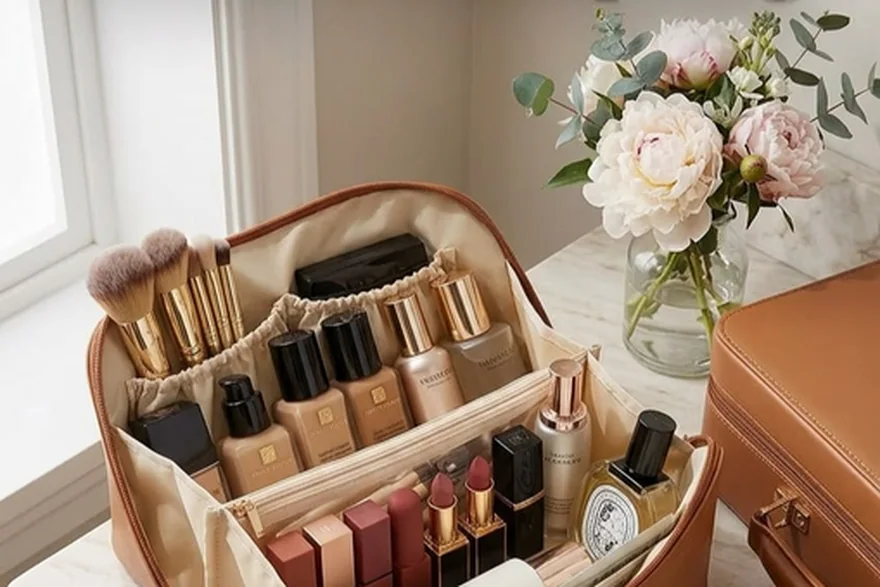
How a Leak-Proof Claim Is Defined in Practice
Leak-proof is a claim about a system, not about a fabric. A buyer who reads a product page saying leak-proof is reading a statement about the finished article under some unstated set of conditions, and the gap between that statement and what the bag actually does is where disputes start. In practice the useful question is narrower: can this bag hold a defined volume of liquid, in a defined orientation, for a defined period, without any of it reaching the outside? Once the question is phrased that way it becomes testable, and once it is testable it can be written into a tech pack and verified before bulk.
Retail reality pushes the claim in two directions at once. Search demand for the category is substantial - toiletry bag searches run at roughly 74,810 per week on Amazon (ASINSIGHT 2026.07) and travel bag for toiletries around 110,000 per month - and sellers competing for that demand want the strongest word available on the listing. At the same time a return costs more than the margin on most units, so a claim that over-promises produces the one outcome a brand owner least wants: a one-star review with a photograph of a stained suitcase.
A sensible commercial definition has four parts. The bag contains a liquid spill of a stated volume, in the orientation the user is most likely to leave it in, for the time it would realistically sit before being discovered, and it does so after the bag has been opened and closed a realistic number of times. Written that way, the definition points directly at the four leak paths - body, seam, closure, hardware - and at the two variables that make a laboratory result meaningless: orientation and time.
Two further variables belong in the definition. Temperature changes viscosity and surface tension, so a thin oil behaves differently from cold water, and time under load matters because a seam tape that holds for ten minutes can creep over an hour. A buyer selling into a warm climate or a sunscreen-heavy category should specify the test liquid as well as the volume, otherwise the sample passes on water and fails on the product the customer actually carries.
The Four Leak Paths and How Each One Is Closed
Every leak in a cosmetic bag leaves through one of four routes. Naming them separately is what turns a vague requirement into a checklist that a factory can quote against and an inspector can verify. The first two are fabric and seam, which most briefs cover; the second two, closure and hardware, are where most failures actually originate.
| Leak path | Mechanism | How it is closed | Cost of closing it |
|---|---|---|---|
| Fabric body | Absorption and capillary draw through a woven face and lining | Laminated film or coating, tested for hydrostatic resistance | Low, mostly material cost |
| Seam | Needle holes and the gap between two stitched panels | Hot-wedge or RF welding, or stitch plus hot-air seam tape | Medium, adds machine time and setter skill |
| Closure | Wicking along woven zip tape and out at the stop | Filmed water-resistant zip, garage, closed bottom stop | Low to medium, per-unit zip cost |
| Hardware | Rivets, eyelets, hanging hooks and label stitching through the barrier | Welder patches, non-penetrating fixings, internal backing plates | Medium, adds operations |
The coated-fabric test methods published by ASTM, and specifically ASTM D751 for coated fabrics, are the usual reference for the first path, covering hydrostatic resistance and coating adhesion. The vocabulary for the third path is standardised separately: ASTM D2053 defines zipper terminology, which is worth citing in a brief so that a buyer and a factory mean the same thing by tape, coil, slider, stop and garage. Confusion over those five words causes more specification errors than any material choice.
Hardware is the path most briefs miss entirely. A hanging hook on a toiletry bag, an eyelet for a strap, a riveted logo plate and even the stitch line of a woven label all penetrate the barrier from the outside inwards. None of them can be fixed with a thicker film. The practical answers are to move the fixing to a bonded patch that sits on the outside of the laminate, to back it with an internal welded plate, or to relocate it to a panel that is not part of the liquid containment zone at all - the lid, the outer pocket or a separate webbing tab.
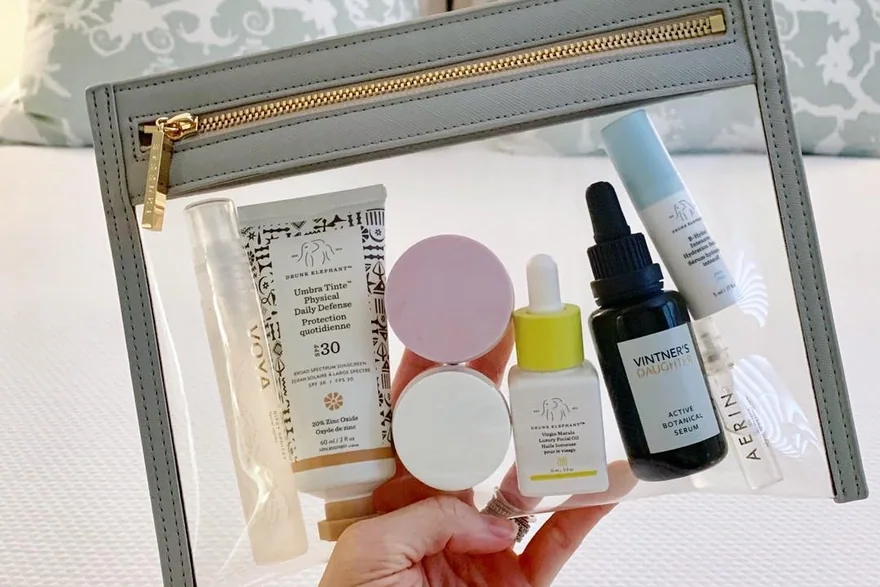
There is also a fifth consideration that sits outside the bag: the container. A leak-proof bag holding a bottle with a loose cap will still deliver liquid to the zip line, because the bottle is the source and the bag is only the second line of defence. Programmes aimed at travel, gym and sports channels increasingly add a structured internal format - a moulded tray, a removable clear pouch or an elasticated bottle loop that holds containers upright - so that the contents stay capped and separated rather than relying on the barrier alone.
Fabric and coating weight both deserve a number rather than a description. A lining described only as polyester can be anything from a light 190T to a heavy 420D, with a coating weight that varies by an order of magnitude; stating the denier, the weave and the coating weight in grams per square metre removes most of the scope for substitution. The same applies to the face fabric, because a heavy face fabric bonded to a light laminate produces a bag that creases the film at every fold.
Closure Engineering and Internal Format Choices
The zip carries more of the leak-proof burden than any other component, and it is specified far too loosely on most briefs. A coil zip has a woven tape, a slider, a top stop and a bottom stop, and each of those is a decision. Tape width and coating decide how much liquid the tape holds before it drips; slider type decides whether the teeth stay aligned under pressure from an over-packed bag; the bottom stop decides whether liquid exits at the closed end or is held there. A filmed zip presses two polyurethane faces together when closed and is the single cheapest upgrade with a measurable effect on leak rate.
Internal format is the second lever. A flat pouch with no structure lets bottles roll, caps loosen and liquid pool against the seam line. A moulded EVA tray or a removable lined pouch holds containers upright, keeps a spill away from the zip, and can be lifted out and wiped - which is the behaviour that turns a bad review into a tolerable one. Elasticated loops sized to a 30 ml to 100 ml bottle, a slip pocket for a palette, and a wipe-clean divider are all cheap additions that change the outcome more than any change to the film.
- Specify the zip by tape width, coil size, film coating, slider type and stop type, not by the word waterproof
- Fit a zip garage at the top so the slider sits inside a covered channel rather than at an open end
- Choose a closed bottom stop for any bag intended to contain liquid rather than a split open-end zip
- Hold containers upright with elasticated loops or a moulded tray so caps stay tight in transit
- Move rivets, eyelets and hanging hooks off the containment panels, or back them with a welded patch
One more engineering detail decides whether the bag is leak-proof in a suitcase: orientation. A bag lying flat in a hold puts the zip line at the bottom, and a partially filled bottle resting against it will find the stop within minutes. A gusseted base that lets the bag stand, a hanging hook for hotel use, and a zip that runs across the top rather than down one side are design choices that keep the closure above the liquid line. They belong in the design review, not in a marketing meeting.
Zip gauge is the next decision after the tape. A #3 coil suits a flat pouch with a light lining; a #5 coil suits a structured case, takes a heavier puller and resists the spreading that happens when an over-packed bag presses against the teeth. Reverse coil hides the teeth inside and is the usual choice where the exterior must look clean, while a metal-look finish adds weight and can catch on the lining. Gauge, tape width and puller finish should be three separate lines on the brief.
Closure alternatives exist for programmes where a zip is the wrong answer. A roll-top with a welded closure removes the zip entirely and is genuinely leak-resistant, but it is slower to open and unfamiliar to some users. A magnetic or press-stud flap is fast and looks premium but leaves a gap. A drawcord with a cord lock is cheap and light but offers no barrier at all. Matching the closure to how the user actually opens the bag matters more than any material upgrade.
Validating Leak Performance Before Bulk Ships
Validation does not need a laboratory to be useful; it needs to be repeatable and agreed in writing. The three checks below can be run on a sample bench with a measuring jug, a board and a timer, and the same three can be repeated by an inspector on a bulk pull so that the production run is judged against the sample that was approved. What matters is that the method is fixed before sampling starts.
| Check | Method | Pass condition to agree in writing | When it runs |
|---|---|---|---|
| Static fill | Stand the bag upright, add a stated volume of water, leave it for a stated period | No moisture on the outside surface or on paper placed underneath | |
| Incline hold | Fill to the same volume, lay the bag at a stated angle on a board for a stated period | No drip from the zip line, corners or seam tape | |
| Flex and refill | Open, close and flex the bag a stated number of times, then repeat the static fill | Same pass condition as the static fill after flexing | |
| Seam bond check | Inspect seam tape or weld line for lift, channel or pinhole at corners | No visible lift at any corner or at the zip junction |
The pass conditions are left blank in this table on purpose: they are commercial decisions. A bag sold as splash-resistant might legitimately pass a static fill of 50 ml for ten minutes, while a bag sold as leak-proof for air travel should hold 200 ml inclined at 30 degrees for an hour. The point is that both are defensible if they are written down, and neither is defensible if the only statement on file is the word leak-proof.
Colour and surface durability matter alongside liquid performance, because a lining that holds water but bleeds dye onto a pale towel generates the same return. The AATCC test method library includes the colour-fastness procedures most buyers cite for crocking and laundering, and a brief that names the method and the rating avoids the argument about whether a faint mark counts. Finished goods are then inspected to AQL 2.5 under ISO 2859-1, shipment is FOB Xiamen, and payment is T/T 30 deposit with 70 against bill of lading.
Sampling discipline is what makes the validation meaningful. A buyer should approve a pre-production sample built on production tooling and production seam settings, not a bench sample made by a setter. Where a programme uses welding, the sample should come off the same machine that will run bulk, and the settings should be recorded. A sample made under different conditions validates nothing about the run that follows it.
Documentation closes the loop. The inspection report, the photographs from the bench test, the lining mill test report and the approved sample reference should sit in one file, because a claim dispute months later is settled on paperwork rather than on argument. Where a retail buyer asks for evidence behind a performance claim, that file is the answer, and assembling it during sampling costs far less than assembling it after a complaint. Where a programme combines a welded seam, a filmed zip and a coated shell, sampling runs at the longer end of that window, so the validation date rather than the design date should set the launch calendar.
The B2B Customisation View
Launch calendars are unforgiving, so cosmetic pouches, vanity cases and beauty organisers programmes are planned backwards from the on-shelf date rather than forwards from the first sketch.
Fixed commercial parameters: 500 pieces per style and colourway minimum, first sample in 6–10 working days (12–15 for complex or hardware-intensive constructions), bulk 35–50 days after approval, AQL 2.5 inspection under ISO 2859-1, FOB Xiamen, T/T 30/70.
A sourcing and programme-management company is answerable for the whole file, not just the sewing, which is why inspection reports and compliance documents are issued with every shipment.
Which Brand Types Benefit Most
Leak-proof construction is bought for a reason, and the reason differs by channel. Start-up brands usually arrive with a specific complaint to solve - a review thread about a ruined wash bag, or a category where the incumbent product leaks - and for them the leak-proof claim is the product. That justifies a welded seam and a filmed zip even at a higher unit cost, because the claim is what earns the listing. Established brands tend instead to be protecting a reputation across a wide range, and for them consistency matters more than the headline: one validated construction, one agreed test method, applied across every size so that no single SKU becomes the weak link in the range.
- Retailers and grocery buyers want the claim to survive a customer complaint, so documented acceptance criteria and a test report on file protect the category manager as much as the brand
- E-commerce sellers should weigh the return rate directly: a bag that prevents one in twenty returns often pays for a film upgrade within a single quarter
- Airline, cruise and hotel amenity buyers use leak-proof bags as a risk control in transit, where a spill damages property that is not theirs
- Sports, gym and swim ranges need the claim to hold against sunscreen and chlorine residue, which are thinner and more mobile than water
- Gift and subscription buyers usually need the claim for copy rather than for performance, and can often meet it with a lighter, cheaper construction if the acceptance test is written honestly
- Professional and mobile beauty buyers judge leak-proof performance by the worst case, so the acceptance test should model a burst bottle rather than a wet brush
- Marketplace sellers should keep the test report on file, because a performance claim without evidence is the first thing a compliance reviewer asks about
- Buyers running seasonal promotions need the claim fixed months before the drop, since changing a seam method after sampling restarts the validation clock
Frequently Asked Questions
What is the difference between leak-proof and waterproof in a cosmetic bag?
Waterproof describes resistance to liquid passing through the material, usually from outside inwards. Leak-proof describes the bag holding liquid inside, which is a harder problem because it involves the seams, the closure and any hardware penetration. A bag can be genuinely waterproof in its fabric and still fail a leak test, because the liquid leaves through the zip line long before it goes through the film.
How much liquid should a leak-proof cosmetic bag be able to hold?
There is no standard figure, which is precisely why the claim needs a written acceptance criterion. A realistic travel brief is 150-250 ml held at an incline for an hour, because that approximates a burst bottle or a poorly capped one in a suitcase. A splash-resistant pouch might be specified at 50 ml for ten minutes. Both are legitimate if they are documented before sampling.
Does a water-resistant zip make a cosmetic bag leak-proof?
It helps substantially but does not complete the job on its own. A filmed zip presses two coated faces together when closed and slows wicking along the tape, but liquid can still exit at the bottom stop, at the corners where the tape meets the panel, and through the stitch line that fixes the tape in place. It is one of four paths, and the strongest single upgrade per unit of cost.
Why does a bag pass a leak test in the sample room and fail in production?
Usually because the seam-sealing parameters were not recorded when the sample was made. A hot-air seam-sealing machine depends on temperature, pressure, dwell and speed, and a bulk run set by a different operator can produce a tape bond that looks identical and lifts after flexing. The fix is to record the settings on the approved sample and require bulk to run to them.
Can a sewn cosmetic bag ever be made leak-proof?
Yes, with seam tape. The panel is sewn and then a thermoplastic tape is laid over the stitch line and bonded with hot air, closing the needle holes. It is the standard approach for PEVA and silicone linings that cannot be welded. The seam tape width and the bond quality at corners are the two things to verify, since corners are where tape lifts first.
What role does the internal format play in stopping leaks?
A large one. Bottles that roll knock their own caps loose and pool liquid against the zip line. Elasticated loops sized to 30-100 ml containers, a moulded tray or a removable lined pouch keeps containers upright and keeps a spill away from the closure, and gives the user something they can lift out and wipe. It is usually cheaper than upgrading the film.
Do hanging hooks and rivets compromise a leak-proof construction?
They do if they penetrate the containment panels. A riveted hook, an eyelet or even the stitch line of a woven label creates a hole through the barrier that no film thickness can close. The options are to move the fixing to a panel outside the liquid zone, to bond it to a welded patch on the outside of the laminate, or to back it internally with a welded plate.
How long should a leak test run before a bag is judged?
Long enough to model the realistic failure scenario. Ten minutes catches gross faults such as an unsealed corner or an open bottom stop. An hour at an incline is a better model of a suitcase in a hold, and it is the condition most travel programmes should specify. The period must be written into the acceptance criterion, not left to whoever is holding the stopwatch.
Can leak-proof cosmetic bags be tested by an accredited laboratory?
Yes. Third-party laboratories test coated fabrics for hydrostatic resistance and coating adhesion using the ASTM methods, and textile laboratories run the AATCC colour-fastness procedures. A buyer should ask for the report to name the method, the conditioning and the result, and should check that the sample tested came from the production construction rather than from a different lining entirely.
Does a leak-proof lining affect how the bag feels or sounds?
It can. Thicker films and welded seams make a bag stiffer and, in the case of some PEVA films, noisier when handled - a common complaint in reviews of budget wash bags. TPU laminates are softer and quieter, which is part of why they cost more. Hand feel should be judged on a sample in the room, not inferred from a specification.
What is the cheapest way to improve leak performance on an existing design?
Upgrade the zip and add a garage before upgrading the film. A filmed zip with a closed bottom stop and a covered slider channel addresses the path that causes most failures, and it usually costs less per unit than moving to a thicker laminate or adding welding operations. The second cheapest change is holding bottles upright with internal loops.
How is leak performance checked during pre-shipment inspection?
By repeating the agreed bench test on a random pull from the finished cartons, at the sample size dictated by the inspection level. The pass condition is the one written into the tech pack. Finished goods are inspected to AQL 2.5 under ISO 2859-1, so the number of units pulled depends on the lot size, and a failing result is handled under the terms agreed before production.
Do leak-proof bags need special care labelling?
They benefit from it. A care label that says wipe clean only, do not machine wash, and do not tumble dry protects the seam tape and the filmed zip, both of which degrade under agitation and heat. It also sets expectations: a bag sold as leak-proof cannot be expected to survive a washing machine, and saying so on the label prevents a predictable return.
Does altitude or cabin pressure affect whether a bag leaks?
It can. Pressure change in an aircraft hold expands air inside bottles and pushes liquid past a cap that was tight at ground level, which is one reason travel ranges should specify containers held upright and a closure that is not under pressure from an over-packed bag. Bags for air travel should be tested after a simulated over-pack rather than empty.
Should a leak-proof claim appear on retail packaging at all?
Only if the acceptance test behind it is documented. Retail compliance teams increasingly ask for the test report that supports a performance claim, and an undocumented claim is a liability rather than an asset. A defensible alternative is a narrower statement such as seam-sealed and wipe-clean lining, which describes the construction rather than promising an outcome.
People Also Ask
Do leak-proof makeup bags really work?
They work when the whole system is specified: a laminated body, welded or taped seams, a filmed zip with a closed bottom stop, and no hardware penetrating the containment panels. Most bags sold as leak-proof only address the fabric, which is why they hold a splash but fail when a bottle actually bursts inside them. The two upgrades that change the outcome most are a filmed zip with a closed bottom stop and a seam that is welded or taped rather than simply sewn.
What makes a toiletry bag leak-proof?
Four things in combination: a coated or laminated barrier, a seam that is welded or taped rather than simply sewn, a closure that resists wicking, and an internal format that keeps containers upright. The zip is usually the deciding component, because woven zip tape carries liquid along its length and out at the bottom stop. Internal format matters too, since holding bottles upright keeps caps tight and keeps a spill away from the closure.
How do you test whether a makeup bag is leak-proof?
Stand the bag upright with a measured volume of water and leave it for a fixed period, then repeat at an incline to simulate a suitcase, then flex the bag and repeat again. Agree the volume, the angle, the duration and the pass condition in the tech pack so that bulk can be judged against the approved sample. Repeat the test after flexing the bag, because corner seams tend to fail after movement rather than at rest.
Why did my toiletry bag leak even though it says waterproof?
Waterproof usually refers to the fabric resisting liquid from the outside, not to the bag containing liquid from the inside. A leak travels along the zip tape, through stitch holes and out at the bottom stop. Check whether the bag has seam tape or welded seams and a filmed zip before relying on it to contain a spill. A filmed zip and a taped or welded seam are the two features to look for on the next purchase.
Request a Sample or a Written Quotation
Send the silhouette, dimensions, material preference and logo artwork, and the programme team will return a written quotation with MOQ, sampling window, bulk lead time and inspection standard.
Email: service@junyuanbags.com · WhatsApp: +86 177 5002 0688