Cosmetic Bag Sourcing Glossary: 50 Terms Every Buyer Should Know
Executive Summary
The cosmetic bag sourcing glossary every buyer needs covers fifty terms in four groups: materials and coatings, construction and hardware, testing and compliance, and commercial and logistics language. The direct answer is that most sourcing disputes are vocabulary disputes — waterproof confused with water resistant, 600D quoted without a weave or coating, AQL 2.5 named without a sampling standard, or FOB assumed to include freight. A shared vocabulary turns a conversation about impressions into a conversation about measurements.
Buyers who write a tech pack in these terms receive faster and more comparable quotes, because a specification naming denier, g/m², coating type, zipper gauge, stitch density, tolerance and packing method leaves very little to interpret. The same vocabulary maps onto the checks used later: AQL 2.5 under ISO 2859-1 for inspection, the ISO 105 series for colour fastness, ASTM D751 for coated fabrics, and REACH or CPSIA for destination-market chemical limits. Keep this glossary beside the spec sheet during sampling, and use the same terms in the purchase order as in the tech pack.
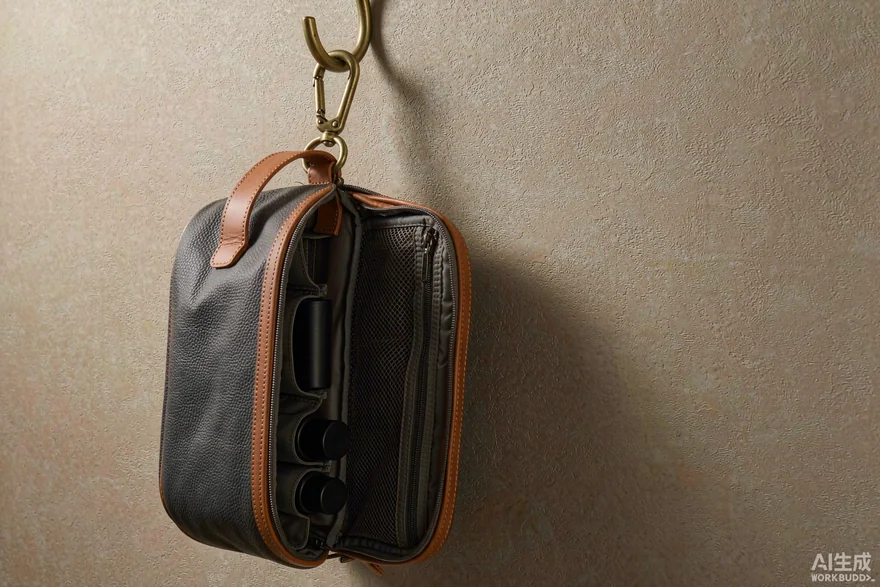
Fabric, coating and material terms (terms 1-13)
Material terms cause more quoting confusion than any other group, because a single word such as polyester can describe a 45 g/m² lining or a 300 g/m² coated shell. The first thirteen terms are the ones a buyer needs in order to describe a fabric precisely enough that two suppliers quote on the same thing.
| Term | Meaning in a cosmetic bag specification | Why a buyer cares |
|---|---|---|
| Denier (D) | Linear mass of a filament, so 600D is thicker and heavier than 210D | Sets abrasion resistance, drape and hand feel; appears on every fabric spec |
| g/m² (GSM) | Fabric mass per square metre, normally quoted after coating | Better than denier alone for comparing a woven shell with a lining |
| rPET | Polyester made from recycled feedstock, usually post-consumer bottle flake | A recycled-content claim needs a certificate, not just a fabric name |
| PU coating | A polyurethane layer applied to the face or back of a fabric | Drives wipe-clean behaviour and the long-term peeling risk |
| TPU laminate | A thermoplastic polyurethane film bonded to fabric rather than painted on | Usually more durable and more expensive than a liquid PU coating |
| PVC / vinyl | A plasticised film used for clear panels and clear security bags | Cold-crack behaviour and plasticiser content must be specified |
| EVA | Ethylene-vinyl acetate sheet used for moulded vanity cases | Moulded work adds tooling and extends sampling to 12-15 working days |
| Nylon (polyamide) | A strong filament commonly supplied in 210D, 420D or 840D | Dyes differently from polyester and generally costs more per metre |
| Twill / plain weave | The interlacing pattern of warp and weft yarns | Affects drape, print sharpness and resistance to seam slippage |
| Ripstop | A grid of thicker threads that stops a tear from spreading | Cheap insurance for lightweight travel pouches and linings |
| Canvas (oz/yd²) | Cotton or blended fabric weighed in ounces per square yard | Heavier canvas needs stronger hardware and a heavier seam construction |
| Peached finish | A raised surface produced by brushing or sanding the fabric | Soft hand feel, but it can reduce print sharpness and edge definition |
| Hydrolysis resistance | Resistance of a coating to breaking down in warmth and humidity | The main cause of peeling in bags stored in a bathroom |
Construction and hardware terms (terms 14-26)
Construction terms describe how the bag is put together, and hardware terms describe the parts a user touches. Together they determine whether a bag survives daily use, and they are also where a specification most often stops short — a drawing shows a zipper but does not say whether it is a #3 coil or a #5 metal.
| Term | Meaning in a cosmetic bag specification | Why a buyer cares |
|---|---|---|
| Zipper gauge (#3, #5, #8) | Approximate width of the closed teeth in millimetres | Sets strength, weight and cost; #5 is the usual pouch standard |
| Nylon coil zipper | Teeth formed from a continuous coil sewn to tape | Smooth running and repairable; the default choice for soft bags |
| Metal zipper | Discrete metal teeth crimped onto tape | Heavier and stiffer, and requires a plating specification |
| Slider and puller | The moving body that closes the teeth and the tab the user grips | The most touched part; failure here ruins an otherwise good bag |
| Auto-lock slider | A slider that holds position until the puller is deliberately tugged | Stops a bag opening itself inside a suitcase |
| Binding / bias tape | A folded strip stitched over a raw seam allowance | Covers internal seams and prevents fraying at the opening |
| Piping | A cord covered with fabric and set into a seam | Adds shape and structure to a boxed vanity case |
| Interlining / foam lamination | Foam or nonwoven bonded to the shell to give body | Determines shape retention; state thickness in millimetres |
| Boxed corner / gusset | A folded corner or added panel that gives the bag depth | Decides whether the bag stands up and how much it holds |
| Stitch density (SPI) | Stitches per inch, typically 7-10 on bag seams | Too few stitches open up; too many perforate the fabric |
| Bar tack | A dense zigzag reinforcement at a stress point | Keeps hooks, handles and loop anchors from tearing out |
| Overlock | An edge stitch that wraps the raw edge of a panel | Cheap internal finishing; quality depends on thread and tension |
| Hang hook / swivel hook | A metal or plastic hook for hanging the bag in a bathroom | Needs a load rating and a bar-tacked anchor to stay attached |
- Zipper gauge, construction type and tape colour, stated as a single line.
- Slider behaviour — auto-lock, non-lock or reversible — and puller material.
- Stitch density in stitches per inch for both seams and visible topstitching.
- Interlining type and foam thickness in millimetres, not just described as padded.
- Reinforcement method at every hook, handle and elastic loop anchor.
Zipper vocabulary is worth getting exactly right, because a gauge number, a construction type and a slider behaviour are three separate decisions that buyers frequently collapse into one. The industry terminology for closures is catalogued in ASTM D2053, which gives buyers a shared reference for tape, teeth, slider and stop. A brief that says only 'a zipper' invites three different quotations; a brief that specifies a #5 nylon coil zipper with an auto-lock slider and a moulded puller invites one. Hardware decisions also interact with fabric: a heavy metal zipper on a lightweight lining pulls the tape and shortens seam life, so gauge and fabric weight should be chosen together. That single sentence prevents the most common hardware complaint in the category, which is a closure that outlives the seam it is sewn into.

Quality, testing and compliance terms (terms 27-39)
These thirteen terms decide what happens when something goes wrong. A buyer who can name the sampling standard, the defect classification and the applicable chemical regime can resolve a dispute in a day; a buyer who cannot is left arguing about impressions. The terminology is also what a laboratory needs in order to issue a report that means anything.
| Term | Meaning in a cosmetic bag specification | Why a buyer cares |
|---|---|---|
| AQL 2.5 | The acceptance quality limit used for bag inspections | Sets how many defects allow a lot to pass or force rejection |
| ISO 2859-1 | The sampling standard behind the AQL plan | Defines sample size, accept number and reject number |
| ISO 105 | A series of colour fastness test methods | Used to specify rubbing, washing, light and perspiration behaviour |
| Crocking | Colour transfer under dry or wet rubbing | The most common complaint on dark linings and printed panels |
| Martindale abrasion | A cycle count before a fabric shows visible wear | Useful for comparing quilted and coated shells |
| Colour fastness to light | Resistance to fading under artificial light | Matters for bags displayed in a shop window |
| REACH SVHC | Substances of very high concern under EU chemicals law | Importers carry communication duties for listed substances |
| CPSIA | US limits on lead and certain phthalates in children's products | Age grading decides whether the regime applies at all |
| OEKO-TEX Standard 100 | A limit-value test carried out on the finished article | Does not cover recycled content, durability or labour practice |
| GRS transaction certificate | The document that follows a specific recycled shipment | Without it, a percentage claim on packaging is unsupported |
| Golden sample | The sealed, signed reference for bulk production | Every dispute is ultimately resolved against this object |
| Counter sample | A sample made to match a physical reference supplied by the buyer | Used when a buyer sends a benchmark product rather than a drawing |
| Defect classification | Sorting of defects as critical, major or minor | Decides whether a borderline lot passes or fails |
Agreeing the defect classification before inspection is worth more than arguing about the AQL number afterwards. A critical defect such as a broken zipper or a detached hook should stop a lot regardless of the defect count, while a minor defect such as an untrimmed thread end should be counted against the accept number. Write the three categories into the purchase order with one example each.
Two of these terms are worth separating carefully. ISO 2859-1 is the sampling standard — it defines how many pieces are drawn from a lot and what accept and reject numbers apply — while AQL 2.5 is the limit applied through that standard. Naming one without the other leaves the inspection undefined; naming both, plus the general inspection level and the defect classification, leaves nothing to negotiate at the moment the report arrives. The published standard can be read at ISO 2859-1. In practice the most frequently omitted element is the general inspection level, which determines the sample size; without it, a buyer and a supplier can both be correct about AQL 2.5 and still disagree about how many pieces were examined. Most arguments about inspection results turn out to be arguments about sample size rather than about defect counting, which is why the level belongs in the purchase order.
Commercial, logistics and packaging terms (terms 40-50)
The final eleven terms govern what the buyer actually pays and when the goods become the buyer's responsibility. Misunderstanding them does not change the product, but it changes the margin, and more than one cosmetic bag launch has been profitable on paper and loss-making once freight, duty and channel fees were added.
| Term | Meaning in a cosmetic bag specification | Why a buyer cares |
|---|---|---|
| MOQ | Minimum order quantity, 500 pieces per style and colourway | Below it, fabric and trim minimums raise the unit price |
| FOB Xiamen | The seller delivers the goods on board at the named port | The buyer pays freight, insurance and all onward costs |
| T/T 30/70 | Telegraphic transfer: 30% deposit, 70% balance | The balance falls due against the bill of lading |
| Bill of lading | The carrier's receipt and the document of title to the goods | Controls release of the consignment at destination |
| Chargeable weight | The greater of actual weight and volumetric weight | Light but bulky cartons cost more to fly than they weigh |
| Carton drop test | Dropping a packed carton from a defined height | Predicts damage in courier and parcel distribution networks |
| HS code | The customs classification number for the article | Determines the duty rate and any documentation duties |
| Lead time | Days from order confirmation to handover at the port | Bulk runs 35-50 days after sample approval |
| Tech pack | The written specification for the product | The single source of truth for sampling and for bulk |
| Pre-production sample | A sample built in bulk materials before cutting starts | Catches material differences a prototype cannot reveal |
| Tolerance | The permitted deviation, for example plus or minus 3 mm | Without it, a rejection argument has no objective basis |
- Quantity stated per style and per colourway, priced as separate lines.
- Shipment term and named port, plus who books and pays the vessel.
- Payment split and the exact document that triggers the balance payment.
- Inspection standard, general inspection level and defect classification.
- Carton quantity, dimensions, board grade, stacking height and marking.
Chargeable weight deserves a worked example, because it surprises buyers on a first shipment. A carton measuring 60 x 40 x 40 cm carries a volumetric weight roughly equivalent to 16 kg under the standard air divisor, so a carton holding 100 light pouches that actually weighs 6 kg is billed as if it weighed 16. Reducing carton height by 10 cm lowers volumetric weight by roughly a fifth, which is why pieces per carton and carton dimensions belong in the tech pack rather than being decided on the packing line. Buyers shipping by sea should instead watch how many cartons fit a pallet, because a carton 2 cm too wide can cost an entire layer. Both modes reward a smaller, denser carton, which makes freight efficiency a packing decision taken at the specification stage rather than a shipping decision taken at the port.
The relationship between these terms is what catches buyers out. A 500-piece order at a low unit price can still be the more expensive option once chargeable weight, duty on the declared HS code and the channel's fees are added. The discipline is simple and unglamorous: model the cost per sellable unit, using the same five lines every time, before placing the order rather than reconciling it afterwards.
The B2B Customisation View
What separates a smooth cosmetic pouches, vanity cases and beauty organisers launch from a painful one is usually the quality of the technical pack rather than the price of the fabric.
Planning figures used across the programme: MOQ 500 pieces per style and colourway, 6–10 working days sampling (12–15 when moulding or multi-layer lamination is required), 35–50 days bulk lead time, AQL 2.5 to ISO 2859-1, FOB Xiamen, T/T 30/70.
QUANZHOU JUNYUAN BAGS keeps the relationship deliberately narrow: specification control, sampling, inspection and logistics coordination, all documented against the buyer's own standard.
Which Brand Types Benefit Most
A shared vocabulary helps each type of buyer at a different point in the process. Start-up brands benefit most during quotation, because a tech pack written in these terms produces comparable prices instead of comparable guesses; a request citing denier, g/m², coating type and zipper gauge can be priced accurately, while a request citing 'a nice soft black fabric' cannot. Established brands benefit during repeat orders, where terminology lets a buyer specify exactly what must not change — fabric lot, foam thickness, stitch density — and what may be substituted. Retailers and wholesalers benefit from the commercial terms, since MOQ per colourway, chargeable weight and HS classification are the three lines that most often move a margin. E-commerce sellers benefit from the testing terms, because a listing that claims wipe-clean or water resistant should be backed by a named method rather than an adjective. Gift and hospitality buyers benefit from the packaging terms, where carton specification and drop testing determine whether a gift arrives presentable. One further point applies to every group: terminology only helps when it is used consistently. A buyer who writes denier in the tech pack, gauge in the purchase order and vague descriptions in emails will receive three different interpretations of the same product. Using the same words in every document is what turns a glossary into a control.
- Start-up brands: use material and hardware terms in the first tech pack so quotations are genuinely comparable.
- Established brands: use tolerance and pre-production sample terms to control what may and may not change on reorder.
- Retailers and wholesalers: master MOQ, chargeable weight and HS classification before modelling a margin.
- E-commerce sellers: cite named test methods for any performance claim that appears in a listing.
- Gift and hospitality buyers: specify carton grade, stacking height and drop testing so gifts arrive presentable.
Frequently Asked Questions
What is the difference between denier and g/m² on a cosmetic bag spec sheet?
Denier describes the thickness of an individual filament, while g/m² describes the mass of a square metre of finished fabric. Denier alone does not account for weave density or coating, so two 600D fabrics can weigh quite differently. Buyers should specify both, and should state whether the mass figure is taken before or after coating, because a coating can add a significant percentage to the finished weight.
Why does a #5 zipper cost more than a #3 zipper on the same pouch?
The gauge number approximates the width of the closed teeth, so a #5 zipper uses more tape, more teeth and a larger slider than a #3. It also runs more smoothly on a bag that is opened several times a day and is harder to skip at a corner. On a pouch that will hold heavy items or a full brush set, the extra cost is usually recovered in fewer field failures.
What does '600D polyester' actually specify?
Only the filament thickness. It says nothing about weave, mass per square metre, coating type, finish or whether the yarn is recycled. Two fabrics both sold as 600D polyester can differ in abrasion resistance, hand feel and print sharpness. A complete specification adds weave, g/m² after coating, coating type and finish, which is the minimum needed for two suppliers to quote on the same material.
How is EVA different from PU-coated polyester in a vanity case?
EVA is a sheet material that is moulded into shape, giving a rigid case that holds its form; PU-coated polyester is a flexible fabric that must be sewn and usually lined or interlined for body. Moulded work brings tooling cost and moves sampling from 6-10 to 12-15 working days. EVA cases resist crushing better, while fabric cases pack flatter and cost less to ship.
What is the practical meaning of AQL 2.5 on a 500-piece order?
It is the defect limit applied through a defined sampling plan rather than a promise of perfection. Under ISO 2859-1 at general inspection level II, a 500-piece lot normally draws 50 pieces for inspection, with an accept number of three and a reject number of four at that limit. The buyer must also state how defects are classified, because a critical defect should stop a lot regardless of the count.
Which standard governs the sampling plan used for bag inspections?
ISO 2859-1 governs sampling procedures for inspection by attributes, and it is the standard that turns an AQL number into a sample size with accept and reject numbers. Quoting AQL 2.5 without naming the standard, the general inspection level and the defect classification leaves the inspection open to interpretation. Buyers who write all four elements into the purchase order avoid most acceptance disputes.
What is a golden sample and who keeps it?
A golden sample is the approved physical reference that bulk production must match. It is sealed, signed and dated at the end of sampling, and the usual arrangement is one copy retained by the brand owner and one by the programme coordinator. Every inspection and every dispute about a repeat order is resolved by comparing goods against that object, which is why it must be stored away from light and humidity.
What counts as a critical defect in a cosmetic bag inspection?
A critical defect is one that makes the product unusable or unsafe: a zipper that will not close or that splits, a hook torn from its anchor, a broken puller, a sharp metal edge, or a lining separating from the shell. Critical defects normally stop a lot regardless of how few are found. Buyers should list their own examples in the purchase order so the classification is agreed before inspection rather than during it.
What is the difference between a proto sample and a pre-production sample?
A proto sample is built to test the design and is often made from stock materials; its job is to expose problems in shape, volume and construction. A pre-production sample is built from the actual bulk materials immediately before cutting begins, so it reveals differences in fabric hand, shade and coating that a prototype cannot. Both are worth requesting on a first programme.
Why is stitch density quoted in stitches per inch?
Because it is measurable and it correlates with seam performance. Too few stitches per inch and the seam opens under load; too many and the needle perforates the fabric, weakening it and causing puckering. Bag seams typically run 7-10 stitches per inch depending on fabric weight. Stating a range in the tech pack gives the factory a target and gives the inspector something to count.
What does FOB Xiamen exclude for a US-bound shipment?
It excludes everything that happens after the goods are loaded on board at the named port: ocean freight, insurance, terminal handling at destination, customs clearance, duty, inland haulage and any warehousing or channel fees. The seller's responsibility ends at the ship's rail. Buyers should model all of those elements per sellable unit before ordering, because they frequently exceed the difference between two unit prices.
What is a bill of lading and when is it released?
A bill of lading is the carrier's receipt for the goods and the document that confers title. It records shipper, consignee, vessel, port and a description of the consignment. Under a T/T 30/70 structure the balance payment falls due against it, and the original document is then released so the consignee can take delivery. Electronic release is common, but the trigger point should be stated in the order.
What does 'hydrolysis resistant' mean for a PU-coated cosmetic bag?
It means the coating resists chemical breakdown caused by warmth and humidity over time. Standard polyurethane coatings can soften, turn tacky or peel away from the fabric after months in a bathroom, which is the environment cosmetic bags live in. A specification that names hydrolysis resistance, supported by accelerated ageing data, is the cheapest way to prevent a complaint that appears long after the return window has closed.
What dimensional tolerance is reasonable on a 24 cm pouch?
Plus or minus 3 mm is a common working tolerance on a sewn soft bag, widening slightly for moulded cases and for bags with foam lamination. The important point is that a tolerance exists at all; without one, a 5 mm difference is either acceptable or unacceptable depending on who is arguing. Buyers should state the tolerance in the tech pack and measure the golden sample so bulk has a reference.
What is a tech pack and who writes it?
A tech pack is the written specification for a product: dimensions and tolerances, materials by measurable properties, hardware, colour references, construction details, branding method, testing requirements and packing instructions. The brand owner owns it, and may prepare it in-house or have a designer or sourcing partner draft it. Whoever writes it, the buyer must approve it, because it becomes the reference for sampling, bulk and inspection.
People Also Ask
What is the difference between a cosmetic bag and a toiletry bag in sourcing terms?
In sourcing terms the difference is construction, not naming. A cosmetic bag or makeup pouch is usually a soft, flat or lightly gusseted bag sized for makeup and brushes, often with elastic loops. A toiletry bag is typically larger, deeper and designed for bottles, frequently with a hanging hook and a wipe-clean lining. Retailers use the words loosely, so a specification should always give dimensions in centimetres rather than rely on the category name.
What does 210D lining mean?
It describes the filament thickness of the lining yarn: 210 denier, a lightweight fabric commonly used for linings, dust bags and internal pockets. The term says nothing about weave, coating or whether the yarn is recycled, so a complete lining specification adds mass in g/m², weave type and any coating. A 210D lining is inexpensive and packs flat, but it is more prone to snagging than a heavier 420D.
How many stitches per inch should a makeup bag have?
Most bag seams run between 7 and 10 stitches per inch, with the lower end suited to heavier coated fabrics and the higher end to lightweight linings. Below about 6 stitches per inch, seams tend to open under load; above roughly 12, the needle perforation weakens the fabric and causes puckering. The right figure depends on fabric weight, so the tech pack should state a range rather than a single number.
What is a reasonable MOQ for a custom printed pouch?
Five hundred pieces per style and per colourway is the standard programme minimum, and it is reasonable because fabric rolls, zipper tape and printed labels all carry their own purchase minimums. Marketplace listings advertise minimums between 100 and 1,000 pieces, but below about 500 the unit price usually rises because trim cannot be bought efficiently. Buyers should price each colourway as a separate line.
Request a Sample or a Written Quotation
Send the silhouette, dimensions, material preference and logo artwork, and the programme team will return a written quotation with MOQ, sampling window, bulk lead time and inspection standard.
Email: service@junyuanbags.com · WhatsApp: +86 177 5002 0688