Instagram & TikTok Cosmetic Bag Trends: Social Media Impact
Executive Summary
Social media changes cosmetic bag demand by compressing the time between a format appearing in a video and a buyer asking for it. The question is how Instagram and TikTok trends should change a sourcing brief, and the answer is that they change the calendar and the camera-facing surfaces, not the fundamentals. Three things travel well on short-form video: a bag that opens in one motion and reveals organised contents, a texture with a tactile sound, and a colour that reads accurately on a phone screen. Everything else in the specification stays driven by use.
The practical implication is a two-tier programme. Keep a permanent core specification that never changes, from shell and lining grade to hardware, and let colourway, print and trim carry the trend response, because those can be changed inside the 500-piece per style and colourway minimum without re-engineering the product. Sampling runs 6-10 working days, or 12-15 for complex constructions, and bulk 35-50 days after approval, so a trend identified today reaches shelf roughly two months later. Inspection runs to AQL 2.5 under ISO 2859-1, FOB Xiamen, T/T 30 deposit and 70 against bill of lading.
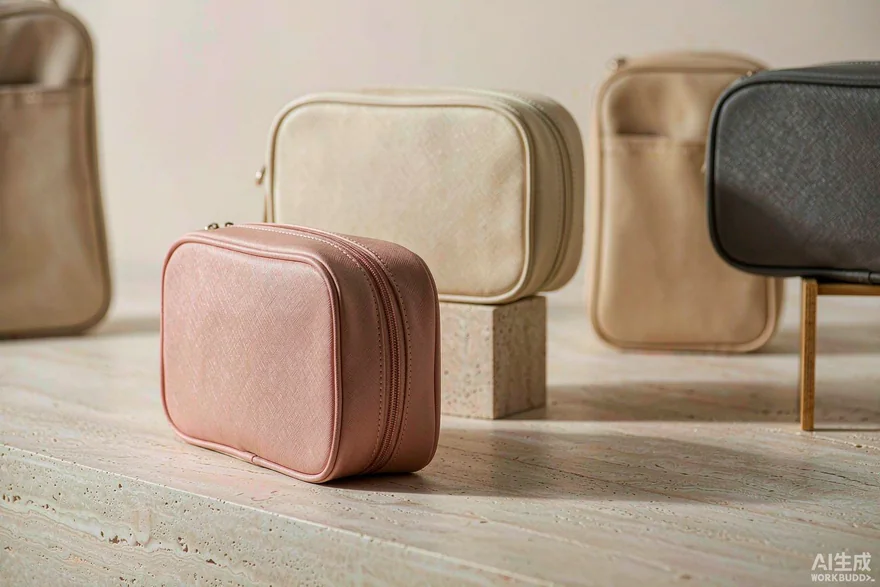
How short-form video reshapes a cosmetic bag brief
Short-form video did not create demand for cosmetic bags; it changed how fast a format becomes recognisable and how quickly recognition turns into a search. A shape that once took two seasons to travel now appears in thousands of videos inside a fortnight, and the result is a demand curve that arrives faster, peaks higher and falls away sooner than the one a wholesale calendar was built for. For a brand owner, the change is not in what to make but in how to structure a programme that can respond without being rebuilt each time.
The mechanism is specific. A video shows a bag being opened and emptied, usually in under fifteen seconds, and the viewer's decision to search happens during that sequence. That means the properties which drive demand are the ones visible and audible in the sequence: how the bag opens, what the interior looks like when it does, whether the material has a texture or a sound, and whether the colour reads true on a small screen. Properties that matter enormously in use, from abrasion resistance to seam strength and wipeability, are invisible in the video and must be protected by specification rather than by trend.
This creates the central tension of a social-first programme. The trend cycle runs in weeks. The production cycle runs in months: sampling takes 6-10 working days, or 12-15 for complex constructions, and bulk takes 35-50 days after sample approval, before inbound transit is added. A brand that chases the trend itself will always arrive after the peak. A brand that builds a stable core and swaps only the surface can respond inside the cycle, because colourway, print and trim changes do not require the product to be re-engineered.
- Short-form video compresses recognition from seasons into weeks, which changes the calendar rather than the product.
- The demand-driving properties are visible and audible in a fifteen-second sequence, not the durable ones.
- A stable core specification plus a variable surface is the only structure that responds fast enough.
- Trend response belongs in colourway, print and trim, not in shell, lining or hardware.
Camera-ready construction: what films well and what fails on camera
Camera-ready is a set of construction decisions, not a filter. The table below sets the common cosmetic bag construction choices against how each reads on camera, the practical trade-off involved, and the format the choice suits best. Two patterns emerge: contrast and structure do most of the work, and the choices that read best on camera frequently carry a freight or durability cost that has to be accepted deliberately rather than discovered later.
| Construction choice | How it reads on camera | Practical trade-off | Best format |
|---|---|---|---|
| Transparent TPU panel | Contents visible without opening, the strongest hook in a short sequence | Shows every scuff and demands a cleaner interior specification | Travel and clear pouches |
| Quilted padded shell | Texture catches light, suggests softness, holds shape when empty | Adds bulk and freight volume for a small interior gain | Pouches and vanity cases |
| Structured moulded EVA shell | Silhouette identical in every shot, which suits repeatable content | Ships air and pushes sampling into the 12-15 working day window | Hard vanity cases |
| Brushed metal zipper | Closes with a sound and a glint that read as quality | Heavier, and plated finishes can drift in shade between batches | Premium pouches and cases |
| Matte shell finish | Reads true under phone LED light without hot spots | Shows handling marks more readily than a gloss finish | Everyday pouches |
| Internal dividers and loops | Organisation visible at the moment of opening | Adds labour and reduces usable volume slightly | Beauty organisers |
| Pale lining | Interior visible in a photo instead of reading as a dark void | Shows makeup marks, so it requires a wipeable coating | All open-flat formats |
| Hanging hook | Demonstrates the format in one motion when unhooked and hung | The most-cited failure point; needs a stated material and load rating | Hanging organisers |
Colour is the variable that causes the most friction between a sample room and a phone screen. Two effects are at work. The first is metamerism: a dye that matches a reference under showroom lighting can shift noticeably under the cool LED of a phone flash. The second is that phone cameras compress saturation, so a subtle shade difference obvious in person may vanish on screen, while a slightly too-saturated shade may look extreme. The answer is not to guess but to evaluate the production sample under the light it will be filmed in, which is a specification step rather than a photography one.
Colour durability then has to be specified, because the colourway that drives the trend can also be the one that fails fastest. A strongly saturated dye on a lining is exactly the case where rubbing and washing behaviour should be stated rather than assumed, and the ISO 105 colour-fastness series is the reference a brief should name. The United States industry equivalent is maintained by AATCC, whose test methods cover the rubbing and laundering evaluations most apparel and accessory brands already recognise.
Material claims made in a video carry the same documentation obligation as claims made on a hangtag, and arguably more, because a video is harder to retract. Where a brand describes recycled content, the claim should rest on the Global Recycled Standard; where the claim concerns substances, OEKO-TEX Standard 100 is the reference. Neither is a marketing asset in itself; both are what allow the marketing sentence to be said safely across a caption, a video script and a product page.
- Evaluate the production sample under phone LED light, not only under showroom lighting.
- Specify a wipeable coated lining wherever a pale lining is used for camera contrast.
- State the colour-fastness test for any strongly saturated trend colourway.
- Accept the freight cost of a structured or quilted shell deliberately rather than by accident.
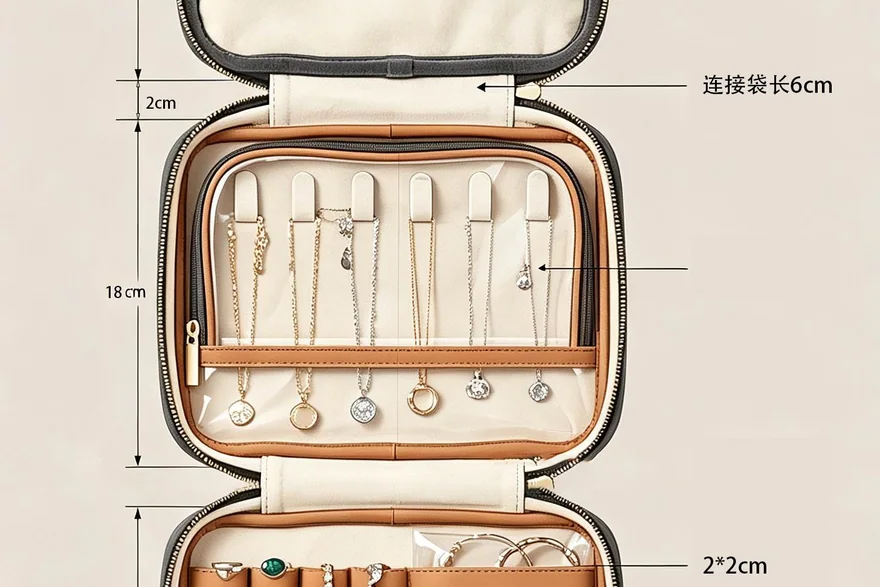
Trend velocity against the production timetable
The arithmetic of a trend drop is unforgiving and should be stated plainly. Sampling takes 6-10 working days, or 12-15 for complex constructions; bulk takes 35-50 days after sample approval; inspection and inbound transit follow. A trend identified as emerging today therefore reaches a warehouse roughly two to three months later, by which time the original wave has usually passed. The correct conclusion is not that trend response is impossible, but that it has to be structured so the lead time is spent on the variable part of the product only.
- Split the specification into a permanent core and a variable surface. Shell, lining grade, hardware and construction never change; colourway, print and trim do.
- Pre-approve the core once. A pre-approved core means a trend drop needs only a colour or print approval rather than a full sampling cycle.
- Stock the core in a neutral base where possible, so the variable layer can be applied to an already approved construction.
- Accept that the launch will land in the tail of the trend rather than at the peak, and plan the content accordingly.
- Run trend colourways at the full 500-piece minimum and no more, so a miss stays survivable.
Print and embroidery are the two surface variables with the longest approval tails, and they are where trend drops most often stall. A print requires artwork separation and a strike-off approval; embroidery requires digitisation and a sewn sample. Both can be started in parallel with sampling once the core construction is fixed, which is the practical argument for fixing the core early even when the colourway is undecided. A brand that waits for the trend to confirm before starting approvals has already lost the window.
The other half of velocity management is deciding what not to chase. A micro-trend with a lifespan of six weeks cannot be served by a 35-50 day production cycle plus transit, and attempting it produces inventory that arrives as demand disappears. The workable filter is to ask whether the format, rather than the moment, has durability: a quilted pouch may be having a moment, but a quilted pouch is also a permanently saleable product, whereas a novelty shape tied to a specific sound or meme is not. Trend response should be applied to surface, and novelty should be declined. A second filter concerns the permanence of the specification change. Changing a colourway is reversible and cheap; changing a shape, a mould or a hardware specification is neither, and a brand that re-engineers the product to chase a moment carries that cost into every subsequent run whether or not the moment lasts. The practical test is to ask what the product would be if the trend had never happened. If the answer is a perfectly saleable cosmetic bag, the change is safe. If the answer is a novelty item with no home, it should be declined however strong the signal looks this week.
- Fix and pre-approve the core construction before the trend colourway is chosen.
- Start print separation and embroidery digitisation in parallel with sampling.
- Decline novelty shapes tied to a moment; accept trend colours on a permanent format.
- Cap a trend colourway at the minimum run so a miss does not become a write-off.
A specification checklist for a social-first cosmetic bag
The table below converts the discussion into a brief. Each line is a specification decision a brand owner makes before sampling, with the setting that suits a social-first programme and the reason for it. The reason column is the part worth arguing with: where a brand disagrees, it should disagree deliberately and record the decision, because an unrecorded specification choice is the one that gets changed silently in the second run.
| Specification line | Social-first setting | Reason |
|---|---|---|
| Top zipper | Full-width, opening flat in one motion | The opening is the moment most filmed; a zipper stopping short forces a two-handed struggle |
| Lining shade | Pale, coated and wipeable | Gives camera contrast without absorbing makeup marks visible in close-ups |
| Shell finish | Matte or low-sheen | Reads true under phone LED without hot spots that blow out detail |
| Base | Structured or lightly interlined | A bag that stands unsupported can be filmed anywhere without a rig |
| Hardware | Metal slider with a quiet puller | Closing sound is audible in video; a rattling puller reads as poor quality |
| Interior layout | Elasticated loops plus one removable divider | Organisation visible at the reveal and survives being filmed repeatedly |
| Colour approval | Approved under phone LED as well as showroom light | Metamerism makes a showroom match unreliable on camera |
| Surface variable | Colourway, print and trim only | Changing these needs no re-engineering, so the core stays pre-approved |
| Packaging | Rigid support plus non-shedding tissue | A creased panel arriving from a mailer undoes what the video promised |
Inspection closes the loop. A social-first product is inspected under AQL 2.5 under ISO 2859-1, and for this kind of programme the defect classification should be written around what the camera sees: print registration on the visible panel, shade consistency between units, and cosmetic marks on any metal. A defect that would pass a generic list is exactly the defect that shows up in a customer's own video, and customer video is the marketing a social-first brand cannot control.
The constants hold throughout: 500 pieces per style and colourway, sampling in 6-10 working days or 12-15 for complex constructions, bulk in 35-50 days after sample approval, inspection to AQL 2.5 under ISO 2859-1, shipment FOB Xiamen, and payment by T/T with 30 per cent deposit and 70 per cent against bill of lading. A social-first programme does not escape any of these; it simply spends the lead time more intelligently, by keeping the specification stable where stability costs nothing and variable where variability creates the demand. The two-tier structure is also the cheapest form of risk management available here, because the core is proven before the trend is chosen and the only thing at stake in a trend drop is the colour. That is a materially smaller exposure than a full redevelopment, and it is what makes a social-first programme repeatable rather than speculative.
- Write the defect classification around what the camera sees, not around a generic list.
- Approve colour under the light it will be filmed in and record the reference used.
- Keep the core specification frozen across trend drops so approvals stay short.
- Plan content capture against the inbound date, not after goods are received.
The B2B Customisation View
Buyers who brief cosmetic bags with a physical reference sample always reach an approved prototype faster than buyers who brief with a photograph alone.
Standard terms: 500 pieces minimum per style and colourway, 6–10 working days for sampling (12–15 for complex builds), 35–50 days bulk production, AQL 2.5 inspection under ISO 2859-1, FOB Xiamen, T/T 30 deposit / 70 balance.
The arrangement suits brands that want factory-level pricing discipline without taking on factory-level vendor management for cosmetic bags.
Which Brand Types Benefit Most
Social-first sourcing rewards buyers who can move quickly and punishes those who cannot, so the framework applies unevenly across the five buyer types. The common thread is that the two-tier structure, a frozen core plus a variable surface, only pays off for buyers who run repeat programmes. A one-off buyer gains little from pre-approving a core it will never use again, and for that buyer the useful part of the framework is the camera-facing specification rather than the calendar. Trend data also has to be read at the right altitude: a brand owner watching individual videos sees noise, while one watching which formats recur across a season sees a signal, and it is the second reading that belongs in a sourcing brief.
- Start-up brands: the trend route is often the only affordable route to attention, so the two-tier structure matters most here. Pick one permanent format, pre-approve it, and run colourway variation against it rather than developing a new shape for each moment.
- Established brands: use social response to protect shelf relevance without destabilising the core range. A trend colourway on an existing approved construction adds news value at a fraction of the cost of a new development.
- Retailers: the useful discipline is reading which formats are gaining search interest before a buying cycle locks. That argues for shorter commitments on colourway and longer commitments on format.
- E-commerce and marketplace sellers: closest to the trend cycle, so the risk is over-rotation. Cap each trend colourway at the 500-piece minimum and keep the permanent listing on a stable core specification.
- Gift and hospitality buyers: least affected by trend velocity and most exposed to inconsistency. A guest-facing bag should be specified for durability and cleanability, with trend colour treated as a refresh rather than a reason to change the product.
Frequently Asked Questions
How fast can a cosmetic bag trend be turned into a production order?
Not as fast as the trend itself. Sampling takes 6-10 working days, or 12-15 for complex constructions, bulk takes 35-50 days after approval, and transit follows, so the realistic horizon is two to three months. The response is structural rather than speed-based: pre-approve a core construction so that a trend drop requires only a colour or print approval.
Which cosmetic bag formats perform best in short-form video?
Formats with a reveal. A bag that opens flat in one motion and shows organised contents outperforms a closed shape, because the opening is the sequence viewers watch. Transparent panels, pale linings and structured bases all support that reveal, while a plain closed pouch gives the camera nothing to show in fifteen seconds. The same reason explains why hanging organisers and train-case styles recur: both open into a visible display.
Why do cosmetic bag colours look different on camera than in a sample room?
Metamerism and saturation compression. A dye matched under showroom lighting can shift under the cool LED of a phone flash, and phone cameras compress saturation, so subtle differences vanish while over-saturated shades look extreme. The fix is to approve the production sample under the light it will be filmed in and to record the reference used. Blaming the viewer's screen settings is how a brand ends up reshooting an entire drop.
How should a brand brief a colourway for accurate on-screen reproduction?
Fix the dye reference in writing, approve the production sample under both showroom and phone LED lighting, and state the colour-fastness test required. Saturated trend shades are the ones most likely to fail a rubbing test, so the brief should name the test and the accepted result rather than leaving it to discretion. Keep one approved shade card with the sealed reference sample for comparison at the next run.
What lining colour reduces the appearance of makeup stains in photos?
A mid-tone lining that is coated and wipeable. A very pale lining gives the strongest camera contrast but shows every mark in a close-up; a very dark lining hides marks but makes the interior read as a void. A mid-tone with a cleanable coating is usually the best compromise between contrast and practicality. For a bag sold on video, contrast matters more; for one sold on reviews, cleanability does.
How does a quilted or padded cosmetic bag affect freight volume?
It increases it. Padding adds bulk without adding usable interior volume, so a container or parcel holds fewer units by volume than it would with a flat pouch. Where a padded construction is chosen for camera appeal, the freight consequence should be accepted deliberately and built into the landed-cost model rather than discovered on the first invoice. Re-engineering the carton recovers some of it, since quilting compresses more than it appears to.
Should a brand chase a micro-trend with a 500-piece cosmetic bag order?
Usually not for the micro-trend itself. A trend with a six-week lifespan cannot be served by a 35-50 day production cycle plus transit, and the inventory arrives as demand disappears. The workable version is to apply the trend colourway to a permanently saleable format, so unsold stock remains sellable after the moment has passed. If the format itself cannot be sold in twelve months, the colourway will not rescue it.
What role does sound play in a cosmetic bag video?
A significant one, because short-form video is watched with sound far more often than display advertising is. A metal slider closing cleanly reads as quality; a rattling puller or a crunching stiff film reads as cheap. Specifying a quiet puller and avoiding an over-stiff clear film are both decisions that protect the soundtrack. Both are cheap to specify and effectively impossible to fix after the run has shipped.
How does AQL 2.5 under ISO 2859-1 handle print and embroidery defects?
The standard sets sampling and accept-reject numbers; the classification is the buyer's. For a social-first product it should treat print registration on the visible panel, shade variation between units and embroidery density gaps as major rather than minor, because those are the defects a camera records and a customer reposts. A defect that passes a generic list is exactly the one that appears in customer video.
What sampling window applies to a printed or embroidered trend colourway?
The 6-10 working day standard window applies to the construction, but print separation and strike-off approval or embroidery digitisation run alongside it and are frequently the slower items. Starting those approvals in parallel with sampling, on a pre-approved core, is what keeps a trend drop inside its window. Waiting for the trend to confirm before starting approvals means the window has already closed.
How should a brand plan content capture around the production timetable?
Against the inbound date rather than after it. A small advance shipment can be pulled for photography and video while the bulk is still in transit, which removes content production from the critical path. Approving colour under the filming light beforehand prevents the most common reshoot. Booking the studio against the vessel date rather than the goods-received date usually saves a fortnight.
Do transparent cosmetic pouches need a specific material specification?
Yes. Low-grade PVC film migrates plasticiser, stiffens and yellows, all of which are visible on camera and all of which generate complaints. The brief should name TPU or a phthalate-free PVC, cite coating properties to a coated-fabric standard, and state how the panel is joined to the shell, since seam stress accelerates the same failure. A panel that yellows in a customer's video is a claim the brand has to answer publicly.
How should a brand avoid overexposure from a single viral cosmetic bag SKU?
By planning what the second act is before the first one lands. A viral SKU produces a demand spike the production cycle cannot absorb, so the useful preparation is a pre-approved alternative colourway that can be ordered immediately, plus a clear statement on the listing about when stock returns. Silence during a stockout is what turns a spike into a permanent loss of listing momentum.
Which trim details read well on camera without adding much cost?
A contrast-coloured zipper tape, a branded woven label at a visible seam, and a dyed-to-match puller cord. All three add recognisable detail at a fraction of the cost of a hardware upgrade, and all three survive the repeated handling that filming involves. A contrast tape also helps the opening read clearly in a small frame. They are also the easiest details to vary between drops without reopening the specification.
How does user-generated content change the packaging brief?
It makes the parcel part of the product. Rigid or semi-rigid support prevents the creasing a poly mailer otherwise guarantees, and a non-shedding tissue wrap protects coated shells and metal pullers in transit. An insert card placed inside the bag is read and often filmed, whereas one placed beside it is usually discarded. The unboxing is the only part of the brand experience a customer films unprompted.
People Also Ask
What cosmetic bag is trending right now?
Trend cycles in this category turn over in weeks, so any specific answer is out of date quickly. The durable observation is about format rather than moment: quilted and padded shells, transparent panels, structured bases and pale linings recur because they all support the same thing, a clean reveal on camera. Build for the recurring properties rather than for the current name.
Are clear cosmetic bags still popular?
Clear panels recur because they solve a filming problem, showing contents without opening the bag, and a travel problem under liquid rules. Their weakness is material: low-grade PVC stiffens and yellows. Specifying TPU or a phthalate-free PVC with coating properties cited to a standard keeps the format working long after the trend wave passes. The format is now closer to a permanent category than to a passing trend.
How do you make a cosmetic bag photogenic?
Engineer the reveal. A full-width zipper that opens the bag flat, a structured base so it stands unsupported, a lining lighter than the shell so the interior reads, and a matte finish that does not blow out under LED. Then approve colour under the light it will actually be filmed in, not only under showroom lighting. Sound counts as well: a quiet metal puller reads as quality on video.
Does TikTok actually drive cosmetic bag sales?
It drives recognition and search faster than any previous channel, which is why search volumes for a format can spike within a fortnight. Whether recognition converts depends on whether supply exists when the searcher arrives, and with bulk production at 35-50 days the brands that benefit are the ones that pre-approved a core and can vary only the surface. Recognition without supply converts into a competitor's sale.
Request a Sample or a Written Quotation
Send the silhouette, dimensions, material preference and logo artwork, and the programme team will return a written quotation with MOQ, sampling window, bulk lead time and inspection standard.
Email: service@junyuanbags.com · WhatsApp: +86 177 5002 0688