Holiday Gift Cosmetic Bags: Seasonal Marketing Calendar
Executive Summary
How should a holiday gift cosmetic bag programme be planned? It should be planned as a critical path that begins with an artwork lock date and ends with a display-ready date, not as a purchase order placed when the season starts to feel close. The immovable parts are the sampling window of 6-10 working days, or 12-15 working days for complex constructions, and the bulk production window of 35-50 days after sample approval. Everything a planner can actually control sits in front of those two windows.
The decisions that follow are structural rather than creative. Peak retail dates do not move, so the real levers are how early artwork locks, how many revision rounds are permitted before that lock, and whether the design was built to carry over into the following year. Freight planning matters as much as production planning, because an order that completes on time still misses the window if it misses the vessel. The 500-piece minimum per style and colourway then sets how many festive colourways one range can carry.
What a holiday gift cosmetic bag programme actually is
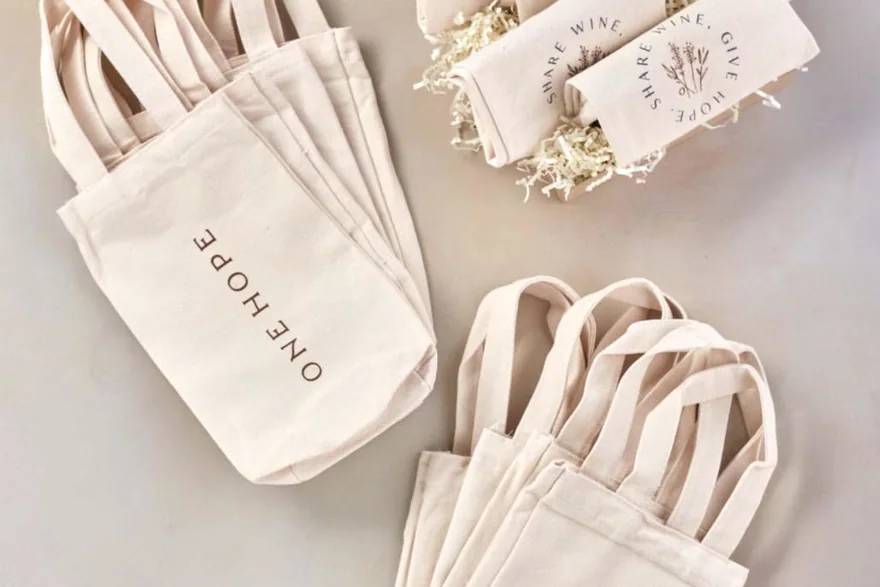
A holiday gift cosmetic bag programme is a seasonal sourcing programme in which a cosmetic bag, makeup bag, toiletry bag or vanity case is bought to be given as a gift, or to carry a gift, inside a compressed selling window that opens in Q4 and closes when the gifting occasion passes. The bag itself is usually not a new category. It is the same 22 x 14 x 8 cm pouch that sells all year as a travel organiser, re-specified with a festive shell colour, a contrasting lining, a warmer hardware finish and a secondary packaging sleeve.
What changes is the set of constraints. The selling window is short and immovable, so there is no second production run if the first one is late. The decoration is occasion-specific, which means the bag has little residual value once the date passes unless the design was planned to carry over. And the order is typically larger than a year-round reorder, because a seasonal display has to open with depth on shelf rather than rely on replenishment that arrives after the peak.
The underlying demand is established rather than speculative. Toiletry bags draw roughly 74,810 weekly Amazon searches according to ASINSIGHT 2026.07, and the phrase travel bag for toiletries draws about 110,000 monthly searches, so a gift buyer is putting a familiar object into a gift context rather than explaining a new one. Typical unit price bands run $0.45 to $12.00 on Alibaba as of 2026.10, and typical marketplace minimums run 100 to 1,000 pieces, against a programme minimum of 500 pieces per style and colourway.
The consequence is that the holiday programme is won or lost in planning rather than in design. A beautiful festive pouch that lands two weeks after the display date is worth less than a plain pouch that lands on time, because the seasonal price point and the gift context both expire. The sections below work through the critical path in arithmetic, the artwork lock as a contractual date, and the freight and carryover decisions that determine what happens to stock the season does not absorb.
The critical path: working backwards from the selling window
A critical path is the longest chain of dependent steps between the brief and the shelf. It is not the sum of everything that happens; it is the sequence that cannot be overlapped. For a seasonal bag programme, production, inspection and packing sit in that chain in that order, and each one starts only when the previous one finishes. Everything else, including the design work and the freight booking, can be brought forward. Building the path explicitly is worthwhile because the plausible durations add up to more calendar time than most first-year planners allow for.
| Critical-path step | Duration assumption (illustrative) | Dependency | Owner | What slips if this runs long |
|---|---|---|---|---|
| Range brief and colourway selection | 10-15 working days | Starts the path | Buying or brand team | No shell fabric is reserved and every later step compresses |
| Artwork development and revision rounds | 15-25 working days | Follows the brief | Design team | Sampling starts late and bulk pushes past the freight cutoff |
| Sampling | 6-10 working days, or 12-15 for complex constructions | Requires locked artwork | Production partner | Sample approval date moves and bulk start moves with it |
| Sample approval and specification sign-off | 3-5 working days | Requires the approval sample | Buyer | Bulk production cannot be released |
| Bulk production | 35-50 days | Requires sample approval | Production | Vessel cutoff is missed and the sailing rolls |
| Inspection to AQL 2.5 under ISO 2859-1 | 2-4 working days | Requires finished bulk | Inspector | No release certificate, so the container is held |
| Export documentation and FOB Xiamen loading | 3-7 working days | Requires release | Programme coordinator | Booking is lost and the next sailing may be a week later |
| Ocean transit, clearance and inland delivery | Confirmed by the buyer's freight partner | Requires loaded container | Buyer's forwarder | Arrival after the display date regardless of how well production ran |
| Receipt, quality release and allocation | 10-15 working days | Requires arrival | Buyer's warehouse | Displays open without the SKU while stock sits in receipt |
Adding the controllable steps at the short end and the long end gives a working range. The short path runs roughly 10 plus 15 plus 6 plus 3 plus 35 plus 2 plus 3 plus 10 working days, about 84 working days, plus transit. The long path runs roughly 15 plus 25 plus 15 plus 5 plus 50 plus 4 plus 7 plus 15 working days, about 136 working days, plus transit. The difference between the two, around fifty working days, is almost entirely the difference between a design that locks on the first revision round and one that does not.
That gap is the reason the artwork lock date belongs in the brief rather than in the design schedule. Once the lock moves, every dependent step moves with it, and the only way to recover is to remove a step, which usually means shipping by air rather than by sea or accepting a carryover design from a previous season. Both are legitimate choices, but both cost money, and neither is available if the decision is made after the vessel has sailed.
The other structural decision is how many festive colourways the range carries. Because the minimum is 500 pieces per style and colourway, three colourways is three production runs and three sets of fabric commitments, not one run with three decoration options. A range with a single evergreen shell and three seasonal sleeves keeps one production run and moves the variety to the packaging, where minimums are lower and leftover stock is cheaper to write off.
Artwork lock, revision rounds and the cost of a late change
An artwork lock is a date on which the design stops changing. It is not a milestone the design team hopes to hit; it is the date after which any change is charged as a change rather than absorbed as development. Programmes that treat the lock as a contract consistently land on time. Programmes that treat it as an aspiration discover, somewhere around the third revision, that the sampling window has moved behind the freight cutoff and the season is now unrecoverable at sea freight economics.
- Fix the lock date in the brief before design work starts, and work backwards from the display date rather than forwards from today.
- Cap revision rounds at two before the lock; a change requested after sampling begins restarts the 6-10 working day sampling clock.
- Separate evergreen elements (shell, lining, hardware finish) from date-specific elements (print motif, sleeve, hangtag) so that only the latter carries seasonal risk.
- Approve colour against a physical reference under defined lighting, because screen approval of a festive red or metallic gold is the single most common source of rejection.
- Approve the print method at sampling rather than at bulk, since switching from transfer to sublimation after approval changes hand feel, colour and unit cost together.
- Write the packing instruction and carton specification at the same time as the artwork, because a display-ready date is a packing-line date, not a production date.
Colour discipline deserves its own note. Festive palettes push towards saturated reds, deep greens and metallic finishes, and all three are difficult. Saturated reds shift noticeably between a screen and a dyed polyester panel. Metallic gold hardware varies by plating batch and should be approved against a retained standard rather than a photograph. Where the programme uses a recycled or organic shell, the GOTS framework and the Global Recycled Standard both require the claim to be traced through the processing chain, which adds approval steps that need to sit before the lock, not after it. In practice, certificate collection should be scheduled inside the sampling window rather than requested once bulk is already running, because a missing certificate at the release gate has the same commercial effect as a failed inspection.
The late-change cost is best expressed in calendar days rather than in money. A design change after sampling starts adds the full sampling window plus the queue position for the next production slot. A change after bulk starts is usually refused or repriced as a new order. In both cases the effect on the season is the same: the display date holds and the bag does not. The arithmetic above shows why a planner with a firm lock date and two revision rounds has roughly fifty working days more slack than one without. That slack is worth more than any saving available from a cheaper shell or a cheaper print route, because it is the difference between landing the window and missing it, and missing it costs the season rather than a margin point.
Practical mitigation is to design the range so that the risk-carrying element is the cheapest one. A plain shell with a printed seasonal sleeve puts the date-specific artwork on a paper component that can be ordered in a small quantity, discarded at the end of the season, and reprinted next year. The reusable pouch carries only the brand mark, which is evergreen and therefore never obsoletes. This single structural choice converts most of the seasonal inventory risk into a printing cost.
The most reliable way to protect the lock date is to make the approval sample the contract. Once the printed panel, the lining, the hardware finish and the packing configuration are approved physically, any subsequent change becomes a change order with a cost and a date attached rather than a comment in a design review. Programmes that work this way tend to converge faster, because the price of a late idea becomes visible at the moment it is proposed rather than at the moment the container is booked.
Freight cutoff planning and carryover stock
Production finishing on time is necessary but not sufficient. A bulk order that completes inside its 35-50 day window still misses the season if it misses the vessel, and vessel cutoffs are fixed by the carrier rather than negotiated by the buyer. The correct approach is to treat the freight cutoff as a second deadline sitting immediately after the inspection release, and to plan the production completion date to land several working days before it rather than on it.
| Design element | Date-specific version | Evergreen version | Recommended carryover decision |
|---|---|---|---|
| Shell colourway | Festive red, deep green or metallic | Navy, charcoal, stone, black | Order festive colourways to forecast only; keep evergreen colourways reorderable mid-season |
| Print motif | Snowflake, seasonal greeting, year numeral | Logo lock-up or brand pattern | Keep the year numeral off the bag entirely and place it on the hangtag instead |
| Lining fabric | Printed festive lining | Solid brand-colour lining | A solid lining lets leftover bags re-enter the year-round range without remarketing |
| Hardware finish | Seasonal gold-tone plating | Standard nickel or gunmetal | Standard finish avoids a separate hardware finish minimum on a short selling window |
| Secondary packaging | Printed festive sleeve or belly band | Plain kraft sleeve | Print the sleeve separately so unsold seasonal packaging is a small write-off, not a full bag |
Carryover planning should happen at design stage, not at clearance stage. The question to ask of every element is whether it still sells on the twenty-sixth of the month after the occasion. A shell in a neutral colourway does. A pouch printed with a year numeral does not. Once that answer is known, the range can be structured so that only the elements with no carryover value are ordered to forecast, while everything else is ordered on a reorder basis against in-season data. This split is the practical difference between a seasonal programme that improves year on year and one that repeats the same write-off every season, and it is taken months before the goods arrive.
Freight mode choice follows from the same arithmetic. Ocean freight is the default for a seasonal programme because the planning horizon above is long enough to accommodate it. Air freight becomes relevant only when the artwork lock has slipped, and it should be evaluated as a cost per unit against the margin on the bag rather than as an abstract emergency. A useful planning rule is to compare the air freight cost per unit with the unit price band: if the bag sits in the lower third of the $0.45 to $12.00 band, air freight will typically exceed the product cost, which means the air option only makes sense for a high-tier gift set. The second question is whether clearance and inland delivery can still complete in time, because air freight landing after the display date has simply bought a faster miss.
Documentation and payment run in parallel with all of this. Inspection runs to AQL 2.5 under ISO 2859-1, and the release certificate is what allows the container to be booked. Shipment terms are FOB Xiamen, with payment by T/T 30 deposit and 70 against bill of lading, which means the deposit is due at the point the production slot is confirmed rather than at the point the goods are finished. Planners should build that payment timing into the cash plan alongside the freight invoice, because both land before the seasonal revenue does.
Carryover is far easier to plan when the range was designed for it. A pouch built on a neutral shell with a solid lining can be re-merchandised with a different sleeve, listed under a different title, or bundled into a welcome kit without any rework at all. The same pouch printed with an occasion motif has none of those options. Choosing which version the programme is buying is a design decision taken months before the season, and it is the largest single determinant of what the end-of-season stock position looks like.
The B2B Customisation View
Programme planning for cosmetic bags starts with the end market: a hotel amenity run and a beauty-retail launch ask for completely different construction and compliance evidence.
Planning figures used across the programme: MOQ 500 pieces per style and colourway, 6–10 working days sampling (12–15 when moulding or multi-layer lamination is required), 35–50 days bulk lead time, AQL 2.5 to ISO 2859-1, FOB Xiamen, T/T 30/70.
The programme-management model exists because most import problems are documentation problems, and documentation is what this office produces and holds.
Which Brand Types Benefit Most
Holiday gifting buyers fall into two groups with different problems. The first is the retailer or e-commerce seller whose revenue depends on the seasonal window and who therefore needs stock on the shelf before the peak rather than during it; the planning arithmetic above is written for that buyer. The second is the corporate or hospitality buyer giving bags to staff, clients or guests, whose deadline is a fixed event date rather than a selling curve, and who can often use an evergreen shell with a festive sleeve to keep the gift feeling seasonal without taking inventory risk on a printed pouch. A third group sits between the two: marketplace sellers whose peak follows an event calendar rather than a shop floor, and whose binding date is the inbound cut-off rather than the gifting date. For all three groups the structural decision is identical: which elements are permitted to expire with the season, and which have to survive it.
- Start-up brands: test the festive concept on a stock shell with a printed sleeve before committing 500 pieces to a custom colourway.
- Established beauty brands: run the holiday pouch as a gift-with-purchase tier, where the bag cost sits inside the promotion budget rather than the product margin.
- Retailers: build the display around one evergreen shell and two seasonal sleeves, so shelf depth does not depend on three separate production runs clearing the minimum.
- E-commerce sellers: list the pouch as a standalone gift SKU as well as a bundle component, so unsold bundle stock has a second route to market.
- Gift and hospitality buyers: choose a neutral lining and a standard hardware finish, which keeps leftover stock usable for the following year's welcome kits.
- Brands with a recycled-content commitment: source a certified shell and confirm the certificate covers the finished printed article before artwork approves any recycled claim.
- Marketplace sellers: confirm the inbound cut-off with the fulfilment provider first, since it usually sits earlier than the gifting date the range was designed around.
Frequently Asked Questions
How far ahead of a peak retail date should holiday artwork be locked?
Take the display date, subtract transit and clearance, then subtract the 35-50 day bulk window, the 6-10 working day sampling window, approval time and receipt time. The lock date lands at the front of that chain. Because a batched seasonal order cannot be re-run, the lock should be treated as a contractual date rather than a target.
How many festive colourways can one holiday range carry under the 500-piece minimum?
Each colourway is a separate commitment of 500 pieces, so three colourways is three production commitments rather than one run with three decoration options. A range with limited forecast confidence is better built from one evergreen shell plus two or three seasonal sleeves, since sleeves carry a much smaller write-off if the season ends with stock left.
What is the minimum forward planning horizon from brief to shelf?
Using the shortest assumptions, the path runs roughly 84 working days plus transit: brief, artwork, sampling at 6-10 working days, approval, bulk at 35 days, inspection, loading and receipt. The longest assumptions run about 136 working days plus transit. Plan to the longer figure for a first season and shorten only with evidence. Where the chain runs longer than the planner expected, the honest options are a simpler construction, an evergreen carryover design, or a later season.
Should the year numeral be printed on a holiday cosmetic bag?
Generally no. A year numeral makes the pouch unsellable after the occasion passes and removes every carryover route. Putting the numeral on a hangtag or a printed sleeve keeps the seasonal signal while leaving the reusable bag evergreen. This is the cheapest single change most holiday ranges can make to reduce end-of-season write-off. Where a dated bag is unavoidable, order it to forecast and plan the overrun tightly, because surplus has no second route to market.
Which closure specification suits a holiday gift-set vanity case?
A #5 nylon coil zipper with a moulded metal-look puller gives a quiet, weighted opening that reads as gift quality without the cost of cast hardware. Zipper terminology and construction are covered by ASTM D2053, which is a useful reference when specifying tape width, chain type and puller attachment in the purchase order. Where a snap or magnetic closure is preferred on the premium tier, test it against coated shells, because stiff coatings can crack at the setting point.
How is a holiday gift set packed to avoid damage on the shop floor?
The pouch should sit in a fitted tray or sleeve rather than loose in a carton, so it does not arrive creased from transit compression. Individual polybagging protects the print face from rub during handling, and a structured base panel helps the bag stand upright in a display rather than slumping in a way that reads as damaged.
What carton count and pack-out format works best for a seasonal display?
For a flat festive pouch around 22 x 14 cm, a shipper holding 60 to 100 pieces with the bags laid flat and consistently oriented works well, because store staff can unpack by layer. Cartons should be filled to capacity so contents cannot shift, and each layer should be separated to prevent print-to-print transfer. A carton that is too deep invites shifting; one that is too tight risks compression creasing at the pack fold.
How should freight be planned if the bulk window slips past the cutoff?
Compare the air freight cost per unit against the margin on the bag. If the bag sits in the lower third of the $0.45 to $12.00 band, air freight will usually exceed the product cost, so the air option only makes sense for a high-tier gift set. Otherwise the honest choice is to accept a later arrival and plan carryover.
Which inspection defect classes matter most on a festive print?
Print registration and coverage, colour consistency against the approved reference, coating appearance at folds, puller attachment and lining cleanliness. Each needs an agreed threshold and method, because ISO 2859-1 governs how many units are sampled rather than what counts as a defect. Inspection runs to AQL 2.5. Agreeing these classes in writing at sampling is what makes the inspection result actionable rather than arguable.
How much overrun should be planned on a seasonal cosmetic bag order?
Enough to cover transit damage and unforecast subscriber or store growth, but not so much that the end-of-season write-off exceeds the margin earned. A practical approach is to plan the overrun on the evergreen shell, where leftover stock has other routes to market, and keep the date-specific printed element ordered close to forecast. Reviewing actual sell-through against planned overrun after the season is what improves next season's number.
Can a holiday cosmetic bag design be reused the following year?
Yes, if the date-specific elements were isolated at design stage. A shell with a solid lining and a brand-mark print carries over unchanged; a pouch printed with a year numeral does not. Retaining the approved colour reference and the print specification makes the following year a repeat order rather than a new development. The same retention discipline applies to the packing instruction and the retained colour reference.
What certification should a holiday gift cosmetic bag carry?
For the textile components, an OEKO-TEX Standard 100 certificate covering the correct article class is the common buyer requirement, and a REACH declaration is expected for the EU market. Where a recycled or organic claim appears on the bag, it should be traceable through a recognised chain-of-custody standard with the certificate scope covering the finished article.
How do T/T 30/70 payment terms interact with a seasonal production schedule?
The 30 per cent deposit is due when the production slot is confirmed, which is before bulk starts, and the 70 per cent balance falls against bill of lading, which is before the goods arrive. Both payments therefore land ahead of seasonal revenue, and the freight invoice lands too. The cash plan has to cover all three before a single unit sells.
How is carryover stock handled when a holiday range closes?
The usual routes are re-merchandising into the year-round range, bundling into a welcome or back-catalogue kit, or selling as a multi-pack without the seasonal promise. Which route is available depends entirely on whether the design isolated its date-specific elements. Prevention at design stage costs far less than any disposal route after the season. Where the set contains product, shelf-life and labelling rules may close off routes the bag alone would have allowed.
People Also Ask
How early should holiday gift cosmetic bags be ordered?
Early enough that the sampling window and the bulk window both complete before the freight cutoff that serves the display date. Adding the shortest assumptions gives roughly 84 working days plus transit; adding the longest gives roughly 136 working days plus transit. First-season programmes should plan to the longer figure and treat the artwork lock date as fixed. A first-season range is usually briefed in the previous quarter rather than in the quarter it sells in.
What makes a cosmetic bag feel like a gift rather than packaging?
Four things carry the impression: a quiet zipper with a weighted puller, a lining colour chosen to contrast with the shell, a structured base that stands upright, and secondary packaging that requires the recipient to do something. None of those four is expensive relative to the shell fabric, and all of them are visible in the first ten seconds. All four are specification lines, which means they can be written into the brief and checked at sampling.
How do you avoid leftover stock after the holiday season?
Isolate every date-specific element onto the cheapest component in the set. A plain shell with a printed seasonal sleeve means the unsold element at the end of the season is paper rather than a finished pouch, and the reusable bag re-enters the year-round range. Keeping the year numeral on the hangtag rather than the bag is the simplest version. Printed paper packaging is far cheaper to discard than a finished printed pouch, so move the date there.
Are branded cosmetic bags good holiday gifts for clients?
They work well when the recipient already travels or already owns the format, which the search volumes suggest most do. The failure mode is over-branding: a large logo turns a gift into promotional merchandise. A small debossed badge or a woven label on the side seam keeps the item usable, which is what keeps the brand visible. Where the recipient already travels, the format needs no explanation and the gift gets used rather than stored.
Request a Sample or a Written Quotation
Send the silhouette, dimensions, material preference and logo artwork, and the programme team will return a written quotation with MOQ, sampling window, bulk lead time and inspection standard.
Email: service@junyuanbags.com · WhatsApp: +86 177 5002 0688