Cosmetic Bags for Luxury Travelers: Premium Material Demand
Executive Summary
Cosmetic bags for luxury travellers are judged on material before they are judged on layout: the buyer notices the cut edge, the weight of the puller and the sound of the zip long before counting compartments. The specification that satisfies that audience is a full-grain leather or 18 oz coated canvas shell at 500-610 g/m², edge paint built in four to six coats to a total of 0.4-0.6 mm, a #5 metal chain zip with a cast puller of 12-18 g, and a cupro or microfibre suede lining rather than a printed polyester. Premium here means tolerance, not decoration.
Programme mechanics stay consistent with any made-to-order run. Buyers commit to a minimum of 500 pieces per style and colourway, allow 6-10 working days for sampling or 12-15 working days where moulded hardware or turned-edge construction is involved, and plan 35-50 days for bulk production after sample approval. Inspection is AQL 2.5 under ISO 2859-1, shipment FOB Xiamen, payment T/T with 30 deposit and 70 against bill of lading.
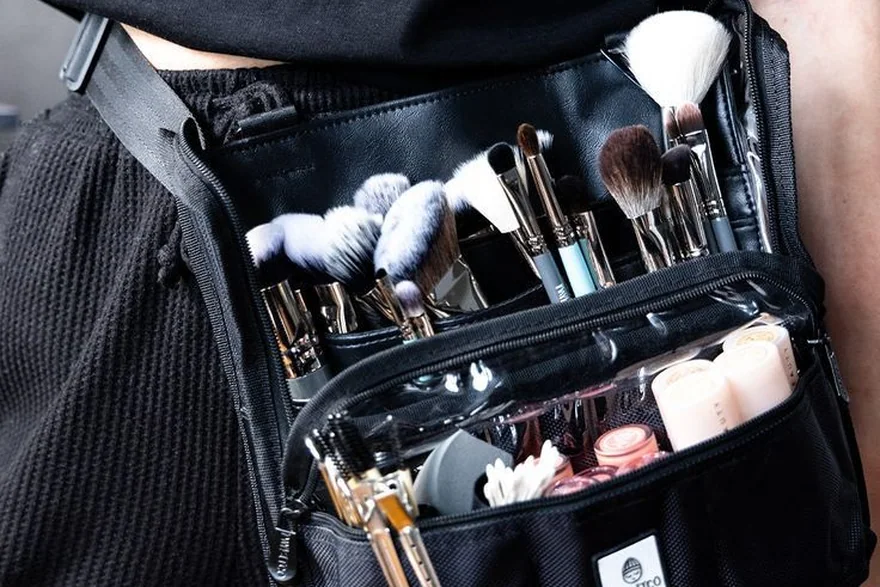
What premium demand actually asks for
Premium demand in this category is not a price point, it is a set of tolerances. A luxury traveller lifts the bag, runs a thumb along the cut edge, opens the zip and looks at the lining before deciding anything. Those four actions are the whole evaluation, and each one is controlled by a specification value rather than by a design sketch. A bag can look expensive in a photograph and fail all four in the hand, which is why the premium tier is where samples matter most and where a single round of revision is normal.
Four expectations recur. Weight and balance come first: a premium vanity case wants enough mass to feel considered, typically 380-620 g empty for a 24 cm body, without tipping into luggage-scale heaviness. Edge quality comes second, because the cut edge is the first surface a thumb finds and the first place a cheap build shows. Hardware feel comes third, since a hollow puller or a plated slider that tarnishes inside a season undoes an otherwise good shell. Lining restraint comes fourth: luxury interiors are quiet, tonal and unbranded.
The failure modes at this tier are specific and expensive. Coated canvas delaminates at the fold after a season of temperature cycling. Plated hardware shows base metal at the puller contact point within months. Edge paint cracks at the corner radius where the build is thickest. Lining pills or snags against a metal compact. Each of those is preventable at specification stage and none of them is fixable after bulk, which is why the premium tier carries more sampling time and a longer defect list than a standard promotional run.
- Specify the edge: number of coats, cure time per coat and total build in millimetres.
- Specify the puller by weight in grams, not by a catalogue photograph.
- Specify stitch count per inch and seam allowance; premium reads as dense and even.
- Specify the lining by fibre and weight, and forbid printed branding on it.
At this tier the buyer pays for what the bag does not do: no peel, no tarnish, no cracked edge, no pilled lining. Write those as measurable pass-or-fail values before the first sample is cut.
Premium shell materials compared
Six materials cover most premium cosmetic bag programmes, and they differ on the three axes that decide a purchase: hand, ageing and care burden. Price position matters too, but the useful way to read it is relative within the market rather than as an absolute number. Typical unit prices listed on marketplaces span 0.45 to 12.00 US dollars, and premium constructions sit at the top of that band, with leather and turned-edge work above it.
| Shell material | Gauge or weight | Hand and ageing | Care burden | Best application |
|---|---|---|---|---|
| Full-grain bovine leather | 1.2-1.6 mm | Firm, develops patina, marks then recovers | Medium: condition twice a year | Vanity cases and structured travel cases |
| Vegetable-tanned leather | 1.4-1.8 mm | Stiff at first, darkens noticeably with sun | High: uneven patina if handled often | Unlined or minimally lined pouch designs |
| Coated canvas | 18 oz, approx. 610 g/m² | Crisp, holds a crease, low stretch | Low: wipe clean, watch fold lines | Print-ready bodies and monogram programmes |
| Ballistic recycled nylon | 1680D, approx. 500 g/m² | Dry, matte, scuffs hide in the weave | Low: spot clean only | Technical-luxury and vegan-friendly lines |
| TPU-coated polyester | 600D, approx. 280 g/m² | Soft, slightly rubbery, quiet | Low: wipe clean, avoid high heat | Lightweight premium pouches |
| Cork fabric on textile backing | 0.6-0.8 mm | Warm, unusual, lightens with wear | Medium: avoid prolonged soaking | Limited runs and gift collaborations |
Leather choice deserves a note on traceability. Full-grain and vegetable-tanned hides vary batch to batch in thickness and in dye uptake, so a premium programme should approve a shade reference from the same production lot rather than from a swatch card, and should allow for a tolerance of plus or minus 0.1 mm on gauge. Vegetable-tanned leather in particular darkens unevenly where it is handled, which is attractive on a bag sold with that story and a complaint when it is not, so the product copy and the specification have to agree.
Gauge tolerance has a direct effect on weight and therefore on perceived quality. At 1.2 mm a full-grain hide produces a 24 cm body near 520 g; at 1.6 mm the same pattern reaches 680 g. Buyers who want the heavier feel should say so at brief stage, because the pattern, the edge build and the hardware gauge all have to be chosen for the thicker material.
Coated canvas is the most forgiving premium shell and the one most often chosen for programmes that carry a monogram or a repeat print. At 18 oz it holds a crease without a frame, takes a screen print or a heat transfer cleanly, and wipes down after a spill. Its weakness is the fold: a coated canvas bag folded flat for storage for months can crease permanently, so carton packing should keep bodies nested rather than folded, and the care card should say so.
Where a programme needs a recycled or vegan position at the premium tier, ballistic recycled nylon at 1680D is the usual answer, with the recycled claim documented against the Global Recycled Standard and any organic cotton component certified to GOTS. A vegan line still has to meet the same tolerance expectations, which is where most of them fail: a quiet lining and a heavy puller cost the same on nylon as on leather.
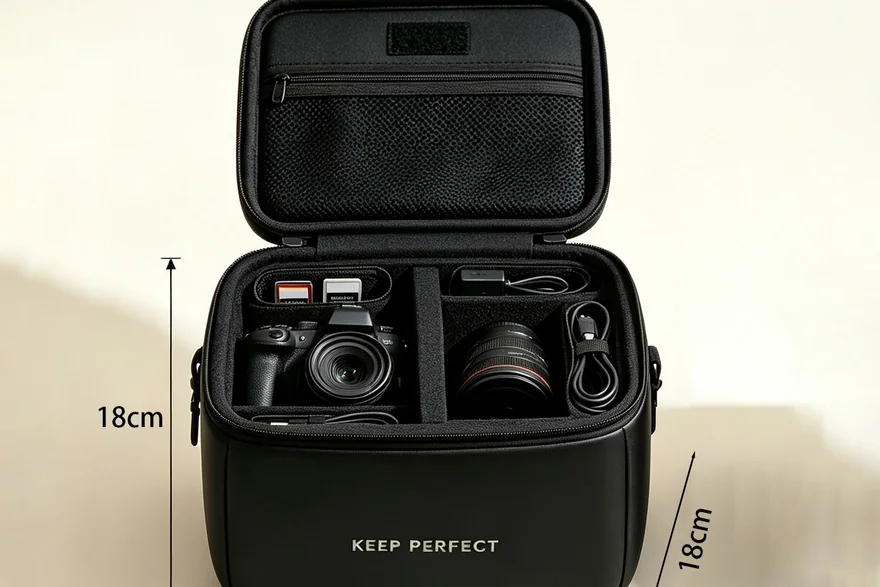
Hardware, lining and edge finishing
If the shell is what the buyer sees, the hardware is what the buyer feels. Premium hardware is heavier, quieter and more precise than the hardware on a mid-tier bag, and it is where a programme either earns its price position or loses it. The specification below reflects what luxury buyers actually respond to in the hand, with values that can be checked on a sample rather than admired in a rendering.
- Zip: #5 metal chain with brass teeth, cast puller weighing 12-18 g, tested to 3,000 cycles with no tooth spread.
- Plating: nickel-free palladium or light gold tone at 0.3-0.5 micron, salt spray 24 hours with no base metal showing at the puller contact point.
- Feet: four or five metal feet at 4 mm diameter, set into a reinforced base panel so they do not punch through under load.
- Edge paint: four to six coats, each cured before the next, total build 0.4-0.6 mm, corner radius no tighter than 6 mm.
- Lining: cupro twill at 80 g/m² or microfibre suede at 200 g/m², tonal to the shell, no printed logo.
- Stitch: 8-9 stitches per inch in bonded nylon 40s, 8 mm seam allowance, no visible start or back-tack on the face.
Corner radius is the detail that decides whether edge paint survives. A designer drawing a 3 mm corner produces an edge paint build that is thicker at the radius than on the straight, and that thickened area cracks first. Moving the radius to 6 mm or wider spreads the build and typically doubles the life of the finish. This is a small drawing change with a large consequence, and it is cheaper to make at the pattern stage than to argue about after a cracked sample arrives.
Lining selection separates serious premium programmes from ones that only look premium on the outside. Cupro twill at 80 g/m² drapes quietly and slides against a metal compact without snagging; microfibre suede at 200 g/m² adds a soft hand and hides marks, at the cost of about 60 g in weight. Printed polyester linings, however good the print, read as mid-tier the moment the bag is opened. For vegan lines, a GOTS-certified organic cotton canvas at 10 oz is an honest alternative and carries documentation the buyer can show.
Hardware tone is the detail that most often breaks family consistency across seasons. A light gold tone from one plating batch can read a full shade warmer than the next, so a premium programme should approve a physical plating standard and hold it, rather than approving from a photograph. Where a range spans two seasons, that standard should be kept with the golden sample and referenced in the purchase order.
Stitch density is the last tolerance that buyers feel without being able to name. At 8-9 stitches per inch in a bonded 40s thread, a seam on a 24 cm body reads as considered and resists the seam-grin that appears at lower counts when the bag is loaded. Below 6 per inch the seam opens visibly at the corners under a 1.5 kg load, which is exactly what a full vanity case weighs.
Compliance, provenance and inspection at the premium tier
Premium programmes attract more scrutiny than commodity runs, because a higher unit price means a higher cost of a recall and because luxury buyers ask for documentation. Leather, coated canvas and plated metal each carry a distinct compliance obligation, and the documents have to come from the material source rather than from the bag programme.
| Risk at the premium tier | Control or test | Reference | Pass target |
|---|---|---|---|
| Chromium VI in dyed leather | Restricted substance declaration from the tannery | EU REACH | Declaration current within 12 months, per dye lot |
| Dye transfer onto light clothing | Colour fastness to rubbing on shell and lining | ISO 105 series | Grade 4 or better dry, grade 3-4 wet |
| Plating tarnish at contact points | Neutral salt spray on finished hardware | In-house rig, 24 hours | No base metal visible, no blistering |
| Coating delamination at folds | Adhesion and flexibility, aged material | ASTM D751 | No delamination after temperature cycling |
| Edge paint cracking at corners | Flex test at reduced temperature | In-house rig, 5,000 cycles at minus 10 °C | No cracking, no flaking |
| Workmanship defects in bulk | Acceptance sampling of the finished lot | ISO 2859-1 | AQL 2.5, 50 pieces drawn from 500, accept 3 |
Leather chemistry is the item buyers underestimate. Restricted substance declarations for dyed leather are issued by the tannery, usually per dye lot, and they expire; a declaration supplied for the sample hide is not automatically valid for the bulk hide. Buyers selling into the EU and UK should ask for a declaration against EU REACH dated within twelve months and matched to the production lot number, and should confirm the expectation in writing before bulk cutting rather than after.
Colour transfer is the second premium risk, because dark leathers and saturated coated canvas are the shades this tier favours and light summer clothing is what they touch. Fastness to rubbing should be tested on the finished shell and lining using the ISO 105 series, with grade 4 or better dry. Where the lining is cupro or a GOTS-certified cotton, the certificate should name the mill, and the shell and lining should also be covered by OEKO-TEX Standard 100 where the buyer sells into Europe.
- Request tannery and mill documents by lot number and check the date before bulk cutting starts.
- Keep a signed golden sample per colourway under the same lighting used at inspection.
- Add edge paint, plating and lining feel to the defect list; stitching alone will not catch premium-tier faults.
Inspection at the premium tier should use the same statistical basis as any other run and a longer defect list. Under ISO 2859-1 at AQL 2.5, a 500-piece lot draws 50 pieces with 3 major defects accepted and 4 rejected; what changes is the definition of a defect, which at this tier includes edge paint continuity, plating uniformity, lining smoothness and puller feel. Shipment is FOB Xiamen, payment T/T with 30 deposit and 70 against bill of lading, and sampling runs 12-15 working days where moulded hardware or turned-edge work is involved.
The B2B Customisation View
What separates a smooth cosmetic pouches, vanity cases and beauty organisers launch from a painful one is usually the quality of the technical pack rather than the price of the fabric.
Planning figures used across the programme: MOQ 500 pieces per style and colourway, 6–10 working days sampling (12–15 when moulding or multi-layer lamination is required), 35–50 days bulk lead time, AQL 2.5 to ISO 2859-1, FOB Xiamen, T/T 30/70.
QUANZHOU JUNYUAN BAGS keeps the relationship deliberately narrow: specification control, sampling, inspection and logistics coordination, all documented against the buyer's own standard.
Which Brand Types Benefit Most
Start-up brands entering the premium tier usually arrive through gifting: a vanity case sold or given at a launch, priced high enough to signal position and produced in a single run. For them the binding constraint is cash tied up in one colourway, since 500 pieces per style and colourway at a premium shell cost is a real commitment, and the sensible move is one body in one colour with a strong hardware specification rather than two bodies in two colours with weaker hardware. Sampling should be booked early, because 12-15 working days applies where turned-edge or moulded hardware work is involved.
Established brands use premium cosmetic bags as halo items: a vanity case that sits beside the cash register, appears in campaign photography and rarely needs a markdown. Their requirement is family consistency across seasons, which means a documented component standard covering plating tone, puller weight, stitch count and lining shade, so that a case produced eighteen months later still matches one on shelf. Retailers commission them as private-label gift items for a loyalty tier, where the edge finish and the puller weight carry more persuasive weight than any printed claim.
E-commerce sellers face a different premium problem: photography. A leather or coated canvas case has to photograph with a visible grain and a clean edge at thumbnail size, which argues for mid-tone shades rather than black, since black leather loses its edge definition on a phone screen. Hospitality buyers, including hotels and airline lounges, buy premium amenity cases in larger single colourway runs and care most about laundering and replacement, accepting a TPU-coated or coated canvas shell over leather for that reason. Where hospitality or amenity use is intended, a coated canvas or TPU shell usually outlasts leather under repeated laundering, and that decision belongs at brief stage.
Frequently Asked Questions
Which leather gauge suits a premium cosmetic vanity case?
Full-grain bovine leather at 1.2-1.6 mm is the working range: thick enough to hold a structured silhouette at 24 cm, light enough to keep the empty case near 600 g. Vegetable-tanned hides at 1.4-1.8 mm suit unlined or lightly lined designs. Allow a plus or minus 0.1 mm tolerance and approve the shade from the production lot rather than a swatch card.
How much should a premium zip puller weigh?
A cast puller of 12-18 g on a #5 metal chain reads as premium without dragging the shell. Below 8 g the puller feels hollow and rattles against the teeth; above 25 g it swings and marks the shell at the zip end during handling. Specify weight in grams in the tech pack, and test to 3,000 cycles with no tooth spread.
Why does edge paint crack at the corners of a leather pouch?
Because the paint build is thicker on a tight radius than on the straight edge and flexes more. A 3 mm corner radius concentrates the build; moving it to 6 mm or wider spreads it and roughly doubles finish life. Specify four to six coats, each cured, to a total build of 0.4-0.6 mm, and flex test at minus 10 °C.
What lining reads as premium in a luxury travel case?
Cupro twill at 80 g/m² or microfibre suede at 200 g/m², tonal to the shell and unbranded. Both drape quietly and resist snagging against metal compacts. Printed polyester linings read as mid-tier the moment the case is opened. For a vegan line, a GOTS-certified organic cotton canvas at 10 oz is an honest substitute with documentation. Microfibre suede adds roughly 60 g, which is worth stating in the brief where weight targets are tight.
How is colour transfer from a dark leather shell controlled?
By testing colour fastness to rubbing on the finished shell and lining against the ISO 105 series, with a target of grade 4 or better dry and grade 3-4 wet. Dark leather and saturated coated canvas are the shades this tier favours, and light clothing is what they touch, so the test belongs in the tech pack rather than in the product copy.
What compliance documents does a leather cosmetic bag need for Europe?
A restricted substance declaration from the tannery, dated within twelve months and matched to the dye lot, covering EU REACH obligations including chromium VI in dyed leather. Mill certificates should name the material producer. Where an organic cotton or recycled component is claimed, the relevant standard documentation should be requested from the same source before bulk cutting. Where the buyer sells into the UK as well, the same declaration usually covers the parallel requirement.
Does the 500-piece minimum apply per colourway in premium runs?
Yes. The minimum is 500 pieces per style and colourway, so a two-colour premium launch is two commitments. Given the higher unit cost of leather and plated hardware, most premium programmes launch one colourway and hold the second for a reorder, using the same component standard so the repeat needs no new development. Reorders using the same component standard need no new development, which is where the saving appears.
How long does sampling take for a turned-edge leather case?
Allow 12-15 working days where turned-edge construction, moulded hardware or a custom puller is involved, and 6-10 working days for a straightforward cut-edge case with stock hardware. Premium programmes should also budget one revision round, because edge build and puller feel are settled by handling a physical sample rather than a drawing. Pattern work on a turned edge is the variable, and it cannot be shortened by adding operators.
What bulk window applies to a premium vanity case programme?
Plan 35-50 days after sample approval. The upper end applies where leather has to be matched by lot, where plating is done to a custom tone, or where a coated canvas carries a mill lead time. Freight planning should start at golden-sample sign-off, and cartons should keep bodies nested rather than folded to avoid permanent creases. Leather matched by dye lot is the single most common cause of a slipped date at this tier.
How does coated canvas behave compared with leather in service?
Coated canvas at 18 oz wipes clean, takes a print or monogram well and holds a crease without a frame, but creases permanently if stored folded for months. Leather at 1.2-1.6 mm marks and then recovers, needs conditioning twice a year and darkens with handling. For amenity and gifting programmes, coated canvas is usually the lower-risk choice. Neither should be stored folded flat for months, which is a care-card point rather than a specification one.
What stitch count should a premium cosmetic bag specify?
Eight to nine stitches per inch in bonded nylon 40s with an 8 mm seam allowance. Below six per inch the seam grins open at the corners under a 1.5 kg load, which is what a full vanity case weighs. Start and back-tack should not be visible on the face of the panel, which is a pattern and operator discipline issue rather than a machine one.
How is plating durability checked on premium hardware?
By neutral salt spray on finished hardware for 24 hours, with no base metal visible and no blistering at the puller contact point, at a plating thickness of 0.3-0.5 micron in a nickel-free palladium or light gold tone. The contact point is where wear concentrates, so inspection should look there specifically rather than at the flat face. A thinner plating may pass a visual check and still fail at 24 hours, so the duration matters.
What does AQL 2.5 mean for a 500-piece premium case order?
Under ISO 2859-1 at AQL 2.5, a 500-piece lot draws 50 pieces with 3 major defects accepted and 4 rejected. What changes at the premium tier is the defect definition: edge paint continuity, plating uniformity, lining smoothness and puller feel all count alongside stitching, because those are the faults that generate returns at this price. Agreeing that defect list before production is what makes an acceptance number meaningful.
Can a vegan premium cosmetic bag meet the same tolerance expectations?
Yes, and the cost difference is smaller than buyers expect. Ballistic recycled nylon at 1680D or TPU-coated polyester at 280 g/m² will take the same #5 metal zip, the same 12-18 g puller and the same quiet lining as leather. The recycled claim needs documentation against the Global Recycled Standard before bulk cutting. The hardware and the quiet lining carry most of the perceived quality, and neither depends on the shell fibre.
Why do premium cosmetic bags photograph poorly on mobile?
Usually because the shell is black and the edge definition disappears at thumbnail size, or because a glossy finish reflects the light source. Mid-tone shades hold edge definition better on a phone screen, and a matte or satin finish avoids a blown highlight. Where photography drives the sale, the sample should be shot before the run is approved. A matte or satin finish avoids a blown highlight, which is the second most common photographic fault.
How are premium cosmetic bag programmes shipped and paid for?
Shipment is FOB Xiamen, covering the goods and their delivery onto the vessel at Xiamen, with freight, insurance, duty and onward carriage carried by the buyer. Payment is T/T with 30 deposit and 70 against bill of lading. Unit cost is driven mainly by shell material, plating specification and whether moulded hardware is amortised into the run. Amortising moulded hardware across the run is usually the largest single lever on unit cost at this tier.
People Also Ask
What material is best for a luxury cosmetic bag?
Full-grain bovine leather at 1.2-1.6 mm for structured vanity cases, and 18 oz coated canvas where the bag carries a print or monogram and needs to wipe clean. Both read as premium; leather ages and needs conditioning, coated canvas is more forgiving in service but creases if stored folded. Either way the hardware and the edge finish decide whether the result reads as premium in the hand.
Why are luxury cosmetic bags so expensive?
Cost sits in tolerances rather than in trim: four to six coats of edge paint, a cast puller weighing 12-18 g, plating at 0.3-0.5 micron, 8-9 stitches per inch and a cupro or microfibre suede lining. Each of those adds process time, and each has a documented pass target that a mid-tier bag never has to meet. None of those steps can be skipped without the bag reading as mid-tier the moment it is picked up.
Do leather cosmetic bags need special care?
Conditioning twice a year, storage away from direct sun and no machine washing. Vegetable-tanned leather darkens where it is handled, which is attractive if the product copy says so and a complaint if it does not. Coated canvas needs only wiping, but should not be folded flat for months at a time. Coated canvas needs far less, which is why amenity programmes usually choose it over leather.
What size vanity case do luxury travellers prefer?
A 24 cm body is the common choice for travel, empty weight 380-620 g depending on shell. It holds a full-size foundation bottle laid flat and a brush roll without distorting the panel. Above 28 cm the case stops fitting a cabin bag alongside other luggage, which is the practical ceiling for this channel. Below 20 cm the case cannot take a full-size bottle laid flat, which is the practical floor.
Request a Sample or a Written Quotation
Send the silhouette, dimensions, material preference and logo artwork, and the programme team will return a written quotation with MOQ, sampling window, bulk lead time and inspection standard.
Email: service@junyuanbags.com · WhatsApp: +86 177 5002 0688