Glossier vs Glow Recipe Makeup Bags: Beauty Brand Merch Strategy
Executive Summary
Glossier vs Glow Recipe makeup bags is a comparison of two digitally native beauty brands' approach to merchandise, and the direct answer is that the pouch is not an accessory line at all: it is a dated brand object produced in short runs that exist to reward a purchase, mark a moment or carry a collaboration. Where a retailer's own-brand range is built to sit on a shelf across seasons and be replenished on forecast, brand merch is built to sell through. Every specification decision follows from that difference, from fabric commitment size to print method to inspection rigour.
The transferable lessons are about commitment sizing and calendar control. Merch economics push towards fewer base bodies and more artwork changes, because a 500-piece minimum applies per style and per colourway, while a print film or screen change is comparatively cheap. Sampling runs 6-10 working days, or 12-15 working days for complex constructions, and has to be scheduled backwards from a fixed announcement date. Bulk then runs 35-50 days after sample approval, with inspection to AQL 2.5 under ISO 2859-1, shipment FOB Xiamen and T/T 30 deposit with 70 against bill of lading.
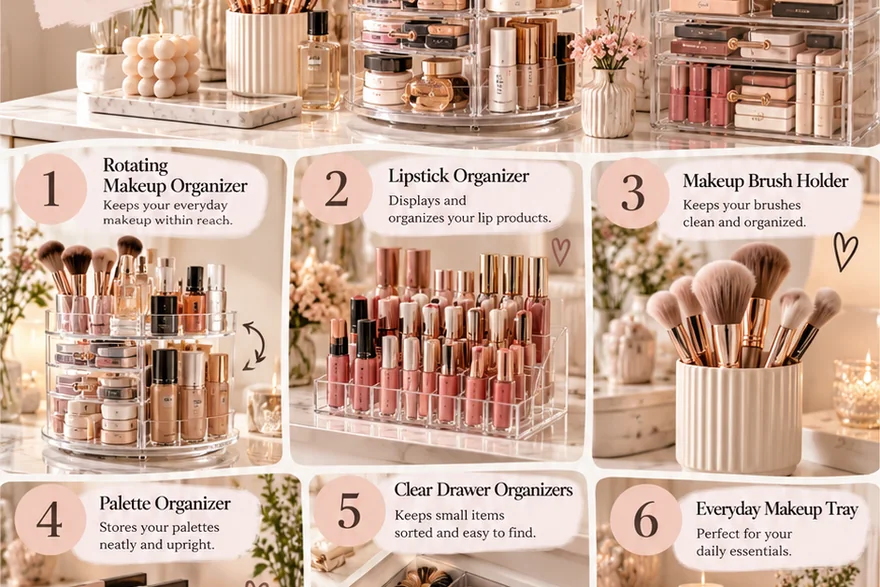
What beauty brand merchandise actually is, and what it is not
Brand merchandise in beauty is a different object from a retail own-brand accessory, and confusing the two is the most common sourcing mistake. A retailer's own-brand pouch is an assortment item: designed to remain in the range across seasons, replenished on a forecast, priced to a ladder and displayed beside other products. A beauty brand's merch pouch is closer to an event. It is produced for a drop, a bundle, a collaboration, a loyalty threshold or a launch anniversary; it is dated by its artwork; and it is expected to sell through rather than to be restocked. That single difference drives the specification, the order size and the calendar.
The two brands compared here illustrate two emphases inside that model, judged only from publicly visible material. Glossier's merchandise has typically leaned on a tightly controlled palette, minimal type-led graphics and objects that look like props from the brand's own photography, which makes the pouch recognisable in a social feed. Glow Recipe's merchandise leans on fruit-derived iconography and saturated colour drawn from its product aesthetic, which makes the pouch read as an extension of the product rather than as separate branded goods. Both approaches are print-led, both are drop-timed, and neither is a permanent accessory line.
Observable evidence is limited to what any shopper can see: product photography, the composition and care text shown on a listing, drop announcements, bundle contents, and the price at which an item is bundled or gifted. Internal margin, defect, return and sell-through figures for either brand are not public, and none is claimed here. The analysis below therefore treats both as worked examples of a model and draws out the transferable mechanics, which is what a buyer can actually use.
Glossier and Glow Recipe are third-party consumer brands. They are referenced only as public market comparisons used to illustrate merchandise strategy. They are not suppliers, partners, clients or endorsers of any programme described here, and no claim is made about their internal product data, specifications, costs or sourcing arrangements.
Drop mechanics, scarcity architecture and commitment sizing
A merch drop is a calendar commitment made before the design is finished. The announcement date sets everything backwards: sampling, bulk, transit, warehouse receipt and the moment the item must be photographed for the listing. Because the date cannot move, the specification has to be realistic about what can actually be sampled and produced inside it. That is the first discipline worth copying. A pouch needing a custom dyed fabric, a custom moulded pull and a printed lining cannot reliably reach a fixed date; a pouch built on a stock body with a changed print usually can.
| Drop type | Typical contents | How it is framed to the shopper | Sourcing lesson for the buyer |
|---|---|---|---|
| Bundle pouch | Product plus pouch sold as one stock keeping unit | Pouch presented as part of the set's value | Internal volume is driven by the product: confirm the pouch fits the product carton before tooling |
| Threshold gift | Pouch added free at a spend level | Framed as a reward rather than a product | Unit cost band sets the promotional margin: fix landed cost before artwork is signed off |
| Limited drop | One artwork, one run, no restock | Scarcity and dated artwork | Keep the fabric commitment to one colourway and vary print instead |
| Collaboration | Co-branded pouch with another brand or artist | Novelty and a shared audience | Allow extra sampling rounds for two sets of artwork approval |
| Loyalty reward | Pouch offered to repeat purchasers | Recognition and retention | Durability matters more than novelty when the item has been earned |
The second discipline is commitment sizing. Because the minimum applies per style and per colourway, the temptation with merch is to widen the range by adding colours. That is the wrong lever for a drop model. The correct lever is to hold one base body and one body colourway, and to place all the variation into the artwork, since a print film or screen change does not create a new fabric commitment. A drop built this way keeps the 500-piece minimum working in the buyer's favour rather than multiplying it across four uncertain colours.
Scarcity also carries a production cost. Short runs are commercially attractive but usually cost more per unit than the same bag at volume, because fabric is bought in smaller lots, print setup is amortised across fewer pieces and cutting efficiency falls. Buyers should therefore price the first drop on first-drop economics rather than assuming the second drop's numbers. Where a series is planned, it is normally cheaper to commit the series quantity once, in a single fabric lot, with the artwork changing per drop, than to place four separate small orders in four separate lots.
- Fix the announcement date first, then work backwards through sampling, bulk, transit and warehouse receipt.
- Hold one base body colourway and vary the artwork: print changes are cheaper than fabric commitments.
- Price the first drop on first-drop economics, because short runs carry a higher unit cost than repeat volumes.
- Where a series is planned, commit quantity once in one fabric lot rather than drop by drop.
Finally, the drop model changes what a defect means. In a replenished assortment a defective unit is replaced from stock. In a dated drop there is no replacement stock, so a failed lot either ships late, ships short or ships defective — and each of those destroys precisely the moment the drop was built to exploit. That is why inspection carries disproportionate weight here, and why the defect classification should be agreed before the goods are finished rather than argued about afterwards.
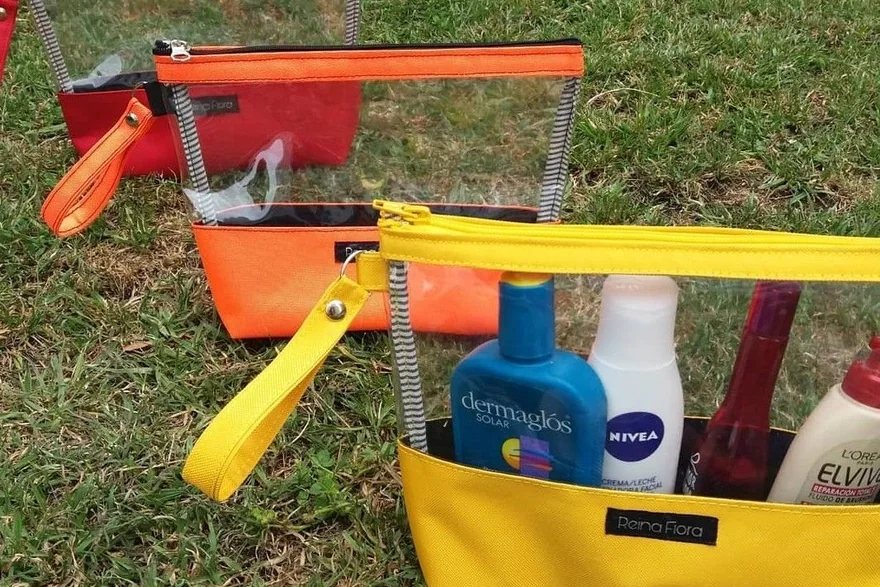
Substrates, print methods and the cleaning question nobody answers early enough
Merch pouches cluster around a small number of substrates, and each one changes both the print method and the cleaning instruction on the label. Cotton canvas in the 8-12 oz range gives a matte, natural hand that photographs well and takes screen print cleanly, but it stains and dries slowly. Coated polyester at 300D or 600D wipes clean and holds saturated colour, but it creases and can feel slippery. Clear TPU suits the liquids-bag use case and shows contents, but it marks easily and depends on weld quality. Recycled PET performs close to virgin polyester and supports a recycled-content claim when the chain of custody is documented.
- Cotton canvas 8-12 oz: best hand feel and print clarity, slowest drying, most readily stained.
- Coated polyester 300D/600D: wipes clean, holds saturated colour, shows creasing and scuffing.
- Clear TPU: satisfies the liquids-bag use case, contents visible, marks easily and needs weld checks.
- Recycled PET: closest to virgin polyester in performance, supports a documented recycled-content claim.
Print method follows from substrate and run length. Screen print suits flat artwork in few colours and is the most durable option on canvas, but each colour adds a screen and a setup charge. Heat transfer handles photographic artwork and short runs without screen charges, although it can crack on flexible substrates over time. DTF sits between the two and has become common for short runs of detailed artwork. Embroidery is the most durable and the most expensive per unit, and it adds weight to a light shell, so it needs a slightly heavier fabric or a stabiliser backing. Where artwork will be reprinted across a series, keeping the same print method and the same fabric lot is what keeps colour consistent between drops.
The cleaning question is where merch programmes most often go wrong, because the artwork is approved before anyone has decided whether the bag is washable. A pouch with a printed lining, a metal pull and a coated shell cannot simply be labelled machine washable at 40 degrees. The care instruction has to follow the weakest component, not the strongest. Buyers should fix the cleaning expectation at the same moment as the substrate, then have the finished article tested for colour fastness to rubbing and to that cleaning method on production fabric rather than on a submission piece.
Method numbers belong in the written specification. A generic request for colour fastness testing can be answered with whichever method the laboratory prefers, which makes results impossible to compare between suppliers or between re-orders. The AATCC test methods and the ISO 105 series are the two vocabularies most used in this category; choose one, name the method numbers, and keep them identical on every re-order.
Where the bag is intended to carry liquids through airport security, the size constraint governs the design rather than the reverse. The TSA 3-1-1 liquids rule sets the container and bag limits a clear toiletry pouch has to satisfy, so a merch bag marketed for travel should be dimensioned against that rule and the current wording checked before dimensions are fixed. A bag that photographs beautifully but fails the screening bin is a returned product.
Labelling, compliance documents and building a drop calendar that holds
Merchandise is still a regulated consumer article. A pouch carrying a beauty brand's name carries the same labelling and substance obligations as any other bag sold into the destination market, and a drop calendar does not extend those deadlines. Fibre content, care instructions, country of origin and any claim printed on the hangtag all have to be correct at the moment of import. The practical consequence is that artwork approval and labelling approval must run in parallel rather than in sequence, because sequential approval is what turns a four-month plan into a missed date.
| Compliance element | What the buyer must fix before artwork closes | Document to request | Timing gate |
|---|---|---|---|
| Fibre content and care text | Substrate, coating and print method confirmed | Sewn-in label proof checked against the written specification | Before bulk cutting begins |
| Tested-for-harmful-substances claim | Claim scope and certificate holder named | OEKO-TEX Standard 100 certificate in the holder's legal name | Before the balance payment is released |
| Restricted-substance conformance | Destination market identified for each shipment | REACH or equivalent declaration covering the production window | Before shipment |
| Children's-product exposure | Whether the item is marketed to children | CPSIA documentation where the item is a children's product | Before import |
| Recycled-content claim | Percentage and input type stated on the artwork | Transaction certificate naming the shipped lot and weight | Before the claim is printed |
A claim on a hangtag is a promise with a document behind it, and the document has to name the correct legal entity. A certificate issued to a fabric mill does not extend to a finished pouch assembled at another site unless the chain of custody is intact. Buyers should check the certificate number, issuing body, holder, product scope and validity dates, and confirm those dates cover the production window rather than merely existing. Where the destination is the EU, restricted-substance obligations sit under EU REACH; where an item is a children's product sold into the US, CPSIA applies.
Timing is the element that actually breaks. Work backwards from the announcement date. Bulk runs 35-50 days after sample approval, and sampling runs 6-10 working days, or 12-15 working days for complex constructions such as a moulded EVA case or a bag with bonded seams. Add transit, customs clearance and warehouse receipt, and the realistic planning window from a finished brief to a live listing is three to four months. Announcing a date before the brief is finished remains the most reliable way to force a specification compromise later.
Inspection and payment close the calendar. Inspection to AQL 2.5 under ISO 2859-1 defines how many units are drawn from the lot and how many defects are tolerated before rejection, with the acceptance number scaling to lot size. The defect classification — critical, major, minor — belongs in the specification before inspection. Standard commercial terms for these programmes are shipment FOB Xiamen with payment by T/T, 30 deposit and 70 against bill of lading, which is what makes a 500-piece first drop commercially viable for a smaller brand.
The transferable lesson across both brands is restraint. Neither model depends on carrying more pouches; it depends on carrying the right pouch at the right moment, in a quantity that sells through, with artwork that will not be reprinted. Buyers who adopt that discipline spend less on leftover stock and more on the specification details — a structured base, a metal pull, a printed lining — that make a low-unit-cost object feel deliberate.
Glossier and Glow Recipe are third-party consumer brands named only as public market comparisons. They are not suppliers, partners, clients or endorsers of any programme discussed here, and no internal sales, margin, defect or sell-through data for those companies is claimed or implied.
The B2B Customisation View
Before a single metre of fabric is cut, the briefing stage settles the silhouette, the lining, the closure and the branding method for makeup bags and toiletry bags.
Standard terms: 500 pieces minimum per style and colourway, 6–10 working days for sampling (12–15 for complex builds), 35–50 days bulk production, AQL 2.5 inspection under ISO 2859-1, FOB Xiamen, T/T 30 deposit / 70 balance.
The commercial arrangement is straightforward: one sourcing partner, one technical pack, one inspection standard, one consolidated shipment.
Which Brand Types Benefit Most
Start-up beauty brands running a first merchandise pouch gain most from the drop discipline, because the failure mode is leftover stock rather than a weak design. A founder should commit to one base body and one body colourway at the 500-piece minimum per style and colourway, then let the artwork carry the novelty, since a print change does not create a new fabric commitment. Established beauty brands benefit from the calendar side: once a drop series is planned, committing the series quantity once in a single fabric lot is normally cheaper per unit than four separate small orders in four separate lots, and it removes shade drift between drops. Retailers and importers commissioning branded pouches should treat them as promotions rather than assortment, which means the compliance documents still have to be in place at import even though the item is dated. E-commerce sellers occupy the same space, but with an extra constraint: the listing has to be photographed before the drop goes live, so sampling has to finish early enough to shoot the production piece rather than a prototype. Gift and hospitality buyers should borrow the threshold-gift discipline instead — fix the perceived-value target, then engineer backwards into the unit cost band — because a corporate or amenity gift that feels cheap reflects on the host rather than on the bag.
- Start-up brands: one body, one body colourway, artwork carries the novelty, 500 pcs per style and colourway.
- Established brands: commit the series quantity once in one fabric lot to cut unit cost and remove shade drift.
- Retailers and importers: treat dated merch as a promotion, but still hold compliance documents at import.
- E-commerce sellers: finish sampling early enough to photograph a production piece for the listing.
- Gift and hospitality buyers: set the perceived-value target first, then work backwards into the unit cost band.
Frequently Asked Questions
What makes a beauty brand's merchandise pouch different from a retailer's own-brand pouch?
A retail own-brand pouch is an assortment item built to remain in the range and be replenished on forecast. A brand merch pouch is closer to an event: it is produced for a drop, bundle, collaboration or loyalty threshold, dated by its artwork, and expected to sell through rather than restock. That difference drives fabric commitment size, print method choice, calendar discipline and inspection rigour.
How should a buyer size the first merchandise drop for a makeup bag?
Small enough that a total sell-through is plausible, and structured so the risk sits in artwork rather than fabric. With a 500-piece minimum per style and per colourway, the safest first drop is one base body in one body colourway, at or near the minimum, with all variation carried by print. If demand justifies it, the second drop can widen the palette on evidence rather than on hope.
Why does a dated drop make inspection more important than a replenished range?
Because there is no replacement stock. In a replenished assortment a defective unit is swapped from inventory and the customer never notices. In a dated drop, a failed lot ships late, ships short or ships defective, and each outcome destroys the moment the promotion was designed to capture. Inspection to AQL 2.5 under ISO 2859-1, with a written defect classification, prevents that.
Which substrate suits a print-led beauty merchandise pouch best?
It depends on the intended hand feel and cleaning expectation. Cotton canvas at 8-12 oz gives the best print clarity and a natural, photogenic surface, but it stains easily and dries slowly. Coated polyester at 300D or 600D wipes clean and holds saturated colour, but it creases and scuffs. Clear TPU suits a liquids bag. Recycled PET performs close to virgin polyester and supports a documented recycled claim.
How does print method affect the care instruction on a cosmetic bag label?
Substantially, because the care instruction follows the weakest component. A heat transfer on a flexible coated shell can crack under repeated machine washing, so the bag may need wipe-clean only even where the base fabric would tolerate more. Screen print on canvas is usually the most durable combination. Deciding the cleaning expectation at the same time as the print method avoids re-labelling later.
What dimensions should a travel toiletry merchandise bag be built to?
To the screening rule it has to satisfy, not to a designer's preference. A clear pouch marketed for carrying liquids through airport security should be dimensioned against the TSA 3-1-1 liquids rule, and the current wording checked before dimensions are fixed. A bag that photographs well but fails at the security bin generates returns and negative reviews that cost more than the design gain.
How does the 500-piece minimum apply across several artworks printed on one body?
The minimum is per style and per colourway, so five artworks printed on a single body in a single body colourway is one commitment, not five. That is the central economic advantage of a print-led merch model: apparent assortment width is bought with print changes rather than fabric commitments. The moment a second body colourway is introduced, a second commitment is created.
When should labelling content be approved relative to artwork approval?
In parallel, not after. Fibre content, care instructions, country of origin and any claim printed on the hangtag all have to be correct at import, and sequential approval is what turns a four-month plan into a missed announcement date. The practical sequence is to freeze the specification first, then close artwork and label text together, so neither can be changed without reopening the other.
Which documents support a recycled-content claim on a cosmetics pouch?
A scope certificate at each site taking legal ownership in the chain, plus a transaction certificate naming the exact shipped lot, its weight and its buyer. A certificate held by a fabric mill does not travel to a finished pouch assembled elsewhere unless the chain of custody is intact. The printed percentage must not exceed the percentage stated on the document, and validity dates must cover the production window.
How far ahead of an announced drop date should sampling begin?
Work backwards: bulk runs 35-50 days after sample approval, sampling runs 6-10 working days or 12-15 working days for complex constructions, and transit, clearance and warehouse receipt sit on top. Three to four months from a finished brief to a live listing is realistic. Adding time for a second sample round is prudent, because handle, zipper and lining rarely settle on the first pass.
What defect classification should a merchandise pouch specification define?
Three tiers, written before inspection. Critical defects make the item unsafe or unusable, such as a broken zipper, a missing lining or a broken needle fragment. Major defects affect saleability, such as visible print misregistration or a crooked seam. Minor defects are cosmetic and within tolerance. Without that written classification the inspector's judgement becomes the specification, which is unenforceable later.
How should a collaboration pouch be planned differently from an in-house drop?
It needs more calendar rather than more specification. Two parties must approve artwork, which usually means an extra approval round, and the run date is often tied to an external announcement the buyer does not control. Building in one additional sampling round and a written approval deadline for each party protects the production window. The specification itself can stay identical to the in-house drop.
How should a beauty brand choose between embroidery and print on a pouch?
By run length, artwork complexity and fabric weight. Embroidery is the most durable and gives a premium hand, but it costs more per unit and adds weight, so it needs a heavier shell or a stabiliser backing. Heat transfer or DTF suits photographic or highly detailed artwork on short runs, while screen print suits flat artwork in few colours. The choice also fixes the care instruction.
What should a buyer include in a brief for a beauty merchandise pouch?
The drop date and the use case first, then the numbers: dimensions in centimetres, shell fabric with weight in g/m2 and coating type, lining specification, zipper gauge and type, print method, artwork files, label and hangtag content, carton count, inspection standard, target landed cost and destination market. Fixing the announcement date before the brief is finished is the most common cause of a compromised specification.
People Also Ask
Why do beauty brands sell makeup bags as merchandise?
The pouch is useful to almost every customer, needs no shade or size matching, and carries the brand logo into daily use long after the product packaging is discarded. That makes it an efficient reward for a purchase threshold, a bundle component or a collaboration object. The economics work because perceived value can be engineered well above unit cost through structure, hardware and printed lining.
How many units should a first merchandise drop be?
At or near the 500-piece minimum per style and colourway, in a single body colourway, with the variation carried by artwork. A first drop is a demand test, not a full assortment, and leftover stock is the usual failure mode. Once sell-through data exists, the second drop can widen the palette on evidence rather than on assumption. Sampling at 6-10 working days leaves enough lead time to test the pull, the zipper and the lining before committing to bulk.
What makes branded merchandise feel expensive?
Weight, structure and finish rather than material cost. A base that does not collapse when set down, a metal rather than moulded zipper pull, a printed interior lining and a hangtag that explains the object all signal that the piece was designed. Printed lining is particularly efficient, since it reads as considered design at a cost of a few cents per unit.
Should a merch pouch be washable or wipe clean only?
The care instruction has to follow the weakest component in the finished article, not the strongest. A coated shell with a printed lining and a metal pull may not tolerate machine washing even where the base fabric would. The cleaning expectation should be fixed at the same time as the substrate and print method, then verified by testing the finished article on production fabric.
Request a Sample or a Written Quotation
Send the silhouette, dimensions, material preference and logo artwork, and the programme team will return a written quotation with MOQ, sampling window, bulk lead time and inspection standard.
Email: service@junyuanbags.com · WhatsApp: +86 177 5002 0688