Designer Dupes vs Original Cosmetic Bags: Legal & Quality
Executive Summary
Designer dupes and original cosmetic bags differ legally and materially, and the direct answer is that reproducing a protected design or applying a registered trade mark without a licence is unlawful in most markets, exposing the brand owner, the importer of record and the marketplace seller to seizure, takedown, damages and, at commercial scale, criminal liability. Copying a protected design is not a sourcing shortcut. The legitimate alternative is original design development: a buyer can pursue a similar aesthetic - a colour family, a silhouette category, a hardware finish - while creating and protecting intellectual property of their own.
Quality follows the same logic. Counterfeit supply carries no written specification, no laboratory reports issued to the ordering entity, no inspection right and no remedy when goods fail, so chemical compliance, colour fastness and zipper durability are all unknown. An original programme costs a little more to develop and produces a documented, inspectable product: sampling in 6-10 working days, bulk in 35-50 days after approval, 500 pieces per style and colourway, inspected to AQL 2.5 under ISO 2859-1 before the balance payment.

Dupe, inspired-by and counterfeit: where the legal line sits
Three words get used interchangeably and should not be. A counterfeit carries a registered trade mark, or reproduces a protected design, without the owner's licence - unlawful in nearly every market where it is sold. An inspired-by product takes a general aesthetic direction that nobody owns: a quilted finish, a neutral colour palette, a rectangular silhouette. "Dupe" is the marketing word usually applied to something that began as inspiration and drifted across the line, and the drift is where the legal risk lives.
Four bodies of law decide where the line fell. They overlap, and a single product can infringe more than one at once. Understanding them is not a substitute for advice from a qualified lawyer in the relevant market, but it explains why the usual defences - "the logo was removed" or "everyone sells it" - do not work.
- Trade mark law protects brand names, logos and, in many jurisdictions, distinctive trade dress; applying a protected mark, or a confusingly similar one, without a licence is infringement
- Registered design rights, known as design patents in the United States, protect the shape, configuration or ornamentation of a product; reproducing a registered design infringes even with no logo present
- Copyright protects original artistic work, including a printed pattern or illustration; copying that artwork onto a bag infringes the artwork
- Passing off and unfair competition cover misrepresenting goods as another business's, including through get-up that confuses consumers, and can apply without any registration
The practical consequence for a buyer is that removing a logo does not make a copy lawful. If the shape or ornamentation is registered, the design right is infringed by the shape itself. If the overall get-up leads consumers to believe the bag comes from the brand, passing off or trade dress claims are available whether or not anything is registered. Copying a protected design is unlawful, and guidance on how close a copy can get is not something a reputable sourcing partner should be offering.
The asymmetry of risk is stark. The upside of a dupe is a few months of borrowed demand. The downside is seizure and destruction of goods at the buyer's cost, marketplace account termination with funds held, a civil claim for damages and an account of profits, injunctions that stop the business trading, and in some jurisdictions criminal exposure for commercial-scale dealing. Against a 500-piece order, no rational buyer takes that trade.
Who carries the legal exposure across the chain
Liability in counterfeiting is not concentrated on one party; it attaches at several points at once, which is why a buyer who thinks the risk sits with the supplier is usually wrong. Rights holders pursue every party in the chain that is worth pursuing, and the cheapest defendant is not necessarily the one who made the goods.
| Party | Exposure | Practical consequence |
|---|---|---|
| Brand owner commissioning the goods | Primary liability for trade mark and design infringement | Damages, account of profits, injunction and legal costs |
| Importer of record | Seizure and forfeiture at the border | Goods detained and destroyed, duty lost, shipment written off |
| Marketplace seller | Listing takedown and account suspension | Revenue interrupted, balances held, reinstatement rarely quick |
| Retailer or distributor | Indemnity claims from the selling channel | Chargebacks, delisting and contractual penalties |
| Sourcing coordinator | Contractual and reputational exposure | Refusal to handle the programme at all |
Enforcement is more systematic than many first-time sellers assume. Rights holders record their marks with customs authorities in most major markets, and automated detection on marketplaces scans listings for protected words, images and get-up. A listing can be removed without a warning, and repeated removals end the account. Where a shipment is detained, the importer typically bears storage and destruction costs, and the burden of proving the goods are genuine falls on the importer rather than on the rights holder.
Ignorance is not a defence, and neither is a supplier's assurance. A buyer who commissions goods is expected to know what is protected in the markets they sell into, and a written note from a supplier saying "this is fine" carries no weight with a rights holder or a customs authority. Where a claim arrives, the usual sequence is a letter of demand, a takedown notice to the selling channel, and then proceedings for damages and an account of profits, with interim relief available to stop trading while the case is argued.
Using a protected brand's name in listing titles, search keywords or metadata is itself a problem. It is trade mark use, it drives the very confusion the law exists to prevent, and it is the evidence a complainant will cite. "Compatible with" and "alternative to" formulations are not a safe harbour when the mark appears in a keyword field, and no amount of disclaimer text in the description undoes it.
The buyer-side controls are unglamorous and effective. Run a trade mark and registered design search in every market where the bag will be sold before locking the design, and ask a qualified lawyer to give a written freedom-to-operate view where the shape is close to an existing product. Register the brand's own mark and, where the system allows, its design. Keep dated development records - sketches, mood boards, specification revisions - because independent creation is a defence only if it can be evidenced.
Customs recordation works in the buyer's favour too once the brand owns a registration. A registered mark can be recorded with border authorities so that infringing imports are stopped before they reach the shelf. That is the mirror image of the risk described above, and it is a further argument for registering early rather than after a first successful season attracts imitators.
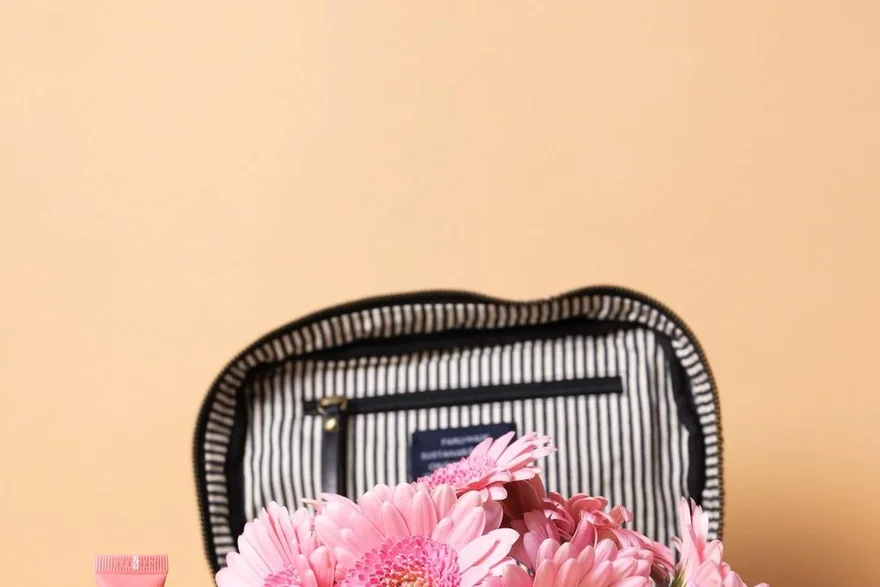
Quality and compliance reality of copy product
There is a widespread assumption that counterfeit bags are made on the same lines as the originals and are therefore equivalent in quality. In cosmetics bags that assumption is close to always wrong. A legitimate programme is built from a written specification and verified against it; a copy is reverse-engineered from photographs, which captures appearance and nothing else. The visual similarity is precisely what makes the quality gap invisible until the bag fails.
| Attribute | Original licensed programme | Counterfeit or copy product |
|---|---|---|
| Specification | Written tech pack: fabric weight, coating thickness, zipper gauge, seam density | Reverse-engineered from images; no written specification exists |
| Laboratory testing | Reports issued to the ordering legal entity | No reports; any claim is unverifiable |
| Chemical compliance | REACH evidence and OEKO-TEX Standard 100 available | Unknown coatings; restricted substances untested |
| Colour fastness | Dye selected against a stated fastness target | Unfixed dye transfers onto clothing |
| Closure durability | Specified chain and slider, cycled during development | Unknown chain; splits under load are common |
| Traceability | Named entity, invoice, lot records and re-order path | Anonymous supply chain with no remedy |
| Inspection right | AQL 2.5 under ISO 2859-1 before balance release | No inspection right and no re-screen remedy |
Chemical compliance is the most serious of those gaps. A coated shell, a printed lining and metal hardware each carry substances restricted in the European Union under REACH, and the certificate most retailers recognise for a finished textile article is OEKO-TEX Standard 100. Copy supply cannot produce either, because both require a named legal entity willing to stand behind the product - and anonymous supply is the defining feature of counterfeit production.
Performance failures follow the same pattern. Colour fastness to rubbing and washing is covered by the ISO 105 series maintained by the ISO technical committee, and a bag whose dye was never selected against a target will transfer onto a customer's clothing on first contact. Zippers are the second predictable failure: standard terminology such as that defined in ASTM D2053 exists precisely so a chain and slider can be specified, and a copy has no specification to check against.
Remedy is the final difference, and the one that matters when something goes wrong. A documented programme has an entity to claim against, a golden sample to compare with, and an inspection record that decides who pays. A copy has none of those. When 8% of a shipment arrives with split zippers, the original programme re-screens or remakes; the copy purchase becomes a total loss, and there is no contractual route to recover it.
A supplier who offers to reproduce a branded bag, or who offers a catalogue of "1:1" copies, is describing their own willingness to infringe. That is the point to end the conversation - not because of etiquette, but because a party who will breach a third party's rights will not honour a specification, a delivery date or an inspection outcome either.
Developing an original design instead: the lawful path
Original design development is not a compromise; it is the faster route to a defensible product and usually the cheaper one once enforcement risk is priced in. The process starts from the buyer's own brief - who the customer is, what the bag must carry, what it retails at - and moves through sourcing decisions that are documented at every step. The output is a bag nobody else can lawfully copy either.
- Write the brief first: audience, retail price band, contents the bag must hold and the aesthetic direction.
- Build a mood board from unprotected sources - colour families, material finishes, hardware shapes - and keep it dated.
- Convert it into a tech pack with dimensions in centimetres, fabric weight in g/m², coating thickness and zipper gauge.
- Sample in 6-10 working days, or 12-15 working days for complex constructions, and revise against the drawing.
- Commission laboratory testing and keep reports issued to the ordering entity before the balance payment.
- Register the brand's own trade mark and, where the system allows, its design, before launch rather than after.
- Produce at 500 pieces per style and colourway, inspected to AQL 2.5 under ISO 2859-1 before release.
Distinctiveness is bought cheaply at the component level. A moulded TPU or plated zamac puller costs a one-off tooling charge of $0-$180 and under $0.50 per unit at 500 pieces, and it gives the bag a signature detail that belongs to the brand. A custom quilting or embossing pattern, a lining printed with original artwork, or a branded binding tape do the same. None of these requires anyone else's intellectual property, and all of them are protectable by the brand.
Briefing for a similar aesthetic lawfully means working at the category level. A buyer can specify a 24 x 16 x 10 cm structured case, a quilted 420-denier shell at roughly 165 g/m², a neutral colour family and a curved zipper path. What must be avoided is the protected identifier set: another brand's name and logo, its signature quilting geometry, a distinctive hardware silhouette it has registered, and any combination of shape and colour that reproduces its registered design. Between those two lists there is a great deal of room to design.
Cost and timing are comparable to any other development programme. Sampling runs 6-10 working days for a standard pouch and 12-15 for complex constructions; bulk production runs 35-50 days after sample approval; shipment is FOB Xiamen on T/T terms of 30% deposit and 70% against bill of lading. The difference from a copy purchase is that every one of those steps is documented, so the product can be defended, insured, listed on any channel and re-ordered next season without a legal question hanging over it. Where a brand sells in more than one market, certificates and registrations should be requested for every jurisdiction at the same time, because a later request against a closed production lot is usually refused.
No third-party name, logo or signature hardware shape anywhere on the product or in listing metadata; a dated development file showing independent creation; trade mark and design searches run in every target market; laboratory reports naming the ordering entity; and an approved golden sample retained for every re-order.
The B2B Customisation View
Development of makeup bags and toiletry bags is a sequence of small approvals, and each approval is cheaper than the rework it prevents.
The numbers a buyer can plan around: 500 pieces minimum per style and colourway, 6–10 working days to a first sample (12–15 where tooling or moulding is involved), 35–50 days to bulk completion, AQL 2.5 under ISO 2859-1 at final inspection, FOB Xiamen terms, T/T 30/70 payment.
As the programme coordinator, QUANZHOU JUNYUAN BAGS owns the sample history, which is what makes a repeat order of makeup bags and toiletry bags look like the original rather than a near-miss.
Which Brand Types Benefit Most
Start-up brands are the group most tempted by dupes, because borrowed demand looks like a shortcut to a first season. It is the opposite: a start-up has the least capacity to absorb a seized shipment, a frozen marketplace balance or an injunction, and it has the most to gain from a design it can register and defend. The recommended path is a single original design at 500 pieces in one colourway, with a moulded puller carrying the brand's own mark. Established brands should treat original development as an asset-management exercise - register marks and designs in every market the range sells into, keep development records, and re-register on new silhouettes before launch. Retailers and catalogue buyers carry indemnity exposure through their own supply contracts, so their own-brand ranges should come with a written freedom-to-operate view from counsel and full laboratory documentation. E-commerce sellers face the fastest consequence of all, because marketplace enforcement is automated and account-level; for them a takedown is a revenue event, not a legal one. Gift and hospitality buyers sourcing amenity or gifting pouches should specify original artwork and avoid any licensed character, mark or protected design, since corporate gifting programmes are highly visible and complaints travel quickly. Sourcing and programme-management companies such as QUANZHOU JUNYUAN BAGS coordinate original design development, specification and inspection, and should decline programmes that ask for a protected design to be reproduced. Development records should be retained for every season, because independent creation is far easier to evidence with a dated file than with a memory.
- Start-up brand: one original design, 500 pieces, own registered mark on a moulded puller
- Established brand: register marks and designs per market; keep dated development records per silhouette
- Retailer or catalogue: written freedom-to-operate view plus full laboratory documentation for own-brand
- E-commerce seller: avoid third-party marks in titles and keywords entirely; enforcement is automated
- Gift and hospitality: original artwork only, no licensed characters, no protected hardware silhouettes
Frequently Asked Questions
Is it legal to sell a cosmetic bag that looks like a designer bag?
It depends on what is protected. A general silhouette or colour family is usually free for anyone to use. Reproducing a registered design - the protected shape, configuration or ornamentation - is infringement even with no logo on the bag, and using a protected mark or confusingly similar trade dress is trade mark infringement. A qualified lawyer in each target market should confirm before launch.
Does removing the logo from a designer-inspired bag make it lawful?
No. Design rights protect shape and ornamentation independently of any mark, so a bag that reproduces a registered design infringes whether or not a logo appears. Passing off and trade dress claims can also apply where the overall get-up leads consumers to believe the product comes from the brand. Removing a mark removes one cause of action, not the exposure, and it does not create a defence.
What is the practical difference between a dupe and a counterfeit?
A counterfeit carries a protected mark or reproduces a protected design without licence - unlawful in nearly every market. "Dupe" is a marketing term for a cheaper product presented as visually similar, and it is frequently applied to goods that are in fact counterfeit. The distinction that matters legally is whether a protected right is being used, not how the seller describes the item.
Who is legally liable when counterfeit cosmetic bags are imported?
Liability attaches at several points: the brand owner commissioning the goods, the importer of record facing seizure and forfeiture, the marketplace seller facing takedown, and the retailer or distributor facing indemnity claims. Rights holders pursue whichever parties are worth pursuing, and the importer usually bears storage and destruction costs on detained goods, so the cheapest defendant is rarely the only one.
What happens at customs if a shipment of counterfeit bags is detained?
Rights holders record their marks with border authorities in most major markets, so goods can be detained on arrival. The importer typically pays storage pending a decision, bears the burden of proving authenticity, and pays destruction costs if the goods are forfeited. Duty already paid is generally not recoverable, which makes a detained shipment a total loss rather than a delay.
Can a marketplace seller lose an account over counterfeit cosmetic bags?
Yes, and it is the fastest consequence in practice. Marketplace enforcement is automated, scanning listings for protected words, images and get-up, so a listing can be removed without warning and repeated removals end the account. Balances are frequently held during review, which turns a legal problem into an immediate cash-flow problem for the seller, and reinstatement is rarely quick even where the seller believes the claim is wrong.
How can a brand owner check whether a bag design is already protected?
Search trade mark registers and registered design databases in every market where the bag will be sold, then ask a qualified lawyer for a written freedom-to-operate opinion where the shape is close to an existing product. Searches are cheap relative to the exposure, and dated development records support an independent-creation defence if a claim is later made.
Is it safe to use a designer brand name in listing keywords or titles?
No. Putting a protected mark in a title, keyword field or metadata is trade mark use, it drives the confusion the law exists to prevent, and it is exactly the evidence a complainant cites. "Alternative to" or "compatible with" formulations do not cure it, and disclaimer text in the description does not undo the keyword use.
What documentation shows a cosmetic bag programme is lawful and original?
A dated development file of sketches, mood boards and specification revisions; trade mark and design search results per market; the brand's own registration certificates; laboratory reports naming the ordering entity; and an approved golden sample retained for re-orders. Together those show independent creation and give the brand something it can enforce later, and they are also what a marketplace will ask for if a complaint is filed.
Do counterfeit cosmetic bags pass chemical compliance testing?
They cannot be evidenced as doing so. REACH declarations and OEKO-TEX Standard 100 certification require a named legal entity willing to stand behind the product, and anonymous supply is the defining feature of counterfeit production. Coatings, printed linings and metal hardware therefore arrive with no restriction testing, and colour fastness has no target to meet.
How does a buyer commission an original cosmetic bag design instead of a copy?
Start with a written brief covering audience, price band and contents, build a mood board from unprotected sources, then convert it into a tech pack with dimensions in centimetres, fabric weight in g/m², coating thickness and zipper gauge. Sampling follows in 6-10 working days, or 12-15 for complex constructions, with revisions made against the drawing.
Does original design development cost more than buying copies?
Development costs a little more up front - a tooling charge of $0-$180 for a moulded puller, sample fees, and laboratory testing - but the comparison ignores enforcement risk. A seized shipment, a destroyed carton count and a suspended marketplace account cost more than any development fee, and they arrive without warning or remedy. Payment and insurance providers also take a view on documented supply.
Can a brand protect its own cosmetic bag design?
Yes. Register the brand name and logo as trade marks in each target market, register the design or design patent where the system allows, and keep dated development records. Registration also enables customs recordation, so infringing imports can be stopped at the border rather than discovered later on a competitor's shelf. It should start at the brief stage, since registration often takes longer than production.
What should a buyer do if a supplier offers to copy a branded bag?
End the conversation and find another partner. A supplier willing to infringe a third party's rights is describing its own approach to contracts, and a party who will breach someone else's intellectual property will not honour a specification, a delivery date or an inspection outcome. The offer is the most useful due-diligence signal available.
How long does original design development take before bulk production?
Allow 6-10 working days for sampling a standard pouch and 12-15 working days for complex constructions, with one or two revision rounds, then 35-50 days of bulk production after sample approval. Registering a trade mark runs in parallel and often takes longer than production, so it should start at the brief stage rather than at launch.
People Also Ask
Are designer dupes illegal?
When they reproduce a protected design or use a protected mark, yes. Design rights cover shape and ornamentation independently of any logo, and passing off can apply to get-up that confuses consumers. A similar aesthetic built from unprotected elements - colour family, silhouette category, material finish - is lawful; reproducing protected identifiers is not. A lawyer in each target market should confirm the position.
Can you get in trouble for selling dupe makeup bags?
Yes. Consequences include border seizure and destruction at the importer's cost, marketplace takedowns and account termination with balances held, civil claims for damages and an account of profits, and injunctions. At commercial scale some jurisdictions also apply criminal liability, which is why the risk is asymmetric against a 500-piece first order, where the entire upside is a few months of borrowed demand.
How do you design a makeup bag inspired by a trend without copying?
Work at the category level: choose dimensions, fabric weight, quilting style, colour family and hardware finish from generic design language. Avoid another brand's name, logo, signature quilting geometry and distinctive registered hardware silhouettes. Keep dated development records showing independent creation, and register the brand's own mark and design. The result is a bag that follows a trend without copying anyone.
Why are counterfeit cosmetic bags lower quality?
They are reverse-engineered from photographs, so appearance is copied but nothing measurable is. There is no tech pack, no laboratory reports naming a legal entity, no REACH or OEKO-TEX evidence, no colour fastness target and no inspection right under ISO 2859-1. Failures appear as zipper splits, dye transfer and unknown coatings, and there is no contractual route to recover the loss when a shipment fails.
Request a Sample or a Written Quotation
Send the silhouette, dimensions, material preference and logo artwork, and the programme team will return a written quotation with MOQ, sampling window, bulk lead time and inspection standard.
Email: service@junyuanbags.com · WhatsApp: +86 177 5002 0688