Custom Logo Cosmetic Bags: Printing Methods Compared
Executive Summary
The question brand owners ask is which printing method to specify for a custom logo cosmetic bag. The answer depends on three variables in order: the face fabric, the artwork, and the quantity. Coated polyester and PU accept screen printing and heat transfer well but block sublimation entirely; polyester poplin accepts sublimation and digital printing; canvas accepts screen printing and embroidery. Artwork then decides the rest: a flat one-colour mark suits screen printing, a photographic gradient needs digital or sublimation, and a textured heritage look needs embroidery.
Cost behaves predictably once that filter is applied. Screen printing and heat transfer carry a setup charge per colour that amortises sharply between 500 and 10,000 pieces, embroidery carries a digitising charge plus a per-thousand-stitch cost, and digital printing carries almost no setup but a higher flat piece rate. Whichever method is chosen, the programme runs on 500 pieces per style and colourway, 6-10 working days for sampling, 35-50 days for bulk, AQL 2.5 inspection and FOB Xiamen terms.
What a logo method has to solve on a bag
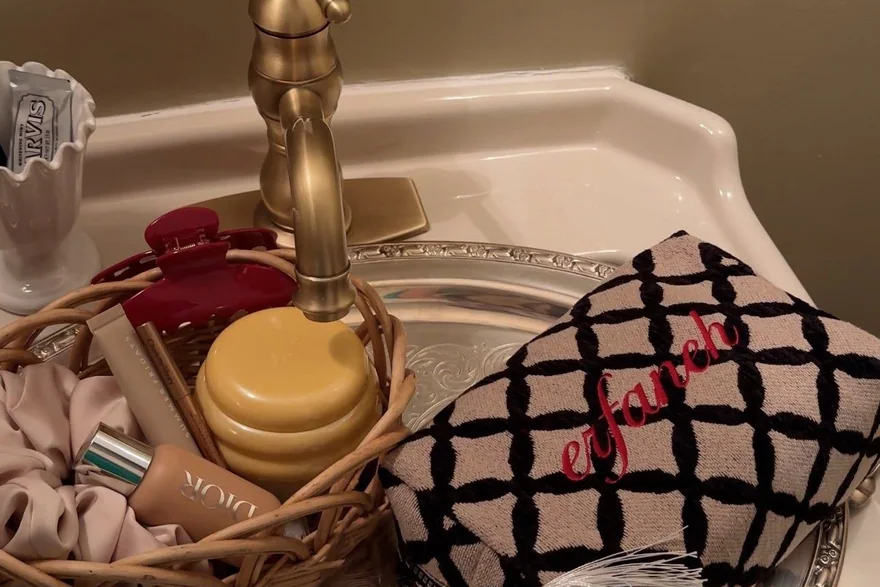
A logo on a bag is harder than a logo on paper. The panel is rarely flat: it curves over a gusset, sits close to a zipper tape, or falls across a seam that flexes every time the bag is opened. The surface itself may be coated, laminated, brushed, mesh or moulded, and each of those takes ink, thread or film differently. A method that produces a perfect sample on one fabric can crack, peel or sink on another, which is why the fabric decision and the logo decision should be made together rather than in sequence.
Six methods cover almost every commercial brief. Screen printing pushes ink through a mesh onto the surface. Heat transfer prints a design onto a carrier film and presses it on. Digital printing lays ink directly onto the fabric with no screen. Dye-sublimation converts a printed dye into gas that bonds inside polyester fibre. Embroidery stitches the mark with thread. Debossing or a rubber or woven patch adds a physical badge. Each has a different setup profile, a different hand feel and a different failure mode.
Beyond the method, the programme has to deliver repeatability. A brand owner placing a second order eight months later expects the same Pantone reference, the same placement and the same edge quality, and that only happens if the specification is written down: method, ink system, colour reference, position in millimetres from a stated datum, and a tolerance. Verbal agreements and approved photographs are not specifications, and they are the usual reason a reorder does not match the original.
Quantity frames everything, because a custom logo cosmetic bag programme starts at 500 pieces per style and colourway. At that volume the setup element of a method is still a visible part of the piece price, so choosing a method with three setups on a 500-piece run is a real cost decision. The same setup becomes negligible at 10,000 pieces, which is why the right question is not which method is cheapest in general but which is cheapest at the quantity actually being ordered.
The method set and what each one costs
Screen printing is the default for a reason: it is durable, opaque and cheap at volume. A mesh screen is produced for each colour, ink is pushed through it, and the deposit sits on top of the fabric. Plastisol inks give strong coverage on dark grounds; water-based inks give a softer hand on natural fibres. The economics are driven by colour count, because each colour means another screen, another setup and another pass. At 500 pieces that matters; at 10,000 it barely registers.
| Method | Setup element charged | Indicative unit cost at 500 pieces | Indicative unit cost at 10,000 pieces | Colour handling | Best on |
|---|---|---|---|---|---|
| Screen printing | One screen per colour | $0.18-$0.35 | $0.05-$0.12 | Spot colours, one screen each | Polyester, canvas, non-woven |
| Heat transfer | Film and plate per design | $0.22-$0.40 | $0.10-$0.20 | Full colour in one pass | Coated polyester, PU, curved panels |
| Digital printing | Minimal, file-based | $0.45-$0.90 | $0.38-$0.75 | Unlimited, photographic | Canvas, uncoated polyester, cotton |
| Dye-sublimation | Paper and press setup | $0.50-$0.95 | $0.40-$0.80 | Unlimited, dyed into fibre | White or light polyester only |
| Embroidery | Digitising plus stitch count | $0.55-$1.20 | $0.45-$1.00 | Thread colours, up to about 12 | Canvas, twill, 600D polyester |
| Rubber or silicone patch | Mould tooling | $0.60-$1.40 | $0.35-$0.85 | Moulded, two or three colours | Structured panels, vanity cases |
Heat transfer is the answer when the panel is awkward. Because the design is printed onto a carrier and then pressed, it can wrap a curve, sit close to a binding, or cover a small area on a moulded shell without the registration problems a screen would face. Modern films handle fine detail and gradients in one pass, which means one setup instead of four. The trade-off is hand feel: a transfer sits as a layer on the surface and can feel plastic on a soft pouch, and its edge is the first place a defect shows.
Digital printing and dye-sublimation solve the photographic problem. Digital lays pigment or reactive ink onto the surface with no screen at all, so a multi-colour artwork costs the same as a one-colour one and a 500-piece run is perfectly viable. Sublimation goes further by driving the dye into the fibre, so there is no layer to feel and no edge to lift. The catch is substrate: sublimation needs polyester, and it needs a white or very light ground, because the dye tints rather than covers.
Embroidery and patches are the premium end. Embroidery reads as quality on canvas and heavy polyester, survives abrasion better than any print, and is the only method that looks better after washing rather than worse. It is priced by stitch count, so a dense logo costs more than an open one, and it needs a backing that sits inside the bag. A moulded rubber or silicone patch carries tooling cost but gives a three-dimensional mark that survives the rough handling a travel case receives, and it can be sewn or heat applied depending on the panel.
Because screens, films, digitising files and moulds are fixed costs, they behave exactly like every other fixed cost in a programme: their per-piece share falls from roughly $0.15-$0.30 at 500 pieces to a few cents at 10,000. A brand owner comparing two methods should therefore compare them at the quantity being ordered, because a method that is expensive at 500 pieces is sometimes the cheapest option at 10,000.
Matching the method to the fabric and the construction
Fabric is the hard filter, and it eliminates methods before cost is even considered. Coating is the main reason. A PU or TPU coating seals the surface, which is excellent for screen printing and heat transfer because the ink or film bonds to the coating rather than soaking into the weave, but it blocks sublimation completely because the dye has no fibre to enter. Uncoated polyester poplin does the reverse: it sublimates beautifully and takes digital printing well, but a screen print on it has less edge definition.
| Face fabric | Typical weight | Constraint it imposes | Recommended method |
|---|---|---|---|
| 210D-300D polyester, uncoated | 70-110 g/m2 | Thin, shows strike-through and heat distortion | Heat transfer at low temperature, or screen print |
| 600D polyester, PU coated | 180-220 g/m2 | Coating blocks dye penetration | Screen print or heat transfer |
| Polyester poplin, white or pale | 110-160 g/m2 | Only light grounds sublimate cleanly | Dye-sublimation or digital print |
| 12 oz cotton canvas | 340-400 g/m2 | Absorbs ink, rough surface breaks fine detail | Screen print or embroidery |
| Clear or frosted TPU | 0.3-0.6 mm film | Heat sensitive, shows adhesive haze | Screen print, or a sewn woven label |
| Moulded EVA shell | Shell, not fabric | Curved, non-porous, uneven pressure | Heat transfer or a moulded rubber patch |
| Mesh or air-mesh panel | 60-120 g/m2 | Open structure breaks a printed film | Woven label or a small rubber patch |
- Decide the face fabric first; it eliminates half the method list immediately.
- Any coating blocks sublimation, regardless of fibre content.
- Sublimation needs a white or pale ground; it tints rather than covers.
- Mesh, EVA and TPU panels usually rule out embroidery entirely.
- Test the chosen method on the production fabric, not on a substitute.
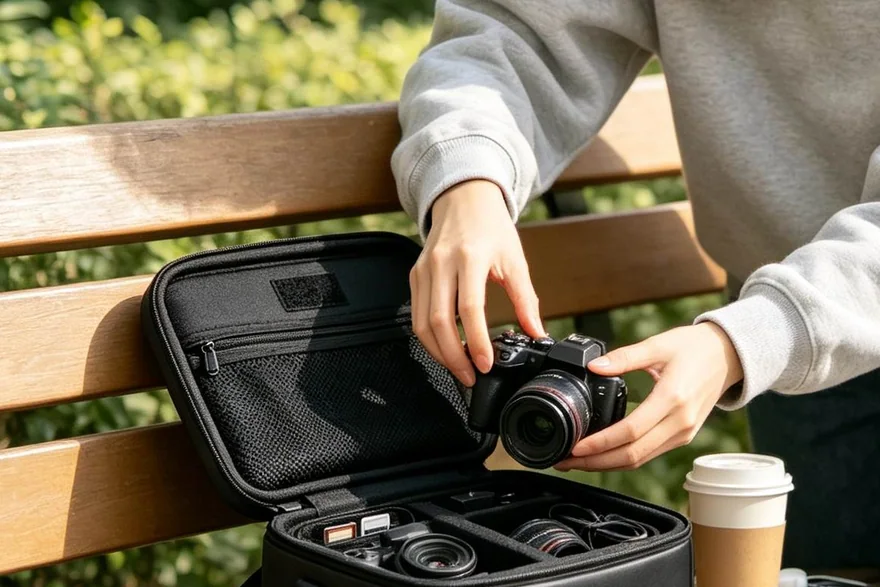
Construction is the second filter. A flat pouch with a single front panel is the easiest case. A boxed organiser has a gusset that folds, and any print crossing that fold has to flex without cracking. A vanity case with a mirror panel or elastic loops leaves a smaller usable area, and a structured case with an internal frame cannot be placed flat under a screen press at all. Placement drawings should specify the logo position in millimetres from a fixed datum, usually the zip end or a seam, rather than centred on the panel, because centred is open to interpretation.
Proximity to hardware causes more rejected samples than any other detail. A logo placed within 3 mm of a zipper tape is at risk from the press foot; one placed across a bound seam sits on a double thickness and prints unevenly. Embroidery near a corner pulls the fabric and distorts the panel. As a working rule, keep the logo at least 5 mm clear of any seam, binding or zipper tape, and at least 8 mm clear of a corner where the panel turns. Those two tolerances remove most placement problems at the sampling stage.
Finally, consider what happens inside the bag. Embroidery and patches add thickness and usually a backing that the user sees when the bag is opened, which on a lined pouch means the backing is hidden but on an unlined one is not. Heat transfer films can strike through on very light fabrics. Screen prints on a dark ground need an opaque ink that may stiffen a small panel. Sampling at 6-10 working days, or 12-15 where the construction is complex, is the point at which all of these are caught, and it is far cheaper to catch them there than at inspection.
Durability, artwork files and how the logo is checked
A logo fails in three ways: it lifts, it fades or it transfers colour onto something else. Each has a corresponding check, and the standard references are worth naming in the tech pack so that the test is defined rather than improvised. The AATCC test methods cover colour fastness to washing, crocking, light and perspiration, and citing the specific method number converts a vague durability request into a measurable acceptance criterion.
| Check | What it catches | Practical target for a retail bag | Method most at risk |
|---|---|---|---|
| Colour fastness to washing | Ink or dye bleeding and fading in the wash | Grade 4 or better after the agreed cycle count | Digital print on uncoated fabric |
| Crocking, dry and wet | Colour rubbing off onto hands or clothing | Grade 4 dry, grade 3-4 wet | Dark screen print on a coated ground |
| Adhesion after flexing | Film edge lifting at a fold or gusset | No lift after repeated flexing of the panel | Heat transfer across a gusset |
| Abrasion resistance | Logo wearing off at corners and base | No visible loss after a set rub count | Screen print on a high-wear corner |
| Light fastness | Fading in a sunlit window display | Grade 4 for a displayed product | Sublimation on pale polyester |
| Stitch integrity | Thread snagging or backing showing | No snag after a snag-resistance check | Embroidery with dense satin stitch |
Artwork files determine how much of that is achievable. Vector artwork is required for screen printing, embroidery digitising and patch tooling, because each of those processes needs clean edges and defined colour separations. Raster artwork is acceptable for digital printing and sublimation, provided it is supplied at 300 dpi at the final printed size and in the correct colour space. A 4 cm logo supplied at screen resolution will produce a visibly soft edge, and no amount of press adjustment recovers detail that is not in the file.
Minimum sizes are not negotiable within a method. Fine serif lettering below about 5 mm cap height disappears under embroidery thread; a keyline thinner than roughly 0.8 mm will not hold as a screen; a gradient across a small mark will band on a transfer film. Simplifying artwork for the chosen method is usually a better outcome than insisting on a corporate mark that the process cannot reproduce. Brand guidelines increasingly include a small-size variant for exactly this reason, and that is the file to supply.
Compliance sits alongside durability. Inks, films and thread have to satisfy the destination market's chemical restrictions, and the EU REACH framework covers azo dyes, certain phthalates in plastisol prints and coatings, and nickel release from metal components such as eyelets or patch rivets. Naming the requirement in the brief and requesting the corresponding declaration costs nothing and prevents a shipment hold, which is by far the most expensive way to discover a compliance gap.
- Supply vector artwork for embroidery, screen printing and patches, raster at 300 dpi for digital and sublimation.
- Specify position in millimetres from a fixed datum, not as centred.
- Keep the logo 5 mm clear of seams and bindings, 8 mm clear of corners.
- Name the AATCC method numbers and the target grade in the tech pack.
- Request a chemical declaration covering inks, films and thread for the destination market.
The visual check at inspection is the last gate. Print defects are classified like any other defect under AQL 2.5 in ISO 2859-1, but a random sample does not catch a systematic registration drift across a run, so the inspection instruction should include a specific print check: colour match against the approved reference, position within tolerance, no lifting at edges, no cracking when the panel is flexed. Written that way, the check is repeatable and the result is defensible either way.
The B2B Customisation View
A sourcing brief for makeup bags and toiletry bags should name the test standard before it names the fabric, because the standard decides which fabrics remain on the table.
Budgeting and scheduling inputs: MOQ 500 per style and colourway; sampling 6–10 working days, extended to 12–15 for lined, moulded or hardware-heavy builds; bulk 35–50 days; pre-shipment inspection at AQL 2.5 per ISO 2859-1; FOB Xiamen; T/T 30/70.
QUANZHOU JUNYUAN BAGS sits between the brand and the production floor precisely so that the brand never has to choose between cost control and inspection discipline.
Which Brand Types Benefit Most
Start-up brands usually need a logo method that survives a small first run without a large setup bill. Screen printing in one colour, or a heat transfer where the panel is awkward, keeps the 500-piece price workable and still looks finished. The risk for a young brand is choosing a method that cannot be repeated: a hand-sprayed sample or an unrecorded film reference often produces a second run that does not match the first. Requiring a written specification and an approved physical reference is therefore worth more to a start-up than saving a few cents per piece.
Established brands tend to optimise for consistency across a range. A brand running a pouch, an organiser and a vanity case will often specify two methods: one for flat woven panels and one for structured or coated panels, with a single Pantone reference and a single placement rule tying them together. Retailers and e-commerce sellers usually optimise for speed and cost instead, choosing a single method that works across every style so that reorders are interchangeable. Gift and hospitality buyers prioritise perceived value, where embroidery or a moulded patch on a structured case reads as a premium finish and supports a higher shelf price.
Gift and hospitality buyers usually decide the method last, once the case construction is settled, and their binding constraint is often a campaign date rather than a cost target. For them the sensible move is a method that tolerates a short run without tooling: screen printing or a heat transfer on a structured case, both of which sit inside the standard 6-10 working day sampling window. Across every buyer type, the two controls that matter most are a written specification and an approved physical reference.
- Start-up brands: one-colour screen print or transfer, with a written specification for repeatability.
- Established brands: two methods across the range, one shared Pantone reference and placement rule.
- Retailers: a single method compatible with every fabric in the assortment.
- E-commerce sellers: digital or sublimation where listing photography needs full-colour artwork.
- Gift and hospitality buyers: embroidery or a moulded patch on structured cases for perceived value.
Frequently Asked Questions
Which logo method survives machine washing at 30 degrees on a coated polyester pouch?
Screen printing with a properly cured plastisol or a polyurethane-based ink is the safest choice, because the coating gives the ink a stable surface to key into. Heat transfer films formulated for polyester also perform well if pressed at the correct temperature and dwell time. Both should be checked for colour fastness to washing and for crocking before bulk. Sublimation is not available on a coated fabric at all, and digital prints on coated grounds need a compatible ink system to avoid flaking.
How many Pantone colours can screen printing hold on a 10 cm panel?
There is no hard limit, but each colour adds a screen, a setup and a registration pass. On a 10 cm panel, two or three spot colours are comfortable; beyond four, registration tolerance starts to matter more than the artwork does. Where a design needs gradients or a photograph, a heat transfer or digital print handles the whole thing in one pass and usually costs less than three or four screens on a short run.
When does heat transfer beat screen printing on a curved vanity case?
When the panel cannot lie flat under a press or when the artwork has continuous tone. A moulded or structured case has a crown that a flat screen cannot print evenly, and a transfer film conforms to the curve during pressing. Transfers also handle gradients and small text in a single application. Screen printing wins when the panel is genuinely flat, the design is spot colour, and the run is long enough for the per-colour setups to amortise.
Can embroidery be applied to a 210D lining panel?
It is possible but rarely advisable. A 210D fabric at 70-90 g/m2 does not have the body to support stitch tension, so the panel puckers around the logo and the needle holes can weaken the weave. A backing helps but adds visible thickness. On a lightweight lining the better options are a printed mark or a small woven label sewn into a seam allowance, which adds brand presence without stressing the fabric.
What is the smallest legible logo height for embroidery on a pouch flap?
Around 5-6 mm cap height for letters, using a satin or a simple fill stitch. Below that, thread width overtakes the letterform and the text becomes a blob. Small marks also need simplification: thin strokes under roughly 1 mm do not survive as thread, and fine serifs close up. Where a corporate mark is too detailed, the usual solution is a simplified small-size variant of the logo rather than a smaller version of the full one.
How does digital printing handle a photographic gradient on canvas?
Well, provided the fabric is prepared for it. Canvas absorbs ink, so a pretreatment or a coating is normally applied to hold the dye at the surface and keep the gradient smooth. Without it, the image looks washed out and the mid-tones lose separation. Canvas also has a pronounced weave, which breaks very fine detail, so photographic artwork on canvas works best at a larger print size where the weave reads as texture rather than noise.
Does sublimation work on a black PVC cosmetic bag?
No. Sublimation requires polyester fibre to accept the dye, and it tints rather than covers, so a black ground cannot be printed with a lighter colour. PVC also cannot take the press temperature without deforming. On a black PVC bag the workable options are screen printing with an opaque ink, a heat transfer with an opaque film, or a sewn or heat-applied patch. Each of those sits on the surface rather than inside it, which is the only option on that substrate.
What file format should a brand owner supply for a debossed or moulded logo?
A vector file with closed outlines, plus a dimensional drawing showing the relief depth in millimetres. For a moulded rubber or silicone patch the tooling is cut from that geometry, so open paths, hairline strokes and live text cause problems. Supplying an AI or EPS with text converted to outlines, a separate PDF for reference, and Pantone references for each colour area is the standard pack. Raster artwork cannot be used for tooling without redrawing.
How much does a second logo position add at 500 pieces?
Usually a second setup plus handling, so on a short run it is a visible addition rather than a rounding error. A second screen position means another setup and another pass, while a second heat transfer means another film and another pressing operation. Where budget is tight at 500 pieces, one well-placed mark on the front panel plus a woven label in a side seam delivers two brand touchpoints for far less than two printed positions.
Which logo method adds the least time to the sampling schedule?
Digital printing, because there is no screen, film or digitising file to produce. Heat transfer is next, needing a printed film; screen printing follows, needing a screen per colour; embroidery needs a digitised file and a sewn sample; a moulded patch needs tooling and is the slowest. All of them fit inside a 6-10 working day sampling window for a straightforward pouch, with complex constructions taking 12-15 working days.
How is colour fastness checked on a printed cosmetic bag?
By reference to published test methods rather than by eye. The AATCC test methods cover washing, crocking, light and perspiration fastness, and a tech pack should name the method number and the target grade, typically grade 4 or better for a retail product. Testing the production fabric with the production ink, not a laboratory substitute, is what makes the result meaningful.
Does a rubber patch change the AQL 2.5 inspection plan?
The sampling plan does not change, but the defect list should. A patch introduces failure modes that a printed logo does not have: adhesive lift at the edge, colour mismatch between the patch and the fabric, and stitch failure where it is sewn. Adding those to the inspection instruction lets the inspector classify them consistently. Under AQL 2.5 the sample size and accept and reject numbers stay as defined by the lot size.
What is the difference between a woven label and a printed label for brand compliance?
A woven label carries the brand text and any required fibre or care information as thread, so it does not fade or wash off, which matters where care instructions must remain legible for the life of the product. A printed satin label costs less and holds finer detail but can lose legibility after repeated washing. Where a destination market requires permanent care labelling, a woven label is the safer specification, and it also survives the higher wash temperatures used in some markets.
Can two logo methods be combined on one cosmetic bag?
Yes, and it is common: a screen-printed mark on the front panel with a woven label in a side seam, or an embroidered logo with a heat-transferred care label inside. Combining methods adds a setup each and a handling step, so it costs more at 500 pieces than at 10,000. The practical rule is to combine only where each method solves a problem the other cannot, rather than to add decoration for its own sake.
Which logo method suits a clear TPU toiletry bag that has to pass airport screening?
Screen printing with an ink formulated for TPU, or a small woven label sewn into a seam. TPU is heat-sensitive, so a heat transfer risks hazing or deforming the film, and embroidery would puncture a panel whose whole purpose is to contain liquids. A printed mark on the upper area, away from the welded seam, keeps the contents visible, which is the point of a clear bag under the TSA 3-1-1 rule.
People Also Ask
What is the cheapest way to put a logo on a cosmetic bag?
One-colour screen printing on a flat panel is usually the cheapest at volume, because the setup amortises quickly and the per-piece cost is low. At 500 pieces a single-colour heat transfer is sometimes cheaper, since it needs one film rather than one screen per colour. Digital printing has no setup but a higher flat rate, making it competitive for short runs with complex artwork rather than for simple marks.
Which logo method lasts longest on a makeup bag?
Embroidery generally outlasts every print method, because thread abrades more slowly than an ink film and there is no layer to lift. Among prints, sublimation lasts longest where the substrate allows it, since the dye is inside the fibre rather than on it. Screen printing is a close third and is the most practical choice on coated fabrics where sublimation is not available.
Can a full-colour photograph be printed on a cosmetic bag?
Yes, using digital printing or dye-sublimation, both of which handle continuous tone in a single pass. Sublimation gives the better result on white or pale polyester because the dye enters the fibre, but it cannot be used on coated, dark or natural-fibre fabrics. Digital printing is more flexible on substrate and is the usual choice for canvas and uncoated polyester.
Do printed logos crack on PU cosmetic bags?
They can, if the ink system is not matched to the coating or if the logo crosses a fold. PU coatings flex differently from the fabric beneath, and an ink film that is too rigid cracks along the flex line. Specifying a flexible ink system, keeping the mark clear of gussets and folds, and testing adhesion after flexing at sampling stage prevents most cracking problems before bulk begins.
Request a Sample or a Written Quotation
Send the silhouette, dimensions, material preference and logo artwork, and the programme team will return a written quotation with MOQ, sampling window, bulk lead time and inspection standard.
Email: service@junyuanbags.com · WhatsApp: +86 177 5002 0688