Cosmetic Bags for Salon Owners: Retail & Client Gifting
Executive Summary
Cosmetic bags earn their place in a salon in two distinct ways, and the specification differs between them. As a retail SKU, the bag has to hold a price point, carry compliant labelling and survive being handled at the front desk, which points to a semi-structured body at 22-26 cm with a matte coated shell and a retail-ready pack-out. As a client gift, the same bag is judged on perceived value rather than on margin, which points to a neutral reusable body with a restrained mark rather than a loud campaign print.
Either route runs on the same commercial frame. Orders start at 500 pieces per style and colourway, sampling takes 6-10 working days or 12-15 working days for complex constructions, and bulk production takes 35-50 days after sample approval. Inspection runs to AQL 2.5 under ISO 2859-1, shipment is FOB Xiamen, and payment is T/T at 30 deposit and 70 against bill of lading. Two colourways double that commitment, so most single sites order one shade and top up annually.
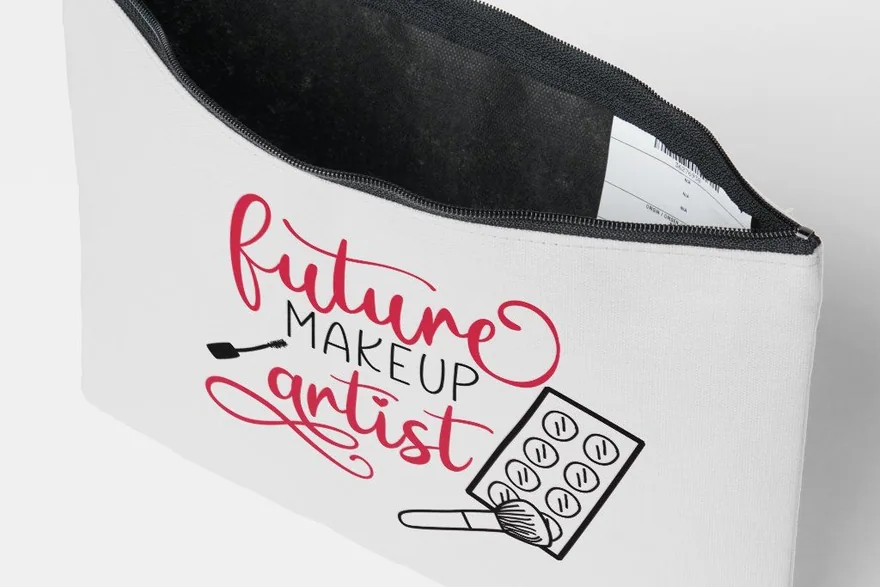
Where a cosmetic bag fits in a salon business model
A salon sells time and skill, which means its physical product range has to work hard without taking floor space. A cosmetic bag does that in two ways at once. As retail stock it sits at the front desk or on a single shelf and adds margin to a transaction that has already been won. As a client gift it supports retention, referral and seasonal promotion, where its job is perceived value rather than direct margin. Both uses draw on the same supply programme, but they are not the same product decision.
The retail case rests on three facts of salon economics. The client is already in the chair and already trusting the stylist's judgement, which removes most of the persuasion cost a normal retailer carries. The footprint is tiny: a 24 cm pouch takes roughly the shelf space of a single styling product. And the category is easy to merchandise, because a bag can be shown empty, filled with product, or bundled as a set without any fixture change.
The gifting case is different in kind. A gift is a cost line, not a margin line, and it is judged on whether the recipient uses it afterwards. A pouch that goes into a handbag keeps the salon's name in front of the client and everyone who sees it; a pouch that goes into a drawer does nothing after the first thank-you. That is why gifting specification should be written around reuse — neutral shade, restrained mark, wipeable lining — even though retail specification is written around price point and shelf appeal.
- Retail SKU: bought to be sold, priced against the shelf, judged on margin and sell-through rate.
- Gift-with-service: bought to be given, priced against the client's service value, judged on reuse.
- Loyalty or referral reward: bought to be earned, judged on whether it feels worth the effort to collect.
- Event and bridal gifting: bought in a single seasonal block, judged on how it photographs on the day.
Retail readiness: price architecture, pack-out and shelf presentation
A salon retail range works at three or four price points, not at one. One price point forces a compromise: either the bag is cheap enough to move and looks it, or it looks good and sits unsold. A ladder lets the front desk trade a client up from an impulse pouch to a gift-grade case without changing the conversation. The ladder also matches the way clients actually buy, which is either a small add-on at check-out or a considered gift purchase for someone else.
| Retail tier | Retail price | Target unit cost | Construction specification | Commercial note |
|---|---|---|---|---|
| Impulse pouch | 9-14 dollars | 1.80-3.20 dollars | Flat 20 x 13 x 5 cm, 300D shell, single print | Sits at the till, bought without deliberation |
| Core pouch | 18-26 dollars | 3.50-5.50 dollars | Semi-structured 24 x 16 x 9 cm, coated shell, lined | The volume driver of the range |
| Premium case | 34-48 dollars | 6.50-9.50 dollars | Structured 26 x 18 x 12 cm, EVA shell, hardware | Bought as a gift, often with product inside |
| Gift set carrier | 55-75 dollars | 9.50-12.00 dollars | 30 x 20 x 14 cm with divider set and inserts | Holds a bundled product set at Christmas |
Size should be matched to the way a bag is carried rather than to how much it holds. A 20 cm pouch sells as an impulse buy at the till, a 24 cm pouch as a considered purchase, and a 26 cm case as a gift. Keeping roughly 4 cm between tiers makes the difference visible on the shelf, which is what makes the trade-up work and stops the range competing with itself. A 30 cm carrier belongs only to gift sets, where the bag is packaging rather than the product.
Pack-out decides whether the bag looks like retail stock or like bulk goods. Retail-ready presentation means an individual polybag, a printed hangtag with barcode and price, a sewn care and fibre-content label, and a display outer that can be cut down and stood on a counter. A counter display unit holding 12-24 pieces costs 0.35-0.90 dollars per unit depending on board grade and print, and it is the difference between a bag being noticed and a bag being stored under the desk.
Labelling is a compliance matter rather than a preference. Bags sold in the United States carry fibre content, care instructions and country of origin, and any item marketed to children also falls under CPSIA requirements for lead and phthalates in accessible substrates. Salons selling into the European Union should also understand EU REACH restrictions on substances in articles, and buyers sourcing coated or dyed fabric generally ask for OEKO-TEX Standard 100 documentation on the material.
- Build a three or four tier ladder rather than a single price point.
- Budget a counter display unit at 0.35-0.90 dollars per bag; it drives sell-through.
- Specify hangtag, barcode, fibre content and care label before bulk, not after.
- Check CPSIA and REACH obligations before the first retail order ships.
- Keep the premium tier physically distinct so the trade-up is visible on the shelf.
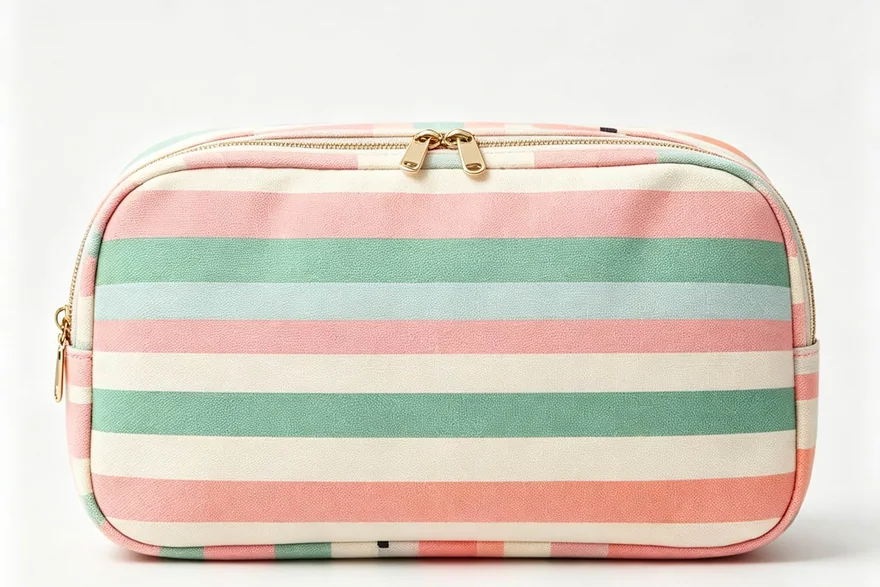
Client gifting tiers and the mechanics of perceived value
Gifting works when the recipient's estimate of what the bag is worth exceeds what the salon paid. That gap is widest on bags that look like retail stock and narrowest on bags that look like promotional goods, which is why the same 3.50 dollar pouch can feel generous or cheap depending on shade, finish and how it is handed over. A bag given at the end of a 180 dollar colour service is being compared with the service, not with other bags.
| Gifting occasion | Bag specification | Fill or pairing | Budget per client |
|---|---|---|---|
| First visit welcome | Flat 20 x 13 x 5 cm pouch in a neutral shade | Two sample sachets and a service card | 2.00-3.50 dollars |
| Colour or treatment service | Semi-structured 24 x 16 x 9 cm, matte shell | Travel-size product matching the service | 4.00-6.50 dollars |
| Bridal party set | Structured 26 x 18 x 12 cm, name panel | Empty, or filled with a mini product | 7.00-11.00 dollars |
| Holiday thank-you | Slim clutch 25 x 17 x 4 cm, seasonal print | Gift card or one full-size product | 3.50-6.00 dollars |
| Loyalty redemption | Core pouch in the salon's own shade range | Empty, redeemable against service credit | 3.50-5.50 dollars |
| Referral reward | Core pouch plus a 10-15 dollar service credit | Empty | 3.50-5.50 dollars plus credit |
Three design rules hold across every gifting tier. Keep the mark small, at 25-40 mm, because a client carries a bag with a discreet logo and leaves one with a large one in a drawer. Keep the shade neutral, because a bag has to work with the recipient's own things rather than with the salon's decor. And keep the body reusable, which in practice means a wipeable lining, a size that fits a handbag, and hardware that does not fail in the first month.
Personalisation is the cheapest way to raise perceived value without raising unit cost. A name panel, an embroidered initial on a 26 cm case, or a printed interior message adds 0.20-0.80 dollars and changes the recipient's relationship with the object. For bridal and event gifting, where six to ten bags leave together, initials on each bag are the difference between a gift and a party favour, and the cost is a single extra operation rather than a second specification.
Timing of handover matters as much as the bag itself. A gift handed over at the end of a service is read as a thank-you, while the same bag given at check-in is read as part of the price. Most salons get a better response from the end-of-service moment and from tying the gift to a specific occasion, because giving the same pouch to every client on every visit turns a gesture into an expectation.
- Judge a gift bag on reuse, not on unit cost; a stored bag returns nothing.
- Keep the logo to 25-40 mm and the shade neutral so the bag works with the recipient's things.
- Match the bag value to the service value: a 180 dollar service should not end with a 2 dollar pouch.
- Use name panels or initials on event and bridal gifting at 0.20-0.80 dollars per unit.
- Specify a wipeable lining even on gift bags, because a stained lining ends reuse immediately.
Running the reorder calendar around a salon year
Salon demand is seasonal in a way that most retail categories are not, because it follows appointments rather than footfall. Holiday gifting concentrates into six weeks, bridal work clusters from late spring to early autumn, and January brings a wave of new-client intake as people reset routines. A bag programme planned against those peaks has to be ordered a full production cycle earlier, which is the part most owners underestimate in their first year.
| Salon moment | Peak period | Order action | Latest order date |
|---|---|---|---|
| Holiday gifting and retail sets | Late November to late December | Gift set carriers and clutch pouches | Early August for sea freight |
| New-year intake and refresh | January to February | Core pouch replenishment and new shade | Early October for sea freight |
| Bridal season | May to September | Structured cases with name panels | Late January for sea freight |
| Mother's Day and gifting peak | April to early May | Premium cases and gift sets | Early January for sea freight |
| Back-to-routine and student intake | Late August to September | Impulse pouch top-up | Late May for sea freight |
Those dates are driven by the production cycle rather than by the calendar. Sampling takes 6-10 working days, or 12-15 working days for structured cases with tooling, sample approval adds 10-15 days, bulk production runs 35-50 days, inspection adds 3-5 days, and sea freight runs 25-40 days. Adding those up puts a realistic first delivery three to four months after the brief is locked, which is why an August order date is already late for a December gifting peak.
Volume planning follows the same rule as any made-to-order programme: 500 pieces per style and colourway. A salon serving 200 regular clients and gifting three times a year consumes 600 or more bags annually, so the minimum is rarely the obstacle; the obstacle is usually splitting one order across too many shades. Two colourways of one body is a 1,000-piece commitment and is workable for a group; a single site is better served by one shade ordered once and topped up annually. Inspection runs to AQL 2.5 under ISO 2859-1, with shipment FOB Xiamen and payment T/T at 30 deposit and 70 against bill of lading.
Cash flow is the usual objection to a 500-piece order and deserves a direct answer. A salon gifting 600 bags a year at 4.00 dollars commits roughly 2,400 dollars plus freight, spread across twelve months, against a retention effect that is hard to attribute but cheap to maintain. Holding stock is not the real risk; ordering several different bodies that cannot be reordered is. The disciplined version is one body in one shade, an annual reorder against the same tech pack, and a buffer of 100-150 pieces held for the first gifting moment of the following year. Freight and duty should be quoted with the order rather than discovered on arrival, because a structured case can add 30-40 per cent to landed cost against a soft pouch at the same unit price.
QUANZHOU JUNYUAN BAGS coordinates retail and gifting programmes of this kind, holding the specification and inspection standard so that a January reorder matches the bags sold the previous December. Programme enquiries go to service@junyuanbags.com.
The B2B Customisation View
A sourcing brief for makeup bags and toiletry bags should name the test standard before it names the fabric, because the standard decides which fabrics remain on the table.
Budgeting and scheduling inputs: MOQ 500 per style and colourway; sampling 6–10 working days, extended to 12–15 for lined, moulded or hardware-heavy builds; bulk 35–50 days; pre-shipment inspection at AQL 2.5 per ISO 2859-1; FOB Xiamen; T/T 30/70.
QUANZHOU JUNYUAN BAGS sits between the brand and the production floor precisely so that the brand never has to choose between cost control and inspection discipline.
Which Brand Types Benefit Most
Salon owners arrive at this category as retailers and as gift buyers at the same time, which is an unusual combination and worth naming explicitly. As retailers they are competing with the front desks of other salons and with the beauty aisles nearby, so they need a ladder of price points and a pack-out that looks deliberate. As gift buyers they are competing with the client's memory of every other gift received that year, so they need perceived value rather than the lowest unit cost. A buyer who optimises the first and forgets the second ends up with cheap bags that nobody keeps.
The same programme serves other buyer types with small adjustments. Start-up brands in professional channels use the salon as a distribution point and want a body that carries the brand's own retail price, which means consistent fabric lots and compliant labelling from the first run. Established brands run seasonal gifting across a salon network and care most about reorder fidelity. Retailers with a beauty aisle buy the core pouch as an own-label line. E-commerce sellers bundle the bag with product as a set. Gift and hospitality buyers, including spas, hotels and event planners, buy the same bodies in a single seasonal block and judge them on how they look in a photograph on the day. All of them are served by the same discipline: one body documented well enough that the third order costs less to place than the first, and produces bags that match the ones already in clients' hands.
- Salon owners: one tiered range serving both retail margin and client retention.
- Start-up brands: consistent fabric lots and compliant labelling from the first 500-piece run.
- Established brands: seasonal gifting across a network, judged on reorder fidelity.
- Retailers: core pouch as an own-label line with retail-ready pack-out.
- Gift and hospitality buyers: single seasonal blocks, judged on appearance in photographs.
Frequently Asked Questions
What retail price should a salon put on a cosmetic bag?
Three tiers work better than one: an impulse pouch at 9-14 dollars, a core pouch at 18-26 dollars and a premium case at 34-48 dollars. Target unit costs of roughly 1.80-3.20, 3.50-5.50 and 6.50-9.50 dollars respectively. The ladder lets the front desk trade a client up without changing the conversation. Review sell-through after 8-12 weeks and drop the slowest tier rather than discounting the whole range.
How many bags should a salon order for a client gifting programme?
Work from the client book rather than from the minimum. A salon serving 200 regular clients and gifting at three moments a year consumes 600 or more bags annually. Orders start at 500 pieces per style and colourway, so one body in one shade is the natural fit, with two colourways taking the commitment to 1,000. Count each gifting occasion separately, since three moments a year multiplies the annual figure.
When should a salon order bags for the December gifting peak?
Order in early August for sea freight. Sampling takes 6-10 working days, approval 10-15 days, bulk 35-50 days, inspection 3-5 days and sea freight 25-40 days. That totals three to four months, so an October order date is already too late for the holiday window. Air freight at 5-8 days is the fallback if the window slips, and costing both options before the brief is locked is worth doing.
What makes a gift bag feel expensive without costing more?
Neutral shade, matte finish and a discreet mark of 25-40 mm carry most of the effect. Personalisation adds the rest: a name panel or embroidered initial costs 0.20-0.80 dollars and turns a giveaway into something the recipient keeps. A wipeable lining also matters, because reuse ends the moment a bag stains. Handing the bag over with the contents arranged, rather than flat, also changes how the value is read.
Should salon retail bags carry barcodes and hangtags?
Yes, if the bag is sold rather than given. Retail-ready pack-out means an individual polybag, a printed hangtag with barcode and price, and a sewn care and fibre-content label. Without those the bag looks like bulk goods and sells slowly, and the front desk has no way to scan it at checkout. A counter display holding 12-24 pieces costs 0.35-0.90 dollars per unit and belongs in the same budget.
What compliance applies to cosmetic bags sold in a salon?
Bags sold in the United States carry fibre content, care instructions and country of origin, and items marketed to children also fall under CPSIA limits for lead and phthalates. Buyers selling into the European Union should understand REACH substance restrictions, and coated or dyed fabric generally comes with OEKO-TEX Standard 100 documentation. Keep the documentation with the tech pack, because a retail partner may ask for it long after the first order.
How much shelf space does a salon bag range need?
Very little. A 24 cm pouch occupies roughly the footprint of one styling product, and a counter display unit holding 12-24 pieces sits inside a square foot of desk. That is the core argument for the category in a salon: it adds a product line without costing floor space or requiring a fixture change. Store the balance of a 500-piece run in a stock room and replenish the display weekly rather than daily.
Is it better to gift an empty bag or one filled with product?
It depends on the occasion. Service-linked gifts work filled, because the product reinforces the treatment just received. Loyalty and referral rewards work empty, because the bag itself is the reward and the client chooses how to use it. Bridal sets are usually given empty with initials on each bag. Filled bags suit service-linked moments; empty bags suit loyalty rewards, where the bag itself is the reward.
What size bag suits a bridal party gift?
A structured case at 26 x 18 x 12 cm reads as substantial, holds a full-size product and photographs well on the day. Add a name panel or embroidered initial per recipient, since six to ten identical bags otherwise read as party favours. Expect a unit cost of 6.50-11.00 dollars at that specification. Order initials per recipient and allow an extra 7-10 days for that personalisation operation.
Can a salon sell the same bag it gives away?
It can, but it should not be identical. A bag given free and then seen on the shelf at 22 dollars devalues the retail line. The usual approach is one body with two finishes: a printed campaign version for gifting and a neutral version with a woven label for retail. Running two finishes also lets the salon see which version clients actually keep using.
How is colour chosen for a salon bag range?
Black and neutral taupe move steadily and suit most interiors; a seasonal accent shade adds interest at Christmas and for bridal work. Avoid bright shades unless the brand already owns one, because clients carry these bags in public and choose what works with their own things. Order one shade first and add an accent shade only after the first run has sold through.
What is the difference between an impulse pouch and a core pouch?
An impulse pouch is flat, around 20 x 13 x 5 cm, costs 1.80-3.20 dollars and is bought without deliberation at the till. A core pouch is semi-structured at 24 x 16 x 9 cm with a coated shell and lining, costs 3.50-5.50 dollars and carries most of the range volume. Stock the impulse tier at the till and the core tier on the shelf, since the two are bought differently.
How should a salon handle a second colourway?
Remember that the 500-piece minimum applies per style and per colourway, so two shades of one body is a 1,000-piece commitment. That suits a group or a salon with a strong seasonal peak. A single site is better served by one shade ordered once and topped up annually with the same fabric reference. Where a second shade is genuinely needed, align it with the following year's replacement budget instead of ordering both at once.
What unit price range should a salon budget for gifting bags?
Across the category unit prices run from about 0.45 dollars to around 12.00 dollars depending on construction. Gifting bags sit in the middle: 2.00-3.50 dollars for a first-visit pouch, 4.00-6.50 dollars for a service-linked gift and 7.00-11.00 dollars for bridal or event sets. Across the whole category, unit prices run from about 0.45 dollars for a simple pouch to around 12.00 dollars for a structured case with hardware and inserts.
How does a salon keep a reorder consistent with the original bags?
Keep the tech pack, Pantone reference and fabric lot number on file and reissue them with each reorder. Sampling before bulk costs 6-10 working days and confirms shade before a large commitment. Inspection at AQL 2.5 under ISO 2859-1 catches shade and construction variation before shipment. Keep a preserved reference sample from the first run so the new shipment can be checked against it on arrival.
Do gifting bags need a counter display unit?
Retail bags do; gifting bags do not. A display outer holding 12-24 pieces costs 0.35-0.90 dollars per unit and materially improves sell-through at the front desk. For gifting, that money is better spent on a name panel or a better lining, since the bag is handed over rather than displayed. Retail tiers do benefit, since a display outer of 12-24 pieces improves sell-through at the front desk.
People Also Ask
What can salons sell besides services?
Bags work well because they take almost no shelf space and need no fixture change. A three tier ladder covers the ground: an impulse pouch at 9-14 dollars, a core pouch at 18-26 dollars and a premium case at 34-48 dollars. Bundling the core pouch with product as a gift set also lifts average ticket without discounting the service. Keep the range to three tiers so the front desk can explain it in a single sentence.
What is a good client appreciation gift for a salon?
A reusable cosmetic bag in a neutral shade with a discreet mark beats a branded novelty item, because it stays in use and keeps the salon's name visible. Match value to the client: 2.00-3.50 dollars for a first visit, 4.00-6.50 dollars after a colour service, and 7.00-11.00 dollars for bridal sets. Neutral shades and a discreet mark matter more than unit cost, because they decide whether the bag is kept.
How far ahead should salons plan holiday retail?
Plan four months out. Sampling takes 6-10 working days, approval 10-15 days, bulk 35-50 days, inspection 3-5 days and sea freight 25-40 days. For a late November gifting peak that puts the order date in early August, with air freight as the fallback at 5-8 days if the window slips. Order in early August for sea freight, or plan air freight at 5-8 days if the window has already slipped.
Are cosmetic bags profitable for salon retail?
They can be, provided the range is tiered rather than single-price. A core pouch costing 3.50-5.50 dollars and retailing at 18-26 dollars supports the margin a salon needs from a low-footprint line. The larger risk is not margin but dead stock, which is why one shade ordered once usually beats three shades ordered together. Keep one shade in the first run and add a second only after sell-through has been measured.
Request a Sample or a Written Quotation
Send the silhouette, dimensions, material preference and logo artwork, and the programme team will return a written quotation with MOQ, sampling window, bulk lead time and inspection standard.
Email: service@junyuanbags.com · WhatsApp: +86 177 5002 0688