Cosmetic Bag with RFID Blocking: Travel Security Feature
Executive Summary
A cosmetic bag with RFID blocking contains a conductive layer, usually a metallised nonwoven or a metal-coated knit laminated behind the lining, that attenuates the radio field a contactless reader uses to energise a passive card at 13.56 MHz. The principle is a partial Faraday cage: the field induces currents in the conductive layer, the layer dissipates energy, and the card in the pouch receives less than it needs to answer. It is a shielding property, not a security guarantee, and the distinction matters on a product page.
Three things decide whether the layer does anything in practice: continuity, coverage and durability. A shielded lining with gaps at the seams or an unshielded zipper mouth leaks, and a metallised layer that cracks after folding stops performing long before the bag wears out. Buyers should specify frequency, coverage and a stated attenuation, then ask for independent laboratory evidence rather than a marketing claim. Programmes start at 500 pieces per style and colourway, sample in 6 to 10 working days, and ship 35 to 50 days after approval at AQL 2.5 under ISO 2859-1, FOB Xiamen, T/T 30 deposit and 70 against bill of lading.
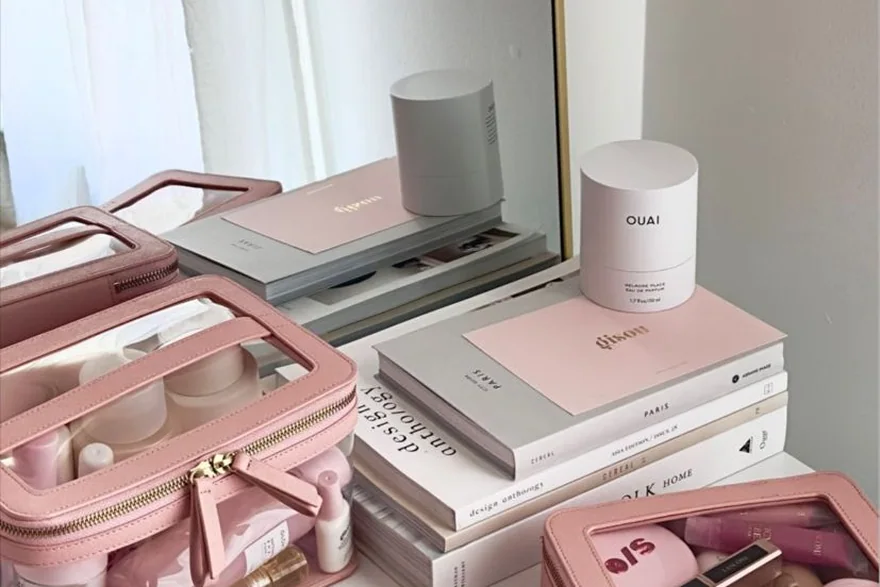
What RFID blocking means when it is written into a bag specification
Contactless payment cards, transit cards and many hotel key cards communicate by near-field induction at 13.56 MHz under the ISO/IEC 14443 family of standards. The card contains no battery: the reader's field powers the chip, which then modulates its answer back to the reader. That dependence on the reader's field is what makes a shield possible. Place a conductive layer between the card and the reader and the field induces eddy currents in that layer instead, so less energy reaches the card's antenna and the card cannot complete a transaction. The general standards framework for this technology is maintained by the International Electrotechnical Commission, and a brief that names the frequency band is already more precise than most retail copy.
The word blocking is where specifications go wrong. A shield attenuates a field by a measurable amount at a stated frequency, in a stated geometry, at a stated distance and orientation. It does not make a card invisible. Attenuation is expressed in decibels, a ratio rather than an absolute: a lining may attenuate substantially at 13.56 MHz and very little at another frequency, because effectiveness depends on frequency, conductivity, thickness and aperture size relative to the wavelength.
A cosmetic bag is an unusual place to put a shield, and that is worth stating plainly. Cardholders and passport covers are the conventional formats, because they hold one card against a lining on both faces. A cosmetic bag is larger, it is opened frequently, and it is carried alongside liquids and makeup, so the shielded volume has more edges and more opportunities to leak. That does not make the feature pointless; a travel pouch with a shielded card pocket is a reasonable product. It does mean the construction has to be thought through rather than bought as a roll of lining and assumed to work.
The commercial context is a premium travel feature rather than a volume driver. 'travel bag for toiletries' draws roughly 110,000 monthly searches, and a subset of that audience buys on security features. Published marketplace pricing for cosmetic bags spans about $0.45 to $12.00 per unit, and a shielded lining moves a product upward within that band because the material costs more than standard lining and the construction is more demanding. The margin case depends on describing the feature accurately, which is why evidence matters more here than in most other bag features.
Shielding materials: how they work and where they stop working
Shielding layers in soft goods fall into three practical families. The most common is a metallised nonwoven or woven fabric, typically polyester plated with copper and nickel, or with nickel alone, used as a lining or as a laminate behind a face fabric. The second is a metal foil laminate, usually aluminium, bonded to a film and then to a fabric carrier; it is the most effective per unit thickness and the least durable, because repeated flexing work-hardens and cracks the foil. The third is a conductive knit or mesh using silver-plated or copper-plated yarns, which drapes and flexes better and is the premium option, at a material cost that is significant in a low-price bag.
Conductivity, thickness and continuity determine performance, and they are not interchangeable. A thin metallised layer with high surface conductivity can perform well when new; the same layer with a cracked or oxidised surface performs unpredictably, because the current path is broken and the remaining conductive islands behave as apertures. This is why a foil laminate that performs best on a flat swatch is often the worst choice in a bag that gets folded, whereas a plated knit with lower nominal performance may hold its behaviour for the life of the product.
Durability is the other half of the decision, and it is specific to the failure mode. Foil laminates crack along a crease line and the crack propagates with each fold. Plated nonwovens abrade at flex points and lose plating where the lining rubs against a seam. Plated knits resist both better but can snag, and their conductivity depends on contact between yarns, which changes as the knit is stretched. Any of these can also be affected by moisture and by residues from cosmetics, which is a genuine concern in a bag that shares space with liquids.
Cost and weight follow the material. A metallised nonwoven adds little weight and a moderate cost per bag, a foil laminate adds some stiffness and a little weight, and a plated knit adds the most cost and is usually reserved for the card pocket area rather than the whole lining. Most programmes get better value by shielding a defined card pocket well than by lining the entire bag thinly, because the pocket can be built as a closed, continuous enclosure while a full lining cannot.
Where the layer sits in the stack also matters. Placing the shield directly behind the face fabric puts it closest to an outside reader and leaves it exposed to abrasion from the outside; placing it behind the lining protects it but increases the distance from the card, which works in the opposite direction. Most programmes compromise by building a dedicated pocket with the shield sandwiched between two fabric layers, so the conductive layer is protected on both faces and the card sits close against it.
| Shielding material | Typical build | Flex durability | Cost position | Principal failure mode |
|---|---|---|---|---|
| Copper-nickel plated nonwoven | Plated polyester, laminated behind lining | Moderate; abrades at flex points | Low to medium | Plating loss where lining rubs a seam |
| Aluminium foil laminate | Foil bonded to film and fabric carrier | Poor; cracks along a crease | Low to medium | Foil cracking and crack propagation |
| Silver-plated conductive knit | Plated yarn knit or mesh | Good; drapes and flexes | Highest | Snagging; conductivity changes on stretch |
| Metallised film insert | Thin film sealed between fabric layers | Poor to moderate | Lowest | Delamination and creasing |
| Carbon-coated conductive fabric | Coated woven base | Moderate | Medium | Coating wear and lower conductivity |
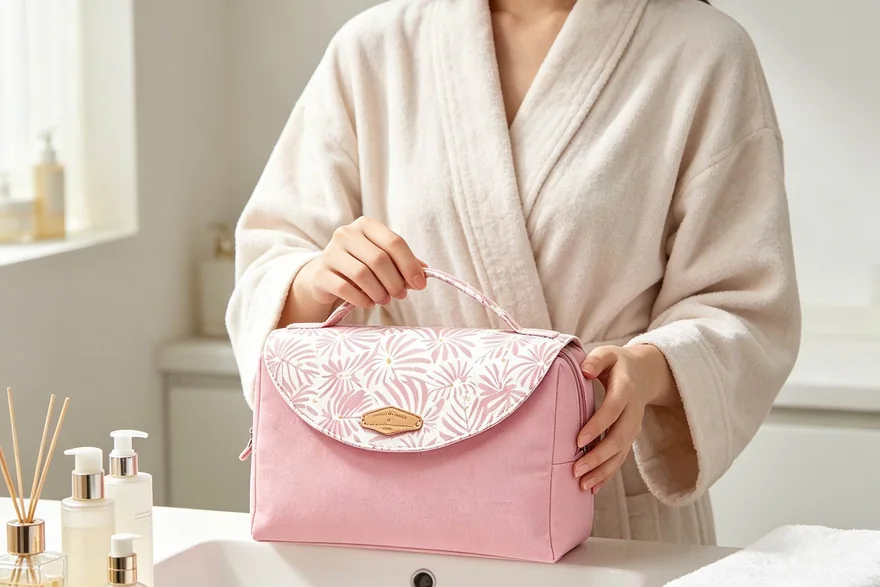
Construction details that decide whether the shield does anything
Coverage is the first determinant. A shield works as an enclosure, so a lining that covers the back panel and the sides but leaves the front under an ordinary fabric does not enclose the card. Buyers should require the shielded area to be drawn on the pattern as a closed shape and should ask what happens at the mouth of the pocket: a card slot that is shielded on two faces but open along the top will still read when a reader is brought close to the opening, because the field couples through the aperture rather than through the fabric.
Continuity at the seams is the second. A conductive layer stitched with ordinary thread is interrupted at every stitch hole, and while a line of small apertures performs better than one large gap, performance at a seam depends on how the layers meet. Overlapping the shielded panels and bonding or taping the join is more reliable than butting them and stitching through. The same logic applies to the zipper: an unshielded closure along the pocket mouth leaves a long aperture, which is why a shielded pocket is better closed with a flap, a fold-over, or a zipper with a shielded overlap behind it.
Placement relative to the card matters more than buyers expect. Shielding effectiveness falls with distance from the layer and changes with orientation, because the reader's field is not uniform. A card sitting flat against a shielded panel behaves differently from a card standing upright in a pocket with air gaps around it. In a cosmetic bag, where a card may be loose among bottles and brushes, the only reliable arrangement is a dedicated, close-fitting card slot built into the shielded enclosure rather than a general claim about the bag as a whole.
One practical consequence deserves a warning on the product page. A shield that works also stops the cards the owner wants to use without removing them: a transit card read through a bag, a hotel key presented while still in the pouch, or a contactless building pass. Buyers should decide deliberately whether the shielded pocket holds only payment cards and whether the design makes it obvious which pocket is which, because a feature that silently stops a card working generates the same complaints as a feature that does nothing.
Assembly method deserves a decision of its own. Bonding the shield to a carrier fabric keeps the layer flat and avoids the perforation that stitching introduces, but adhesive choice affects hand-feel and durability, and a bonded panel that delaminates leaves the shield floating loose inside the pocket. Quilting or tacking the shield at a few points is cheaper and more forgiving, at the cost of local interruption at each tack. The brief should state which method applies and how a delaminated panel would be detected during inspection.
- Shield a defined, close-fitting card pocket rather than claiming protection for the whole bag.
- Draw the shielded area as a closed shape on the pattern; an open mouth is an aperture.
- Overlap and bond shielded panels at the seams instead of butting them and stitching through.
- Specify performance at a named frequency and geometry, not with the single word RFID.
- Tell the customer which pocket is shielded, so wanted cards are not silently blocked.
Evidence, claims and compliance for a shielding feature
A shielding claim should be treated like any other performance claim: the buyer asks for the evidence before the claim goes on the packaging. A useful test report names the material, the construction, the frequency or frequency band, the measurement setup, the sample orientation, the distance between reader and card, and the result in decibels or as a pass or fail against a stated threshold. A report that says only that a material blocks RFID, with no method and no geometry, is not evidence of anything and should not be relied on. Independent laboratory testing, rather than an in-house demonstration, is the standard a buyer should set.
The claim itself has to be written carefully. Shielding reduces the chance that a passive card is energised by an unexpected reader; it does not address every fraud route, and it says nothing about card-not-present fraud, about a physically stolen card, or about the security measures the card issuer applies. Many modern contactless transactions also use dynamic cryptograms, which limits what a read of the card data alone would achieve. Advertising regulators in most markets require substantiation for security claims, so the safest copy describes what the material does and cites the measurement, rather than promising that fraud cannot occur.
Material compliance applies to the shield as a textile in its own right. A metallised layer sits inside a bag that also holds cosmetics, so restricted-substance status should be documented for the plated fabric and its adhesive, not inherited from the outer shell. EU REACH sets the framework for chemical substances in articles sold into the European market, and OEKO-TEX Standard 100 is the certification buyers most often request for textiles in repeated contact with skin and personal items.
The programme mechanics are standard. Minimum order quantity is 500 pieces per style and colourway. Sampling runs 6 to 10 working days for a bag with a sewn shielded pocket, and 12 to 15 working days where the construction includes a bonded enclosure, a moulded component or a laminated lining that has to be trialled. Bulk production is 35 to 50 days after sample approval, inspected at AQL 2.5 under ISO 2859-1, shipped FOB Xiamen on T/T 30 deposit and 70 against bill of lading.
| Requirement | What to ask for | Why it matters | Red flag |
|---|---|---|---|
| Test report | Named method, frequency, geometry, result in dB | Without method there is no claim to defend | A certificate with no method or setup |
| Sample state | Tested in the finished pocket, not as a swatch | Seams and apertures change the result | Flat swatch data used for a finished bag |
| Durability | Performance after a stated flex or abrasion cycle | Layers crack and abrade in real use | New-condition data only |
| Material compliance | Declaration for the plated layer and adhesive | Metal layer is a separate article component | Compliance assumed from the outer fabric |
| Claim wording | What the material does, with the measurement cited | Security promises need substantiation | Language promising fraud cannot occur |
Request an independent laboratory report that names the method, the frequency band, the sample orientation and the result. A certificate that states only that a material blocks RFID does not tell a buyer what the finished bag will do, and it will not support a claim made to a retail customer.
The B2B Customisation View
Range planning for makeup bags and toiletry bags works best when the hero style and the gift-with-purchase style are engineered together, sharing linings and hardware to protect the budget.
Planning figures used across the programme: MOQ 500 pieces per style and colourway, 6–10 working days sampling (12–15 when moulding or multi-layer lamination is required), 35–50 days bulk lead time, AQL 2.5 to ISO 2859-1, FOB Xiamen, T/T 30/70.
The value of a programme-coordination model is continuity: QUANZHOU JUNYUAN BAGS keeps the approved reference sample, the shade standard and the AQL record for every repeat order.
Which Brand Types Benefit Most
Shielded pockets suit buyers whose customers travel with cards. Start-up brands use the feature as a differentiator in a crowded travel-pouch category, but the risk is highest for them: a young brand that makes an unsupported security claim carries the reputational cost alone, so the laboratory evidence matters more than the feature. Established brands use shielding to extend a travel range with a justified price step, and they are better placed to carry the documentation cost across a larger volume. Retailers care about substantiation, because a security claim on a shelf is a claim the retailer may have to defend, and many will ask for the test report during onboarding. E-commerce sellers benefit when the listing explains the mechanism rather than asserting an outcome, since a specific explanation converts better than a vague promise and generates fewer disputes. Gift and hospitality buyers use shielded pouches in travel amenity kits for premium tiers, where the feature supports the positioning rather than carrying it.
- Start-up brands: differentiate a travel pouch, but secure the test evidence before making any claim.
- Established brands: justify a price step in a travel range with documentation carried across volume.
- Retailers: expect to produce the test report at onboarding, so obtain it early.
- E-commerce sellers: explain the mechanism in the listing rather than promising an outcome.
- Gift and hospitality buyers: use the feature to support premium positioning in travel amenity kits.
The decision that separates a credible programme from a weak one is scope. Shielding one well-built card pocket, with bonded seams and a closed enclosure, is achievable and describable. Shielding an entire cosmetic bag and claiming the contents are protected is neither, because the mouth, the seams and the distance between card and lining all leak. Buyers should also plan for the pocket to be replaced or re-specified if the first test comes back marginal, which is cheaper than reprinting packaging later. Commercial terms are unchanged: 500 pieces per style and colourway, sampling in 6 to 10 working days or 12 to 15 for complex constructions, 35 to 50 days to bulk after approval, AQL 2.5 under ISO 2859-1, FOB Xiamen, T/T 30 deposit and 70 against bill of lading.
Frequently Asked Questions
What does an RFID blocking lining actually do in a cosmetic bag?
It places a conductive layer between a contactless card and a reader, so the reader's field induces currents in the layer instead of energising the card's chip. That attenuates the field at 13.56 MHz under the ISO/IEC 14443 family. It is a shielding property with a measurable value, not a guarantee that no transaction can ever occur.
Should the whole bag be shielded or only a card pocket?
Only a defined card pocket, in most cases. A shield works as an enclosure, and a bag that opens along a zipper mouth has a long aperture. A close-fitting shielded slot, with overlapped and bonded seams, is both more effective and easier to describe honestly than a thin layer behind the entire lining. A defined pocket is also easier to describe accurately on packaging than a general claim about the whole bag.
What test evidence should a buyer request before making a claim?
An independent laboratory report naming the material, the construction, the frequency band, the measurement setup, the sample orientation, the reader-to-card distance and the result in decibels. A certificate stating only that a material blocks RFID, with no method, does not describe what the finished bag will do. A report on a fabric swatch is useful background, but it does not describe what the finished pocket will do.
Does shielding stop every form of card fraud?
No. It addresses one specific route: an unexpected reader energising a passive card. It says nothing about card-not-present fraud, a physically stolen card, or issuer-side controls. Copy should describe what the material does and cite the measurement rather than promising that fraud cannot happen. Copy that explains the mechanism and cites the measurement is both more accurate and easier to defend later.
Which shielding material lasts longest in a bag that gets folded?
A silver-plated or copper-plated conductive knit generally tolerates flexing best, though it costs more and can snag. Aluminium foil laminates perform well flat but crack along a crease and the crack propagates. Plated nonwovens sit between the two and tend to lose plating where the lining rubs a seam. Whichever is chosen, performance should be measured again after a defined flex cycle rather than only when new.
Do stitched seams break the shielding?
They interrupt it. A conductive layer stitched with ordinary thread is broken at every stitch hole, and while small apertures perform better than large ones, a butted and stitched join is weaker than an overlapped and bonded one. The brief should state how shielded panels meet. The brief should state how shielded panels meet, because that detail is decided on the sewing floor, not in the fabric.
Can a shielded pocket block a card the owner wants to use?
Yes, and this is a real design issue. A transit card, a hotel key or a building pass in the same pocket will not read through the shield. The design should make it obvious which pocket is shielded and should hold payment cards separately from cards that need to be presented while inside the bag.
What minimum applies to a bag with a shielded pocket?
The minimum is 500 pieces per style and colourway. The shield itself does not change the quantity, but it does affect lead time: a sewn shielded pocket samples in 6 to 10 working days, while a bonded enclosure or a laminated lining counts as complex and samples in 12 to 15 working days. Buyers should also budget for a re-test if the first pocket construction comes back marginal.
How is shielding performance affected by distance and orientation?
Substantially. Attenuation changes with the distance between the card and the layer and with how the card's antenna is oriented relative to the reader's field. That is why a card lying flat against a shielded panel behaves differently from one standing loose in a pocket, and why a close-fitting slot is the reliable arrangement. Specifying a snug slot removes most of that variability and makes the result repeatable between units.
Is the metal layer safe next to cosmetics and skin?
It should be documented like any other textile component. Restricted-substance status is needed for the plated fabric and its adhesive rather than assumed from the outer shell, and buyers selling into Europe should reference EU REACH. OEKO-TEX Standard 100 is the certification most often requested for this kind of component. Keeping the declaration with the component specification avoids a scramble when a retailer asks for documentation.
How should the feature be described on packaging?
Describe what the material does and cite the measurement: a shielded card pocket that attenuates the field at a stated band, tested by a named method. Avoid outcome promises such as fraud-proof or fully secure, because advertising regulators in most markets require substantiation for security claims. Naming the frequency band and citing the test method is specific, credible and still easy to read on a hangtag.
What inspection level covers a shielded pocket?
AQL 2.5 under ISO 2859-1 with a written defect classification. For this construction the critical list should include gaps in the shielded area, seams that are butted rather than overlapped, delamination of the laminate and pockets that are not closed, since each defeats the function rather than the appearance. A pocket that looks perfect but leaks at a seam is a functional failure and should be classified as one.
Does shielding work after the bag gets wet or dirty?
Performance can change, because moisture and residues affect surface conductivity and contact between conductive yarns. Cosmetics and liquids in the same bag make this a realistic condition rather than a hypothetical one. Buyers should ask for performance to be measured after a defined conditioning cycle, not only when new. Specifying conditioning before measurement is the only way to know how the pocket behaves after real use.
Will a shielded bag cause problems at airport security?
The shielded lining itself is not a restricted item, and bags are screened by X-ray rather than by reading cards. The practical point is different: a card left in a shielded pocket cannot be read by a reader the traveller wants to use, so designers should keep frequently presented cards, such as transit passes, out of the shielded slot.
Can a shielded lining be added to an existing bag design?
Often yes, if the pocket can be built as a closed enclosure with overlapped seams. Retrofitting a thin layer behind the existing lining of an open bag rarely achieves much, because the mouth and the seams leak. A dedicated slot added at the pattern stage is the more reliable route. Re-sampling the modified design, rather than assuming the change is neutral, keeps the original approval valid.
People Also Ask
Do RFID blocking bags actually work?
A conductive layer does attenuate a 13.56 MHz reader field, and that can be measured. Whether a particular bag achieves anything depends on coverage, seam continuity and how close the card sits to the layer, so the honest answer is that a well-built shielded pocket works and a thin lining in an open bag may not. Ask for a test report with a named method.
What is the best material for an RFID blocking lining?
It depends on the duty cycle. Aluminium foil laminates attenuate well when flat but crack when folded. Copper-nickel plated nonwovens are cheaper and moderate in durability but abrade at flex points. Silver-plated conductive knits flex best and cost the most, which is why they are usually confined to the card pocket. For a bag that is folded daily, durability usually matters more than the highest attenuation measured on a flat swatch.
How can you test whether a bag really blocks RFID?
The reliable route is laboratory measurement with a calibrated reader at a stated distance and orientation, reporting attenuation in decibels at a named frequency. A home test with a phone can be misleading because phone output power, antenna position and app behaviour all vary. A finished bag should be tested, not a fabric swatch. Ask for the result in decibels at a named frequency, with the orientation and distance stated alongside it.
Is an RFID blocking cosmetic bag worth the extra cost?
It is worth it if the design shields a defined card pocket properly and the brand can cite evidence. It is poor value if the shield is a thin layer behind an open lining, because the money buys a claim rather than a behaviour. Buyers should compare the cost of the pocket against the retail price step it supports. A shielded pocket that cannot be evidenced is a cost with no return, whatever the retail price step it supports.
Request a Sample or a Written Quotation
Send the silhouette, dimensions, material preference and logo artwork, and the programme team will return a written quotation with MOQ, sampling window, bulk lead time and inspection standard.
Email: service@junyuanbags.com · WhatsApp: +86 177 5002 0688