Best Cosmetic Bags for Bridesmaids 2026: Wedding Gift Guide
Executive Summary
Best cosmetic bags for bridesmaids in 2026 are the ones sized and finished for a single wedding morning rather than for general travel. The working recommendation is a closed size of 24 x 15 x 9 cm, roughly 3 litres, in a wipe-clean laminated fabric, with personalisation applied by embroidery or a debossed patch rather than a surface print. That size holds one person's full face plus brushes, fits in a tote alongside a steamed dress, and survives being photographed on a dressing table.
The commercial mechanics matter as much as the design. A brand owner building a bridal line orders at 500 pieces per style and colourway, so a six-colourway range is six separate minimums; consolidating to three colourways with two personalisation finishes is usually the better first programme. Sampling takes 6 to 10 working days, 12 to 15 for a debossed patch or a rigid gift box, and bulk runs 35 to 50 days after approval, which has to be counted backwards from the wedding season rather than forwards from the order date.
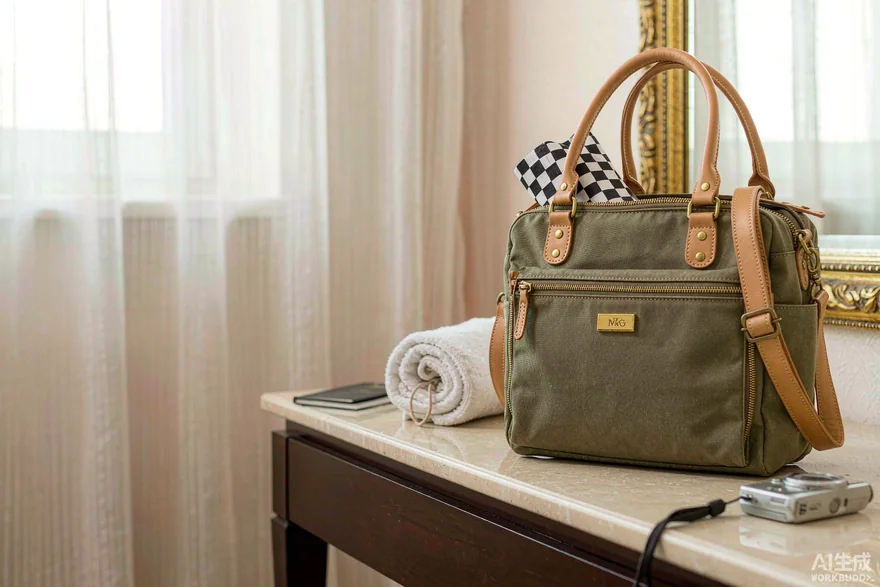
Why bridesmaid cosmetic bags are a category of their own
A bridesmaid cosmetic bag is asked to do three jobs at once, and only one of them is holding makeup. It has to work as a proposal gift weeks before the wedding, as a functional kit on the morning itself, and as a keepsake afterwards. That combination drives specifications in directions a general-purpose pouch would never take. It needs to look gift-ready without a box, because it is often handed over in person. It needs a lining that can be wiped clean after a foundation spill in a hotel room. It needs personalisation that reads clearly in a group photograph taken at arm's length.
The gifting context also sets the emotional register. A bridal party gift is usually given once and kept for years, so perceived quality matters more than durability under daily use, and the failure mode that matters most is cosmetic rather than structural: a monogram that peels, a foil that dulls, or a lining that stains on first contact. Buyers who specify a bridal bag using the same checklist as a travel kit tend to over-build the structure and under-build the finish, which produces a bag that lasts longer than anyone needs and looks worse than anyone wants.
Demand is seasonal and predictable, which is both the opportunity and the risk. Weddings cluster in late spring and early autumn in most markets, so a bridal line has to be on the shelf well before the engagement season that precedes it. For a brand owner this means the production calendar runs backwards from a fixed retail date: sampling, approval, bulk production and freight all have to be scheduled before the season opens, not during it. The 35 to 50 day bulk window is the shortest part of that chain, and the part most buyers remember; freight and seasonal congestion are the parts most often forgotten. Buyers new to the category also underestimate approval revisions: a first bridal sample almost always comes back with a change to the monogram position or the foil colour, and each revision restarts part of the sampling clock.
Size, capacity and personalisation: what the gift has to do
Size is the first decision and the easiest to get wrong. A bag that is too small cannot hold the products a bridesmaid actually brings to a wedding morning, and a bag that is too large stops reading as a gift and starts reading as luggage. The working recommendation for the main gift is a closed footprint of 24 x 15 x 9 cm, roughly 3 litres. That holds a foundation bottle, a palette, a mascara, a setting spray and a short brush roll, with a small elastic loop for lipstick. Anything below about 20 cm wide forces the recipient to choose which products to leave behind. Depth matters as much as width: a bag that is only 6 cm deep cannot stand a bottle upright, so bottles lie across the lining and leak into the seam, which is the failure most likely to be remembered.
The proposal gift is a separate product with a separate brief. It is typically smaller, around 18 x 11 x 6 cm or 1.0 to 1.2 litres, because its job is to hold a card, a small cosmetic item and perhaps a piece of jewellery rather than a full kit. Sellers who offer both sizes as a pair give the buyer a natural upsell path, and the two sizes can share fabric, lining and hardware, which keeps component inventories manageable across a 500-piece minimum per style and colourway.
| Use case | Recommended closed size | Capacity | Notes |
|---|---|---|---|
| Bridesmaid proposal gift | 18 x 11 x 6 cm | 1.0 to 1.2 litres | Holds a card, one lipstick and a small keepsake |
| Wedding morning kit | 24 x 15 x 9 cm | 2.8 to 3.2 litres | Fits a full face plus a short brush roll |
| Weekend-away bag | 28 x 18 x 11 cm | 5.0 to 5.5 litres | Shared items for a group getting ready together |
| Bridal party organiser | 30 x 20 x 12 cm | 6.5 to 7.0 litres | Several people drawing from one bag at a venue |
| Maid of honour upgrade | 26 x 16 x 10 cm | 3.8 to 4.2 litres | Same style one size up, different foil colour |
Personalisation is the part that turns a pouch into a bridesmaid gift, and the method should be chosen against the fabric rather than against a trend. Embroidery up to three initials is the most durable option on woven polyester, canvas or twill and reads well in a photograph. A debossed polyurethane patch gives a quieter, more premium look and works on vegan leather and PU, but needs tooling and adds days to sampling. Heat transfer vinyl is the cheapest and fastest and works on flat panels, though it sits on the surface and can lift at a seam or a fold after repeated handling.
Placement matters as much as method. A monogram on the front panel lower third is the conventional position and survives being photographed from above. Placing initials on a gusset or across a curved top edge looks distinctive in a studio shot and unreadable in a group photograph. Buyers should also decide whether the personalisation is per-name or per-role: per-name embroidery means every bag in the order is different, which affects how the production floor sequences the run and is worth confirming before the order is placed rather than after.
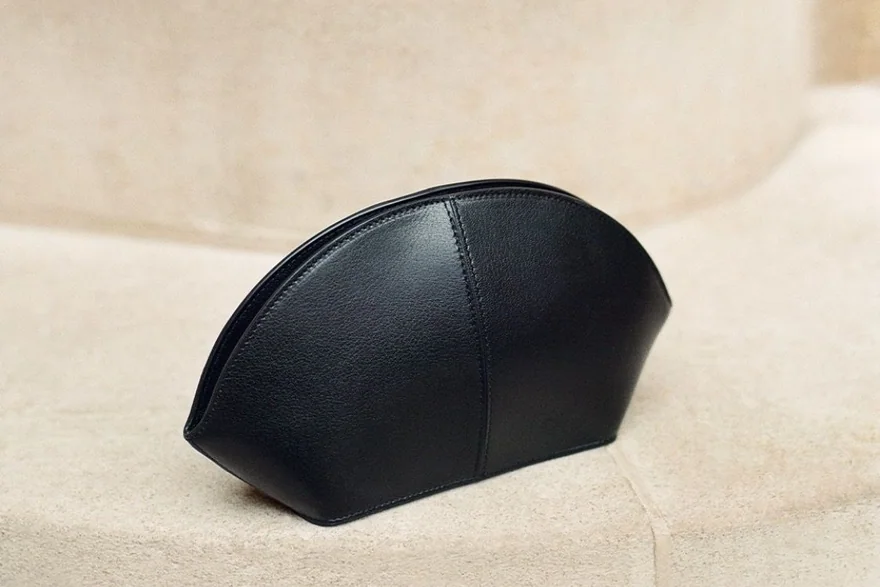
Fabric, lining and finish choices that photograph well
Bridal colourways are narrow and unforgiving. Blush, champagne, sage, dusty blue and soft ivory dominate, and all of them are light, which makes staining the defining risk. A light-coloured uncoated lining will show a foundation mark permanently, and because the bag is a keepsake, that single mark ends the product's life in the recipient's eyes. The practical answer is a laminated lining: 0.08 mm of polyurethane resists powder and light moisture, and 0.10 to 0.15 mm of thermoplastic polyurethane gives a genuinely wipe-clean surface for a bag that will hold liquids on a wedding morning.
Face fabric choice is then driven by how the monogram will be applied and by how the bag should feel in the hand. A 420D polyester with a soft PU backing takes embroidery cleanly and costs less. A vegan leather or PU face takes a deboss well and photographs with more depth, at a higher unit cost. A satin or twill face looks unmistakably bridal but marks easily and needs a protective finish. Whichever is chosen, the fabric should be tested for colour fastness against the ISO 105 series, because a blush bag that crocks onto a white dress is the worst possible outcome in this category.
- Specify a laminated lining at 0.08 mm minimum; a light uncoated lining stains on first contact with foundation and ends the bag's life as a keepsake.
- Match the monogram method to the face fabric: embroidery on woven polyester or twill, debossing on PU or vegan leather, transfer only on flat panels.
- Choose hardware finish once and hold it across the range; mixed gold and silver within one bridal party reads as a packing error in group photographs.
- Ask for colour fastness to rubbing on every light colourway, since blush, champagne and ivory are the tones most likely to transfer dye.
- Confirm that any foil or metallic thread used in personalisation is tested for durability, as dull foil is the most common complaint after a year of storage.
Compliance should be settled before sampling rather than after. A cosmetic bag given as a gift still places materials in contact with skin and with the products inside it, so buyers selling into the European Union should confirm that the fabric and any coating meet the restrictions set out under EU REACH. Where a natural fibre such as cotton canvas or a satin blend is used, the OEKO-TEX Standard 100 label is the most widely recognised way for a brand owner to evidence that the textile has been tested for harmful substances, and a GOTS reference is appropriate where an organic fibre claim is being made.
Hardware finish is the last of the photograph decisions and the one most often overlooked by buyers comparing samples side by side. Gold-tone and rose-tone hardware suit warm bridal palettes; nickel and gunmetal suit cooler ones. Mixing finishes across a single order is a common and avoidable error, because brides photograph the bags together and any inconsistency is visible immediately. The zipper puller, the badge and any charm should all be specified with the same finish code, and the brief should state that mixed finishes are not acceptable within one colourway.
Quantity, timing and packaging for a wedding order
The ordering structure of a bridal line is where B2B buyers most often miscalculate. A minimum order quantity of 500 pieces applies per style and colourway, so a range with four styles across six colourways is twenty-four separate minimums if each colourway is treated as its own order. Most first programmes are better served by one or two styles across three colourways, with differentiation delivered through personalisation rather than through fabric. That keeps the total commitment manageable and concentrates volume, which usually improves the unit price as well.
| Personalisation method | Order structure | Effect on sampling | Best on |
|---|---|---|---|
| Embroidery, up to 3 initials | 500 pieces per style and colourway | +2 to 4 working days | 420D to 600D polyester, canvas, twill |
| Heat transfer vinyl | 500 pieces per style and colourway | +1 to 2 working days | Flat polyester panels only |
| Debossed PU patch | 500 pieces per style and colourway | +5 to 7 working days, tooling | PU and vegan leather faces |
| Woven name label | 500 pieces per style and colourway | +3 to 5 working days | Any lined bag with a side seam |
| Foil-stamped rigid gift box | 500 pieces per style and colourway | +4 to 6 working days, tooling | Rigid box packaging |
Timing then has to be counted backwards from the season. Standard sampling runs 6 to 10 working days, and a bridal bag with a debossed patch, a foil-stamped box or a custom lining print falls into the 12 to 15 working day bracket. Bulk production is 35 to 50 days after sample approval. Inspection is set at AQL 2.5 under ISO 2859-1, which fixes the sample size and the accept and reject numbers in advance. Shipment is on FOB Xiamen terms with payment by T/T, 30 percent deposit and 70 percent against bill of lading. Freight time sits on top of all of it.
Packaging is not an afterthought in this category; it is part of the gift. A rigid gift box sized to the bag in its packed rather than flat state protects the laminate from impressions during transit and removes the need for the buyer to wrap the item. Tissue, a printed card and a consistent foil colour across the range cost a small share of unit cost and do a disproportionate amount of work in the unboxing moment, which is the moment most bridal gift content is created around. For a bag sold through a retailer rather than direct, a hangtag with a clear material and care statement does the same job at lower cost.
Care and labelling close the programme out. A bridal bag intended as a keepsake needs a care instruction that matches its construction: a laminated lining can be wiped but should not be machine washed, a debossed patch should not be pressed with a hot iron, and a foil-stamped box should be stored away from humidity. A small care card inside the box costs very little and prevents the most common way a gift bag is ruined in its first month, which is a well-meant wash.
A bridal programme should be scheduled from the retail date backwards: freight, then 35 to 50 days of bulk production, then 6 to 15 working days of sampling, then time for approval revisions. Buyers who schedule forwards from the order date routinely find the goods arriving after the season has opened.
The B2B Customisation View
The commercial logic behind makeup bags and toiletry bags is simple to state and hard to execute: hold the unit cost, hold the colour, hold the delivery window.
Commercial parameters stay fixed across the range: MOQ 500 pieces per style and colourway, prototype turnaround 6–10 working days (extended to 12–15 for multi-panel or moulded builds), bulk lead time 35–50 days from approved sample, AQL 2.5 inspection to ISO 2859-1, FOB Xiamen, T/T 30 deposit and 70 against bill of lading.
For makeup bags and toiletry bags, that coordination matters most in the two weeks between packing and vessel loading, when documentation errors cost more than any material decision.
Which Brand Types Benefit Most
Bridal and gifting programmes suit different buyers for different reasons. A start-up brand often enters through this category because the product is emotionally driven, the colourways are narrow and the personalisation does the differentiation that a larger range would otherwise need; the discipline is to keep the first programme to one style and three colourways. An established brand with an existing beauty or accessories line can extend into bridal with almost no new tooling by applying a monogram and a gift box to a bag it already sells. Retailers and wholesalers buying a bridal capsule need the packaging sorted first, because a gift category sells on shelf presence more than on specification. E-commerce sellers do well with the proposal-size bag, which ships cheaply, photographs at close range and carries a high perceived value relative to its size. Gift and hospitality buyers, including event planners and hotel groups that assemble welcome packages for wedding parties, are the volume end of this category: they need a fixed landed cost, a box that stacks, and a delivery date that can be written into a contract. Whatever the buyer type, the bridal category rewards restraint: fewer colourways, better packaging and a monogram method matched to the fabric will outperform a wide range built on one weak specification.
- Start-up brands: enter with one style across three colourways and let the monogram provide the range depth.
- Established brands: extend an existing bag into bridal with a monogram and a rigid box rather than new tooling.
- Retailers and wholesalers: resolve packaging and shelf presence before refining the specification, since gifting sells visually.
- E-commerce sellers: lead with the 18 cm proposal size, which ships cheaply and photographs well at close range.
- Gift and hospitality buyers: fix landed cost, carton stacking and a contractual delivery date before anything else.
Frequently Asked Questions
What size cosmetic bag works best as a bridesmaid gift?
A closed footprint of 24 x 15 x 9 cm, roughly 3 litres, is the working recommendation for the main gift. It holds a foundation bottle, a palette, a mascara, a setting spray and a short brush roll without becoming luggage. Bags below about 20 cm wide force the recipient to leave products behind. For a proposal gift given weeks earlier, 18 x 11 x 6 cm is sufficient, because it only needs to hold a card and a small item.
Which personalisation method lasts longest on a bridesmaid pouch?
Embroidery lasts longest on woven fabrics because the thread passes through the cloth rather than sitting on it, and it survives washing and handling. A debossed polyurethane patch is a close second and reads as more premium, though it needs tooling. Heat transfer vinyl is the cheapest and fastest but sits on the surface and can lift at a fold. Match the method to the fabric rather than to a trend.
Can every bag in one order carry a different name?
Per-name personalisation is possible, but it changes how the run is sequenced on the production floor and should be confirmed before the order is placed. Embroidery programmes usually handle per-name work as a digitised file per name, while a debossed patch needs one tool per letter set and so suits a shared role such as Bridesmaid rather than individual names. Confirming this early avoids a mid-run change.
Why should a bridesmaid bag have a laminated lining?
Bridal colourways are light, and a light uncoated lining shows a foundation or mascara mark permanently. Because the bag is intended as a keepsake, one visible mark effectively ends its life in the recipient's eyes. A lining laminated with 0.08 mm of polyurethane resists powder and light moisture, and 0.10 to 0.15 mm of thermoplastic polyurethane gives a wipe-clean surface for liquids.
How many colourways should a first bridal programme cover?
Three is usually right. A minimum of 500 pieces applies per style and colourway, so six colourways across two styles means twelve separate minimums and a much larger total commitment. Blush, champagne and sage cover most bridal palettes, and further differentiation can be delivered through monogram thread colour and hardware finish, which do not add another minimum.
Does the minimum order quantity apply per colourway or per style?
Per style and per colourway. A 500-piece minimum therefore applies to each colour of each style, so a two-style range in three colourways is six minimums of 500 pieces. This is why consolidation matters: concentrating volume into fewer colourways reduces the total commitment and usually improves the unit price, while spreading the same volume thinly across many colourways does the opposite.
How far ahead of the wedding season should a bridal order be placed?
Work backwards from the retail date. Allow for freight, then 35 to 50 days of bulk production after sample approval, then 6 to 10 working days of standard sampling or 12 to 15 for a debossed patch or a foil-stamped box, plus time for approval revisions. Placed forwards from the order date, the goods routinely arrive after the season has opened.
Which fabric looks most bridal without being impractical?
A vegan leather or polyurethane face photographs with depth and takes a deboss well, but marks more easily and costs more. A 420D polyester with a soft PU backing is more practical, takes embroidery cleanly and costs less. Satin and twill look unmistakably bridal but need a protective finish. In every case, test the light colourways for colour fastness to rubbing before approving.
Should hardware finishes be consistent across a bridal party order?
Yes. Brides photograph the bags together, and any mix of gold, rose and nickel within one order reads as a packing error in a group shot. The zipper puller, the badge and any charm should all carry the same finish code, and the brief should state explicitly that mixed finishes are not acceptable within a single colourway.
What certifications should a bridal cosmetic bag carry?
For the European Union, confirm that fabric and coatings meet EU REACH restrictions. Where a natural fibre such as cotton canvas or a satin blend is used, OEKO-TEX Standard 100 is the most widely recognised evidence that the textile has been tested for harmful substances, and GOTS is appropriate where an organic fibre claim is made. Certificates should be requested with the material submission, not after production.
Is a gift box worth the extra cost for a bridesmaid bag?
Usually yes, because gifting sells on presentation and the box removes the need for the buyer to wrap the item. A rigid box sized to the bag in its packed rather than flat state also protects the laminate from impressions during a long transit. For a bag sold through a retailer, a hangtag with a clear material and care statement delivers much of the same benefit at a lower cost.
How should a maid of honour bag differ from the bridesmaid bags?
The most effective approach is the same style one size up, around 26 x 16 x 10 cm, in the same colourway with a different monogram thread or foil colour. This keeps tooling and fabric common across the order while creating a visible hierarchy. A completely different style breaks the visual set that makes the gift photograph well as a group.
What inspection standard should be written into a bridal order?
AQL 2.5 under ISO 2859-1 is the standard reference, and it fixes the sample size and the accept and reject numbers before production starts. For a gift product, add explicit defect definitions for the monogram: registration, thread breaks and foil dullness are cosmetic defects that matter more here than they would on a utility bag, and they should be listed as unacceptable at any level.
Can a bridesmaid bag be made in a recycled fabric?
Yes. Recycled polyester made from post-consumer bottle flake is widely available at 300D to 600D and performs close to virgin polyester in this application. Where a recycled content claim is made on the hangtag, the claim should be traceable through the Global Recycled Standard so that the percentage stated on the label can be evidenced. Confirm availability early, as recycled yarns can have longer lead times.
What is a sensible first order for a retailer testing the bridal category?
One style, three colourways, at 500 pieces each, with embroidery rather than a debossed patch, is a sensible test. It avoids tooling cost, keeps sampling inside the 6 to 10 working day window and produces enough units to judge sell-through across three palettes. If the category performs, a second programme can add the proposal size and a rigid box, which share fabric with the first.
People Also Ask
What do you put in a bridesmaid makeup bag as a gift?
A practical fill is a mini lipstick or lip balm, a travel-size setting spray, a small mirror, a hair tie and a handwritten card. Everything should be under 100 ml if the bag will be carried in hand luggage, and liquids should sit inside a sealed compartment. Keep the fill light so the bag itself does not lose shape before it is photographed.
How much should a bridesmaid gift bag cost?
Retail prices for personalised bridal pouches generally sit in a broad band from around $18 to $45 depending on fabric, personalisation method and packaging, with the bag itself a small part of that figure and the monogram and box a large one. For a brand owner, the relevant number is landed unit cost, which should be modelled before the retail price is set.
When should bridesmaid gifts be ordered for a spring wedding?
For a retail buyer, stock should be on shelf before the engagement season that precedes the wedding season, which means ordering several months ahead of the ceremonies themselves. For a brand owner, the chain is freight plus 35 to 50 days of bulk production plus 6 to 15 working days of sampling plus revision time, all counted backwards from the required shelf date.
Can bridesmaid bags be personalised with a role instead of a name?
Yes, and it is often the better choice for production. Role wording such as Bridesmaid, Maid of Honour or Mother of the Bride means one digitised file or one patch tool serves every bag in the order, which keeps sampling short and avoids per-name sequencing. Names work well with embroidery where each name is a separate file but no tooling is required.
Request a Sample or a Written Quotation
Send the silhouette, dimensions, material preference and logo artwork, and the programme team will return a written quotation with MOQ, sampling window, bulk lead time and inspection standard.
Email: service@junyuanbags.com · WhatsApp: +86 177 5002 0688