Wholesale Cosmetic Bags: Bulk Sourcing Strategy for Retailers
Executive Summary
The question retail buyers ask is how to run a wholesale cosmetic bag programme that sells through without locking cash into slow colourways. The answer is to fix the assortment ladder first, then buy each rung to a single 500-piece minimum per style and colourway, and only then negotiate unit price. Assortment decisions move sell-through; price decisions move margin. Taking them in that order keeps the first buy small enough to test and large enough to be economic. A three-rung ladder of an opening-price flat pouch, a core structured organiser and a premium vanity case covers the replacement, everyday-carry and gifting missions that generate most category volume.
From there the work is mechanical: build a tech pack, cost to the landed figure rather than the FOB figure, qualify the compliance file early, and hold the calendar to 6-10 working days for sampling and 35-50 days for bulk. Inspection at AQL 2.5 under ISO 2859-1 protects the shelf-ready rate, and payment on T/T terms of 30% deposit and 70% against the bill of lading keeps the balance tied to shipping documents. Retailers who follow that sequence reorder on data rather than instinct.
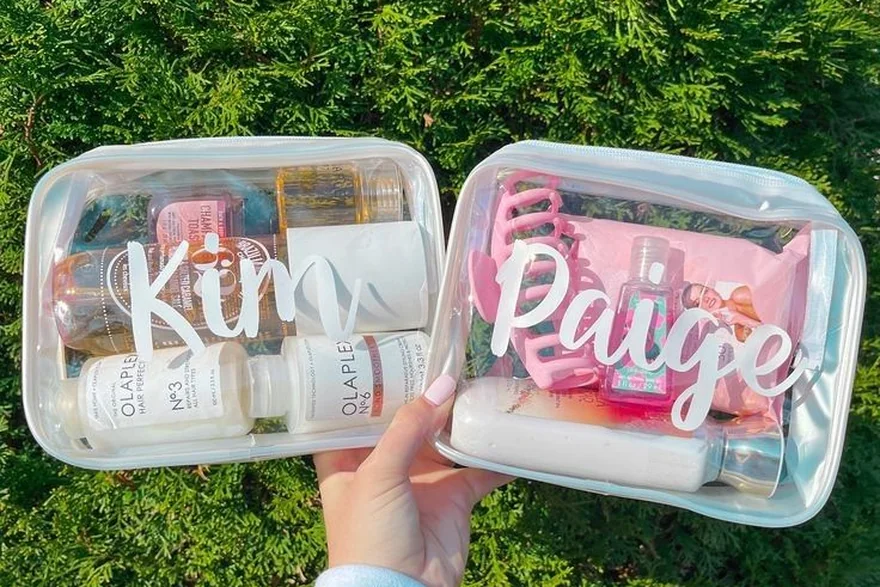
What wholesale means in the cosmetic bag category
Wholesale, in the bag trade, describes a transaction between the party that arranges the goods and a business that resells them, priced per piece in case-pack multiples and shipped against a single commercial invoice. It is not a description of quality. A wholesale cosmetic bag can be a flat pouch costing well under a dollar or a structured vanity case costing several dollars; the word only tells a buyer how the goods were bought, not what they are. That distinction matters because most sourcing mistakes in this category come from treating wholesale as a product type rather than a buying method.
Three buying modes sit under the same word. The first is catalogue wholesale: an existing pouch bought in a stock shade, with no change to pattern, fabric or hardware, and with artwork position as the only variable. The second is semi-custom: the same catalogue body with a logo applied by screen print, transfer or embroidery. The third is a made-to-order programme, where fabric, weight, dimensions, hardware, lining and print are all specified by the buyer. Retailers frequently move through all three as volume grows, and each mode carries a different minimum, a different calendar and a different cost structure.
Demand data explains why the category earns shelf space at all. ASINSIGHT data for 2026.07 puts toiletry bag searches at roughly 74,810 per week on Amazon, while travel bag for toiletries attracts about 110,000 monthly searches and make up bags for women about 80,000 monthly. Marketplace listings cluster in a unit price band of $0.45 to $12.00, with advertised minimums typically between 100 and 1,000 pieces. A made-to-order cosmetic bag programme begins at 500 pieces per style and colourway.
That minimum is the first strategic constraint a retailer meets, and it is the quantity at which a cutting marker, a dye lot, a print setup and a line changeover all become economic.
Retailers who plan well treat the assortment as a ladder rather than a list. One opening-price pouch, one mid-tier organiser and one premium case cover three shopping missions and three shelf zones. Each rung has its own construction, its own fabric weight and its own landed cost target, and each is ordered to its own 500-piece minimum. Getting the ladder settled before the first costing request shortens the entire cycle, because the brief stops changing after sampling has already started.
Building the assortment ladder before the first costing request
An assortment ladder is a set of rungs, each with a defined construction, a landed cost target and a job to do on the shelf. Three rungs is usually enough for a first programme. The opening rung exists to win the price-driven shopper and the impulse add-on, so it must reach a landed cost that still supports the retailer's entry price after freight and duty. The core rung carries the brand identity: a heavier fabric, a lining, a hanging hook or an internal divider. The premium rung is bought in the smallest quantity and earns its place through gifting and seasonal display.
| Rung | Landed cost target per piece | Typical construction | Fabric and weight | Where it sells |
|---|---|---|---|---|
| Opening | $0.60-$1.40 | Flat zip pouch, single compartment, bound seams | 190T-210D polyester or 300D recycled polyester, 70-90 g/m2 | Checkout zone, e-commerce add-on |
| Core | $1.60-$3.20 | Boxed organiser, lined, one divider, hanging hook | 600D polyester at 180-220 g/m2 or 12 oz cotton canvas | Beauty aisle, own-brand shelf |
| Premium | $3.50-$7.50 | Vanity case with mirror panel, elastic loops, structured base | 900D PU-coated polyester or TPU-laminated fabric | Gifting table, department store |
Colourway count is where first programmes go wrong. Because the minimum is 500 pieces per style and colourway, opening four colourways at the core rung commits 2,000 pieces before a single unit has sold. A safer first buy is two colourways at the opening rung, two at the core rung and one at the premium rung: 2,500 pieces spread across three constructions rather than 2,000 across one. The same money buys considerably more information, and the second drop can concentrate on the shades that actually moved.
- Open no more than two colourways per rung on a first buy.
- Share one construction across two rungs so zip tape, slider and lining can be consolidated.
- Set the landed cost target before choosing the fabric, not after.
- Reserve roughly one tenth of the first buy value for a mid-season reorder.
- Write the reorder trigger into the plan before the first shipment sails.
Pack format is part of the assortment decision, and it is usually discovered too late. A flat pouch ships well folded in a polybag with a printed header card. A structured organiser does not: it needs either a stuffing insert or a rigid inner carton to arrive shelf-ready. Carton counts then drive the freight line. A 1,000-piece order of flat pouches may pack 200 pieces per carton across five cartons, while the same quantity of structured cases at 40 pieces per carton fills twenty-five cartons and costs several times more to move. Deciding the pack format at brief stage avoids a freight surprise that cancels the tier saving.
Depth follows the first eight weeks of sales. A rung selling 60% of its buy in that window deserves a reorder at the next volume tier; a rung sitting at 20% needs a markdown plan rather than a repeat. Because bulk production takes 35-50 days after sample approval and sampling takes 6-10 working days, a reorder decision made in week eight lands roughly in week twenty. That lag is why the trigger has to be written down in advance rather than discovered when the shelf looks thin.
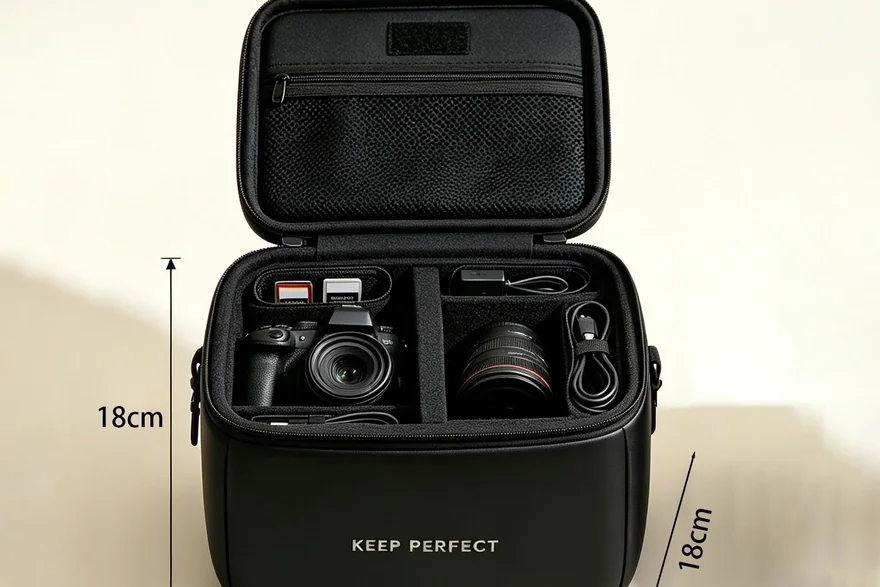
Costing to the landed figure and qualifying the document file
FOB Xiamen pricing is the cleanest basis for comparing two quotes, because it fixes the point at which cost and risk transfer: the goods are loaded on board at Xiamen, and everything after that belongs to the buyer. Freight, insurance, import duty, port handling and last-mile delivery all sit outside an FOB figure, and on a bulky, low-value product they can add a material percentage to the piece cost. A quote that looks cheaper on an FOB basis sometimes loses once carton volume is applied, because a bulkier pouch fills the container long before it reaches the weight limit.
| Cost element | Included in FOB Xiamen | Behaviour at 500 pieces | Behaviour at 10,000 pieces |
|---|---|---|---|
| Fabric, lining and trim | Yes | Bought at small-lot rates | Dyed or woven to order at a lower rate |
| Cutting, sewing and packing labour | Yes | Setup and changeover dominate | Line runs continuously |
| Print or embroidery setup | Yes | Amortised across 500 units | Amortised across 10,000 units |
| Sampling and pattern development | Usually billed separately | Full cost borne by the first buy | Often credited or absorbed |
| Inland haulage and export clearance | Yes | Fixed cost, high per piece | Fixed cost, negligible per piece |
| Ocean freight and insurance | No | Buyer books and pays | Buyer books; cost per carton falls |
| Import duty and taxes | No | Unchanged per piece | Unchanged per piece |
| Port to distribution centre | No | Buyer's own network | Buyer's own network |
Qualification is a document exercise before it is a visit exercise. A retailer should request, in writing, the material specification with fabric weight stated in grams per square metre, the hardware specification, the colour reference for every trim, and the test reports that apply to the destination market. Asking for these at quotation stage sorts serious programmes from catalogue resellers quickly: a party that cannot produce a fabric weight or a zipper specification is unlikely to hold tolerances across a 5,000-piece run, whatever the sample looked like.
- Material specification: face fabric, denier, g/m2, coating type, lining construction.
- Hardware specification: zipper gauge, slider type, puller finish, plating.
- Colour references for fabric, thread, zip tape and print, with a standard or a lab dip number.
- Test reports relevant to the destination market and to the retail channel.
- Packing specification: pieces per polybag, per inner carton, per export carton, and carton dimensions.
- A cutting from the exact production fabric, not a visually similar substitute.
Inspection and payment close the loop. A pre-shipment inspection at AQL 2.5 under ISO 2859-1 sets a measurable acceptance number before the goods are released. On a 5,000-piece lot at general inspection level II the sample size is 200 pieces, with 10 defects accepted and 11 triggering rejection of the lot. Payment on T/T terms of 30% deposit and 70% against the bill of lading keeps the balance tied to shipping documents rather than to a promise. Together they give the retailer a defined moment at which risk transfers.
Retailers booking a large seasonal slot can sanity-check capacity statements. Programmes coordinated by QUANZHOU JUNYUAN BAGS draw on SGS-verified floor space of 4,950 m2 across 7 production lines and 149 machines, with monthly output capacity of 200,000 pieces. A 10,000-piece slot is a fraction of that, but it still has to be booked against every other programme competing for the same month.
Running the calendar: sampling, bulk, inspection and reorder
The calendar is the least negotiable part of a wholesale programme. Sampling takes 6-10 working days for a straightforward pouch and 12-15 working days where the construction is complex: a moulded EVA shell, a multi-layer vanity case, an engineered print placement that has to line up on every panel. Bulk production then runs 35-50 days after sample approval. Add freight and clearance and a first programme realistically spans three to four months from signed brief to distribution centre, so a launch date has to be planned backwards from that figure rather than forwards from a buying meeting.
| Phase | Working days | Decision required from the buyer | Risk if compressed |
|---|---|---|---|
| Brief and tech pack | Buyer-controlled | Approve dimensions, fabric, hardware, print | Re-sampling and cost changes |
| Sampling | 6-10 (12-15 complex) | Approve or correct the prototype | Wrong fabric or logo locked into bulk |
| Bulk production | 35-50 | Confirm packing and ship window | Line slot lost, air freight needed |
| Inspection | Within the bulk window | Accept or reject against AQL 2.5 | Defects discovered at the destination |
| Booking and sailing | Varies by lane | Confirm documents for the T/T balance | Roll-over and demurrage charges |
Defects in this category are predictable, which is why the inspection plan can be written around them. Stitch density that opens at the zip end, print that cracks along a fold, a hanging hook that tears out of a single-layer panel, a lining seam that splits under the weight of a full bottle: each has a specification fix. Writing those four into the tech pack as explicit requirements, with a test or a pull value attached, prevents more claims than any inspection can, because inspection only samples the run while the specification governs all of it.
Replenishment is where a wholesale programme either compounds or stalls. A reorder at 1,000 or 5,000 pieces reuses the approved pattern, the approved fabric reference and the approved print setup, so the sampling step largely disappears and the calendar shortens to the bulk window plus inspection. That is the practical argument for holding a core rung across seasons: the programme becomes faster and cheaper with every repeat, whereas a new style restarts the full 6-10 working day sampling and 35-50 day bulk cycle.
Seasonal phasing spreads that cycle across the year. A retailer planning 10,000 pieces annually does better with four drops of 2,500 than with one drop of 10,000, because each drop refreshes the shelf and each reorder can correct the colour mix. The tier saving at 10,000 pieces is real, and there are two ways to approach it: book the annual volume and call it off in instalments, or buy each drop at its own tier. The first secures the price, the second preserves flexibility, and the choice depends on how much confidence the colour forecast deserves.
- Plan the launch date backwards from 35-50 days of bulk, plus sampling and sailing.
- Approve one golden sample and hold it as the physical reference for every reorder.
- Write the four recurring defects into the tech pack as testable requirements.
- Reorder before the stock-out, not at the stock-out.
The B2B Customisation View
Teams developing cosmetic pouches, vanity cases and beauty organisers benefit from deciding the closure, the lining and the logo application before the pattern is drafted, because each choice constrains the next.
Standard terms: 500 pieces minimum per style and colourway, 6–10 working days for sampling (12–15 for complex builds), 35–50 days bulk production, AQL 2.5 inspection under ISO 2859-1, FOB Xiamen, T/T 30 deposit / 70 balance.
As a sourcing and programme-management company, QUANZHOU JUNYUAN BAGS holds the specification, the inspection record and the shipment schedule together, which is exactly the coordination work a single-factory relationship rarely covers.
Which Brand Types Benefit Most
Different buyers use the same programme structure for different reasons. Start-up brands usually arrive with one hero product and a fixed launch date, and their constraint is sequence rather than price: a first run of 500 pieces per style and colourway has to cover the launch itself, the press and influencer send-out, and the first wholesale enquiry that follows it. They benefit most from a single rung executed properly, with a fabric and print specification that can be reordered unchanged, because a reformulation between drops breaks the visual consistency a young brand can least afford to lose.
Established brands and retailers use the ladder rather than the single product. A retailer with a checkout zone, a beauty aisle and a gifting table needs three constructions and three price points, and gains the most from consolidating trim across all three: one zipper gauge, one puller finish, one lining shade. That consolidation lets separate 500-piece minimums share the same trim purchase, which is often worth more than a small unit-price concession. E-commerce sellers, by contrast, frequently buy one rung in many colourways, because colour is their main search differentiator and the listing photograph changes far more than the pattern does.
Gift and hospitality buyers work to a different clock. Their orders are tied to a campaign date rather than to a replenishment cycle, so the premium rung and retail-ready packing matter more to them than the tier discount, and a late arrival is worth less than a slightly higher unit cost. Across all five groups the underlying discipline is the same: fix the specification, buy the smallest quantity that produces a real demand signal, and let the second drop earn the better price.
- Start-up brands: one rung, one colourway, a specification that reorders without change.
- Established brands: three rungs sharing trim, hardware and lining references.
- Retailers: opening, core and premium rungs mapped to distinct shelf zones and price points.
- E-commerce sellers: one rung across several colourways to widen search coverage.
- Gift and hospitality buyers: premium rung with retail-ready packing, hang loop and a two-piece gift box option.
Frequently Asked Questions
What counts as one style when a retailer mixes prints inside a wholesale cosmetic bag order?
A style is one construction: one pattern, one set of dimensions, one hardware specification. Print artwork is not the test. Three prints on the same pouch body are one style with three artworks, and the 500-piece minimum applies to the style, which means 1,500 pieces in total if each artwork gets a full run. Change the dimensions, the fabric weight or the zipper gauge and it becomes a different style with its own minimum. Clarifying this before quoting prevents the most common first-order surprise in the category.
How many colourways should a retailer open at 500 pieces each on a first buy?
Two per rung is the practical ceiling for a first buy. Four colourways at the core rung commits 2,000 pieces against a construction that has never been on the shelf, and if two shades fail the whole rung is over-stocked. A first buy of two opening, two core and one premium colourway puts 2,500 pieces across three constructions, which tests price point, construction and shade at the same time. The winning shades then absorb the second drop, where the volume tier improves anyway.
What retail multiple should a wholesale cosmetic bag programme be planned around?
Rather than a fixed multiple, work backwards from the shelf price the shopper will accept. A pouch retailing at $9.99 needs a landed cost that leaves room for the retailer's margin, the markdown allowance and the cost of returns. With the market unit price band running from $0.45 to $12.00, the workable approach is to set the landed cost target per rung first, then choose the construction that achieves it.
When is a stock pouch with a logo better than a fully custom build for a retailer?
When the test is commercial rather than product-led. A catalogue body with a logo applied can reach shelf faster and at a lower development cost, which suits a retailer validating a price point or a seasonal theme. The trade-off is differentiation: the same body is available to competitors. A made-to-order build takes longer because sampling runs 6-10 working days and bulk 35-50 days, but the pattern, fabric and hardware then belong to the programme. Many retailers start stock-plus-logo and switch once volume justifies it.
How does an FOB Xiamen quote differ from a delivered-duty-paid quote?
FOB Xiamen covers the goods, inland haulage to port and export clearance, with risk transferring when the cartons are loaded on board. Everything afterwards, including ocean freight, insurance, import duty and delivery to the distribution centre, belongs to the buyer. A delivered-duty-paid quote bundles those costs into a single figure, which is convenient but harder to compare, because the freight and duty assumptions are buried inside it. Requesting both makes the freight and duty component visible and therefore negotiable.
What does AQL 2.5 under ISO 2859-1 mean for a 5,000-piece cosmetic bag shipment?
It sets the sample size and the accept and reject numbers for a pre-shipment inspection. At general inspection level II, a lot of 3,201 to 10,000 pieces takes code letter L, which means 200 pieces are drawn at random and inspected. With an AQL of 2.5 for major defects, 10 defects are accepted and 11 reject the lot. That is a statistical gate, not a guarantee.
How long does a first wholesale cosmetic bag order take from approved sample to warehouse?
Bulk production runs 35-50 days after sample approval, and inspection happens inside that window or immediately after it. Sailing time, port clearance and inland delivery to the distribution centre then add a lane-dependent period on top. A realistic planning figure for a first programme is three to four months from signed brief to warehouse, because sampling adds 6-10 working days, or 12-15 where the construction is complex, before bulk even begins.
Which fabric weights suit an opening-price cosmetic bag?
Light weights in the 70-90 g/m2 range, typically 190T or 210D polyester, hold a low price point while still surviving normal use. Below that the fabric tends to show the lining seam and abrade at the corners. The saving is better found in construction than in weight: a flat pouch with bound seams and one compartment costs far less to sew than a boxed organiser with a lining and a divider.
What carton count should a retailer plan for a 1,000-piece pouch order?
It depends entirely on whether the pouch is flat or structured. A flat pouch can pack around 200 pieces per export carton, so 1,000 pieces is five cartons. A structured organiser at roughly 40 pieces per carton turns the same 1,000 pieces into twenty-five cartons, which changes the freight quote substantially. Ask for carton dimensions and pieces per carton at quote stage.
How does the TSA liquids rule change a travel toiletry bag brief?
It sets the practical inner volume. Under the TSA 3-1-1 liquids rule, liquids in carry-on must sit in containers of 100 ml or less inside a single transparent quart-size bag, so a clear TPU pouch of roughly 20 x 20 cm with a welded seam is the shape that actually gets through screening. A brief for an opaque case in the travel channel should therefore either include a removable clear pouch or be positioned as a checked-bag product.
What compliance file should a US retailer request before a cosmetic bag ships?
For children's products the Consumer Product Safety Improvement Act sets lead and phthalate limits and requires a children's product certificate backed by third-party testing. For general-use bags, request the material specification, a declaration covering restricted substances, and any test reports the retailer's own compliance team requires. Getting these documents before bulk rather than after shipment avoids a hold at the distribution centre, which is far more expensive than the test itself.
What compliance file should an EU retailer request for the same programme?
Ask for a restricted substance declaration mapped to EU REACH obligations, covering azo dyes, nickel release from metal hardware, and phthalates in any coated or printed layer. Where the face fabric carries a recycled claim, request the transaction certificate chain as well, because retailers are increasingly asked to evidence that claim at the shelf. Requesting the file at quotation stage is useful in itself: parties with a working compliance system answer within days, and those without one stall.
When is air freight justified for a cosmetic bag replenishment order?
Only when the cost of an empty shelf exceeds the freight premium, which on a bulky low-value item is rarely. A carton of pouches is mostly air, so air freight is charged against volume weight and can exceed the goods value. It can still make sense for a short, high-margin promotional window, or for a sample set needed for a retail line review.
How should a retailer phase a 10,000-piece annual cosmetic bag programme?
Either book the annual volume to secure the 10,000-piece tier and call it off in instalments, or buy four drops of 2,500 at their own tier. The first locks the price but commits the assortment; the second costs slightly more per piece and allows each drop to correct the colour mix against actual sales. Programmes with a proven core rung tend to benefit from the booked-volume approach, while programmes still finding their shade range usually do better drop by drop.
What should trigger a re-cost request partway through a programme?
A change to any element that was priced: fabric weight or supplier, coating type, zipper gauge or brand, print method, colourway count, packing specification, or carton count. A change to fabric weight alone can move the piece price by more than a tier discount saves, which is why the approved sample and its specification should be treated as fixed. Re-cost requests triggered by volume growth are the good kind; those triggered by a spec change usually signal that the brief was signed too early.
People Also Ask
Are wholesale cosmetic bags profitable for small retailers?
They can be, provided the first buy is small enough to sell through. Profitability in this category is driven less by unit price than by sell-through and markdown rate, because a pouch that fails to move at $9.99 eventually clears at $3.99 and erases the margin on three that did sell. A small retailer is usually better served by one rung of 500 pieces in two colourways than by a wider buy at a lower piece price.
How much stock should a first cosmetic bag order cover?
Enough for roughly eight to ten weeks of anticipated sales plus a display allowance, held at the 500-piece minimum per style and colourway. That window is long enough to read real demand and short enough that the reorder, which takes 35-50 days of bulk production plus sailing, arrives before the shelf empties. Buying a full season upfront rarely improves the economics once storage, markdown and working capital are counted.
Why do wholesale prices vary so widely for what looks like the same pouch?
Because the visible photograph does not show fabric weight, coating type, stitch density, zipper gauge, lining construction or packing specification. Two pouches of identical appearance can differ by 60 g/m2 of fabric, a branded versus unbranded zipper, and a single versus double stitched seam, and each of those carries a real cost. Comparing written specifications rather than images is the only reliable way to judge whether a lower quote is a saving or a downgrade.
What is a good sell-through rate for cosmetic bags in the first season?
A core rung that clears 60% of its buy within the first eight to ten weeks is performing well and justifies a reorder at the next volume tier. Below roughly 35% over the same window usually indicates a colour, price or placement problem rather than a product defect, and the answer is a corrected second drop rather than a repeat of the first. Tracking sell-through by colourway, not just by style, is what makes the second drop accurate.
Request a Sample or a Written Quotation
Send the silhouette, dimensions, material preference and logo artwork, and the programme team will return a written quotation with MOQ, sampling window, bulk lead time and inspection standard.
Email: service@junyuanbags.com · WhatsApp: +86 177 5002 0688