Soft-Sided vs Hard-Shell Cosmetic Cases: A Buyer's Comparison
Executive Summary
Soft-sided cosmetic cases win on freight, flexibility and speed to market; hard-shell cases win on protection, shape retention and perceived value. A soft-sided case in 600D polyester typically costs $1.60 to $6.00 per unit and packs 40 to 60 per export carton. A moulded EVA hard shell costs $4.50 to $12.00, requires tooling of roughly $2,500 to $9,000 amortised over the order, and packs 12 to 20 per carton because it cannot nest.
The decision turns on what is inside. Fragile contents such as glass fragrance bottles, pressed-powder palettes and LED mirrors justify a hard shell; soft contents such as brushes, tubes and fabric items do not. Minimum order is 500 pieces per style and colourway, soft-sided sampling takes 6 to 10 working days while a moulded shell takes 12 to 15 working days for sampling plus 15 to 25 working days to cut the tool, and bulk takes 35 to 50 days after approval. Freight is the deciding figure: 40 to 60 pieces per carton soft against 12 to 20 rigid, which on a 5,000-unit order adds about $1.62 per unit before tooling.
Where the Line Between Soft and Hard Actually Sits
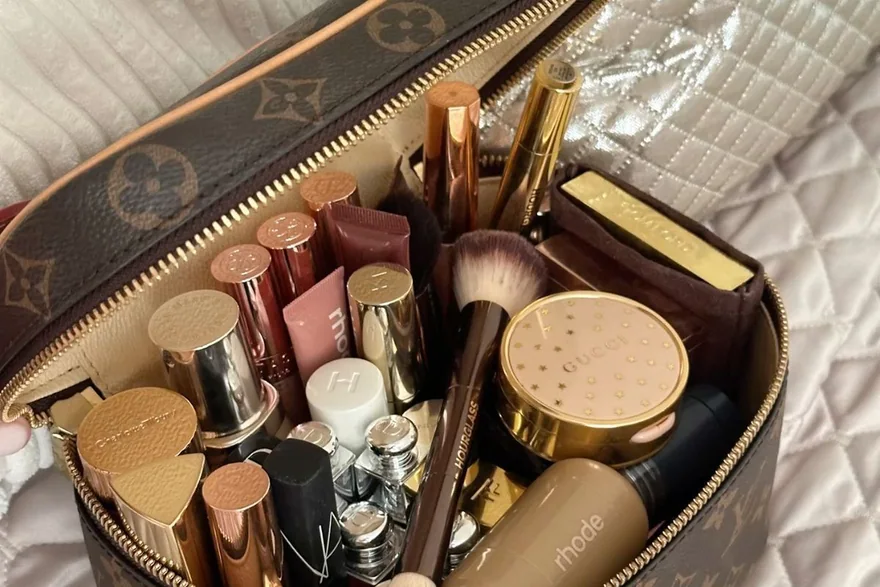
The distinction is not rigid versus floppy; it is whether the product has a self-supporting shell. A soft-sided case has a fabric shell whose shape comes from the contents, from a lining, from interfacing or from a base board, and it collapses when empty. A hard-shell case has a moulded or framed shell, most commonly EVA, ABS or polypropylene, that holds its shape empty and resists compression. Between them sits a large semi-rigid middle ground, usually a fabric shell over a moulded base or a frame, which is where a lot of mid-price volume actually sits.
Buyers should name which of the three is being ordered, because the middle ground is frequently quoted as hard-shell and then delivered as soft. A fabric case with a moulded EVA base and a fabric lid is semi-rigid: it protects from below but not from above. The test is simple and worth writing into the brief: with the case empty and closed, apply 20 kg evenly across the lid for 60 seconds and measure the deflection. Under 10 mm is hard-shell behaviour, 10 to 30 mm is semi-rigid, over 30 mm is soft.
- Soft-sided: fabric shell, shape from contents or a base board, collapses empty
- Semi-rigid: fabric over a moulded base or frame, protects from below only
- Hard-shell: moulded EVA, ABS or PP, holds shape empty, resists compression
- The 20 kg lid test separates the three: under 10 mm deflection is hard-shell behaviour
Both constructions sit inside the same commercial framework. The typical unit price band on marketplaces runs from $0.45 to $12.00, with soft-sided cases concentrated in the lower two-thirds and moulded shells at the top, and B2B minimums on those platforms commonly sit between 100 and 1,000 pieces. A custom programme runs at 500 pieces per style and colourway, and the shell decision is what determines whether tooling is needed before the first sample. That single difference drives most of the rest: a soft-sided programme can be re-sized between seasons at no cost, while a moulded programme is committed to a shape until the volume justifies cutting another tool.
Soft-Sided Construction: Shells, Weights and Behaviour
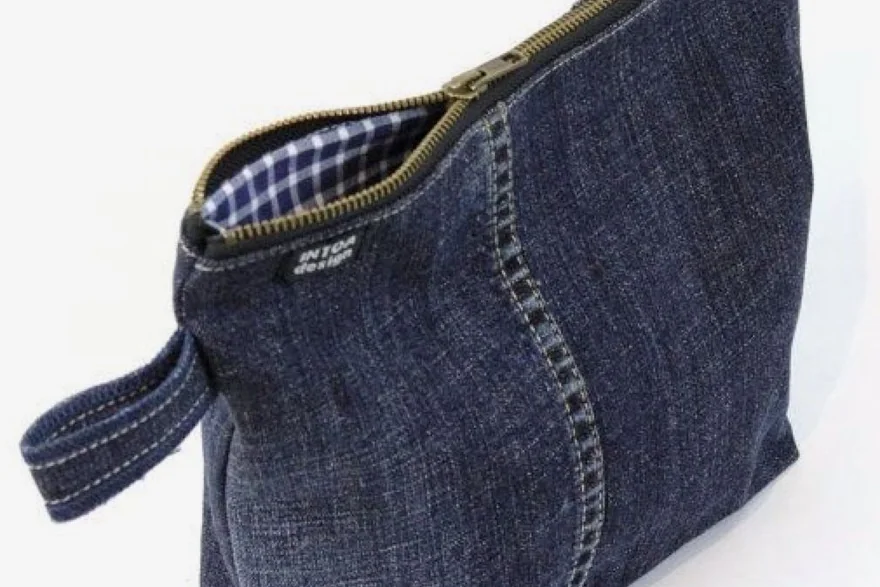
Soft-sided cases are specified by fabric, coating and structure. Nylon and polyester in the 420D to 600D range dominate, with fabric weights typically between 180 and 300 grams per square metre, and a PU or TPU coating of 0.05 to 0.12 mm for water resistance. Neoprene at 3 to 5 mm is used where a cushioned, tech-accessory feel is wanted, and coated canvas at 320 to 420 g/m2 serves natural-positioned ranges. The shell alone rarely decides the feel; the interlining does.
| Soft-sided build | Shell specification | Empty weight | Unit band | Best use |
|---|---|---|---|---|
| Basic lined pouch case | 420D polyester, 180 g/m2 | 110-160 g | $0.90-$2.60 | Gift-with-purchase, insert |
| Padded standing case | 600D polyester, 5 mm foam | 180-260 g | $2.20-$5.50 | Daily makeup kit |
| Neoprene zip case | 4 mm neoprene, bonded | 150-220 g | $2.40-$6.00 | Cushioned, casual ranges |
| Semi-rigid base case | 600D shell, 2.0 mm EVA base | 260-380 g | $3.40-$8.00 | Travel, bottles upright |
| Framed soft case | Fabric over PP frame | 320-460 g | $4.20-$9.50 | Train-case look, soft feel |
Structure is added in three ways and each has a cost. Interlining, a fusible or sewn-in layer of 80 to 200 g/m2, costs $0.08 to $0.30 and gives general body. Foam lamination of 3 to 6 mm costs $0.35 to $0.85 and gives a padded, protective feel that reads as premium. A base board or moulded EVA base of 1.5 to 2.5 mm costs $0.18 to $0.55 and gives the upright stance that keeps contents visible when the case is opened.
Speed to market is the advantage buyers undervalue. A soft-sided case can be resized, re-coloured and re-quoted without any capital commitment, so a brand can run three sizes across two colourways in one season and drop the losers in the next. That flexibility is worth real money in a category where the best-selling size is often not the one the buyer predicted, and it is the main reason most first-season cosmetic case programmes are soft. Sampling stays at 6 to 10 working days, and a pattern change costs nothing beyond a cutting marker.
The advantages compound in logistics. A soft case compresses, so a 24 x 16 x 10 cm case ships at 40 to 60 pieces per export carton and can be compressed further with vacuum packing where the retail presentation allows it. There is no tooling, so a new size or shape costs nothing beyond a pattern, and sampling stays at 6 to 10 working days. For a brand testing a category or running a seasonal colour, that speed is worth more than the protection a shell would add.
The weaknesses are protection and presentation. A soft case offers little resistance to a crushing load in transit or in an overhead bin, so glass bottles and pressed powders break. It also loses its shape on a shelf, which is why soft cases are usually photographed filled or with a base board fitted. Coated shells bring a specification of their own: coated and laminated fabrics are assessed against ASTM D751 for coated fabrics, and a coating that cracks at a fold point is the most common complaint on padded soft cases.
Hard-Shell Construction: EVA, ABS and the Tooling Question
Hard-shell cosmetic cases are moulded, and moulding means tooling. EVA is the default material: it is compression- or injection-moulded into a shell of 2.0 to 5.0 mm wall thickness, then covered with a fabric or film laminate and lined. ABS and polypropylene are used where a rigid, glossy, injection-moulded finish is wanted, typically on vanity and train cases. The tooling is the whole commercial question, because it is paid before the first case exists.
| Hard-shell build | Wall or gauge | Tooling cost | Empty weight | Unit band |
|---|---|---|---|---|
| Moulded EVA, fabric cover | 2.5-3.5 mm EVA | $2,500-$4,500 | 280-420 g | $4.50-$8.50 |
| Moulded EVA, film laminate | 3.0-4.0 mm EVA | $3,000-$5,500 | 320-480 g | $5.20-$10.00 |
| Deep-drawn EVA clamshell | 4.0-5.0 mm EVA | $4,500-$9,000 | 420-620 g | $6.80-$12.00 |
| ABS injection shell | 2.0-3.0 mm ABS | $6,500-$14,000 | 480-750 g | $7.50-$12.00 |
| PP framed case | 1.8-2.5 mm PP | $3,800-$7,500 | 400-600 g | $5.80-$10.50 |
Tooling changes the arithmetic of a first order. At 500 pieces, a $4,000 tool adds $8.00 to every unit, which usually makes the project unviable at the price the buyer had in mind. At 3,000 pieces the same tool adds $1.33, and at 10,000 pieces it adds $0.40. The practical guidance is to treat a moulded shell as a second-year decision: launch soft, prove the volume, then tool the shell once volume justifies it, or negotiate a shared tool where an existing mould of a similar size can be modified rather than cut from scratch.
Protection is what the money buys. A 3.0 mm EVA shell with a laminated cover survives a 1 metre drop onto concrete at four corners with contents intact, and resists a 50 kg compression load for 24 hours with deflection under 5 mm. That is meaningful for glass fragrance, pressed-powder palettes and anything with an LED mirror, and it is why hard shells dominate the premium gift-set category. The shell also holds its shape on a shelf, so it photographs well empty.
Lead time is longer than the tooling alone suggests. Cutting an EVA tool typically takes 15 to 25 working days before a trial shot, and a first-shot shell usually needs one adjustment cycle, so buyers should plan 5 to 7 weeks from tool approval to a shippable sample rather than the 12 to 15 working days quoted for sampling itself. The tool also has a working life, commonly 30,000 to 80,000 shots depending on the material, which is worth confirming if a programme is expected to run for several years across repeat orders.
Two constraints should be planned for. Freight is worse than the unit cost suggests, because a rigid case cannot nest: a 24 x 16 x 10 cm EVA case ships at 12 to 20 pieces per carton against 40 to 60 for the soft equivalent, so volumetric weight can dominate the landed figure. And compliance scope is wider, since a moulded shell and its laminate add materials to the restricted-substance assessment under EU REACH, with CPSIA applying where a case is marketed to children.
Freight, Testing and How to Write the Shell Line
| Decision factor | Soft-sided | Semi-rigid | Hard-shell |
|---|---|---|---|
| Unit price band | $0.90-$6.00 | $3.40-$9.50 | $4.50-$12.00 |
| Tooling required | None | Base mould only | $2,500-$14,000 |
| Pieces per export carton | 40-60 | 26-38 | 12-20 |
| Sampling time | 6-10 working days | 10-12 working days | 12-15 working days |
| 1 m drop test | Contents at risk | Partial protection | Passes at four corners |
| 20 kg lid deflection | Over 30 mm | 10-30 mm | Under 10 mm |
Three tests separate the claims from the reality. A drop test from 1 metre onto concrete at four corners, with representative contents, is the single most useful one and should be run on the pre-production sample. A compression test at 50 kg for 24 hours reveals whether a semi-rigid case will survive a container stack. A cycle test of 2,000 open-and-close actions on the lid hinge or zip line catches the fatigue that shows up in month three rather than on day one.
- State the construction class: soft-sided, semi-rigid or hard-shell, and do not accept the word case alone.
- Name the shell material, the fabric weight or wall thickness, and any coating or laminate gauge.
- State the structure method: interlining weight, foam thickness, base board or moulded base.
- For hard shells, state wall thickness, cover material, lining, and whether tooling is new or shared.
- State the deflection limit under a 20 kg lid load so soft and hard cannot be confused at approval.
- State the drop and compression tests to be run, with the acceptance criterion for each.
A landed-cost comparison makes the choice concrete. Take 5,000 units of a 24 x 16 x 10 cm case. Soft-sided at $3.40 per unit packs 50 per carton, so 100 cartons; moulded EVA at $7.20 packs 16 per carton, so 313 cartons. At $38 per carton the freight is $3,800 against $11,894, a difference of $8,094 or $1.62 per unit, before the $4,000 tool adds a further $0.80 at this volume. The hard shell therefore costs about $6.22 per unit more landed, and that has to be recovered in retail price or in reduced damage and returns before the decision makes sense.
Programme terms are the same for both: 500 pieces per style and colourway, FOB Xiamen, T/T 30 percent deposit and 70 percent against the bill of lading, and bulk at 35 to 50 days after sample approval. Sampling is the variable, at 6 to 10 working days for a soft case with existing patterns, 10 to 12 where a base mould is involved, and 12 to 15 for a new EVA or ABS shell. Final random inspection runs at AQL 2.5 under ISO 2859-1, where a cracked shell or a failed drop test is functional. Buyers should also confirm in writing whether the tooling is owned by the programme or held by the supplier, since that determines whether a second source can run the same shell later.
Cases sold for air travel are usually filled with 100 ml containers, and the TSA 3-1-1 liquids rule sets that limit. A hard shell adds little value if the contents are soft tubes and brushes; it earns its cost when glass, palettes or a mirror are inside.
The B2B Customisation View
What separates a smooth cosmetic pouches, vanity cases and beauty organisers launch from a painful one is usually the quality of the technical pack rather than the price of the fabric.
Planning figures used across the programme: MOQ 500 pieces per style and colourway, 6–10 working days sampling (12–15 when moulding or multi-layer lamination is required), 35–50 days bulk lead time, AQL 2.5 to ISO 2859-1, FOB Xiamen, T/T 30/70.
QUANZHOU JUNYUAN BAGS keeps the relationship deliberately narrow: specification control, sampling, inspection and logistics coordination, all documented against the buyer's own standard.
Which Brand Types Benefit Most
The soft-versus-hard decision is usually a cash-flow decision before it is a design one. Start-up brands should launch soft-sided: no tooling, 6 to 10 working days to a sample, and 40 to 60 pieces per carton, which keeps the first 500-piece order affordable and leaves room to change the size after real customer feedback. Established brands with proven volume and a premium gift set are the natural candidates for a moulded EVA shell, because the tooling can be amortised over a repeat programme rather than a single order. A working test: divide the tooling cost by the expected two-year volume, and proceed only if the result is under about 8 percent of the unit price. A $4,000 tool against 10,000 units over two years adds $0.40, which is comfortable; the same tool against 1,000 units adds $4.00, which no cosmetic case margin will absorb.
- Retailers and private-label buyers: semi-rigid with a moulded EVA base is the best shelf compromise, standing upright in an aisle while packing 26 to 38 per carton.
- E-commerce sellers: a hard shell photographs well empty and survives the carrier network better, but the volumetric weight can erase the margin on a low-price listing.
- Gift-with-purchase buyers: soft-sided with a light interlining, because the insert cost has to stay inside the price band and no tooling can be justified.
- Fragrance, skincare and premium beauty brands: hard shell for glass and palette sets, where a 1 metre drop test with contents intact is the claim that matters.
- Travel-channel buyers: hard shell only where the contents justify it; for tube and brush kits a soft case with a base board is lighter and packs twice as densely.
- Subscription-box buyers: soft-sided with a light interlining, since a rigid shell cannot be justified against a quarterly box margin or a volumetric freight rate.
- Brands planning a second season: soft now, moulded later; the first season's size data is what makes a tooling decision safe rather than speculative.
Frequently Asked Questions
How much does tooling for a moulded EVA cosmetic case cost?
Roughly $2,500 to $4,500 for a standard fabric-covered EVA shell, $3,000 to $5,500 with a film laminate, $4,500 to $9,000 for a deep-drawn clamshell and $6,500 to $14,000 for an injection-moulded ABS shell. Amortised over 500 pieces that can add $8.00 or more per unit, so tooling should follow proven volume.
Is a hard-shell cosmetic case worth the extra cost?
It is worth it when the contents are fragile or expensive: glass fragrance bottles, pressed-powder palettes and LED mirrors. A 3.0 mm EVA shell passes a 1 metre drop test at four corners with contents intact and holds shape on a shelf. For soft contents such as brushes and tubes the protection is not needed. The other side of the argument is freight: at 12 to 20 pieces per carton against 40 to 60, a rigid shell costs more to move than it costs to make.
What wall thickness should be specified for a moulded EVA case?
2.5 to 3.5 mm for a standard cosmetic case with a fabric cover, rising to 3.0 to 4.0 mm with a film laminate and 4.0 to 5.0 mm for a deep-drawn clamshell that must survive a 1 metre drop. Below 2.5 mm the shell dents under a 50 kg compression load.
How do soft and hard cosmetic cases compare on freight?
A soft-sided case of 24 x 16 x 10 cm ships at 40 to 60 pieces per export carton because it compresses; a semi-rigid case ships at 26 to 38 and a moulded EVA case at 12 to 20 because it cannot nest. Volumetric weight, not unit cost, is often what decides the landed figure on a rigid shell.
What is a semi-rigid cosmetic case?
A fabric shell over a moulded EVA or polypropylene base or frame, typically with a 1.5 to 2.5 mm base board. It protects from below but not from above, and shows 10 to 30 mm of deflection under a 20 kg lid load. It is frequently quoted as hard-shell and then delivered as soft, so the deflection test should be written into the brief.
How long does sampling take for a moulded cosmetic case?
Twelve to fifteen working days for a new EVA or ABS shell, because the tool has to be cut and trialled before the first case can be assembled. A soft-sided case using existing patterns takes 6 to 10 working days, and a semi-rigid case with a base mould takes 10 to 12. Bulk remains 35 to 50 days after approval.
Can an existing mould be modified instead of cut new?
Often yes, and it is worth asking before accepting a full tooling charge. A size change of 10 to 15 percent on an existing EVA tool can sometimes be achieved with an insert rather than a new cavity, cutting the tooling cost substantially. Sharing a tool across colourways is normal; sharing across sizes is not. Ask for the modification as a separate written line from a new tool, because a shared-tool charge is sometimes quoted at close to the full price.
Does a hard-shell case pass airline liquids requirements more easily?
The rule governs containers, not the bag, so neither construction has an advantage at screening. A hard shell does contain a leak better, which matters when 100 ml bottles are carried under the TSA 3-1-1 rule. A wipe-clean EVA shell can be rinsed out, while a soft fabric lining usually cannot. Clear or translucent shells also speed screening, because the contents are visible without opening the case, and they survive being rinsed after a leak.
What drop test should be specified for a cosmetic case?
A 1 metre drop onto concrete at four corners with representative contents inside, repeated once per corner, with the acceptance criterion that contents remain intact and the shell shows no crack. Add a 50 kg compression test for 24 hours to check container stacking, and 2,000 lid cycles to catch hinge or zip fatigue. Repeat the drop test after a 24-hour cold soak at 0 degrees if the programme ships in winter, because EVA stiffens and behaves differently when cold.
How much does a soft-sided cosmetic case weigh when empty?
A basic lined pouch case of 420D polyester weighs 110 to 160 g, a padded 600D standing case 180 to 260 g, a neoprene case 150 to 220 g and a framed soft case 320 to 460 g. A moulded EVA case runs 280 to 620 g depending on wall thickness, which is a real factor in air freight.
Why do coated soft cases crack at the folds?
Because the coating or laminate is bent beyond its flex limit at the gusset fold, particularly on a padded case where the foam increases the bend radius stress. Coated and laminated fabrics are assessed against ASTM D751 for coated fabrics, and specifying a flex test alongside the standard coating checks catches most cases before bulk. Specifying a thinner coating, or a TPU rather than a PVC coating, reduces the risk, and a flex test at sampling catches it before bulk.
What minimum applies to a moulded EVA cosmetic case?
The programme minimum is 500 pieces per style and colourway, the same as any other custom bag. The commercial constraint is tooling rather than minimum: at 500 pieces a $4,000 tool adds about $8.00 per unit, so most moulded programmes are planned at 3,000 pieces or more, where the same tool adds about $1.33.
Do hard-shell cases need more compliance testing?
They add materials to the scope. A moulded shell and its laminate are assessed alongside the lining and hardware under EU REACH, and CPSIA applies where the case is marketed to children. A soft-sided case puts fewer distinct materials in scope, so the test package is usually smaller and cheaper. The shell, the laminate adhesive and the plating on any metal fitting each add a line to the test scope, and the report should list them by name.
How are shell defects classified at final inspection?
A cracked shell, a dent that does not recover, or a lid that will not close is functional. Minor surface marks, slight laminate wrinkle at a corner or a small colour variation within tolerance is cosmetic. Under AQL 2.5 in ISO 2859-1 the two categories carry different acceptance numbers, so the inspection plan should list them separately.
Which construction should a first-time brand choose?
Soft-sided. There is no tooling, sampling takes 6 to 10 working days rather than 12 to 15, and the case packs at 40 to 60 per carton, which keeps the first 500-piece order inside budget. Once the size and the volume are proven, a moulded shell can be tooled against real demand rather than a forecast. Move to a moulded shell once a size has sold through at least twice, because the tooling then amortises across proven volume rather than across a forecast.
People Also Ask
What is the difference between a soft-sided and a hard-shell cosmetic case?
A soft-sided case has a fabric shell whose shape comes from the contents or from interlining, and it collapses when empty. A hard-shell case has a moulded EVA, ABS or polypropylene shell that holds its shape and resists compression. Under a 20 kg lid load, soft deflects over 30 mm and hard under 10 mm. The 20 kg lid test separates them in seconds: under 10 mm of deflection is hard-shell behaviour, over 30 mm is soft.
Are hard makeup cases better for travel?
Only when the contents are fragile. A moulded EVA case passes a 1 metre drop test with glass and palettes intact and contains a leak, but it weighs 280 to 620 g and packs 12 to 20 per carton. For brushes and tubes, a soft case with a base board is lighter and packs twice as densely. A hard shell earns its keep for glass, palettes and mirrors, and not for brushes and tubes, which is the distinction that matters when specifying.
How much does a custom cosmetic case cost to produce?
Soft-sided cases typically run $0.90 to $6.00 per unit, semi-rigid $3.40 to $9.50 and moulded EVA $4.50 to $12.00, before tooling. A moulded shell also carries a $2,500 to $14,000 tool that has to be amortised across the order, which is usually the deciding figure rather than the unit price. Tooling is the figure that decides: $2,500 to $14,000 amortised across the order, which is about $8.00 per unit at 500 pieces and $0.40 at 10,000.
What is EVA in a cosmetic case?
Ethylene-vinyl acetate, moulded into a shell of 2.0 to 5.0 mm wall thickness and then covered with a fabric or film laminate and lined. It is light, flexible enough to absorb impact without cracking, and holds its shape when empty, which is why it is the default material for hard-shell cosmetic cases. It is moulded into a shell of 2.0 to 5.0 mm, then covered with a fabric or film laminate and lined, which is why it stays light while still rigid.
Request a Sample or a Written Quotation
Send the silhouette, dimensions, material preference and logo artwork, and the programme team will return a written quotation with MOQ, sampling window, bulk lead time and inspection standard.
Email: service@junyuanbags.com · WhatsApp: +86 177 5002 0688