PU Coating vs PVC Coating vs TPE Lamination for Makeup Bags
Executive Summary
PU coating, PVC coating and TPE lamination are three different ways of putting a polymer skin on a textile, and they separate on four measurable axes: abrasion life, low-temperature behaviour, chemical exposure and weight. Polyurethane coating gives a soft hand at 0.10-0.25 mm with Martindale abrasion of 20,000-40,000 cycles and no plasticiser. Polyvinyl chloride is the cheapest at a cost index near 0.75 but needs 20-40 parts of plasticiser per hundred resin and stiffens near -5 to -10 °C. Thermoplastic elastomer lamination costs most, near 1.9, and returns 30,000-60,000 cycles with cold bend below -30 °C.
The choice is rarely about waterproofing, where all three perform adequately for a makeup bag. It is about chemical exposure and end-of-life positioning. Polyvinyl chloride carries the phthalate and chlorinated paraffin questions that drive retailer questionnaires, while thermoplastic elastomer is chlorine-free and often recyclable within a single polymer family. Programmes run at 500 pieces per style and colourway, sampling takes 6-10 working days, and bulk takes 35-50 days after sample approval.
Three Routes to a Coated Fabric
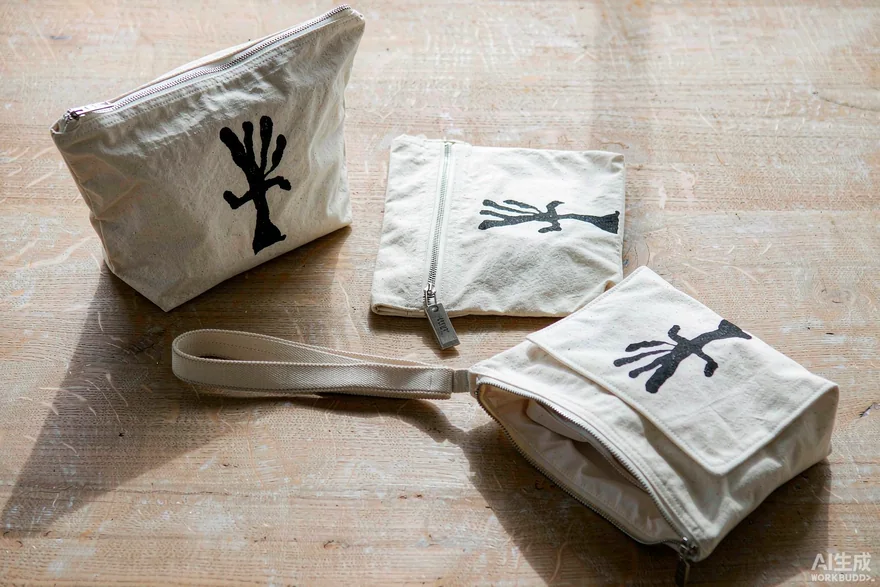
A coated or laminated fabric is a composite: a textile base that carries the load and a polymer layer that provides the surface. The three routes differ in how that polymer is applied. Polyurethane coating is a liquid resin spread on to the cloth by knife or roller and cured, with the optional wet-coagulation step that produces a microporous structure. Polyvinyl chloride coating uses a paste of resin, plasticiser, stabiliser and filler that is gelled in an oven. Thermoplastic elastomer lamination bonds an already-formed film to the cloth by heat and pressure, so no solvent is involved at all.
For a makeup bag the distinction shows up first in thickness and weight. A polyurethane coating runs 0.10-0.25 mm and brings the finished fabric to 180-320 g/m². Polyvinyl chloride paste is applied more heavily, 0.15-0.35 mm, and the fabric lands at 380-650 g/m². Thermoplastic elastomer film is 0.20-0.50 mm with a finished fabric of 260-450 g/m², and it has the lowest specific gravity of the three at 0.90-1.00 against 1.30-1.45 for polyvinyl chloride. On a 23 x 15 x 9 cm bag, that density difference alone can change the packed weight by 30-60 g.
The physical test language for these composites is standardised, which helps when a specification has to be enforced across more than one supplier. The methods collected under ASTM D751 cover coating adhesion, breaking strength, tear resistance, hydrostatic resistance and low-temperature bend for coated fabrics, and naming those methods in a tech pack converts adjectives into something measurable.
- PU: liquid resin spread and cured, 0.10-0.25 mm, fabric 180-320 g/m², no plasticiser required
- PVC: paste of resin, plasticiser and filler, gelled in an oven, 0.15-0.35 mm, fabric 380-650 g/m²
- TPE: pre-formed film bonded by heat and pressure, 0.20-0.50 mm, fabric 260-450 g/m², no solvent
- Specific gravity: TPE 0.90-1.00, PU 1.15-1.20, PVC 1.30-1.45 - it changes packed weight per carton
- All three waterproof adequately for a makeup bag; the real differences are wear, cold behaviour and chemistry
Performance Matrix: Where the Three Separate
Abrasion is the property that decides how a bag looks after a season in a handbag. Thermoplastic elastomer leads at 30,000-60,000 Martindale cycles under a 12 kPa load, followed by polyurethane at 20,000-40,000 and polyvinyl chloride at 12,000-25,000. Corners and the fold where a base gusset meets the front panel are where the difference appears, because those areas see repeated rubbing against hard objects rather than flat abrasion.
Low-temperature behaviour separates the three even more sharply. Plasticised polyvinyl chloride loses flexibility as the temperature falls and can crack at a mandrel bend around -5 to -10 °C, which is a genuine risk for container shipments on winter routes and for retail in cold climates. Polyurethane holds to roughly -20 to -30 °C, and thermoplastic elastomer to -30 to -40 °C. Specifying a low-temperature bend test at -10 °C is a cheap filter that removes most unsuitable polyvinyl chloride grades.
Elongation and recovery determine whether a bag creases permanently when it is packed flat for shipping. Thermoplastic elastomer at 400-800 percent elongation recovers best, polyurethane at 300-600 percent is adequate, and polyvinyl chloride at 150-300 percent tends to hold a crease. For a structured case that ships flat and must look right on a shelf within an hour of unpacking, this property matters more than abrasion.
| Property | PU coating | PVC coating | TPE lamination | Why it matters |
|---|---|---|---|---|
| Film thickness | 0.10-0.25 mm | 0.15-0.35 mm | 0.20-0.50 mm | Thicker films resist puncture but add weight |
| Finished fabric weight | 180-320 g/m² | 380-650 g/m² | 260-450 g/m² | Drives carton weight and freight |
| Martindale abrasion at 12 kPa | 20,000-40,000 cycles | 12,000-25,000 cycles | 30,000-60,000 cycles | Corner wear on a bag carried daily |
| Low-temperature bend | -20 to -30 °C | -5 to -10 °C risk | -30 to -40 °C | Winter transit and cold-climate retail |
| Elongation at break | 300-600 % | 150-300 % | 400-800 % | Crease recovery after flat packing |
| Plasticiser required | No | Yes, 20-40 phr | No | Source of odour and migration |
| Specific gravity | 1.15-1.20 | 1.30-1.45 | 0.90-1.00 | Grams per finished bag |
| Weld window | 160-200 °C | 150-190 °C | 130-170 °C | Radio-frequency and ultrasonic feasibility |
| Print compatibility | Screen, transfer, digital | Screen and solvent ink | Screen with pre-treatment | Logo method options |
| Material cost index | 1.0 | 0.75 | 1.9 | Material spend per unit |
Joining method interacts with material choice in a way that surprises buyers. All three are thermoplastic and can in principle be welded, but the processing windows differ: thermoplastic elastomer welds at 130-170 °C with a wide tolerance, polyurethane at 160-200 °C with resin-dependent results, and polyvinyl chloride at 150-190 °C while releasing hydrogen chloride if overheated. A supplier whose weld tooling is set up for one material will often substitute another without re-tuning, which produces seams that look fine and fail at 3-6 months.
Printability rounds out the decision. Polyurethane accepts screen printing, heat transfer and most digital methods without pre-treatment. Polyvinyl chloride needs solvent-based inks that can plasticiser-migrate and turn tacky. Thermoplastic elastomer has low surface energy and usually needs corona or flame pre-treatment to reach an ink adhesion of grade 4 or better on a cross-hatch tape test, which adds a process step and a small cost.
Chemical Profile and Compliance Exposure
Material selection in this category is increasingly driven by compliance questionnaires rather than by touch. The questions cluster around plasticisers, solvents, catalysts, pigments and halogens, and the answers differ by coating family. Polyvinyl chloride concentrates the most exposure because its formulation needs a plasticiser system and a heat stabiliser, both of which have historically been the source of restricted substances.
Restrictions on substances in articles placed on the EU market are administered under EU REACH, which covers authorisation, restriction and candidate-list declaration duties. Children's products sold in the United States face lead and phthalate limits under the Consumer Product Safety Improvement Act, which is relevant because a makeup bag marketed to teenagers may be classified as a children's product. Neither regime bans a coating family outright; both constrain what is in the formulation.
| Substance or issue | Coating most exposed | Rule or list to check | Practical control | Screening cost |
|---|---|---|---|---|
| Phthalate plasticisers | PVC | REACH Annex XIV, CPSIA section 108 | Non-phthalate plasticiser or switch to TPE | $150-$300 per material |
| Organotin catalyst residue | PU | REACH Annex XVII entry 20 | Catalyst declaration from the coating mill | $120-$250 |
| Short-chain chlorinated paraffins | PVC, flame-retarded grades | REACH and persistent organic pollutant rules | Avoid flame-retardant grades unless required | $180-$350 |
| Heavy metals in pigment | All three | CPSIA total lead and soluble limits | Pigment declaration with batch reference | $90-$180 per shade |
| Solvent residue | PU, wet-coagulated grades | REACH restriction, residue limits | Specify solvent-free or water-based PU | $100-$220 |
| Odour and volatile organic compounds | PVC and solvent PU | OEKO-TEX limit catalogue or in-house panel | Sealed jar at 40 °C for 24 hours | In-house, no charge |
Two controls cost almost nothing and prevent most problems. The first is a signed formulation declaration from the coating mill naming the resin, the plasticiser system and the pigment supplier, re-issued whenever a shade or grade changes. The second is a sealed-jar odour test at 40 °C for 24 hours assessed by a panel of three against a five-point scale, with grade 3 or better required. Odour is the single most common cause of a rejected first shipment in this category, and it is entirely preventable at sampling stage.
Screening strategy should follow the market rather than the material. A bag sold only into one market can be screened against that market's list and nothing more, which keeps the annual spend near $400-$600. A bag listed on a global marketplace will meet several lists at once, so the economical approach is to screen the highest common denominator once and to keep the report on file for every channel. Re-testing the same material for each retailer questionnaire is the most common unnecessary expense in this category.
End-of-life positioning is the other side of the same decision. Thermoplastic elastomer contains no chlorine and can often be recycled within a single polymer family, which supports a mono-material claim. Polyvinyl chloride complicates both recycling and any incineration statement because of its chlorine content and metal stabilisers. Polyurethane sits in between: recyclable in principle, but rarely collected in practice. A brand making a public recyclability claim should ask which polymer the claim applies to before it is printed.
Matching the Coating to the Programme
Selection works best backwards from the failure the buyer cannot afford. A promotional bag priced near the bottom of the typical $0.45-$12.00 unit band cannot carry a thermoplastic elastomer laminate at a cost index of 1.9; a polyvinyl chloride or light polyurethane coating is the only arithmetic that works, and the buyer should then spend the remaining budget on a clean, non-phthalate formulation. A premium case sold at several times that band should take the laminate, because the returned-goods cost of a cracked corner exceeds the material delta many times over.
Volume and colour count change the answer too. Polyurethane is available in almost any shade with a low minimum per colour, which suits a brand running 6-10 colourways at 500 pieces each. Polyvinyl chloride has wider colour minimums at the coating mill but cheaper tooling. Thermoplastic elastomer film is stocked in a narrower palette, so a custom shade can extend the sampling window and should be planned into the calendar.
- Budget programme, warm climate: PVC with a non-phthalate plasticiser, mandrel bend checked at -5 °C
- Mainstream daily-use bag: PU at 0.15-0.20 mm, Martindale 20,000 cycles or better, water-based grade
- Premium structured case: TPE lamination, 30,000 cycles or better, weld window 130-170 °C
- Teen or children's line: phthalate screening under CPSIA limits plus pigment heavy-metal declaration
- Recyclability claim: mono-polymer TPE construction with face, binding and lining in the same family
- Cold-climate retail: low-temperature bend at -20 °C, which usually eliminates standard PVC grades
Conversion details also differ between the three and belong in the costing conversation. Polyvinyl chloride at 380-650 g/m² needs a heavier needle and slower feed, and it blunts cutting knives faster than a lighter cloth. Thermoplastic elastomer film can slip under the presser foot unless a Teflon or roller foot is used, which slows the line. Polyurethane is the easiest of the three to cut and sew and is one reason it remains the default for a first programme even where a laminate performs better.
Qualification should be run once per material and per supplier rather than per order. A sensible package costs $400-$900 in total: coating adhesion, Martindale abrasion at 12 kPa, low-temperature bend, rub fastness dry and wet under ISO 105 colour fastness methods, and a plasticiser or solvent screen. Reports remain valid for 12 months or until the mill changes, and the cost is trivial against a rejected shipment.
Commercial terms are constant across the three materials. Minimums are 500 pieces per style and colourway, sampling takes 6-10 working days and 12-15 working days for complex constructions such as a welded case with a laminated film, and bulk production takes 35-50 days after sample approval. Final inspection runs at AQL 2.5 under ISO 2859-1, shipment is FOB Xiamen, and payment is T/T 30 deposit with 70 against the bill of lading.
The last piece of advice is the least technical and the most useful: approve a physical reference swatch and keep two signed copies, one with the buyer and one with the programme coordinator. Coated fabrics drift between production runs in thickness, gloss and hand, and no written specification captures gloss. A retained swatch turns a subjective argument about whether a shipment matches into a comparison against an agreed standard.
The B2B Customisation View
The route from concept to shelf for makeup bags and toiletry bags is short when the specification is tight at the start, and painfully long when it is not.
Fixed commercial parameters: 500 pieces per style and colourway minimum, first sample in 6–10 working days (12–15 for complex or hardware-intensive constructions), bulk 35–50 days after approval, AQL 2.5 inspection under ISO 2859-1, FOB Xiamen, T/T 30/70.
The role played here is programme coordinator: QUANZHOU JUNYUAN BAGS translates a retail brief into a factory-ready technical pack and then audits the output against it before goods leave the floor.
Which Brand Types Benefit Most
Start-up brands usually optimise for unit cost and speed, which points to a water-based polyurethane at 0.15-0.20 mm: Martindale around 20,000 cycles, no plasticiser questions, and a colour range wide enough for a six-colourway launch at 500 pieces each. The risk to manage is gloss drift between the approved sample and bulk, so a retained reference swatch and a gloss check at inspection are worth more to a young brand than another laboratory report.
Established brands and retailers tend to have a restricted-substance list already, and the coating decision becomes a question of which family produces the cleanest answer to it. Thermoplastic elastomer answers almost every question favourably and supports a mono-material recyclability claim, at a material cost index of 1.9. Retailers selling into cold-climate markets should treat the low-temperature bend result as a listing requirement, because a cracked corner discovered in store is a markdown rather than a return.
- Start-up brands: water-based PU, wide shade range, retained gloss swatch, 500 pieces per colourway
- Established brands: TPE for clean compliance answers and mono-material claims
- Retailers: low-temperature bend written into the listing requirements for cold-climate stores
- E-commerce sellers: abrasion life and crease recovery, since both drive the review photography
- Gift and hospitality buyers: PVC at a 0.75 cost index for large single-colour runs, with an odour screen at 40 °C
E-commerce sellers occupy a middle position and should decide on abrasion and crease recovery rather than on chemistry. A bag that arrives creased from flat packing photographs badly, which costs more in conversion than a coating upgrade costs in unit price; thermoplastic elastomer at 400-800 percent elongation recovers best, and polyurethane at 300-600 percent is usually adequate. Where the range is shot on white within an hour of unpacking, that property deserves more weight in the decision than the restricted-substance questionnaire.
Across all five buyer types the same three documents resolve most disputes: a signed formulation declaration, a screening report with per-substance results, and a retained reference swatch for gloss and hand. None of the three costs more than a few hundred dollars, and together they convert a subjective argument about whether a shipment matches into a comparison against an agreed standard.
Frequently Asked Questions
Which coating gives the longest life on a makeup bag carried every day?
Thermoplastic elastomer lamination, at 30,000-60,000 Martindale cycles under a 12 kPa load, roughly doubles the life of a standard polyvinyl chloride coating. Polyurethane sits between the two at 20,000-40,000 cycles. The difference first appears at the corners and at the fold where the base gusset meets the front panel, so those areas should be inspected on an aged sample.
Why does PVC coating crack on winter shipments?
Polyvinyl chloride needs 20-40 parts of plasticiser per hundred resin to stay flexible, and the plasticiser system stiffens as temperature falls. Standard grades can crack at a mandrel bend around -5 to -10 °C. A container on a winter route and a cold-climate shop both reach that range, so a low-temperature bend test at -10 °C should be written into the specification.
Is phthalate-free PVC genuinely available for cosmetic bags?
Yes. Non-phthalate plasticiser systems based on terephthalates, citrates or bio-based esters are widely used and perform acceptably for a bag that is not flexed in the cold. The buyer should still ask for a formulation declaration naming the plasticiser and a screening report, because non-phthalate claims are only as good as the document behind them.
How much does switching from PVC to TPE add to unit cost?
On material cost indices, polyvinyl chloride sits near 0.75 and thermoplastic elastomer near 1.9, so the raw material roughly doubles. On a finished bag that usually translates to a smaller increase, because material is one line among cutting, sewing, trim and packing. The relevant comparison is against the cost of returned goods, not against the material line alone.
Can all three coatings be radio-frequency welded?
In principle yes, but the windows differ: thermoplastic elastomer welds at 130-170 °C with a wide tolerance, polyurethane at 160-200 °C with resin-dependent results, and polyvinyl chloride at 150-190 °C while releasing hydrogen chloride if overheated. Tooling set for one material and run on another produces seams that pass visual inspection and fail within three to six months.
What coating adhesion value should a specification require?
A common acceptance is 12 N or more per 25 mm after five conditioning cycles, tested by the coated fabric methods in the ASTM D751 family. Adhesion below that shows up as peeling at the corners after a few weeks of use. It should be tested on the actual colourway, because pigment loading changes adhesion between shades.
Does TPE lamination accept a printed logo?
It does, but low surface energy means pre-treatment is normally needed. Corona or flame treatment before screen printing brings ink adhesion to grade 4 or better on a cross-hatch tape test. Without treatment, a logo can look perfect at sampling and rub off in transit, so the tape test should be run at approval stage rather than assumed.
Which coating is lightest for a travel makeup case?
Thermoplastic elastomer, with a specific gravity of 0.90-1.00 against 1.15-1.20 for polyurethane and 1.30-1.45 for polyvinyl chloride. On a 23 x 15 x 9 cm case the difference can be 30-60 g of packed weight, which matters for a brand that quotes shipping weight on a product page or sells into an airline-friendly range.
What causes the smell in a new coated makeup bag?
Usually residual solvent or plasticiser volatility rather than the base polymer. Solvent-based polyurethane and plasticised polyvinyl chloride are the two most exposed. The screen is a sealed jar held at 40 °C for 24 hours, assessed by a panel of three on a five-point scale, with grade 3 or better required before bulk is released.
How should a buyer handle a recyclability claim on a coated bag?
Ask which polymer the claim covers. Thermoplastic elastomer contains no chlorine and can often be recycled within a single polymer family, especially if face, binding and lining are the same material. Polyvinyl chloride complicates the statement because of chlorine and metal stabilisers. A claim printed without that check is the kind that attracts complaints.
Is a solvent-free PU coating as durable as a solvent-based one?
Modern water-based and solvent-free polyurethane grades reach Martindale results of 20,000-35,000 cycles, close to solvent-based equivalents, and they remove the solvent residue question entirely. They can be slightly less flexible on tight folds, so a fold test on the actual pattern is worth adding for a structured case with a folded base gusset.
What does a full material qualification package cost?
Budget $400-$900 for coating adhesion, Martindale abrasion at 12 kPa, low-temperature bend, dry and wet rub fastness, and a plasticiser or solvent screen. Reports are valid for 12 months or until the coating mill changes. That spend is small against the cost of a rejected shipment, which is why it belongs in the sampling window.
How does colour count affect the coating choice?
Polyurethane offers the widest shade range with low minimums per colour, which suits a launch of 6-10 colourways at 500 pieces each. Thermoplastic elastomer film is stocked in a narrower palette, so a custom shade can extend the sampling window beyond the standard 6-10 working days and should be planned into the calendar.
Do pigment choices affect compliance screening?
They do. Heavy-metal limits under children's product rules apply to pigments and to prints, and a bright red, orange or yellow shade carries more screening exposure than a neutral tone. A pigment declaration with a batch reference costs $90-$180 per shade and is the fastest way to answer a retailer questionnaire on a colour-critical style.
What happens if a bulk coating fails the low-temperature bend test?
There is no rework for a formulation problem in finished goods: the coating cannot be changed after cutting and sewing. Under AQL 2.5 the lot would be rejected on a major defect, and the remedy is a re-make with a different grade. This is precisely why the bend test must be run at sampling rather than discovered at final inspection.
Is PVC still the right choice for a large promotional run?
Often yes. At a cost index near 0.75 it is the cheapest of the three and gives an acceptable hand for a one-season gift or amenity bag used in warm conditions. The conditions are a non-phthalate formulation, an odour screen at 40 °C, and acceptance that the bag has a shorter service life than a polyurethane equivalent.
People Also Ask
Which is better for a makeup bag, PU or PVC?
Polyurethane wins on most axes that matter: no plasticiser, Martindale abrasion of 20,000-40,000 cycles against 12,000-25,000, and flexibility to -20 or -30 °C. Polyvinyl chloride is about 25 percent cheaper on material and perfectly serviceable for a promotional bag used in warm conditions, provided a non-phthalate formulation is specified.
Is TPE the same as TPU?
No, though both are thermoplastic elastomers in the broad sense. Thermoplastic polyurethane is a specific chemistry giving high abrasion and elastic recovery, while thermoplastic elastomer in the bag trade usually refers to olefin-based blends that are lighter and softer with a specific gravity near 0.90-1.00. Ask the mill which one is being quoted.
Why do some coated bags go sticky after a year?
Plasticiser migration or polyurethane hydrolysis. Plasticised polyvinyl chloride exudes plasticiser over time, leaving a tacky surface; polyester-based polyurethane breaks down under humidity and heat, which can be checked by holding specimens at 70 °C and 95 percent relative humidity for 7-14 days before bulk.
Can a coated fabric bag be recycled?
Only if the construction is mono-polymer. A thermoplastic elastomer bag whose face, binding and lining are all in the same family can be recycled in principle. Mixing a polyvinyl chloride face with a polyester lining and a nylon zipper makes separation impractical, so a recyclability claim should be checked against the full bill of materials first.
Request a Sample or a Written Quotation
Send the silhouette, dimensions, material preference and logo artwork, and the programme team will return a written quotation with MOQ, sampling window, bulk lead time and inspection standard.
Email: service@junyuanbags.com · WhatsApp: +86 177 5002 0688