Promotional Cosmetic Bags: Marketing ROI & Brand Exposure
Executive Summary
Promotional cosmetic bags generate brand exposure through repeated use rather than through a single impression, and the exposure a buyer gets is an estimate built from three inputs: landed unit cost, retention period and impressions per use. None of those can be quoted as a universal figure, because they depend on distribution channel, bag quality and audience. This guide sets out the framework and labels every number in it as illustrative arithmetic rather than measured result.
The model is simple and worth doing before artwork is commissioned. Divide landed unit cost by the product of retention months and monthly uses to reach a cost per use, then divide again by the number of people who see the bag per use to reach a cost per impression. The comparison that matters is against the alternative use of the same budget. A custom promotional programme starts at 500 pieces per style and colourway, samples in 6-10 working days and runs bulk in 35-50 days.
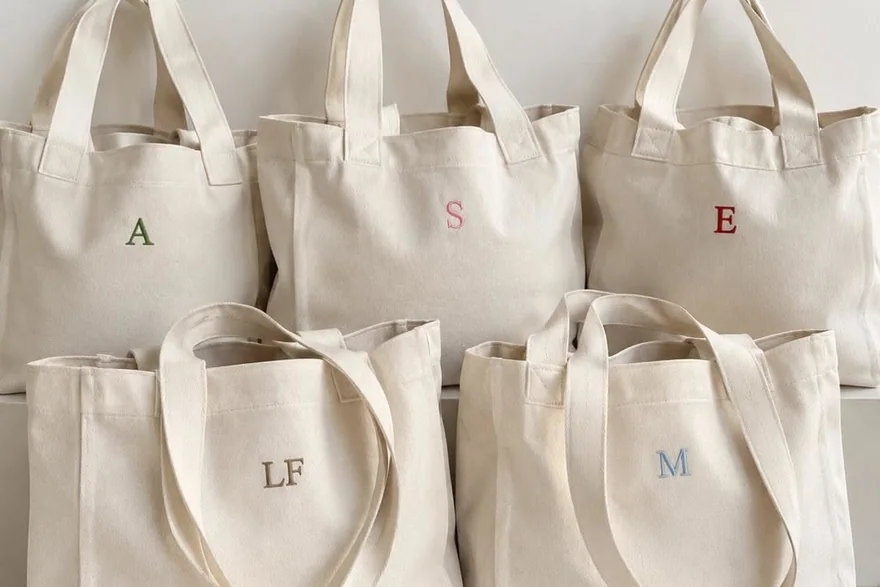
What promotional cosmetic bags are and where they circulate
A promotional cosmetic bag is a bag given away rather than sold, carrying a logo or campaign message, and distributed to create brand contact rather than margin. Five distribution channels account for nearly all volume: gift-with-purchase at a beauty counter or in an e-commerce order, event and trade-show handout, hotel and spa amenity, corporate gifting, and influencer or press seeding kits.
Each channel produces a different exposure profile, which is the reason a single return figure cannot be quoted for the category. A gift-with-purchase pouch goes to someone who has already bought, stays in a bathroom and is seen daily by its owner. An event handout goes to a stranger, is often discarded within hours, and is seen by a crowd for one day. The same bag, printed identically, has entirely different economics in those two channels.
Unit economics set the boundary. Marketplace pricing for cosmetic bags runs roughly $0.45 to $12.00, and the promotional band sits in the lower half of that range, typically $0.70 to $3.50 landed depending on quantity, fabric and print. At the bottom, a nonwoven pouch is a one-event object; at the top, a printed 420D pouch with a decent zipper is kept and used, which is where the exposure model becomes interesting.
The category also has a documentation dimension that giveaway buyers underestimate. A promotional bag is still a consumer product, and it is distributed at volume, often internationally, and sometimes to children. Compliance and claim substantiation therefore apply as they would to a retail bag, which is the subject of the last section of this guide.
The bag itself is only one variable. Four things determine what a promotional programme delivers: who receives it, in what setting it is used, how long it is kept, and how many other people see it. Only the first is under direct control at the point of distribution, which is why channel selection deserves more attention in the brief than bag selection does.
The exposure estimation framework
Exposure is estimated, not measured, and the honest way to present it is to name each input, state the assumption behind it, and show the arithmetic. The four inputs are landed unit cost, retention period in months, uses per month, and observers per use. Everything else in the model is derived from those four.
| Input | What it covers | How to set it | Illustrative value only |
|---|---|---|---|
| Landed unit cost | Unit price plus freight, duty and handling | From the actual quotation for the actual quantity | $1.40 per unit |
| Retention period | Months the bag stays in service | From channel norms, then measured by survey | 18 months |
| Uses per month | Times the bag is opened and seen by the owner | From channel norms; daily use is 20 to 30 | 22 uses |
| Observers per use | People other than the owner who see it | From setting: bathroom 1, gym or travel 3 to 6 | 1.4 observers |
| Derived: cost per use | Landed cost divided by total uses | Arithmetic from the rows above | About $0.0035 |
| Derived: cost per impression | Cost per use divided by observers | Arithmetic from the rows above | About $0.0025 |
The arithmetic behind those derived rows is shown so the method is clear, and every figure is illustrative. Landed cost of $1.40 across a retention period of 18 months at 22 uses per month gives 396 uses in service, which is $0.0035 per use. Divided by 1.4 observers per use, that is roughly $0.0025 per impression. These are not measured results. They are what the model produces from the stated assumptions, and changing any one assumption changes the output proportionally.
Sensitivity is the point of doing this at all. Hold cost and observers constant and move retention from 18 months to 6, and the cost per impression roughly triples. Move observers from 1.4 to 4 by choosing a travel or gym distribution instead of a bathroom-only one, and the cost per impression falls by about two thirds. Those two levers, retention and setting, are worth more than negotiating a further five cents off the unit price.
Buyers should also decide in advance what they are comparing against. A cost-per-impression figure is only meaningful next to the alternative use of the same budget, whether that is paid social at a known cost per thousand, a discount, or a sample sachet. A promotional bag that produces a higher nominal figure than paid media may still win on recall and on useful life, but that is a judgement the buyer makes explicitly rather than one the model makes.
The framework also runs backwards. If a buyer knows the cost per impression a campaign has to beat, the model can be inverted to show what retention period or observer count would be required at a given unit cost. That is a more honest use of the arithmetic than producing a favourable number from optimistic inputs, and it usually shows that the channel, rather than the bag, is the decision that matters.
Two inputs deserve a note of caution. Uses per month is difficult to observe and is usually overestimated, and observers per use changes if the bag is used somewhere other than intended. Both should be stated as ranges in any internal document rather than as single values, so that the output is presented as a band rather than as a point estimate.
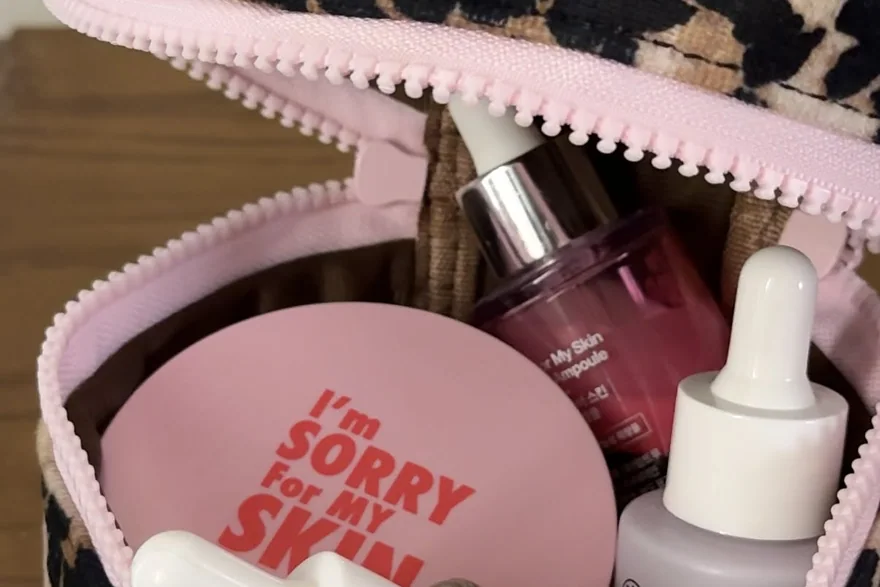
Cost per impression: building the model without inventing data
The discipline that separates a usable estimate from a marketing number is that every input has a source. Where no internal data exists, the assumption should be stated as an assumption and the output labelled illustrative. The checklist below is what a buyer should be able to produce for any promotional bag programme.
- Source each input: landed cost from the quotation, retention and uses from a channel norm or a small owner survey, observers from the setting in which the bag is used.
- Label the output: any figure produced from assumed inputs is illustrative arithmetic, not a measured result, and should be presented that way internally and externally.
- Run a sensitivity band: recalculate at the low and high end of each assumption, because the spread between them is more informative than the central case.
- Compare against a named alternative: the same budget spent on paid media, discounting or sampling, with its own cost per thousand stated.
- Measure retention afterwards: a QR code, a short survey or a redemption code attached to the first campaign converts an assumption into data for the second.
- Count what is countable: units distributed, units redeemed, units mentioned in reviews or social posts, rather than impressions inferred from a model.
The most common error is treating retention as a property of the bag when it is a property of the channel and the recipient. A well-made pouch handed to a stranger at a trade show has a short retention because there is no relationship; the same pouch given as a gift-with-purchase to someone who has just spent money with the brand has a long one because the object is associated with a purchase decision already made.
Quality moves retention but with diminishing returns, and the relationship is not linear. Moving from a nonwoven pouch to a printed polyester pouch changes the retention assumption substantially; moving from a good polyester pouch to a premium one changes it much less, while moving unit cost considerably. Buyers should locate the point at which additional spend stops buying additional retention, and it is usually lower than intuition suggests.
Measurement after the campaign is what makes the second campaign better. The cheapest instrument is a short URL or QR code printed on the care label rather than on the outer face, so it does not compete with the logo; a redemption code tied to a refill or a repurchase discount also works. Both convert the retention assumption into a number that can be carried into the next model.
A worked sensitivity is more persuasive than a single figure. Taking the illustrative case in the previous section and holding cost and observers constant while moving retention across 6, 12 and 24 months, the cost per impression falls by roughly half from 6 to 12 months and by roughly half again from 12 to 24. Those are arithmetic consequences of the stated assumptions rather than findings about any campaign, and they show where the leverage sits.
The same band should be run on observers. Moving distribution from a home bathroom to a gym or a workplace washroom changes the observer assumption by a factor of three or more, which is usually a larger effect than any quality upgrade available at the same budget.
Specification, compliance and programme timing for giveaway bags
A giveaway bag is still a consumer product, and the two compliance lines that matter most are chemical compliance in the destination market and child-safety rules where the bag may reach children. Both should be settled before artwork is locked, because both can change the material choice.
| Requirement | Where it applies | What to obtain | When to settle it |
|---|---|---|---|
| Chemical substances | EU and UK placements | REACH conformity statement covering the article | Before fabric is booked |
| Restricted substances | Most retail and marketplace buyers | OEKO-TEX Standard 100 certificate for the article | At sample stage |
| Child-safety rules | United States placements, bags for under-12 audiences | CPSIA lead and phthalate test report | Before the first shipment |
| Recycled content | Any recycled claim on pack | GRS transaction certificate for the lot | Before print artwork is final |
| Country of origin | Customs and marketplace listings | Origin marking consistent with the shipping documents | Before packing |
| Print durability | Any branded giveaway | Crocking and wash fastness result for the print | At sample stage |
In the European Union, chemical substances in articles fall under REACH, and a supplier conformity statement covering the article is the document a buyer should hold. In the United States, where a promotional bag is intended for or likely to reach children, the Consumer Product Safety Improvement Act sets lead and phthalate limits that require testing and a children's product certificate.
Print method follows quantity and artwork. Screen printing suits one or two spot colours at volume and is durable on polyester; heat transfer suits photographic artwork and short runs but sits on the surface; a woven label or a rubber pull badge adds perceived value at a modest unit cost and survives washing better than most prints. Where the bag carries a QR code, it should be printed on the care label or the inner face so it does not compete with the logo.
Timing is the practical constraint on most campaigns. A promotional cosmetic bag programme starts at 500 pieces per style and colourway, sampling takes 6-10 working days for a standard printed pouch and 12-15 working days where laminated fabric, moulded components or multi-process printing are involved, and bulk production runs 35-50 days after sample approval. Shipment is on FOB Xiamen terms with payment by T/T, 30% deposit and 70% against bill of lading, and inspection to AQL 2.5 under ISO 2859-1.
Country of origin marking should be agreed before packing rather than at customs. The origin statement on the product, on the carton and in the shipping documents has to agree, and a mismatch produces a customs hold rather than a paperwork correction. Where a programme ships to more than one market, the marking requirement for each should be listed on the purchase order.
Print durability is the defect most likely to appear after distribution rather than at inspection. A logo that crocks onto hands or lifts after handling generates complaints attributed to the brand rather than to the bag, so a crocking and wash fastness result on the printed article belongs in the sample approval pack. It is a cheap test, it takes days rather than weeks, and it protects the one asset a promotional programme is actually buying.
The B2B Customisation View
What separates a smooth cosmetic pouches, vanity cases and beauty organisers launch from a painful one is usually the quality of the technical pack rather than the price of the fabric.
Planning figures used across the programme: MOQ 500 pieces per style and colourway, 6–10 working days sampling (12–15 when moulding or multi-layer lamination is required), 35–50 days bulk lead time, AQL 2.5 to ISO 2859-1, FOB Xiamen, T/T 30/70.
QUANZHOU JUNYUAN BAGS keeps the relationship deliberately narrow: specification control, sampling, inspection and logistics coordination, all documented against the buyer's own standard.
Which Brand Types Benefit Most
Promotional programmes are run by all five buyer types with different success criteria. Start-up brands use a printed pouch as a low-cost gift-with-purchase that turns a first order into a repeat one, and their exposure model should be built around retention among existing customers rather than around reach. Established brands run promotional bags as part of a campaign calendar, where the bag has to match the seasonal artwork and arrive before a fixed date, which makes programme timing the dominant risk. Retailers and wholesalers use them as basket-building incentives and need the unit cost modelled against margin rather than against media. E-commerce sellers include a printed pouch in the parcel as a review-generation tool, and for them the meaningful metric is the change in repeat purchase rate, not an impression count. Gift and hospitality buyers, including hotels, airlines and corporate gifting programmes, distribute at volume and on a fixed calendar, so their priorities are consistent supply, clean presentation and compliance documentation that clears an internal review. QUANZHOU JUNYUAN BAGS coordinates promotional programmes for all five from a sourcing and programme-management position, with bag development and export experience since 2004 and SGS-verified production floor space of 4,950 m2 across 7 production lines and 149 machines, monthly output capacity of 200,000 pieces; enquiries go to service@junyuanbags.com.
- Start-up brands: model retention among existing customers rather than reach among strangers.
- Established brands: treat campaign launch dates as the dominant risk and build in the longer sample lead time.
- Retailers and wholesalers: model unit cost against basket margin, not against media benchmarks.
- E-commerce sellers: measure the change in repeat purchase rate rather than an impression count.
- Gift and hospitality buyers: prioritise calendar reliability, presentation and compliance documentation.
- All five: any exposure figure produced from assumed inputs should be labelled illustrative and never reported as a measured campaign result.
Frequently Asked Questions
What unit cost band applies to a promotional cosmetic bag?
Typically $0.70 to $3.50 landed, inside a wider marketplace band of about $0.45 to $12.00 for cosmetic bags generally. Position depends on fabric, print and quantity: a nonwoven pouch with a one-colour print sits near the bottom, and a 420D polyester pouch with a woven label and a branded pull sits near the top. Freight and duty should be included, because they move the figure more than most buyers expect.
How is cost per impression calculated for a giveaway bag?
Divide landed unit cost by the total number of uses across the retention period, then divide by the number of observers per use. Using the illustrative values in this guide: $1.40 over 18 months at 22 uses per month gives 396 uses, or about $0.0035 per use, and dividing by 1.4 observers gives roughly $0.0025 per impression. Those inputs are assumptions, so the output is illustrative arithmetic.
What retention period should a model assume for a promotional cosmetic bag?
There is no universal figure, and assuming one is the main way these models go wrong. A reasonable starting assumption is six months for an event handout to strangers and 18 to 24 months for a gift-with-purchase going to an existing customer. The assumption should be replaced by measured data after the first campaign, using a QR code, a survey or a redemption code.
How many impressions per use should be assumed?
Between 1 and 6 depending on setting, and it should be set from where the bag is used rather than from the category. A pouch kept in a home bathroom is seen by its owner, so about 1 to 1.5 observers per use. A pouch carried to a gym, a workplace washroom or on travel is seen by several people, so 3 to 6. The setting is a distribution decision, not a bag decision.
Which distribution channel produces the longest retention for a promo bag?
Gift-with-purchase to an existing customer, because the recipient has already made a purchase decision and the object is associated with it. Corporate gifting to employees and hotel amenity programmes also produce long retention within their own contexts. Event and trade-show handouts produce the shortest, because there is no prior relationship and many bags are discarded on the day.
Does a higher-quality promotional bag improve retention in the model?
Yes, but with diminishing returns. Moving from a nonwoven pouch to a printed polyester pouch with a working zipper moves the retention assumption substantially. Moving from a good polyester pouch to a premium one moves retention much less while raising unit cost considerably. Locating that inflection point is more valuable than optimising the unit price alone.
What print method suits a one-colour logo on a polyester pouch?
Screen printing for volume, because it bonds well to polyester, is durable through handling and washing, and is economical at 500 pieces and above. Heat transfer suits photographic or multi-colour artwork and shorter runs, and sits on the surface rather than in it. A woven label or a branded rubber pull adds perceived value and outlasts most prints on a bag that gets handled daily.
Which compliance documents apply to a promotional cosmetic bag in the EU?
A REACH conformity statement covering the article is the core document, and most retail and marketplace buyers additionally ask for an OEKO-TEX Standard 100 certificate for the finished article rather than for the fabric. If a recycled-content claim appears on the packaging, a GRS transaction certificate for the specific lot is also required. All three should be requested before the fabric is booked.
Which United States rules apply to a promotional bag given to children?
The Consumer Product Safety Improvement Act sets limits on lead and certain phthalates for children's products and requires testing and certification. Whether a bag falls in scope depends on its intended use and audience, so the decision should be made before the first shipment rather than after. Children's-product testing should be commissioned on the finished article with its print and hardware.
What minimum applies to a printed promotional cosmetic bag?
500 pieces per style and colourway. A two-colourway campaign is therefore 1,000 pieces in total if both colourways are required, which is worth noting when budgeting. Print setup costs are usually amortised into the unit price at this quantity, so the effective minimum is also the point at which most print methods become economical. Sampling takes 6-10 working days for a standard printed pouch and 12-15 working days for laminated or multi-process work.
How long does a promotional bag programme take from artwork to delivery?
Sampling takes 6-10 working days for a standard printed pouch and 12-15 working days where lamination, moulding or multi-process printing is involved, and bulk production runs 35-50 days after sample approval. Freight on top of that depends on mode and destination. A campaign with a fixed launch date should be planned from the longest figure rather than from the shortest.
Should a promotional bag carry a QR code or a woven label?
Both, for different jobs. The woven label carries the brand and is what is seen in use; the QR code is a measurement instrument and is better placed on the care label or the inner face so it does not compete with the logo. A code tied to a repurchase discount or a refill offer converts the retention assumption into data for the next campaign.
How is a promotional bag packed for event distribution?
Bulk packed in inner cartons of 50 to 100, nested rather than stacked, with pulls aligned so they do not press into adjacent panels, and delivered to the venue with a count per carton that matches the distribution plan. Individually polybagged only where the bag is handed to a consumer directly; bulk packing is cheaper and faster for high-volume handout.
How should a buyer measure whether a promo bag programme worked?
Count what is countable rather than what is modelled: units distributed, codes redeemed, repeat purchase rate among recipients against a control group, and review or social mentions carrying the bag. Modelled impressions are useful for planning a campaign and should not be reported afterwards as a result. A redemption instrument turns the planning assumption into measured data.
What is the difference between a giveaway bag and a retail gift-with-purchase bag?
A giveaway bag goes to anyone, is optimised for unit cost and reach, and has no relationship behind it. A gift-with-purchase bag goes to a paying customer, is optimised for perceived value and retention, and sits inside a purchase decision already made. The second usually justifies a higher unit cost because the retention and repeat-purchase assumptions behind it are stronger.
People Also Ask
Are promotional cosmetic bags effective marketing?
They are effective where the recipient keeps and uses them, which makes the distribution channel more important than the bag. A pouch given to an existing customer as a gift-with-purchase has a much stronger retention assumption than the same pouch handed out at an event. Buyers should model the channel first and treat the bag quality as a secondary lever with diminishing returns.
How much do promotional cosmetic bags cost?
Typically $0.70 to $3.50 landed per unit depending on fabric, print method and quantity, within a wider cosmetic bag marketplace band of about $0.45 to $12.00. Freight and duty should be added before any comparison. At 500 pieces per style and colourway, print setup is usually amortised into the unit price rather than charged separately. Sampling takes 6-10 working days and bulk runs 35-50 days after approval.
What makes a promotional bag get kept rather than thrown away?
Usefulness first: a working zipper, a wipe-clean lining and a size that fits a real set of contents. Material quality second, because a bag that looks disposable is treated as disposable. Design restraint third, since a bag with a large logo is kept less often than one with a small mark that reads as a product rather than an advertisement.
How do you measure brand exposure from a giveaway bag?
By counting what can be counted: units distributed, codes redeemed, repeat purchase rate among recipients compared with a control, and mentions in reviews or social posts. Impressions from a model are a planning tool built from assumed retention, uses and observers, and should be labelled illustrative rather than reported as a measured result. A QR code on the care label and a redemption code tied to a repurchase discount are the two cheapest instruments for turning an assumption into data.
Request a Sample or a Written Quotation
Send the silhouette, dimensions, material preference and logo artwork, and the programme team will return a written quotation with MOQ, sampling window, bulk lead time and inspection standard.
Email: service@junyuanbags.com · WhatsApp: +86 177 5002 0688