People Also Ask: Can I Put My Logo on a Cosmetic Bag?
Executive Summary
Yes, a logo can be put on a cosmetic bag, and there are seven realistic ways to do it: screen printing, heat transfer, digital sublimation, direct digital print, embroidery, debossing or embossing, and applied identification such as woven labels, metal plates or leather patches. Each method has its own substrate constraints, colour limits and durability profile, and the right choice depends on the shell material, the artwork complexity, the placement available on the panel and the quantity ordered. Getting that match wrong is the single most common cause of a rejected decorated sample.
The two other answers buyers need are about colour and about rights. Colour matching on fabric is never identical to a paper proof, because ink sits on a textured surface and fastness is measured by standard rubbing and washing tests rather than by eye. And trademark clearance sits with the brand owner: registering artwork rights, obtaining written permission for any mark not owned outright, and holding that evidence on file is entirely the buyer's responsibility, not something a sourcing partner can assume on their behalf.
What putting a logo on a cosmetic bag actually involves
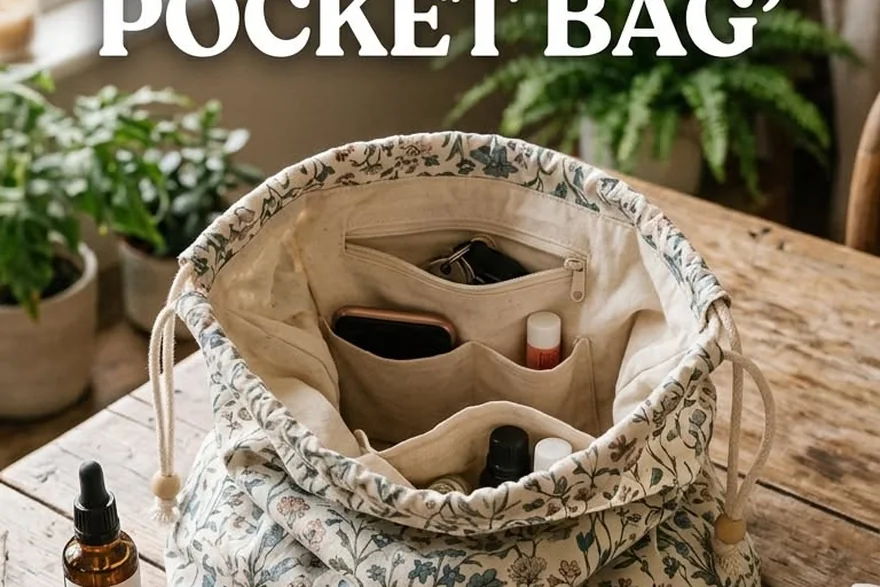
Yes. A logo, wordmark, monogram or seasonal artwork can be applied to a cosmetic bag, makeup pouch, toiletry bag or moulded vanity case, and it is standard practice rather than a special request. Every programme in this category of 500 pieces per style and colourway includes some form of brand identification. The interesting questions are therefore not whether branding is possible but which method suits the substrate, how well that method survives contact with cosmetics, and who owns the right to reproduce the mark in the first place.
Branding works outward from the construction. On a sewn 600D polyester pouch, the front panel carries print or embroidery, the side seam carries a woven label, and the zipper can carry a printed tape or a custom pull. On a PU wipe-clean vanity case the same front panel rejects most print inks and instead takes a debossed die, a heat-transfer film or a riveted metal plate. Choosing the bag before choosing the decoration almost always produces a compromise later.
- Substrate first: polyester, nylon, canvas, PU, TPU-coated fabric and EVA skin each accept a different set of methods.
- Artwork type second: spot-colour marks suit screen print; photographic or gradient artwork suits transfer or sublimation.
- Placement third: flat panels accept almost anything; seams, curves, gussets and webbing restrict most methods.
- Durability fourth: a logo inside a bag that meets lipstick, foundation and cleanser has to be tested, not admired.
- Rights fifth: clearance is always the brand owner's task, and it must be evidenced in writing.
Placement deserves more thought than it usually gets. A logo centred on the front panel is the standard answer, but alternatives include a small offset mark at the lower right, a repeating pattern printed across the whole shell, a woven label inserted in a side seam, branding printed onto the lining, a printed zipper tape, a rubberised zip pull, and external swing tags or belly bands supplied separately from the bag. Each position has a different minimum printable area and different abrasion exposure.
Finally, the practical sequence runs: choose the shell material, confirm which methods that shell accepts, prepare artwork in the right file format for the chosen method, apply it to a sample, then evaluate appearance and durability on that physical sample. Buyers who reverse the order by designing artwork before the bag exists usually find either the surface cannot hold the detail or the colour that matters cannot be reproduced.
Decoration methods compared: what each can and cannot do honestly
The honest starting point is that no method does everything. Screen printing gives crisp edges and excellent rub resistance but struggles with gradients. Heat transfer handles gradients well but dislikes seams and deep curves. Sublimation produces photographic results yet only works on polyester. Embroidery outlasts everything but stiffens light fabric and costs more per unit. Reading the trade-offs in one place prevents the most common disappointment, which is a beautiful logo on the wrong substrate.
| Method | Works on | Colour limits | Durability in service | MOQ and cost implication |
|---|---|---|---|---|
| Screen print, plastisol or water-based ink | Polyester, nylon, cotton canvas, TPU-coated fabric | Spot colours, typically 1-4; each colour needs a separate screen | Strong abrasion and wipe resistance when properly cured | Low set-up plus a screen charge per colour; most economical across a 500-piece run |
| Heat transfer vinyl or printed film | Polyester, PU, some nylon; flat panels preferred | Spot colours plus gradients and fine-line detail | Good, though edges can lift over seams or tight curves | Low set-up, higher consumable cost per piece; suited to personalisation |
| Digital sublimation | Polyester fabric and poly-coated panels only | Full colour, photographic artwork, no white ink | Excellent on polyester; transfers into the fibre rather than sitting on it | No screens; economical for full-colour panels; unusable on cotton or PU |
| Direct digital print, DTG or UV | Coated fabrics, PU panels, some canvas | Full colour including white, fine gradients | Good; may need a protective finish in high-abrasion zones | Moderate set-up; practical for detailed artwork or smaller quantities |
| Embroidery | Woven fabric from roughly 210D upward, canvas, quilted panels | Thread colours, usually up to 8-12 per design | Outstanding; resists abrasion and cleaning for years | Digitising fee plus stitch-count pricing; highest unit cost of the common methods |
| Deboss or emboss | PU leather, PVC, thick EVA skins | No added colour unless foil is added; relies on shadow | Permanent deformation; best on flat structured panels | Metal die cost; attractive once amortised over repeat runs |
| Woven label or woven patch | Any construction that accepts a sewn component | Woven thread colours, commonly up to 8 | Excellent against laundering and abrasion | Weaving set-up plus per-piece cost; practical at low volume too |
| Metal plate or leather patch | PU panels, webbing tabs, structured cases | Etched or enamelled metal, leather with foil or deboss | Very good; adds perceived value and some weight | Tooling for plates; unit cost among the highest options |
Cost structure is where buyers most often misread a quotation. Screen pricing divides into a fixed preparation element and a variable per-piece element, so unit cost falls quickly as quantity rises across the 500-piece minimum. Embroidery reverses some of that logic: there is little fixed cost beyond digitising, but the running cost scales with stitch count, so a dense 28,000-stitch crest costs several times a sparse 6,000-stitch wordmark regardless of quantity. Asking which element dominates tells a buyer where negotiation has any room.
Minimum quantities interact with method in a second way. A programme of 500 pieces per style and colourway clears a mill's fabric lot and supports print preparation economics comfortably. Below that threshold some decoration routes become unattractive because the fixed element cannot be spread: cutting dies for debossing, plate tooling for metal patches, and weaving set-up for labels all behave badly at low volume. Where a buyer genuinely needs fewer pieces, the realistic answer is usually a stock programme with one heat-transfer application rather than a fully decorated custom build.
Durability testing should be specified and not assumed. Colour fastness to rubbing, to washing or cleaning and to perspiration are separate measurements with separate scales, published as test methods by bodies including ISO and AATCC. A buyer asking a cosmetic bag to survive contact with oily makeup should request the relevant rubbing result on the decorated panel specifically, because a logo can pass every visual check and still mark off onto a pale lining during the first week of use.
Colour limits, registration and reading at bag scale
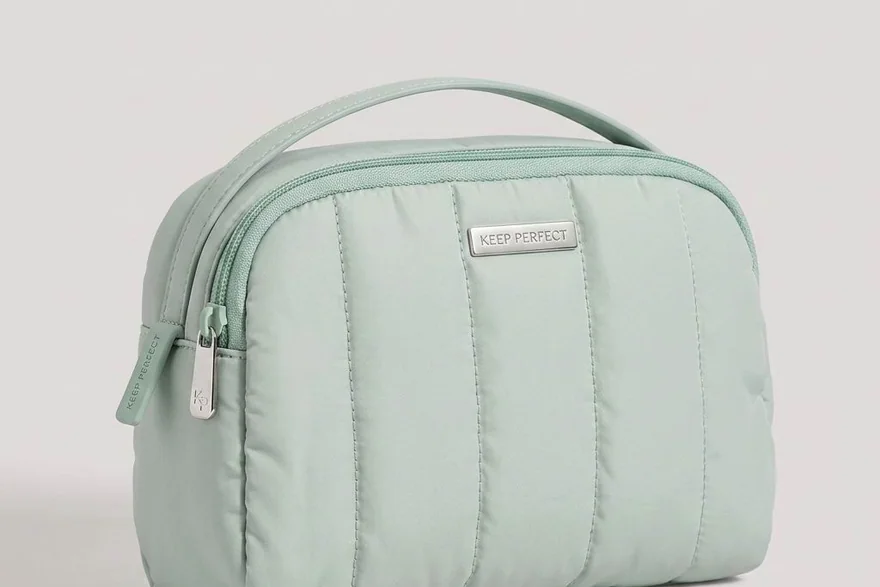
Colour on fabric behaves differently from colour on paper, and the difference is physical rather than anybody's failure. Ink sits on a textured surface that scatters light, so a Pantone reference matched on coated card reads slightly duller and slightly darker on 600D polyester. On PU the surface is smoother but the polymer itself can migrate and shift a printed colour over weeks. Expecting an exact visual match to a print proof is the fastest route to a sample rejection that never needed to happen.
- Screen print and embroidery use spot references; a Pantone number plus tolerance is the right way to specify them.
- Sublimation and digital print simulate a gamut; some Pantone references fall outside what any ink set can reach.
- Fine detail below roughly 1.2 mm stroke width disappears on coarse weaves and should be thickened for production.
- Registration between multiple print colours typically moves by 0.5-1.0 mm; artwork with tight abutting panels needs trapping.
- Neon, metallic and fluorescent targets have no reliable match in most soft-goods decoration processes.
- Fastness is measured, not judged: request rubbing and cleaning results against a published test method.
Scale is the second practical constraint. A crest that looks authoritative at 30 mm on a business card becomes mud at 18 mm on a zip pull, and the limiting factor is the number of physical threads or halftone dots available per millimetre. Woven labels quote their own thread density; embroidery has a minimum legible letter height of approximately 4-5 mm depending on stitch type; screen print on coarse canvas loses any stroke thinner than about 1.2 mm. Simplifying artwork for production is normal and usually improves brand legibility rather than damaging it.
Colour fastness deserves a specific request rather than a general one. Rubbing, washing, water, perspiration and light are separate exposures reported on separate scales, standardised as families of methods by ISO and by AATCC, whose technical manuals set out how each is carried out: ISO 105 colour fastness and the published AATCC test methods. Specifying 'dry rubbing 4 minimum, wet rubbing 3-4 minimum' is enforceable. Asking for 'good colour fastness' is not.
Safety of the applied decoration is sometimes overlooked. Inks, coatings and transfer films sit directly against the product and, in some channels, against skin. Buyers selling into EU or US Retail will often specify restricted-substance compliance for the decorated area, commonly through labelling schemes such as OEKO-TEX Standard 100, or through documentation supplied against input declarations. Requesting that evidence before mass production is considerably cheaper than discovering the gap after cartons are packed.
A final practical point about approval: evaluate decoration on the actual production substrate, under the same light the brand photographs in. A mark approved under warm warehouse lighting frequently reads differently in a retail or studio environment. Buyers should also remember that dark ink on a pale shell and pale ink on a dark shell fail differently: the latter usually needs an underbase or a discharge agent, and both change cost and hand feel. Buyers who keep one approved reference decoration panel, signed and dated, and require each subsequent run to be compared against it, avoid the slow drift that appears when colour is judged from memory across three or four repeat orders.
Trademark clearance and artwork ownership: who carries the risk
This is the part of the conversation that cannot be delegated. Responsibility for trademark clearance and for artwork rights belongs to the brand owner, and it stays there. Before any mark is reproduced on a cosmetic bag, the buyer must be satisfied that they own it, have licensed it, or have written permission from whoever does. No sourcing partner, decorator or production unit can make that judgement for them, and none should be asked to reproduce a protected mark without documented authority.
The standard expected evidence is simple: a registration number or application reference, the territory of protection, the class covering bags and cosmetic cases, and the name of the entity holding the right. Where the mark is licensed, the licence should name the licensee and cover the specific product. Where an agency created the artwork, written assignment or a licence to reproduce should exist. Collecting that documentation before sample requests saves a programme from discovering a problem at the point where goods are already paid for.
| Situation | Who must clear it | Evidence to hold on file | Consequence if missing |
|---|---|---|---|
| Brand's own registered wordmark | The brand owner | Registration certificate, class and territory matching bags | Removed listing, seized goods, counterclaim exposure |
| Agency or freelance designer artwork | The commissioning brand | Written assignment of rights or reproduction licence | Disputed ownership, delayed production, redesign cost |
| Licensed character or entertainment property | The licensee | Licence naming the licensee and the product category | Immediate stop on production and retailer delisting |
| Retailer or private-label name | The programme owner | Written authorisation from the name owner for this product | Recalled stock and chargebacks from the retailer |
| Customer-supplied photograph or illustration | The brand commissioning the bag | Licence from the photographer or illustrator | Infringement claim after launch |
| Stock imagery purchased online | The brand commissioning artwork | Extended commercial licence covering product manufacture | Claim even where the basic licence was valid |
The everyday traps are mundane rather than dramatic. Fonts are software and carry their own licence; a typeface licensed for desktop publishing may not permit reproduction on a physical product, which is why vector artwork with fonts converted to outlines is both a practical and a contractual safeguard. 'Free' image downloads usually mean free for editorial use. And a logo designed to resemble an established brand closely enough to be mistaken for it will not be reproduced by any reputable programme.
Enforcement reality is worth stating plainly. Marketplaces and customs authorities both act on rights-holder complaints, and both act quickly. A shipment held at import is not recoverable from anybody downstream, and a listing taken down during a launch week damages more than revenue. The buyer's name appears on the commercial documents, which means exposure lands on them. Treating clearance as a formality rather than a gate is how small brands turn a first order into a legal problem.
The comfortable version of this process takes about a week. Confirm ownership, collect registrations and licences, convert fonts to outlines, keep one signed artwork approval per style, and require every repeat run to reference those approvals. Programmes run by QUANZHOU JUNYUAN BAGS and similar coordinators ask for exactly that documentation because it protects the buyer first and the programme second. Anything less leaves the party with least control carrying the largest share of the risk.
The B2B Customisation View
Cost, compliance and craft pull against each other on every cosmetic pouches, vanity cases and beauty organisers project; the specification is the record of how those three forces were balanced.
Commercial parameters stay fixed across the range: MOQ 500 pieces per style and colourway, prototype turnaround 6–10 working days (extended to 12–15 for multi-panel or moulded builds), bulk lead time 35–50 days from approved sample, AQL 2.5 inspection to ISO 2859-1, FOB Xiamen, T/T 30 deposit and 70 against bill of lading.
Buyers who use a programme coordinator keep their own supply-chain optionality; the technical pack travels, so production can be re-placed if a launch is brought forward.
Which Brand Types Benefit Most
Decoration decisions land differently across buyer types. A start-up cosmetics brand usually wants maximum perceived value from the smallest quantity, and tends to over-estimate how much detail a method can hold; starting with one-colour screen print or a woven label on a stock shell produces a credible result without tooling risk. An established beauty house generally has brand guidelines dictating exact references and minimum clear space, and its difficulty is translation rather than choice: converting a guideline written for print and packaging into something a 600D polyester panel can actually reproduce.
- Independent and start-up makeup brands: prioritise one strong mark on the front panel, keep to spot colours, and delay tooling decisions until volume justifies them.
- Established beauty brands: map existing brand guidelines onto each substrate in advance and approve a signed reference decorated panel per style.
- Retailers and private-label programmes: standardise on one or two methods across the range so replacement and replenishment stay consistent season to season.
- E-commerce sellers: choose decoration that photographs well and survives returns handling, since resale condition depends on it.
- Gift, hospitality and amenity buyers: use deboss or a metal patch where the item must feel premium without loud external branding.
- Subscription box operators: consider seasonal heat-transfer artwork for variety without committing the entire programme to one permanent mark.
For every one of them the commercial frame is identical. The programme minimum is 500 pieces per style and colourway, sampling for a decorated sample takes 6-10 working days and 12-15 for complex constructions, and bulk takes 35-50 days after written sample approval. Inspection follows AQL 2.5, terms are FOB Xiamen, and payment is T/T 30 deposit with 70 against bill of lading. Decoration choices change cost and appearance considerably, but not that sequence, so buyers can finalise artwork later than feared and should finalise rights clearance earlier than feels necessary.
Frequently Asked Questions
Can a logo be printed on any cosmetic bag fabric?
No, substrates differ sharply. Polyester and nylon accept screen print, heat transfer and sublimation well. Cotton canvas takes print and embroidery. PU and PVC reject most print inks and instead suit heat-transfer film, debossing or an applied patch. Coated fabrics vary with their coating chemistry. Choosing the shell before choosing the decoration is what prevents artwork and surface being incompatible later.
What file format should logo artwork be supplied in?
Vector files are ideal: AI, EPS or SVG with fonts converted to outlines, Pantone references named rather than screen-matched, and a placement drawing giving dimensions in centimetres. High-resolution raster files at 300 dpi or above work for sublimation and digital print. Embroidery needs the source plus enough detail for a digitising technician to interpret stitch direction correctly.
How small can a logo be printed before it stops reading?
Roughly 18-20 mm wide works for a simple icon; detailed crests need 30 mm or more. Lettering is the constraint rather than the mark itself: embroidery loses anything below about 4-5 mm cap height, and screen print drops strokes thinner than roughly 1.2 mm on coarse canvas. Below those thresholds simplify the artwork rather than shrinking it.
Does each logo colour require a separate printing screen?
Yes, in screen printing each spot colour has its own screen and its own pass, so a four-colour crest costs materially more than a one-colour wordmark in preparation and registration time. Buyers sensitive to cost often reduce a design from four colours to one or two with almost no loss of recognition. Heat transfer and digital print avoid per-colour screens entirely.
Why is embroidery unsuitable for some cosmetic bag shells?
Embroidery needs a surface stable enough to be pierced thousands of times. Thin or very light synthetic fabrics, typically below about 210D, can pucker or tear around dense stitching. Very smooth PU tends to show permanent needle marks. Quilted panels and canvas handle it well. Buyers should also remember embroidery stiffens a small pouch noticeably.
Can a logo be applied to a PU leather cosmetic bag with a heat press?
Yes, heat-transfer film is one of the most reliable ways to brand PU, provided the press temperature suits that particular polymer and the panel is flat. Prints directly on PU often fail because ink will not bond to the surface. Where a logo must sit across a seam or a curve, a riveted metal plate or a small sewn patch handles the geometry better.
What is the difference between a woven label and a printed label?
A woven label builds the design from dyed threads, giving a soft handle, excellent durability and no risk of ink rubbing off; it costs more to prepare. A printed label or satin ribbon prints ink onto a tape, allowing finer detail and full-colour artwork at lower cost but with lower abrasion resistance. Woven labels suit long-lived products; printed labels suit care instructions.
Is debossing possible on a bag that is not leather?
Yes, if the surface has enough thickness to deform permanently. PU leather, PVC, thick TPU skins and dense EVA shells all accept heat-and-pressure debossing. Standard woven polyester will not hold an impression at all, because the fibres spring back once pressure releases. Debossing also works best on flat panels rather than overstuffed or curved areas.
How durable is a printed logo against makeup spills and wiping?
Correctly cured plastisol or water-based screen ink on polyester survives regular wiping with cleanser very well. The real test is rubbing fastness, measured dry and wet on published scales. Buyers should request fastness results on the actual decorated panel rather than on the base fabric, since a failure appears when a transferred logo lifts or an uncured ink marks onto a pale lining.
Can Pantone colours be matched exactly on fabric?
Not exactly. Inks sit on a textured reflective surface rather than smooth coated paper, so even a well-matched spot colour reads slightly different. Embroidery threads come from a finite stock range, so references are approximated rather than mixed. Sublimation reaches many colours but some references fall outside any ink gamut. Agreeing a tolerance and a signed reference panel is the practical answer.
Does adding a logo change the minimum order quantity?
The 500-piece minimum per style and colourway already assumes decoration. Certain methods add their own economic threshold: cutting dies for debossing, plate tooling for metal patches and weaving set-up for labels all carry fixed costs that make low volume unattractive. Screen print and heat transfer sit comfortably within the standard minimum, which is why they dominate first runs.
Can a copyrighted image or licensed character be reproduced on a bag?
Only with documented permission. Reproducing a character, photograph or third-party illustration requires a licence naming the licensee and covering this product category. Department store services routinely ask to see it before accepting delivery, and marketplace platforms act on complaints quickly. Without authority, the commissioning brand owns the exposure and the goods will not be released.
Who owns artwork if a designer created it for the brand?
Absent a written agreement, rights often remain with the creator rather than the commissioning brand, which surprises many buyers. Commissioning artwork should therefore include a written assignment of rights, or at minimum a licence to reproduce on specified products and territories. This document should be kept on file and attached to each production order, because successive repeat runs rely on it.
Can branding be added to a stock cosmetic bag instead of a custom one?
Yes, and it is the pragmatic route below the standard minimum. Applying one heat transfer or a sewn label to an existing stock shell avoids fabric minimums and tooling. The compromises are fewer choices of size, colour and material, and usually a smaller print area. Buyers testing a market often start here and move to full custom once repeat demand is proven.
Is branding a moulded EVA cosmetic case different from branding a fabric pouch?
Yes. A moulded EVA shell does not accept most print or stitching, so branding shifts to debossing into the skin, a hot-stamped foil, an applied PU patch, or a moulded-in logo on the shell itself if tooling permits. The available flat area is also smaller and usually curved, which restricts patch placement. Expectations set for a fabric pouch do not transfer.
People Also Ask
How do I get my logo printed on a makeup bag?
Supply vector artwork with fonts converted to outlines and Pantone references, confirm the shell material, then choose a method compatible with it: screen print and heat transfer for polyester, transfer film or a riveted plate for PU, debossing for EVA. A decorated sample is prepared in 6-10 working days, reviewed for appearance and rubbing fastness, then bulk runs 35-50 days after written approval.
Can I put a trademarked name on a custom cosmetic bag?
Only if the mark is owned, licensed or authorised in writing for that product. The buyer must supply the registration number and territory, or the licence naming them, before production begins. A name resembling a protected brand closely enough to confuse consumers should not be reproduced at all; exposure sits with whoever commissions the goods, regardless of who applies the logo.
What is the cheapest way to brand a cosmetic bag?
A one-colour screen print on the front panel is usually the least expensive across a 500-piece run, since the per-piece cost is low and preparation is modest. But reducing the colour count that way usually cuts unit cost by a third or more with almost no loss of brand recognition, which is why it is often the first conversation worth having. A heat transfer is cheaper to prepare but costs more per piece at higher volumes.
Will my logo wash off a cosmetic bag?
A correctly specified and cured application should not. Screen print on polyester, sublimation into polyester and embroidery are all durable under normal cleaning. Failures usually come from mismatched method and substrate, insufficient curing, or an untested transfer film applied over a seam. Requesting dry and wet rubbing fastness results on the decorated panel before bulk, rather than relying on how it looked on the day, is the reliable safeguard.
Request a Sample or a Written Quotation
Send the silhouette, dimensions, material preference and logo artwork, and the programme team will return a written quotation with MOQ, sampling window, bulk lead time and inspection standard.
Email: service@junyuanbags.com · WhatsApp: +86 177 5002 0688