Low MOQ Custom Cosmetic Bags: 100-500 pcs Sourcing Guide
Executive Summary
Low MOQ custom cosmetic bags are available across a marketplace band of 100-1,000 pieces, but the standard programme minimum quoted throughout this site is 500 pieces per style and colourway, and every figure below is built on that number. Sub-500 quantities are possible through three routes: decorating a stock blank, digital printing onto a white polyester body, or consolidating colourways onto one shell fabric. Each route trades specification freedom for quantity.
The reason is fixed cost, not policy. A dye lot runs 300-600 m, a zipper chain is spun 1,000-3,000 m per shade, a print screen costs 30-120 USD per colour per position, and a line changeover consumes 2-4 hours. Those amounts do not shrink with the order, so a 150-piece run carries them across 150 units instead of 500 and quotes typically land 30-80% above the 500-piece price. Sampling takes 6-10 working days, bulk 35-50 days, and inspection costs the same per day whatever the quantity, so a small order buys speed in the sample stage and nowhere else.
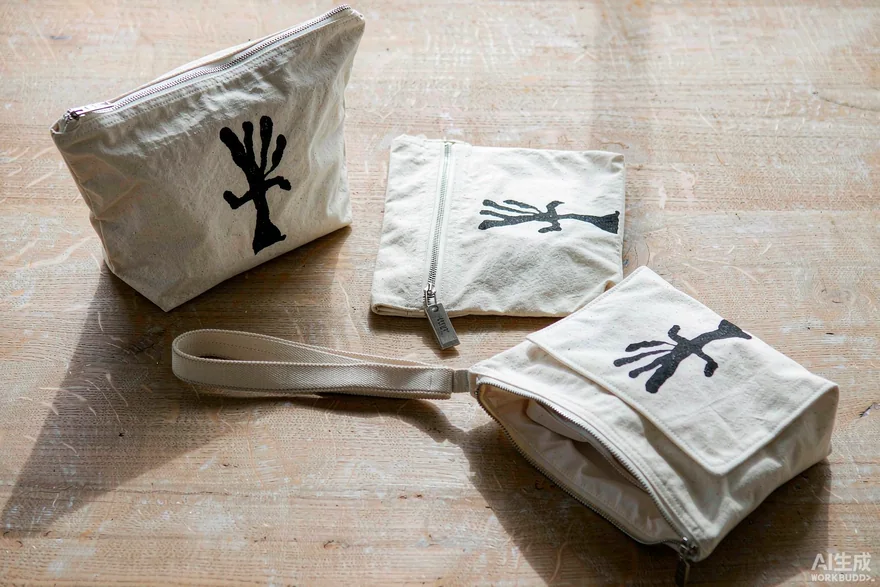
What low MOQ means in the cosmetic bag market
Marketplace listings for cosmetic bags quote minimums across a band of roughly 100-1,000 pieces and unit prices from 0.45 to 12.00 USD (Alibaba, October 2026). The standard programme minimum quoted throughout this site is 500 pieces per style and colourway. The gap between those two numbers is where most first-order confusion sits, and it is worth unpacking before a buyer sends the first enquiry, because the two numbers describe two different products.
A listing at 100 pieces is usually selling a stock body with a decoration applied. A programme at 500 pieces per style and colourway is building the bag from a pattern, a specified fabric and a specified trim set. Both are legitimate, and both are called custom in the market, but only the second gives a buyer control over dimensions, fabric weight, hardware and internal layout. Recognising which one a quote describes is the first skill in low-MOQ sourcing.
Minimums exist because of fixed costs rather than policy. A fabric mill will not dye less than a lot, typically 300-600 m. A zipper chain is produced in runs of 1,000-3,000 m per shade. A print screen costs 30-120 USD per colour per position regardless of how many bags run through it. A cutting die costs 45-180 USD. A line changeover and first-piece tuning consumes 2-4 hours of paid time. None of these amounts shrink just because the order is smaller.
The commercial calendar is also indifferent to quantity. Sampling takes 6-10 working days for a straightforward construction and 12-15 for complex ones; bulk runs 35-50 days after sample approval; inspection sits at AQL 2.5; shipment is FOB Xiamen under T/T terms of 30% deposit and 70% against the bill of lading. A 150-piece order saves money on materials and nothing at all on calendar, which is why small first orders frustrate buyers who expected them to be proportionally faster. Understanding that trade is the subject of the three sections that follow.
Why the 500-piece line exists: fixed cost per style and colourway
The cleanest way to understand a minimum is to divide the fixed costs by the quantity. The table below uses a standard flat pouch at 22 x 14 x 8 cm in 600D polyester with a printed logo and a dyed-to-order shell. Every line is an amount that has to be paid once per style or once per colourway, whether the order is for 150 pieces or 5,000.
| Fixed cost line | Amount per style or colourway | Absorbed at 500 pcs | Absorbed at 150 pcs | Buyer consequence |
|---|---|---|---|---|
| Shell fabric dye lot | 300-600 m minimum at 1.80-4.20 USD/m | 0.55-1.30 USD per piece | 1.85-4.30 USD per piece | Mill surcharge of 80-250 USD below lot size |
| Zipper chain in a matched shade | 1,000-3,000 m per colour | 0.09-0.22 USD per piece | 0.30-0.75 USD per piece | Stock black or natural tape removes the minimum |
| Print screen or heat-transfer setup | 30-120 USD per colour per position | 0.06-0.24 USD per piece | 0.20-0.80 USD per piece | Single position, single colour artwork halves it |
| Cutting die or laser programme | 45-180 USD | 0.09-0.36 USD per piece | 0.30-1.20 USD per piece | Choosing from an existing die library avoids tooling |
| Line changeover and first-piece tuning | 2-4 hours at 60-220 USD | 0.12-0.44 USD per piece | 0.40-1.47 USD per piece | Scheduling behind a large run shares the cost |
| Laboratory test report per material set | 120-400 USD | 0.24-0.80 USD per piece | 0.80-2.67 USD per piece | Test the base material once and add shades later |
Inspection cost behaves the same way. Under ISO 2859-1 the sample size is set by lot size and inspection level, not by order value, so a 150-piece lot at general inspection level II still draws a sample of 32 pieces at AQL 2.5 with an acceptance number of 2. The inspector's day rate, typically 180-320 USD, is identical whether the lot holds 150 bags or 1,500, which adds roughly 1.20-2.10 USD per piece to a small lot and 0.12-0.21 USD to a large one.
Freight adds a second penalty that has nothing to do with the factory. A 150-piece order packs into three to five cartons, around 0.5-0.8 m³, which is too small for a full container and too large for a cheap parcel. Air freight at 4.50-8.00 USD per kilogram, or a courier at 6-11 USD per kilogram, turns a 2.80 USD bag into a 4.50-5.50 USD landed unit. At 500 pieces the same bag ships LCL or as a shared 20 ft container at 0.08-0.25 USD per piece.
Put together, quotes at 100-300 pieces commonly land 30-80% above the 500-piece price for the same-looking bag, and sometimes higher where a dyed shade or a custom zipper is involved. For a buyer testing demand, that premium is often the correct price to pay for information. For a buyer who already knows the style sells, ordering 500 and holding stock is usually cheaper than ordering 150 twice.
Options when a buyer needs fewer than 500 pieces
There are five legitimate routes below the standard 500-piece minimum per style and colourway, and they differ in how much specification the buyer keeps. The right route depends on whether the constraint is cash, demand uncertainty, or a genuine need for a small physical quantity such as a gift programme or a limited collaboration.
- Stock blank with decoration: an existing body in a stock colour, printed, embroidered or heat-transferred. Quantities from 100 pieces; dimensions and fabric are fixed.
- Digital or sublimation print: artwork printed directly onto a white polyester body with no screen cost. Quantities from 50-200 pieces; coated and dark shells are excluded.
- Colourway consolidation: one shell colour across the whole order with the variation carried by print and trim, which keeps the order inside one 500-piece colourway.
- Shared material run: scheduling the order immediately behind a larger run in the same fabric so the dye lot and trim minimums are already covered.
- Phased programme: placing 500 now with a split delivery, for example 200 pieces immediately and 300 held to a call-off date within 60-90 days.
Route one is the most common and the most misunderstood. A stock blank programme gives a buyer roughly eight to fifteen body shapes in four to eight stock colours, with decoration applied by screen print at 0.35-1.10 USD per position, embroidery at 0.60-2.40 USD depending on stitch count, or a heat transfer at 0.25-0.90 USD. Lead time compresses to 15-25 days because no fabric has to be dyed and the pattern already exists. What a buyer gives up is the 22 x 14 x 8 cm dimension, the 210 g/m² fabric weight and the exact shade.
Route two removes the screen charge but not the physics. Sublimation needs a polyester face of at least 65% polyester content and works best on white or pale grounds; a coated 600D shell will not take a dye-sub print, and a dark shell needs a transfer film rather than direct printing. Colour gamut is narrower than a matched Pantone shade, so a brand with a tightly controlled identity should treat digital print as a sampling tool and move to dyed fabric at 500 pieces.
Route five is worth particular attention because it solves both problems at once. A 500-piece order with a split delivery delivers the 150-200 units the buyer needs now, holds the remainder as finished or semi-finished stock, and charges the 500-piece unit price. The carrying cost is modest, typically 0.02-0.06 USD per piece per month, and the buyer avoids paying for a second sampling round later. It requires trust in the demand forecast, which is exactly what the first 150 pieces are meant to establish. Route three deserves a numerical note as well. Consolidating four print variations onto a single shell colour keeps the buyer inside one 500-piece colourway where four dyed shades would need 2,000 pieces, and the print variation still gives the listing four images. Route four, the shared material run, is worth asking about explicitly, because scheduling a smaller order immediately behind a larger one in the same fabric removes the dye-lot surcharge at the cost of accepting a fixed delivery date.
Planning the jump from a 150-piece test to a 500-piece programme
The sensible sequencing is to buy information cheaply first and specification second. A 100-200 piece run on a stock blank tells a buyer which shape, which price point and which artwork sells. A 500-piece custom run then fixes the dimensions, the fabric and the shade that the test revealed. Trying to do both at once on a 150-piece custom order is the expensive version of the same experiment. The transition point is worth naming: once a style has sold through 300-400 units, the buyer has enough information to specify properly, and the next order should be placed at 500 pieces with a real pattern, a real fabric and a real shade.
| Stage | Quantity | What is fixed at this stage | Unit price index | Lead time |
|---|---|---|---|---|
| Market test | 100-200 | Artwork and stock body colour | 165-200 (500-piece price = 100) | 6-10 working days sampling plus 15-25 days |
| First custom run | 500 | Fabric, zipper shade, pattern, tooling | 100 | 6-10 working days sampling plus 35-50 days |
| Colourway extension | 500 per new colour | New dye lot and matched zipper shade | 92-100 | 6-8 working days sampling plus 35-50 days |
| Repeat order | 500-5,000 | Golden sample reference and frozen spec | 88-96 | 3-5 working days sampling plus 30-45 days |
| Consolidated annual programme | 5,000-50,000 across styles | Framework pricing and reserved capacity | 80-90 | 35-50 days per release |
Compliance documentation is another fixed cost that small orders carry badly. Certificates are issued to a material article, not to an order: OEKO-TEX Standard 100 covers a defined fabric construction for a defined period, and a buyer selling into the EU market will need REACH-conformant inputs documented in the same way. A test report costing 120-400 USD is worth 0.24-0.80 USD per piece at 500 units and 2.67 USD at 150, which is why testing the base material once and adding shades later is the standard advice. A buyer planning three shades of one style should commission the report on the base construction, confirm that the certificate covers the coating and the print inks as well as the fabric, and schedule the shades to follow inside the certificate validity period rather than testing each one independently.
Three commercial questions should be answered in writing before a low-MOQ quote is requested: whether the sample charge is credited against the first bulk order, whether the quoted price holds if the buyer increases to 500 pieces within 90 days, and whether a second colourway on the same shell counts toward the same 500-piece minimum. Those three answers change the true cost of the first order more than any unit-price negotiation does. A fourth question is worth adding for buyers who expect to grow: whether the price quoted at 500 pieces holds if a second order is placed within twelve months, since a framework commitment made early is usually worth more than a discount negotiated on the first run.
An enquiry that says low MOQ gets a marketplace answer. An enquiry that says 500 pieces per style and colourway, one shell colour, two print positions, FOB Xiamen gets a programme answer. Buyers should state quantity per style and per colourway separately, because those are the two numbers a minimum is actually applied to.
The B2B Customisation View
Teams developing cosmetic pouches, vanity cases and beauty organisers benefit from deciding the closure, the lining and the logo application before the pattern is drafted, because each choice constrains the next.
Standard terms: 500 pieces minimum per style and colourway, 6–10 working days for sampling (12–15 for complex builds), 35–50 days bulk production, AQL 2.5 inspection under ISO 2859-1, FOB Xiamen, T/T 30 deposit / 70 balance.
As a sourcing and programme-management company, QUANZHOU JUNYUAN BAGS holds the specification, the inspection record and the shipment schedule together, which is exactly the coordination work a single-factory relationship rarely covers.
Which Brand Types Benefit Most
Low-quantity sourcing suits some buyer types far better than others. A start-up brand validating a price point needs 100-300 pieces and should accept a stock body, because the experiment is about artwork and demand rather than about a 210 g/m² fabric. An established brand launching a capsule collaboration needs the specification more than the quantity discount and will usually pay the premium on 300-500 pieces of a fully custom build. A retailer testing a private-label range needs a compliant, tested article from the first unit, which pushes toward 500 pieces with the documentation paid for once. An e-commerce seller running a marketplace test needs speed above all and should take digital print on a stock blank at 15-25 days. A gift or hospitality buyer with a defined amenity set and a fixed event date needs certainty of delivery, which argues for 500 pieces with a split call-off rather than a minimum run that arrives late.
- Start-up brands: use a stock blank for the first 100-200 pieces and move to custom at the reorder.
- Established brands: pay the low-MOQ premium once, then hold the golden sample for repeat runs at 500 and above.
- Retailers: insist that the first order, however small, carries a test report on the actual bulk material.
- E-commerce sellers: choose digital print for speed and check that the shell is at least 65% polyester.
- Gift and hospitality buyers: fix the event date first and work backwards through 35-50 days of bulk plus transit. Across all five buyer types the same arithmetic applies: a low-MOQ order is a purchase of information, and information should be bought at the lowest price that still produces a usable answer. A 150-piece run on a stock blank answers which shape and which artwork sells; only a 500-piece programme answers what the bag will cost at scale.
Frequently Asked Questions
What is the standard minimum order quantity for a custom cosmetic bag programme?
Five hundred pieces per style and colourway. That is the programme minimum quoted throughout this site and the number every price, lead time and inspection figure is built on. Marketplace listings advertise minimums from 100 pieces, but those are typically stock bodies with decoration applied rather than a bag built to a buyer's specification. Buyers wanting variety on a single minimum run should keep one shell colour and vary print and trim instead.
Why is the minimum set per colourway rather than per order?
Because the fixed costs are per colourway. A dye lot of 300-600 m and a zipper chain run of 1,000-3,000 m are both colour-specific, so two colourways of the same style consume two lots. An order of 500 pieces split across three colours would need three dye lots, which is why the minimum is applied to each colourway rather than to the order total.
Can a buyer order 100 pieces of a fully custom cosmetic bag?
Not as a standard programme. Below 500 pieces per style and colourway the practical routes are a stock blank with decoration, digital or sublimation printing onto a white polyester body, or joining a shared material run. Each gives up some specification: dimensions, fabric weight or exact shade. A fully custom build at 100 pieces is possible only with significant surcharges.
How much more does a 150-piece run cost per unit than 500 pieces?
Commonly 30-80% above the 500-piece price, and more where a dyed-to-order shade or a matched zipper is involved. The premium comes from fixed costs: the dye lot, the screen, the die, the line changeover and the inspection day rate all stay the same while the quantity falls. Freight adds a second penalty because small lots rarely fill a container.
What is a stock blank and what can actually be changed on it?
A stock blank is an existing body held in a standard shape and a stock colour, ready for decoration. A buyer can change the artwork, the print or embroidery position, the puller, the label and the packaging. The dimensions, the shell fabric, the lining and the base colour are fixed. Lead time drops to roughly 15-25 days because no fabric needs dyeing.
Does digital printing remove colour minimums on cosmetic bags?
It removes the screen charge and the short-run print penalty, but not the fabric or trim minimums. Sublimation needs a polyester face, works best on white or pale grounds, and cannot match a Pantone shade as tightly as dyed fabric. It is an excellent route for 50-200 pieces and a poor route for a brand with a tightly controlled colour identity.
Can two colourways be combined to reach 500 pieces?
Only if the variation is carried by print or trim rather than by shell fabric. Two dyed shells need two dye lots and two zipper shades, so they count as two colourways and each needs 500 pieces. One shell colour with three print variations is a single 500-piece colourway, which is the standard way to get variety out of a minimum run.
What is a material surcharge and when does it apply?
A material surcharge covers the difference between the mill's minimum lot and the quantity the order actually consumes. If a style needs 220 m of fabric and the mill minimum is 500 m, the buyer pays for 500 m or pays an 80-250 USD surcharge. Surcharges also appear on trim: a zipper shade spun at 1,000 m when the order needs 400 m.
Are sample charges credited against a low-MOQ order?
Often, but only if the proforma says so. A sample on a simple construction costs 60-400 USD plus 30-80 USD courier, and programmes frequently credit that against the first bulk order. On small orders the credit is worth more per piece, which makes it a reasonable item to ask for explicitly at the enquiry stage rather than after the sample is approved.
How does a small order affect inspection sample size?
Less than buyers expect. Under ISO 2859-1 at general inspection level II, a 151-280 piece lot draws 32 pieces at AQL 2.5 with an acceptance number of 2, while a 501-1,200 piece lot draws 80 with an acceptance number of 5. The sample grows, but the inspector's fixed day rate of 180-320 USD per piece equivalent is what hurts a small lot.
What lead time applies to a 200-piece custom run?
On a stock blank with decoration, 6-10 working days for the sample plus 15-25 days for production. On a bespoke build below the standard 500-piece minimum, sampling still takes 6-10 working days, or 12-15 for complex constructions, and bulk still runs 35-50 days, because the calendar is driven by material procurement rather than by quantity. Transit then adds 25-40 days by sea to a US or European warehouse, which usually exceeds the production time on a small order.
Can a buyer test 100 pieces and then reorder 500 later?
Yes, and it is the recommended sequencing. The first run establishes which shape and artwork sells; the second fixes the specification. The buyer should ask at the outset whether the first-order price holds on an increase to 500 within 90 days, and should keep the first sample as a reference even if it is a stock body, because the decoration position still needs to be repeated.
Which components carry the hardest minimums on a small order?
Dyed shell fabric, matched zipper tape and custom hardware. Fabric lots start at 300-600 m, zipper chain at 1,000-3,000 m per shade, and a custom metal puller or moulded logo badge often at 1,000-5,000 pieces. Stock black or natural zipper tape, stock pullers and stock shell colours are the three switches that most reduce a small-order quote.
Does an unprinted plain bag have a lower minimum?
Slightly, because the print screen charge of 30-120 USD per colour per position disappears. The dominant costs, being the dye lot, the die and the line changeover, remain. Practically, an unprinted bag does not move the minimum below 500 pieces per style and colourway; it reduces the unit price by roughly 0.06-0.80 USD depending on how many print positions were planned.
What should a low-MOQ buyer freeze first in the specification?
Dimensions and shell colour. Those two decisions drive the pattern, the dye lot and the marker, and changing either after sampling forces a new round of 4-7 working days plus 40-200 USD. Artwork, label position and packaging can stay flexible until much later without disturbing the production slot or the material booking. Artwork, label position and packaging can stay flexible until much later without disturbing the material booking or the production slot.
People Also Ask
What is a low MOQ for custom cosmetic bags?
Marketplace minimums run from about 100 pieces, but those usually describe a stock body with decoration. The standard programme minimum for a bag built to a buyer's specification is 500 pieces per style and colourway. Anything below that is delivered through stock blanks, digital print or shared material runs. Below 500 pieces the practical routes are stock blanks, digital print and shared material runs, each giving up some specification freedom.
Can I order 100 custom makeup bags?
Yes, if the bag is a stock blank with your artwork applied; quantities from 100 pieces are common and lead time is 15-25 days. A fully custom bag with your own dimensions, fabric and shade carries the 500-piece minimum per colourway. Below that, expect quotes 30-80% above the 500-piece price. A bespoke bag with your own dimensions, fabric and shade carries the 500-piece minimum per colourway and a 35-50 day bulk window.
Why do suppliers set MOQ per colour?
Because fabric is dyed in lots of 300-600 m and zipper chain is produced in 1,000-3,000 m per shade. Each colourway consumes a separate lot, so the fixed cost repeats per colour. Buyers wanting variety on a single minimum run should keep one shell colour and vary the print and trim instead. The remedy for a buyer wanting variety is one shell colour with several print variations, which stays inside a single colourway minimum.
How do I reduce the cost of a small first order?
Use a stock body colour, print in one position with one colour, choose stock zipper tape and pullers, order 500 with a split delivery rather than 150 twice, and test the base material once rather than per shade. Each of those removes a fixed cost line that a small lot would otherwise carry alone. Testing the base material once and adding shades inside the certificate validity period avoids repeating a 120-400 USD report per colourway.
Request a Sample or a Written Quotation
Send the silhouette, dimensions, material preference and logo artwork, and the programme team will return a written quotation with MOQ, sampling window, bulk lead time and inspection standard.
Email: service@junyuanbags.com · WhatsApp: +86 177 5002 0688