How to Start a Cosmetic Bag Brand: From Concept to First Shipment
Executive Summary
Starting a cosmetic bag brand means clearing five gates: a defined customer and price point, a written specification, an approved sample, a booked bulk slot and an inspected first shipment. The direct answer is that the slowest part of the process is rarely production itself; it is the decision work that happens before a sample is cut and the document work that happens after the sample is approved. A realistic first programme runs 500 pieces per style and colourway, takes 6-10 working days for a standard sample, 12-15 working days for complex constructions, and needs 35-50 days of bulk production after approval.
First-time brand owners should also budget for the costs that sit outside the unit price: tech pack preparation, sample courier charges, print or tooling setup, laboratory testing, inspection, packaging artwork, freight and duty. A written tech pack — dimensions in centimetres, fabric named by denier and g/m², hardware by gauge, Pantone references and a packing specification — removes most of the ambiguity that triggers re-sampling. The most common schedule slip is a specification change after the golden sample is sealed, because that restarts material sourcing and pushes the bulk slot back.
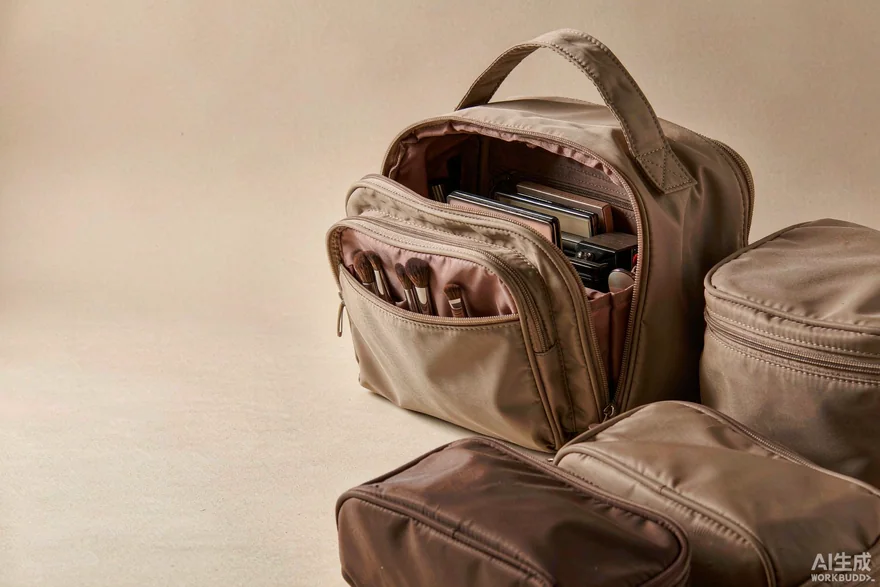
What starting a cosmetic bag brand actually requires
A cosmetic bag brand starts with demand, not with a logo. Buyers sizing the category can use published search behaviour as a rough proxy: ASINSIGHT data for July 2026 records roughly 74,810 weekly searches for 'toiletry bag' on Amazon, 'travel bag for toiletries' draws around 110,000 searches a month, 'make up bags for women' around 80,000 a month, and 'custom makeup bag' somewhere between 5,400 and 6,600 a month. Those figures describe search interest rather than sales, but they show how much of the category is functional travel demand rather than fashion demand.
The category splits into use cases that behave differently in sourcing: flat pouches for handbags, structured vanity cases for dressing tables, hanging toiletry bags for travel, clear bags for security screening, and organisers with brush loops for makeup kits. Each carries a different bill of materials, a different tooling requirement and a different price ceiling. A brand owner who picks one use case and one customer can write a specification; a brand owner who tries to serve all five usually writes five specifications and funds five sample rounds.
Capital planning follows the same logic. Marketplace listings for custom cosmetic bags sit in a typical band of $0.45 to $12.00 per unit depending on material, construction and quantity, with advertised B2B minimums commonly between 100 and 1,000 pieces. A first programme of 500 pieces per style and colourway sits comfortably inside both ranges and is small enough to sell through while large enough to be quoted seriously. The costs that surprise first-time buyers are not unit costs but one-off costs: sampling, couriers, print setup, testing, inspection, packaging artwork and freight.
- One use case, one customer and one price point for the first range — variety can wait for reorder data.
- A written tech pack before any sample is requested, with dimensions, materials, hardware and packing method.
- A realistic timeline: 6-10 working days for sampling, 12-15 for complex builds, 35-50 days for bulk.
- A cash plan covering one-off costs as well as the unit price, plus a contingency for a second sample round.
- A sales channel chosen before packaging artwork is drawn, so barcodes and marking are right the first time.
From concept to a written specification and unit economics
The tech pack is the document that turns an idea into something that can be quoted. It should state external dimensions in centimetres with a tolerance, capacity in litres or by the items the bag must hold, the shell and lining by denier and g/m², the coating or laminate type, hardware by gauge and finish, Pantone references for fabric and print, stitch density, logo method and placement, interior layout, packing method, carton quantity and carton marking. Anything left out will be interpreted by whoever cuts the sample, and interpretation is the single largest cause of re-sampling.
Unit economics should be calculated as landed cost per sellable unit rather than as the factory price. Add the unit price, the amortised setup or tooling charge, testing, inspection, packaging, inbound freight, duty and the channel's own fees, then compare the result with the intended retail price. A brand planning a $19.99 shelf price on a pouch quoted at $3.20 needs to know whether the remaining margin survives freight and fees before the first order is placed, not after the cartons arrive.
| Decision | Options commonly seen on marketplaces | Effect on unit cost and schedule |
|---|---|---|
| Shell material | 190T polyester through 600D rPET, roughly 60-300 g/m² | Heavier fabric raises material cost and carton weight; coatings add a lamination step |
| Construction | Flat pouch, gusseted pouch, quilted case, moulded EVA case | Moulded work adds tooling and moves sampling from 6-10 to 12-15 working days |
| Closure | #3 nylon coil, #5 nylon coil, metal zipper, magnetic frame | Gauge and slider type change hardware cost, weight and the field failure rate |
| Branding | Woven label, screen print, heat transfer, embroidery, metal puller | Setup charges are fixed, so unit cost falls sharply between 500 and 5,000 pieces |
| Order quantity | 500 pieces per style and colourway and upward | Fabric and trim minimums drive most of the price step below 1,000 pieces |
| Packaging | Polybag only, printed belly band, rigid gift box | Adds per-unit packing cost and carton volume, which moves freight cost |
Quantity maths should be done before the design is finalised. The programme minimum is 500 pieces per style and per colourway, so one style in three colourways is three separate 500-piece commitments rather than one 500-piece order. Spreading 500 pieces across four colourways produces 125 of each, which generally fails fabric and trim minimums and pushes the unit price up. A single colourway for the first run also produces cleaner sell-through data, so the second order can be weighted towards the shade that actually sold.
Pricing position should be decided from the channel backwards. Marketplace shoppers compare against listings they can see, so the retail price sets the ceiling and the landed cost has to fit beneath it. Working backwards — retail price, minus channel fees, minus freight and duty, minus packaging and inspection — leaves the amount available for the unit price, and that number tells the brand owner which materials are affordable. Designing first and pricing afterwards is the sequence that produces an unsellable product. The arithmetic should be repeated whenever a feature is added, because a second zipper, a printed lining or a rigid gift box each moves the number in the same direction.
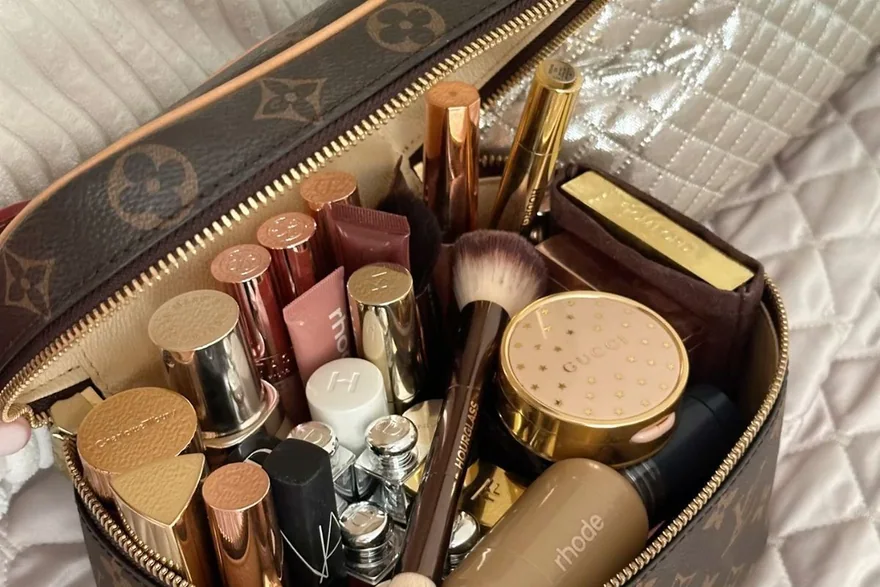
Sampling, tooling and approval: what happens in 6-15 working days
Sampling is a sequence, not a single event. The tech pack is translated into a pattern, materials are sourced or substituted, panels are cut, print or embroidery is applied, the bag is assembled, and an internal check measures it against the specification before photographs are sent for approval. Any material that is not held in stock extends the window, which is why unusual zippers, custom pullers and speciality laminates should be decided at the concept stage rather than discovered during sampling.
| Stage | Working days | Decision required from the brand owner |
|---|---|---|
| Tech pack issue | 0-2 | Confirm dimensions, materials, Pantone references and hardware |
| Material sourcing | 3-5 | Approve or reject any substitute fabric, lining or trim |
| First sample build | 6-10 standard, 12-15 for complex constructions | Measure the bag, fill it with real products, work the zipper repeatedly |
| Revision round | 4-8 per round | Freeze the specification; each change restarts part of the clock |
| Golden sample sealing | 1-2 | Sign and retain two sealed reference samples |
| Bulk slot booking | 35-50 days of production | Release the deposit and confirm capacity |
The physical checks matter more than the photographs. A sample should be filled with the actual products the bag will carry — a 20 cm palette, an 18 cm bottle, a full brush set — because a pouch that looks correct empty usually reveals its problems when loaded. Work the zipper through its full travel twenty times, wipe the lining with a cosmetic oil and leave it overnight, and hang the loaded bag by its hook for two days to see whether the anchor distorts.
Revision rounds are where schedules are lost. Each round adds roughly 4-8 working days because panels must be re-cut or materials re-sourced, and more than three rounds usually signals an incomplete tech pack rather than a difficult design. The cheapest prevention is a physical review before the first sample request: buy two competitor products in the target size, fill them, and write down exactly what the brand wants changed. That exercise costs two retail purchases and typically removes one full sample round.
- Fill the sample with the real products the bag will carry, not with tissue paper or an empty shell.
- Run the zipper through its full travel twenty times and listen for teeth skipping at the corners.
- Wipe the lining with cosmetic oil, leave it 24 hours, then check for staining or coating lift.
- Hang the loaded bag by its hook for 48 hours and inspect the anchor stitching for distortion.
- Approve colour under daylight and under retail LED lighting, because the two rarely agree.
Two administrative points close the sampling stage. Courier transit sits outside the working-day count, so a 6-10 working-day sample plus international courier is closer to three calendar weeks door to door. And the golden sample must be sealed and signed, with one copy retained by the brand owner and one by the programme coordinator, because every later inspection and every dispute about a repeat order is resolved by reference to that physical object. Buyers working to a fixed launch date should count calendar weeks rather than working days, and should add a week of contingency for the revision round that experience suggests will happen.
Bulk production, inspection and the first shipment
Bulk begins when the deposit is paid and the specification is frozen. Fabric and trim lots are confirmed against the golden sample, panels are cut and printed, assembly runs through the seven production lines, and finished bags are packed to the agreed carton quantity. The schedule is predictable when nothing changes mid-run; it slips when artwork arrives late, when an incoming lot fails an internal check, or when public holidays interrupt the window.
| Milestone | Timing | Document or action |
|---|---|---|
| Deposit and purchase order | Day 0 | T/T 30% deposit and a signed, frozen specification |
| Fabric and trim confirmation | Day 3-10 | Lot compared against the sealed golden sample |
| Cutting and printing | Day 8-18 | Print registration and panel alignment checked in line |
| Assembly and in-line check | Day 18-30 | Stitch density, zipper alignment and loop placement verified |
| Final inspection | Day 30-45 | AQL 2.5 under ISO 2859-1, defect list and photographs |
| Balance and handover | At shipment | T/T 70% against bill of lading; handover FOB Xiamen |
Inspection criteria belong in the purchase order, not in a conversation. AQL 2.5 applied through ISO 2859-1 gives a defined sampling plan: under general inspection level II, a 500-piece lot normally draws 50 pieces for inspection, with an accept number of three and a reject number of four at that limit. The buyer should also define how defects are classified, because a broken zipper and a loose thread should not carry the same consequence in the accept-or-reject decision.
Freight planning starts with carton dimensions. Five cartons of flat pouches at roughly 0.1 m³ each is about half a cubic metre and perhaps 90-120 kg, which sits near the point where air and sea costs converge; above roughly ten cartons, sea freight is usually cheaper but adds weeks of transit. Air freight is charged on chargeable weight, meaning the greater of actual and volumetric weight, so light but bulky cartons are expensive to fly. Buyers should compare both modes against the launch date rather than assuming air is quicker overall.
Documentation closes the shipment. A customs broker normally needs a commercial invoice with the correct HS classification, a packing list showing carton count, dimensions and weights, the bill of lading, country-of-origin marking details and any test reports the destination market requires. These should be sent before the vessel sails rather than on arrival, because a missing classification or an incorrect declared value can hold the consignment at the port and turn a 35-day production schedule into a two-month delay.
Once the goods land, the first run becomes data. Sellers should record which size sold first, which colourway moved slowest, what returns actually said, and what the inspection report flagged, then feed all four into the next tech pack. The second order is where a brand becomes a business: a larger quantity per colourway, one fewer revision round, and a unit price that reflects fabric bought in a single lot. Buyers who treat the first 500 pieces as research rather than as profit usually reach a healthy margin by the third order. By then the tech pack is stable, the fabric is bought in a single lot, and sampling usually needs only one round.
The B2B Customisation View
A realistic cosmetic bags schedule assumes one round of sample revision; planning for a perfect first sample is the most common cause of a slipped launch.
Fixed commercial parameters: 500 pieces per style and colourway minimum, first sample in 6–10 working days (12–15 for complex or hardware-intensive constructions), bulk 35–50 days after approval, AQL 2.5 inspection under ISO 2859-1, FOB Xiamen, T/T 30/70.
A sourcing-partner structure also protects the buyer when volumes grow, because capacity for cosmetic bags can be spread across SGS-verified production lines without changing the specification.
Which Brand Types Benefit Most
Different brand types enter this process with different advantages and different blind spots. Start-up brands benefit most from discipline: one use case, one colourway, one price point, and a tech pack written before any sample is requested, because the temptation to add a second variant is usually what breaks the first budget. Established brands benefit from data they already own — returns reasons, review language, best-selling dimensions — and that material should be fed straight into the specification rather than left in a spreadsheet. Retailers and wholesalers building a private label normally have the channel solved already, so their binding constraint is packaging artwork, barcode allocation and carton marking rather than product design. E-commerce sellers should plan backwards from the listing: photography of the golden sample, dimensions stated in centimetres, and packaging that survives courier handling without crushing the bag. Gift and hospitality buyers, who distribute rather than sell, should prioritise scuff resistance and a neutral or co-brandable exterior over fashion detailing, since the bag represents the host brand rather than itself. Whichever group the buyer belongs to, the same sequence applies: decide the use case, write the specification, approve a physical sample, then book production. Brands that reverse that order, booking production first and specifying afterwards, are the ones whose first shipment arrives late and sells slowly.
- Start-up brands: launch one style in one colourway and resist adding variants until reorder data exists to justify them.
- Established brands: mine returns logs and review text for the failure modes the next range must be specified against.
- Retailers and wholesalers: lock packaging artwork, barcode numbers and carton marking early, because reprints cost more than the delay.
- E-commerce sellers: state dimensions in centimetres, photograph the sealed golden sample, and test-fit the shipper carton before bulk.
- Gift and hospitality buyers: choose scuff-resistant shells and a co-brandable exterior panel, and keep the interior layout simple.
Frequently Asked Questions
How many units should a first cosmetic bag order cover?
A first order should cover one style per colourway at the programme minimum of 500 pieces per style and colourway, rather than 500 pieces spread across several designs. Splitting 500 across four colourways produces 125 of each, which usually fails fabric or trim minimums and raises the unit price. A single colourway also produces cleaner sell-through data, so the second order can be weighted towards the shade that actually sold.
What should a tech pack for a cosmetic bag contain?
A usable tech pack gives dimensions in centimetres with tolerances, capacity, a material list by denier and g/m² plus coating type, Pantone references for fabric and print, hardware by gauge and finish, stitch density, logo method and placement, interior layout, packing method, carton quantity and carton marking. Anything not written down will be interpreted by whoever cuts the sample, and interpretation is the main cause of re-sampling.
How long does sampling take for a moulded EVA vanity case?
Complex constructions run 12-15 working days rather than the 6-10 working days typical of a sewn pouch, because moulded shells need tooling preparation, forming trials and a fit check against the lining and zipper. Buyers should add courier transit on top, since working-day counts exclude shipping. If the design uses a custom puller or an unusual zipper gauge, material sourcing can extend the window further, so hardware should be decided before the sample request.
Can a brand launch with one style in three colourways?
Yes, provided each colourway meets the 500-piece minimum, making the order 1,500 pieces in total. The advantage is a fuller-looking shelf and a broader shade test; the cost is three times the inventory risk and three times the inspection scope. A common compromise is one style in two colourways for the first run, with the third added on reorder once sell-through data shows which direction to extend.
What unit price should a first-time buyer expect for a printed polyester pouch?
Marketplace listings for custom cosmetic bags typically span $0.45 to $12.00 per unit, and a printed polyester pouch with a standard zipper usually sits in the lower half of that band at 500 pieces. The variables that move the number are fabric weight, coating, print method and colour count, hardware gauge and packaging. Buyers should compare quotations against an identical tech pack, because a low price on a thinner fabric is not a saving.
How is a logo protected on a custom zipper puller?
A logo on a puller is protected by registering the mark before tooling is commissioned, and by keeping the artwork, the tooling ownership terms and the permitted production quantities inside the purchase order. Tooling for a custom puller or a metal plate is a one-off cost and should be recorded as an asset in the brand's books. Buyers should also retain the sealed golden sample, which shows exactly what was approved if a later lot differs.
What is the difference between a proto sample and a golden sample?
A proto sample is the first physical interpretation of the tech pack, and its job is to expose problems. A golden sample is the approved reference that bulk production must match: sealed, signed and dated, with one copy retained by the brand owner and one by the programme coordinator. The distinction matters commercially, because revisions against a proto are expected, while any deviation from the golden sample during bulk is treated as a defect.
When should a trademark be filed relative to the first shipment?
Filing should precede artwork release, because discovering that a mark is already in use can force a reprint of labels, pullers and packaging. Brand owners normally file in the destination market before the first bulk slot is booked, then keep the application reference with the tech pack. Legal counsel should advise on classes and territory, since bag categories and cosmetics-adjacent classes can overlap in classification practice.
At what carton count does air freight stop making sense for a first run?
Air freight is charged on chargeable weight, which uses the greater of actual and volumetric weight, so light but bulky cartons are expensive to fly. Five cartons of flat pouches at roughly 0.1 m³ each falls near the point where air and sea costs converge; above roughly ten cartons, sea freight is usually cheaper but adds transit time. Buyers should compare both options against the launch date rather than assuming air is faster overall.
How many sample rounds are realistic before bulk?
Two rounds is normal and three is tolerable. Each revision round runs roughly 4-8 working days because materials must be re-sourced or panels re-cut, and each round consumes part of the sampling window. More than three rounds usually signals an incomplete tech pack rather than a difficult design. The discipline that prevents it is a physical review before the first sample is requested: measure a competitor product, fill it, and write down the changes wanted.
What stretches a 35-day bulk slot to 50 days?
The usual causes are specification changes after the golden sample is sealed, late approval of print artwork, fabric or trim substitution because an incoming lot failed an internal check, public-holiday shutdowns, and capacity pressure when several programmes book the same window. Buyers protect the slot by freezing the specification at sealing, approving artwork early and releasing the deposit promptly, since production slots are generally held against a signed order.
Should barcodes be arranged before or after sampling?
Before sampling, if packaging artwork is being drawn at the same time, because a barcode printed on a hangtag or carton cannot be added later without a reprint. The number itself can be allocated quickly; the artwork is the constraint. Sellers working through marketplaces should also confirm which identifier the channel requires, because some allocate their own labels and will not accept a retailer barcode printed at origin.
What does AQL 2.5 mean for a 500-piece cosmetic bag order?
AQL 2.5 is an acceptance quality limit applied through a defined sampling plan. Under ISO 2859-1 at general inspection level II, a 500-piece lot normally draws 50 pieces for inspection, with an accept number of three and a reject number of four at that limit. The buyer should also state how defects are classified as critical, major and minor, because a broken zipper and a loose thread should not carry the same consequence in the decision.
How should a first shipment be split to test two price points?
The cleanest test keeps the construction constant and varies one variable shoppers can see: a two-piece set against a single pouch, or a printed lining against a plain one. Splitting 500 pieces into 250 and 250 keeps each variant above trim minimums in most cases and produces comparable data. Varying fabric, size and packaging at the same time makes the result uninterpretable, because the buyer cannot tell which change moved the number.
What documents does a customs broker need for a first bag shipment?
A broker normally asks for a commercial invoice with the correct HS classification, a packing list showing carton count, dimensions and weights, the bill of lading, country-of-origin marking details, and any test reports or certificates the destination market requires. Buyers should send these before the vessel sails rather than on arrival, because a missing classification or an incorrect declared value can hold the consignment at the port.
People Also Ask
How much does it cost to start a cosmetic bag brand?
The variable cost is the inventory: 500 pieces per style and colourway at a unit price inside the $0.45-$12.00 band commonly advertised on marketplaces. The fixed costs are the ones that surprise first-time buyers — sampling, courier charges, print or tooling setup, laboratory testing, inspection, packaging artwork, freight and duty. A launch budget should list both columns separately and add a contingency, because artwork and specification changes are common before the first bulk slot is confirmed.
Can one person launch a makeup bag brand with 500 pieces?
Yes. Five hundred pieces is a manageable first inventory for a single operator and it is the standard programme minimum per style and colourway. The work that cannot be avoided is the specification: dimensions, materials, hardware, artwork and packing method all have to be decided by the brand owner. Everything else — sample coordination, inspection, freight forwarding — can be delegated to a sourcing partner or a freight forwarder.
How long does it take to get a custom cosmetic bag made?
Add three blocks: sampling at 6-10 working days for standard constructions and 12-15 for complex ones, bulk production at 35-50 days after sample approval, and transit time, which depends on the mode and the lane. Courier time for samples sits outside the working-day count. Realistic planning also allows for revision rounds, each of which adds roughly 4-8 working days before the golden sample can be sealed and production booked.
Is CPSIA testing needed to sell children's cosmetic bags in the United States?
Bags directed at children fall within the Consumer Product Safety Improvement Act framework, which sets limits on lead and certain phthalates, requires testing by an accredited laboratory and imposes tracking-label duties. A bag marketed to adults is treated differently, so age grading is the first decision the brand owner must make. Counsel should confirm the intended age group before artwork is drawn; the statutory detail is published by the Consumer Product Safety Commission.
What is the cheapest way to test a cosmetic bag design before bulk?
Buy two or three competitor products in the target size, fill them with the real items the bag will carry, and write down what fails: a zipper that catches at the corner, a loop too narrow for a brush, a lining that stains. Then commission a sample built with those corrections. The exercise costs a few retail purchases plus one sample fee, and it prevents the most expensive outcome in the category — 500 units of a design nobody ever tested.
Request a Sample or a Written Quotation
Send the silhouette, dimensions, material preference and logo artwork, and the programme team will return a written quotation with MOQ, sampling window, bulk lead time and inspection standard.
Email: service@junyuanbags.com · WhatsApp: +86 177 5002 0688