Faux Leather vs Vegan Leather Cosmetic Bags: Terminology Guide
Executive Summary
Faux leather and vegan leather are not interchangeable terms, and the difference matters on a cosmetic bag specification. Faux leather is a material description: a sheet built to imitate animal hide, usually a polyurethane or polyvinyl chloride coating on a knit or woven base cloth. Vegan leather is a content claim: the finished article contains no input of animal origin. The two overlap heavily, because most polyurethane bags satisfy both readings at once, but they fail in different ways: a faux leather bag can contain a leather zip puller and stop being vegan, while a cork or cactus-fibre bag is vegan without looking anything like faux leather.
No harmonised legal definition controls the word vegan for bags in the main export markets, so the claim is only as strong as the documentation behind it. Buyers should specify the polymer and thickness in millimetres, require a signed bill-of-materials declaration per lot, and add laboratory screening against restricted substances before bulk. Programme minimums are 500 pieces per style and colourway, sampling runs 6-10 working days (12-15 for complex constructions), and bulk runs 35-50 days after sample approval.
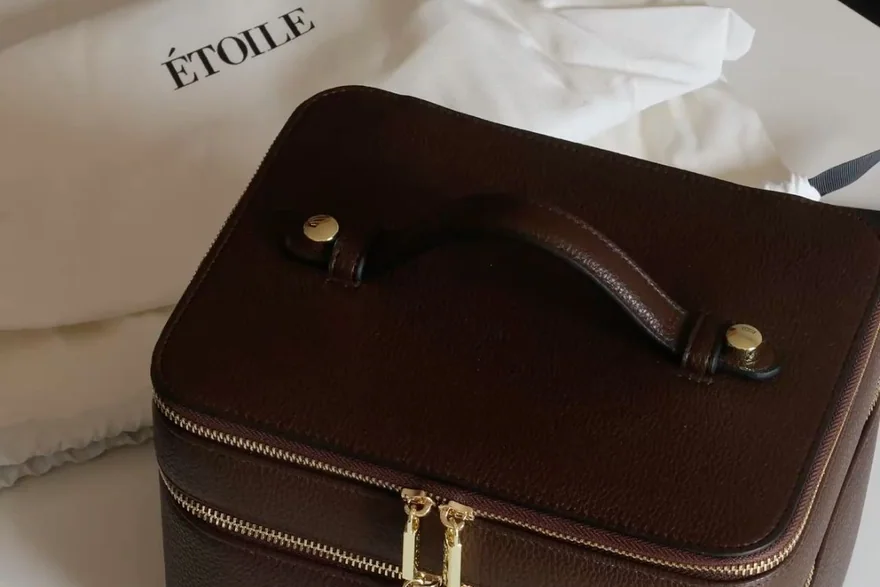
What Faux Leather and Vegan Leather Mean on a Specification Sheet
Faux leather and vegan leather are often printed on the same hangtag, but they answer two different questions. Faux leather is a material description: a sheet made to imitate animal hide, normally a polymer coating applied to a textile base. Vegan leather is a content claim: the finished article contains no material of animal origin. A polyurethane cosmetic pouch satisfies both descriptions at once. A cactus-fibre sheet satisfies only the second. A bag with a genuine leather zip puller on a polyurethane body satisfies neither, because the puller is animal-derived even though the shell is not.
The problem for brand owners is that neither term is controlled by a harmonised legal definition in the main export markets. EU Regulation 1007/2011 governs textile fibre names and requires composition labelling, but it does not define vegan; the US Textile Fiber Products Identification Act and the FTC Green Guides treat it as an ordinary marketing claim subject to general substantiation rules. Guidance from the EU REACH framework governs chemical content rather than animal content, so a compliant bag can still be mislabelled. The claim is therefore only as strong as the file behind it, and that file is assembled from mill declarations and laboratory reports rather than from one certificate stamped vegan.
This changes how a specification must be written. A buyer who writes vegan leather cosmetic bag on a tech pack receives whatever the supplier has on the shelf, most often 0.6-0.9 mm polyurethane on a 75-210 g/m² knit, because that is the default reading of the phrase in the bag trade. A buyer who writes polyurethane-coated knit, 0.75 mm plus or minus 0.05 mm, no animal-derived input anywhere in the bill of materials, signed declaration per lot receives something checkable. The second version costs nothing extra to write and can be defended when a retail buyer asks for evidence.
- Faux leather is a material category; vegan leather is a content claim - a single bag can meet both, one, or neither
- The default trade reading of vegan leather is 0.6-0.9 mm polyurethane on a knit base - name the polymer if something else is wanted
- Animal-derived trim breaks the claim: leather pullers, silk screen labels, wool felt stiffeners, beeswax finishes
- Substantiation is a file, not a logo: mill declaration, restricted-substance screening, rub and abrasion reports
- Write thickness in millimetres with a tolerance; a 0.55 mm coating and a 0.90 mm coating behave very differently at the corners
Material Families Behind Both Labels
Six material families sit underneath the two labels, and they differ far more from each other than the label suggests. Conventional polyurethane leather is a resin cast on to a release paper and transferred to a base cloth, giving a grain pattern that can be embossed into anything from a fine pebble to a full crocodile relief. Polyvinyl chloride leather uses a paste that needs plasticiser to stay flexible, which is why it is cheaper and why it smells. Microfibre polyurethane is a non-woven impregnated with resin and then buffed, producing a suede-like nap that reads as premium but marks with water.
Plant-fibre sheets are the newest family and the least standardised. Cactus, pineapple leaf and apple-pomace materials are typically a plant residue carried on a textile backing and bound with a partly bio-based polyurethane or a polylactic acid binder, so bio-based content usually lands between 20 and 60 percent rather than 100. Cork fabric is a 0.4-0.8 mm veneer laminated to a knit, with its own binder chemistry and a distinctive grain that varies from sheet to sheet. Mycelium sheets are grown rather than woven and still behave like a pilot-scale material: colour ranges are narrow and minimums are unstable.
Cost follows the same order every time. Using standard polyurethane as the 1.0 reference, polyvinyl chloride sits near 0.7, microfibre suede near 2.2, cork near 3.4, plant-fibre sheets near 4.4 and mycelium near 7.5. Those indices are material costs only; the convertability penalty is separate. A cork sheet with a 0.8 mm veneer will crack at a tight fold radius under 3 mm unless the pattern is re-engineered, and a mycelium mat at 2 mm thickness will not run through the same folder used for a 0.7 mm film.
| Material family | Binder or coating | Typical base cloth | Weight and thickness | Cost index (PU = 1.0) | Watch-out |
|---|---|---|---|---|---|
| Polyurethane leather | PU resin, one to three coats | 75-210 g/m² knit or 0.4-0.8 mm split | 280-520 g/m² total, 0.6-0.9 mm | 1.0 | Hydrolysis after 2-4 years in humid climates |
| Polyvinyl chloride leather | PVC paste with plasticiser | Woven or knit, 90-260 g/m² | 420-700 g/m², 0.7-1.1 mm | 0.7 | Plasticiser migration, odour, cold crack |
| Microfibre polyurethane suede | PU impregnated non-woven, buffed | Islands-in-sea PET or PET-PA non-woven | 300-480 g/m², 0.6-0.9 mm | 2.2 | Water spotting, shade variation in the nap |
| Plant-fibre sheet (cactus, pineapple, apple) | Partly bio-based PU or PLA binder | Plant residue on a textile carrier | 380-620 g/m², 0.8-1.2 mm | 4.4 | Bio-based content 20-60 percent, low abrasion life |
| Cork fabric | Natural suberin binder, textile backing | Cork veneer 0.4-0.8 mm on knit | 260-420 g/m², 0.6-1.0 mm | 3.4 | Edge cracking below a 3 mm fold radius |
| Mycelium sheet | Grown mat, PU or wax finish | Foam-like mat 2-8 mm | 300-560 g/m², 1.0-2.5 mm | 7.5 | Narrow colour range, unstable minimums |
A useful rule of thumb for a daily-use cosmetic bag is to match the material to the abuse it will take rather than to the story on the hangtag. A bag that lives in a bathroom and gets wiped weekly wants a closed-cell polyurethane surface at 0.7 mm or thicker with a Martindale result above 15,000 cycles. A bag sold as a premium gift can carry cork or a plant-fibre panel on the front face only, with polyurethane used for the base and the binding, which keeps the story and protects the parts that actually fail.
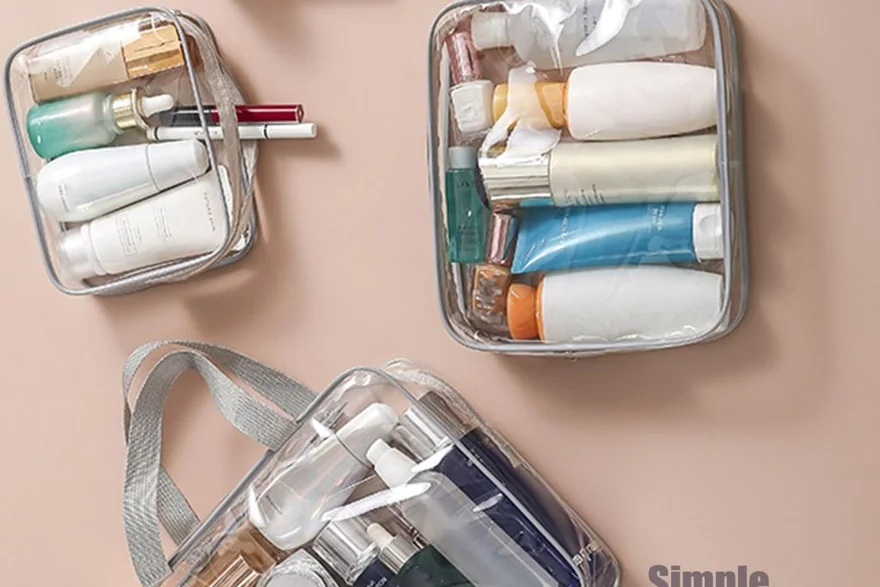
Documents That Turn a Vegan Claim Into a Defensible One
Retail onboarding teams do not ask whether a bag is vegan; they ask for the document that proves it, and they ask which scope the document covers. The most common failure is scope mismatch: a certificate issued for a fabric roll is presented as if it covered a finished bag with a lining, a zipper, a metal puller and a printed logo. Every component added after the certificate was issued sits outside it, which is why a bill-of-materials declaration has to accompany every other document in the file.
Chemical screening is the second layer. Restriction of hazardous substances in articles sold into the EU is governed by EU REACH, and a screening report against the candidate list is the practical way to show a coating and its dyes are clean. A laboratory report should name the specific article tested, list the substances screened and give the result for each, not simply a pass statement. Buyers should also require the report to be issued by an ISO/IEC 17025 accredited laboratory, otherwise a retail technical team may refuse it.
Third-party certificates add credibility where the buyer's own brand promise is at stake. The OEKO-TEX Standard 100 label is widely recognised for articles tested against a limit-value catalogue; the Global Recycled Standard covers recycled content with transaction certificates per shipment; and the Global Organic Textile Standard covers organic fibre content. None of the three is an animal-content certificate, and presenting them as one is the fastest way to lose a listing.
| Claim on the hangtag | Document that supports it | Issued by | Validity | Typical cost and lead time |
|---|---|---|---|---|
| No animal-derived content | Bill-of-materials declaration, signed | Material mill or assembly plant | Per production lot | No charge, 3-5 working days |
| Free of substances of very high concern | REACH candidate-list screening report | ISO/IEC 17025 laboratory | 12 months or per lot | $180-$420 per material, 7-12 days |
| Tested for harmful substances | OEKO-TEX Standard 100 certificate with product class | OEKO-TEX member institute | 12 months | $350-$900, 3-6 weeks |
| Contains recycled content | GRS transaction certificate with percentage | GRS-approved certification body | Per shipment | $200-$500 per certificate, 5-10 days |
| Contains organic fibre | GOTS scope certificate | GOTS-approved body | 12 months | $400-$1,200, 4-8 weeks |
| Colour fastness to rubbing | ISO 105-X12 report, dry and wet rating | ISO/IEC 17025 laboratory | Per shade lot | $25-$60 per shade, 3-5 days |
Timing is the part buyers underestimate. A certificate taking 3-6 weeks and a screening report taking 7-12 days do not fit inside a 6-10 working day sampling window, so documents have to be requested when the material is selected rather than when the sample is approved. The efficient sequence is to request the mill declaration and the screening report at material selection, run the rub and abrasion tests during sampling, and file the certificate before bulk ships. Programmes that leave documentation to the last fortnight routinely ship a compliant bag with an incomplete file, which is the worst of both outcomes.
- Ask for the certificate scope line every time: fabric, component or finished article
- A transaction certificate travels with the shipment; a scope certificate travels with the company
- Screening reports should list results per substance, not a single pass line
- Renew laboratory reports annually or when the coating mill changes
- Keep the signed bill-of-materials declaration for at least three years after the last shipment
Writing the Specification and Qualifying the Material Before Bulk
Terminology disputes are cheap to resolve on paper and expensive to resolve after 5,000 units are packed. The qualification plan for a vegan or faux leather cosmetic bag should test the five failure modes that actually generate returns: coating separating from the base cloth, surface rubbed through at the corners, colour transfer on to light clothing, cracking in cold transit, and flaking after a humid summer. Each has a standard method and a numeric acceptance that can be written into the tech pack and re-checked at final inspection.
Colour behaviour deserves separate attention because a vegan leather bag is usually a solid-colour article with no pattern to hide shade drift. Rub fastness against ISO 105 colour fastness methods should be reported dry and wet, and the acceptance for a bag that rubs against clothing in a suitcase should be dry 4 or better and wet 3-4 or better. Shade should be controlled with a reference swatch approved under a D65 light source and a tolerance of Delta E 1.2 or less for matching panels on the same bag.
| Failure mode | Test | Method reference | Acceptance for daily use | Frequency |
|---|---|---|---|---|
| Coating separating from base cloth | Coating adhesion | ASTM D751 family, coated fabrics | 12 N or more per 25 mm after 5 cycles | Per colour lot |
| Surface rubbed through at corners | Abrasion resistance | Martindale, 9 kPa or 12 kPa load | 15,000 cycles to grade 4 or better | Per material |
| Colour transfer on to clothing | Colour fastness to rubbing | ISO 105-X12, dry and wet | Dry 4 or better, wet 3-4 or better | Per shade |
| Cracking in winter transit | Low-temperature bend | Mandrel bend at -10 °C | No cracks, no whitening | Per material |
| Flaking after a humid summer | Hydrolysis resistance | 70 °C at 95 % relative humidity, 7-14 days | No tackiness, no delamination | Per material |
| Odour complaint on unpacking | Odour assessment | Sealed jar at 40 °C for 24 hours, trained panel | Grade 3 or better on a 5-point scale | Per lot |
Commercial terms follow the same logic: the numbers are fixed and should appear in the enquiry rather than being discovered later. Programmes run at 500 pieces per style and colourway, sampling takes 6-10 working days and 12-15 working days for complex constructions such as cork panels with folded edges, and bulk production runs 35-50 days after sample approval. Final inspection is conducted at AQL 2.5 under ISO 2859-1, shipment is FOB Xiamen, and payment is T/T 30 deposit with 70 against the bill of lading.
One last specification detail separates good programmes from bad ones: state the lining and the trim in the same document as the shell. A vegan claim covering a polyurethane shell is worthless if the interior lining is a silk-feel fabric of unknown origin or the interlining is wool felt. Listing every component with its fibre or polymer, its weight in g/m², and its supplier reference takes an extra hour at the tech-pack stage and removes the ambiguity that otherwise surfaces when a retailer's compliance team reviews the file.
The B2B Customisation View
Brand owners approaching cosmetic pouches, vanity cases and beauty organisers usually arrive with a mood board, a target landed cost and a launch date; the technical pack is what turns those three inputs into a repeatable specification.
Programme data for this category: minimum order quantity 500 pieces per style and colourway, sampling in 6–10 working days (12–15 working days for complex constructions), bulk production 35–50 days after sample approval, final random inspection at AQL 2.5 under ISO 2859-1, FOB Xiamen, T/T 30/70.
Engaging a sourcing partner gives the brand owner one channel for the awkward questions — shade drift, component substitution, carton marking — that otherwise bounce between three vendors.
Which Brand Types Benefit Most
The terminology question lands differently for each buyer type, and the answer that suits one is often wrong for another. Start-up beauty brands usually need the story as much as the performance, so a plant-fibre or cork front panel with a polyurethane base gives a credible marketing position at a material cost index of 4.4 or 3.4 rather than the 7.5 of a full mycelium build. The risk for a young brand is claiming more than the file can prove, so the hangtag wording should match the documents exactly: bio-based content of 20-60 percent should be printed as a percentage, not as fully plant-based.
Established brands and retailers are audited rather than persuaded. Their technical teams will ask for the certificate scope line, the screening report with per-substance results, and the bill-of-materials declaration, and they will reject a file that covers only the face fabric. For these buyers the safest construction is a single-polymer polyurethane bag: face, binding and lining all in one polymer family, which simplifies both the claim and the end-of-life statement. E-commerce sellers care about returns and photography, where a consistent embossed grain and a stable shade under studio lighting matter more than the feedstock; a 0.75 mm polyurethane with a 15,000-cycle Martindale result photographs predictably and survives the return journey.
- Start-up brands: one plant-based panel for the story, polyurethane for the structure, percentage claims printed honestly
- Established brands: single-polymer construction, full certificate scope, screening reports renewed annually
- Retailers and catalogue buyers: numeric acceptances for rub, abrasion and hydrolysis written into the tech pack
- E-commerce sellers: stable grain and shade, wipe-clean interior, packaging that survives the outbound box
- Gift and hospitality buyers: cork or embossed polyurethane with a debossed logo, 500-piece minimum per colourway, sampling 6-10 working days
Buyers carrying a private-label range across several categories should standardise the language in one internal glossary, so that product pages, hangtags and tech packs use the same words for the same material. Inconsistent terminology is the most common cause of a compliance question downstream: a page describing plant-based leather next to a specification listing polyurethane invites an auditor to ask which is true. A one-page glossary that fixes the permitted wording per material family takes an afternoon to write and prevents the problem across a whole season.
Frequently Asked Questions
Is faux leather the same thing as vegan leather on a Chinese specification sheet?
No. On a mill specification sheet, faux leather is read as a material category, which in practice means a 0.6-0.9 mm polyurethane or polyvinyl chloride coating on a knit or woven base. Vegan leather is read as a marketing phrase and carries no material definition at all, so the mill will substitute whatever it has in stock. The fix is to name the polymer, the thickness with a tolerance, and the base cloth weight in g/m².
Can a PVC cosmetic bag be sold as vegan leather?
It can be sold as vegan, because polyvinyl chloride contains no animal input, but the label is only half the problem. PVC needs plasticiser to stay flexible, and plasticiser blends are the part most likely to appear on a restricted-substance list. A buyer planning a PVC bag should budget for candidate-list screening at roughly $180-$420 per material and 7-12 days, and should ask for an odour assessment before bulk.
Which animal-derived inputs hide inside a bag described as vegan leather?
The shell is rarely the problem. Leather zip pullers, silk-feel lining, wool felt stiffener behind a logo patch, beeswax in a finish, and gelatine-based sizing in a paper backing all introduce animal content. The only reliable control is a component-by-component bill-of-materials declaration signed by the assembly plant and re-issued for every production lot.
What bio-based content is needed before a bag can be called plant-based?
There is no legal threshold for bags, so the honest approach is to print the measured number. Cactus, pineapple and apple-pomace sheets typically run 20-60 percent bio-based because a synthetic binder is still needed to hold the plant residue together. A hangtag reading 40 percent bio-based facing with a polyurethane structure is defensible; one reading plant-based leather without a number is not.
Does an OEKO-TEX Standard 100 certificate prove a bag is vegan?
No. That certificate is an article-level test against a limit-value catalogue for harmful substances and says nothing about animal content. It is useful in the file because retail technical teams recognise it, but the vegan claim still rests on the bill-of-materials declaration. Expect to pay $350-$900 for certification with a 3-6 week lead time and a 12-month validity.
What is the difference between PU leather and microfibre suede?
Polyurethane leather is a resin film transferred on to a base cloth, so the surface is closed and wipe-clean at 0.6-0.9 mm. Microfibre suede is a non-woven impregnated with resin and then buffed to raise a nap, giving a softer hand at a cost index near 2.2. The trade-off is maintenance: the nap spots with water and shows shade variation between panels, which is visible on a solid-colour cosmetic bag.
How is hydrolysis resistance tested before a bulk order is released?
The common accelerated method holds coated specimens at 70 °C and 95 percent relative humidity for 7-14 days, then checks for tackiness, cracking and loss of adhesion to the base cloth. A bag destined for a humid climate should pass 14 days with no visible change. The test costs little but takes calendar time, so it belongs in the sampling window rather than after approval.
Why do vegan leather cosmetic bags crack during cold-weather transit?
Polyurethane and polyvinyl chloride coatings stiffen as temperature falls, and plasticiser-containing formulations stiffen fastest. A container crossing a winter route can see sub-zero holds well before the bag reaches a heated shop. Specifying a low-temperature bend test at -10 °C with no cracking or whitening is the usual control, and it is worth running on the binding material as well as the shell.
Can a vegan leather cosmetic bag be embossed or debossed with a logo?
Polyurethane takes a heated die well and holds a deboss at 0.7 mm or thicker. Microfibre suede embosses but loses definition as the nap recovers. Cork can be laser-marked or screen-printed but will crack if a fold radius below 3 mm is forced through the marked area. Plant-fibre sheets should be tested at sampling stage because binder formulations vary between mills.
Which printing method survives on cork fabric?
Screen printing with a flexible ink and a low-temperature cure works better than heat transfer, because cork scorches above roughly 150 °C and the textile backing can shrink. Laser marking gives a clean burnt-edge logo on darker veneers. Whichever method is used, the print should be rub-tested to ISO 105-X12 and checked after a 24-hour sealed-jar odour test.
What does a REACH screening statement actually cover for a cosmetic bag?
It covers the article named in the report, tested against the candidate list for substances of very high concern at the 0.1 percent weight-by-weight threshold. It does not cover components added later or shades not listed. Buyers should require the report to name the coating, the dyes and the base cloth, and to be issued by an ISO/IEC 17025 accredited laboratory, otherwise a retail compliance team may refuse it.
How long does sampling take for a plant-based leather pouch?
Standard constructions sample in 6-10 working days. A pouch with cork panels, folded edges and a speciality binder is a complex construction and should be planned at 12-15 working days, because the material itself has to be sourced before the first cut. Bulk then runs 35-50 days after sample approval at 500 pieces per style and colourway.
Does the word vegan have to appear on the sewn-in care label?
No regulation requires it. Composition labelling rules cover fibre names and percentages, not ethical claims, so the word appears on a hangtag or a printed insert by choice. If it is used, the same file that supports the product page should support the tag, and the claim should not be broader than the bill-of-materials declaration allows.
What happens if a dye lot fails the wet rub test at final inspection?
Under an AQL 2.5 inspection, a failing critical or major defect count rejects the lot. The practical remedy depends on the failure: a surface finish problem can sometimes be re-sprayed and re-inspected, but a shade or fastness problem in the coating cannot. This is why rub fastness should be verified on a laboratory report during sampling, not discovered at final inspection.
Is mycelium leather realistic for a 500-piece cosmetic bag programme?
At present it is a pilot-scale material. Colour ranges are narrow, sheet thickness varies from 2-8 mm, and the cost index near 7.5 puts the finished article well above the typical $0.45-$12.00 unit band quoted on marketplaces. A mycelium front panel on a polyurethane body is a more realistic first step than a full mycelium shell.
People Also Ask
What is vegan leather actually made of?
Most vegan leather is a polyurethane or polyvinyl chloride coating on a knit or woven base cloth. Newer versions carry cactus, pineapple leaf or apple residue bound with a partly bio-based binder, giving 20-60 percent bio-based content, or use a cork veneer laminated to a textile backing. Mycelium sheets are grown rather than woven and remain pilot-scale.
Is faux leather better than real leather for a makeup bag?
For a bag that meets spilled foundation and gets wiped weekly, a closed-cell polyurethane surface at 0.7 mm or thicker is easier to clean than finished leather and costs far less. Leather wins on repairability and long-term patina. The deciding factor is the spill profile: cosmetics and oils stain unfinished leather permanently.
How can a buyer check whether a bag is really vegan?
Ask for a component-level bill-of-materials declaration covering shell, lining, interlining, zipper tape, puller and any finish, signed per production lot. Then check the certificate scope of any label shown, because a fabric certificate does not cover a finished bag. No single document answers the question on its own.
Does vegan leather peel over time?
Polyurethane coatings can delaminate from the base cloth, usually after 2-4 years in a humid climate as the resin hydrolyses. The accelerated check is 7-14 days at 70 °C and 95 percent relative humidity, looking for tackiness and loss of adhesion. Thicker coatings and polyester-based resins last longer than thin polyvinyl chloride films.
Request a Sample or a Written Quotation
Send the silhouette, dimensions, material preference and logo artwork, and the programme team will return a written quotation with MOQ, sampling window, bulk lead time and inspection standard.
Email: service@junyuanbags.com · WhatsApp: +86 177 5002 0688