Cosmetic Pouch vs Cosmetic Bag: Which One Does Your Brand Need?
Executive Summary
A cosmetic pouch is a flat, single-panel or minimally gusseted container, typically 20 x 14 cm or smaller, while a cosmetic bag has a gusset of 5 to 12 cm, a structured base and usually a lining. The pouch is lighter, cheaper and packs at 40 to 60 pieces per export carton; the bag holds roughly three times the volume and stands on a shelf. Choose the pouch for gift-with-purchase and subscription boxes and the bag for retail and daily use.
Both run on the same commercial terms: 500 pieces per style and colourway, 6 to 10 working days for sampling, 35 to 50 days for bulk after approval, and final random inspection at AQL 2.5 under ISO 2859-1. The real decision is unit cost against perceived value. A pouch lands at $0.45 to $1.20 and reads as packaging; a bag lands at $1.80 to $4.50 and reads as a product that can be sold on its own.
Where the Pouch Ends and the Bag Begins
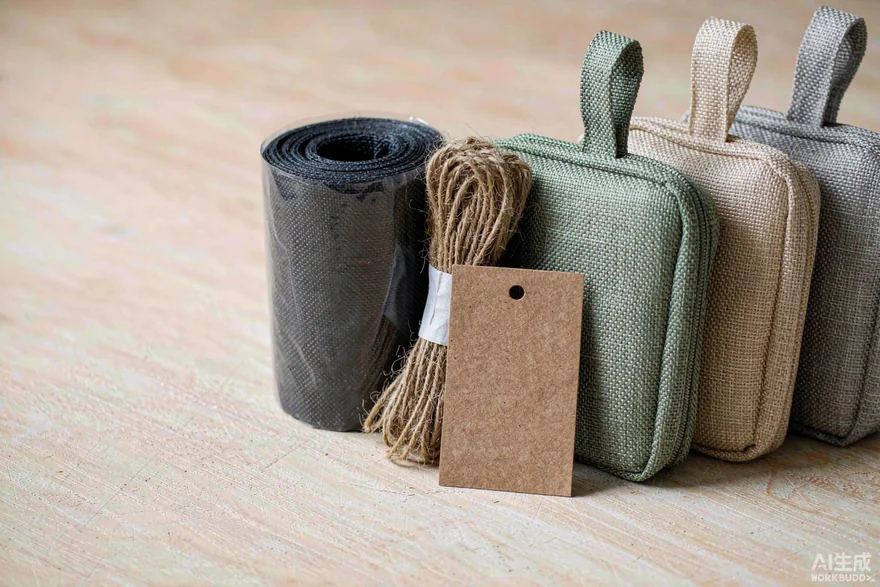
The dividing line between a cosmetic pouch and a cosmetic bag is the gusset. A pouch is flat or nearly flat, built from one or two panels with a gusset of 0 to 3 cm; a bag has a gusset of 5 to 12 cm, a defined base and usually a base board of 1.0 to 1.4 mm. Below roughly 15 cm on the longest edge the market calls the product a pouch regardless of construction; above 20 cm with a gusset it is a bag.
That single dimension changes everything downstream. A flat pouch holds items laid flat and closes over them, so capacity is limited by the footprint rather than by the depth. A gusseted bag holds items stacked and standing, so a 24 x 16 x 10 cm bag accommodates a foundation bottle upright where a 24 x 16 cm pouch would have to be folded around it. Buyers should sketch the contents before choosing, because the drawing settles the question faster than a price comparison.
- Pouch: gusset 0-3 cm, no base board, footprint-limited capacity
- Bag: gusset 5-12 cm, base board 1.0-1.4 mm, volume-limited capacity
- Pouch size band: 12-20 cm long, typically 20 x 14 cm
- Bag size band: 20-30 cm long, typically 24 x 16 x 10 cm
- Pouch packs 40-60 per carton; bag packs 24-36 per carton
Retail language is less precise than specification language. Many listings describe a 20 x 14 cm flat pouch as a bag because the word sells better, and a few describe a shallow gusseted bag as a pouch because the word sounds lighter. Buyers writing a brief should therefore avoid the name entirely and state the three dimensions plus the gusset, which removes the ambiguity and prevents a quotation arriving for the wrong product.
Material choice follows the same logic. A pouch at 20 x 14 cm works in 210D polyester at about 70 g/m² or in 8 oz cotton at about 270 g/m², because the panel carries little load. A bag of 24 x 16 x 10 cm wants 420D nylon at about 190 g/m² or 12 oz canvas at about 400 g/m², because the gusset corners and the base take the strain. Specifying a bag fabric on a pouch inflates cost without adding life; specifying a pouch fabric on a bag produces corner failures within a season.
Two closures dominate each format. Pouches use a drawstring, a short #3 coil zip or a snap flap, all of which suit a flat opening. Bags use a #5 coil zip across three sides of the gusset, which is what allows the bag to open wide enough to see the contents. Zipper terminology and performance are covered by ASTM D2053, and buyers should note that a three-sided zip costs roughly $0.30 more than a straight one and adds two operations to the assembly.
Size, Gusset and Usable Volume Compared
Usable volume is the number buyers rarely calculate and the one that decides the format. A flat pouch of 20 x 14 cm has an effective internal capacity of about 0.4 litres once the seam allowance and the closure are accounted for. A gusseted bag of 24 x 16 x 10 cm has about 2.6 litres, roughly six times as much, for a footprint only 37 percent larger. That ratio explains why the bag wins on daily use and the pouch wins on gifting.
| Format | Dimensions | Gusset | Usable volume | What it holds |
|---|---|---|---|---|
| Flat pouch, small | 16 x 11 cm | 0 cm | About 0.15 L | Lipstick, balm, two pencils |
| Flat pouch, standard | 20 x 14 cm | 0-2 cm | About 0.4 L | Palette, mascara, compact |
| Shallow pouch | 22 x 15 cm | 3 cm | About 0.8 L | Palette plus brushes flat |
| Gusseted bag, small | 20 x 12 x 7 cm | 7 cm | About 1.4 L | Travel-size bottles upright |
| Gusseted bag, standard | 24 x 16 x 10 cm | 10 cm | About 2.6 L | Foundation bottle, two palettes, brush roll |
| Hanging organiser | 26 x 20 cm folded | 8 cm | About 3.4 L | Full wash kit across four compartments |
The table shows why the shallow pouch at 3 cm is the awkward middle child. It costs nearly as much as a small gusseted bag because it needs the same three-panel assembly, but it holds about half as much. Buyers rarely choose it deliberately; it usually appears when a brief asks for a pouch that must hold a bottle. The correct answer in that case is a small bag, not a deeper pouch.
Standing behaviour is the second practical difference and it depends on the base board rather than on the gusset. A 1.0 to 1.4 mm board under the lining keeps a half-full bag upright; without it the bag slumps even with a 10 cm gusset. A pouch never stands, which is fine for a drawer or a gift box and a problem on a retail shelf, where a product that cannot stand has to be merchandised flat or hung.
Weight matters for a third reason: postage. A flat pouch in 210D polyester with a drawstring weighs about 35 to 45 grams; a lined gusseted bag in 420D nylon with a base board weighs 180 to 240 grams. For a subscription box shipped by post, that difference of roughly 180 grams can move a parcel into the next rate band, which is often a larger cost than the bag itself.
- Calculate usable volume before comparing prices
- Avoid the shallow 3 cm pouch; a small bag is better value
- Specify base board thickness for any bag that must stand
- Check the postal rate band where the pouch ships inside a box
- State three dimensions plus gusset in every brief
Unit Cost, Packing Density and Freight Impact
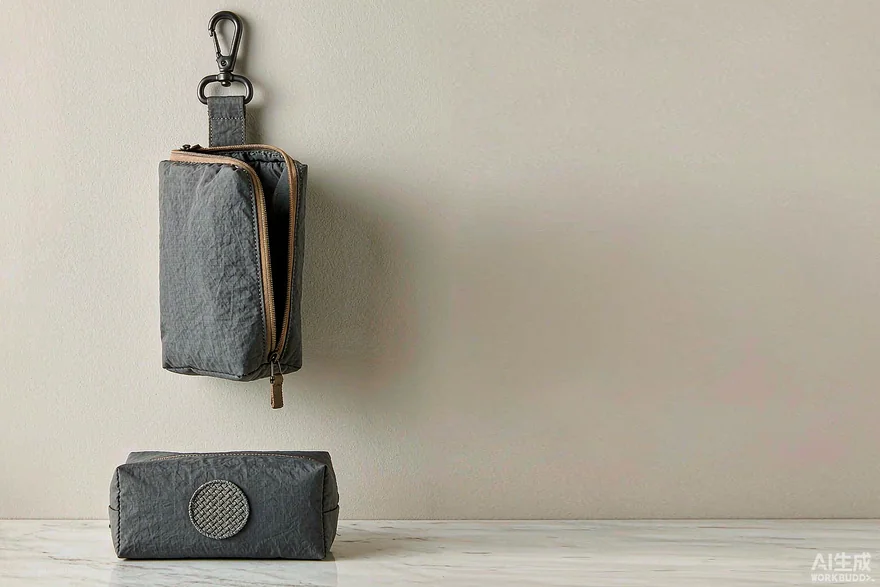
Unit cost is where the pouch wins outright, and packing density is where it wins again. A pouch needs fewer panels, no base board, a shorter zip and less assembly time. The compounding effect shows up clearly when a buyer models a 5,000-piece order rather than a single unit, because freight and duty are calculated on cartons and weight rather than on pieces.
| Cost line | Flat pouch 20 x 14 cm | Gusseted bag 24 x 16 x 10 cm |
|---|---|---|
| Shell fabric consumption | About 0.06 m² | About 0.16 m² |
| Lining | Often omitted | 190T-210D, adds $0.12-$0.30 |
| Base board | Not used | 1.0-1.4 mm, adds $0.10-$0.22 |
| Closure | Drawstring or #3 zip | #5 coil zip on three sides |
| Assembly time | About 4 minutes | About 11 minutes |
| Unit price band | $0.45-$1.20 | $1.80-$4.50 |
| Pieces per export carton | 40-60 | 24-36 |
| Weight per piece | 35-45 g | 180-240 g |
Freight is the number most often missed. On a 5,000-piece order, a pouch ships in about 100 cartons and a bag in about 170, a difference of roughly 70 cartons. At typical ocean freight and destination handling rates that gap adds roughly $700 to $1,400 to the landed cost, which on 5,000 pieces is $0.14 to $0.28 per unit. It does not overturn the price ranking, but it does narrow the gap more than most buyers expect.
Branding cost behaves differently on the two formats. A pouch offers one large flat panel, which is the ideal surface for a screen print or a heat transfer at $0.08 to $0.40. A gusseted bag offers a front panel plus a gusset, and printing across the gusset costs more because the panel has to be printed flat before assembly. Embroidery needs a stable woven base and is usually reserved for the bag, because a pouch shell at 210D will pucker under a dense stitch.
Where a recycled or certified material is required, the cost gap narrows further. An RPET shell costs roughly 10 to 20 percent more than virgin polyester at the same denier, and supporting the claim with a transaction certificate under the Global Recycled Standard is standard practice. Retailers in the European Union often add OEKO-TEX Standard 100 as a baseline because it tests the finished article. Both certificates should be requested at brief stage, because adding one after cutting starts means re-sourcing the shell.
Model the pouch and the bag on cartons and weight, not on unit price alone. A pouch at $0.85 and a bag at $2.40 look far apart per piece, but once 70 extra cartons of freight and roughly 180 grams per piece of postal weight are added, the effective gap on a 5,000-piece programme narrows by 20 to 30 percent.
Choosing Pouch or Bag by Programme Type
The decision is usually settled by what the bag is for rather than by what it costs. Five programme types cover most briefs, and each has a clear answer. Buyers should identify their programme first and then read the corresponding row, because the format that fits a gift campaign rarely fits a retail shelf and the reverse is equally true.
| Programme | Format that fits | Reason | Specification to fix |
|---|---|---|---|
| Gift-with-purchase | Flat pouch | Reads as packaging, under 3% of basket | Shell weight, print area, packing configuration |
| Subscription box | Flat pouch | Low postage weight, packs flat | Weight in grams, postal rate band |
| Beauty retail shelf | Gusseted bag | Must stand and look substantial | Base board 1.0-1.4 mm, #5 zip |
| E-commerce listing | Gusseted bag | Photographs as a product, higher price | Interior pockets, branded puller |
| Travel amenity | Flat pouch or small bag | Housekeeping checks it quickly | Wipeable lining, bulk packing in tens |
Gift-with-purchase is the clearest case for the pouch. A campaign gifting a bag with a $45 purchase needs the item to feel like a gift without costing more than roughly 3 percent of basket value, which puts the budget at about $1.20 landed. Only the pouch fits that, and it also photographs well laid flat beside the products, which is how most campaign pages are shot.
Retail is the clearest case for the bag. A product that cannot stand has to be merchandised flat or on a hook, which limits where it can be placed on a shelf and how it looks beside competing items. A 24 x 16 x 10 cm bag with a base board, a #5 zip and a branded puller occupies a full facing and supports a price of $19.99 to $34.99, which a pouch at the same quality cannot.
A hybrid approach works for capsules. Many brands run a pouch as the entry item and a bag as the hero item, sharing one shell fabric, one lining and one hardware set so the range reads as a family. The shared trims reduce per-unit branding cost by about 20 to 30 percent because screens and tapes are reused, and the two products cover gift and retail without a second development cycle.
Whichever format is chosen, the closing gates are the same. Minimum order quantity is 500 pieces per style and colourway; sampling takes 6 to 10 working days, or 12 to 15 with tooling or custom hardware; bulk takes 35 to 50 days after approval; and final random inspection runs at AQL 2.5 under ISO 2859-1, which on a 5,000-piece lot draws a 200-piece sample with 10 defects accepted and 11 triggering rejection. Shipment is FOB Xiamen with T/T 30 percent deposit and 70 percent against the bill of lading.
The B2B Customisation View
Most delays on cosmetic pouches, vanity cases and beauty organisers trace back to one unanswered question in the brief, so the first working session is spent removing ambiguity rather than choosing colours.
The numbers a buyer can plan around: 500 pieces minimum per style and colourway, 6–10 working days to a first sample (12–15 where tooling or moulding is involved), 35–50 days to bulk completion, AQL 2.5 under ISO 2859-1 at final inspection, FOB Xiamen terms, T/T 30/70 payment.
QUANZHOU JUNYUAN BAGS operates as the custom bag specialist on the file, managing the parts of the process that brands rarely resource in-house: shade matching, component sourcing and pre-shipment inspection.
Which Brand Types Benefit Most
Start-up brands on a tight first budget should begin with a pouch. At $0.45 to $1.20 landed and 500 pieces, a first run costs a fraction of a gusseted bag programme and still produces a branded product that can be photographed for a launch page. The pouch is also the faster route to market, because a flat two-panel build sits at the short end of the 6 to 10 working day sampling window.
Established beauty brands usually need the bag, because their customers expect the item to be usable every day and their retail partners expect it to stand on a shelf. The efficient structure is a two-item capsule: a pouch for gift-with-purchase and a gusseted bag for retail, sharing one shell, one lining and one hardware set. That sharing cuts branding cost by roughly 20 to 30 percent and makes the two items read as a range.
Subscription-box operators should choose the pouch on weight grounds alone. At 35 to 45 grams against 180 to 240 grams for a lined bag, the pouch keeps a parcel inside a lower postal band, and the saving on postage across a monthly cycle often exceeds the difference in unit cost. Retailers and private-label buyers usually take the opposite view, because shelf presence and perceived value drive their sell-through more than freight does.
Gift and hospitality buyers should decide by packing configuration rather than by format. A pouch supplied as amenity packaging is judged on print crispness and on pieces per room, so the specification that fits is a 210D or cotton shell, a one-colour print and bulk packing in tens. Buyers in this segment should state the packing and the carton mark in the brief, because those two fields decide the cost per occupied room.
Frequently Asked Questions
What gusset depth separates a cosmetic pouch from a cosmetic bag?
Around 3 cm. A pouch has a gusset of 0 to 3 cm and no base board; a bag has a gusset of 5 to 12 cm and a base board of 1.0 to 1.4 mm. Buyers should state three dimensions plus the gusset in the brief, because the word pouch is used loosely in retail listings and causes quotations to arrive for the wrong product.
Does a cosmetic pouch need a lining?
Usually not. A pouch carrying powders, balms and a compact can run unlined in 8 oz cotton or 210D polyester, which keeps the weight near 40 grams and the unit cost near $0.45. Add a 190T lining, roughly $0.12 to $0.20, only if the pouch will carry foundation or lipstick, both of which migrate through uncoated fabric.
How much usable volume does a 20 x 14 cm pouch actually hold?
About 0.4 litres once seam allowance and closure are deducted, against roughly 2.6 litres for a 24 x 16 x 10 cm gusseted bag. That is six times the volume for a footprint only 37 percent larger, which is the single strongest argument for the bag when the contents include a bottle.
Why is a 3 cm gusset pouch poor value?
It needs the same three-panel assembly as a small gusseted bag, so it costs nearly as much, but it holds about half as much, roughly 0.8 litres against 1.4. It usually appears in a brief that asks for a pouch able to hold a bottle. The correct answer in that case is a small bag of about 20 x 12 x 7 cm.
What minimum applies to a flat printed cosmetic pouch?
500 pieces per style and colourway, the same as any custom construction. Screen print set-up is normally included at that quantity. Marketplace listings showing 100 to 1,000 pieces generally describe stock pouches with a logo added rather than a custom shell, a printed lining or a bespoke size.
How long does sampling take for a pouch with a drawstring?
Six to ten working days, at the short end of the window because there is no tooling. A moulded toggle, a custom metal end or a welded film pouch moves the programme to 12 to 15 working days. Buyers should approve the trim colour separately so a late change to the cord does not restart the shell approval.
Can a pouch be printed edge to edge?
Yes, and it is the main advantage of the format. A flat panel takes a screen print or a heat transfer at $0.08 to $0.40 with no gusset to align across. A gusseted bag can also be printed across the gusset, but the panel has to be printed flat before assembly, which adds cost and alignment risk.
Does embroidery work on a cosmetic pouch?
Only on a stable woven base. A 210D polyester pouch will pucker under a dense stitch, so embroidery suits 12 oz canvas at about 400 g/m² or heavier nylon. On a lightweight pouch, a woven label at $0.10 to $0.25 gives the same branded effect without distorting the panel.
How many pouches ship per export carton?
40 to 60 pieces, against 24 to 36 for a gusseted bag of similar footprint. On a 5,000-piece order that is roughly 100 cartons against 170, a difference of about 70 cartons, worth roughly $700 to $1,400 in ocean freight and destination handling, or $0.14 to $0.28 per unit.
How much does a pouch weigh compared with a bag?
About 35 to 45 grams for an unlined 210D pouch with a drawstring, against 180 to 240 grams for a lined 420D gusseted bag with a base board. That difference of roughly 180 grams can move a subscription parcel into the next postal rate band, which is often a larger cost than the item itself.
Which format suits a $45 gift-with-purchase campaign?
The flat pouch. A campaign budget of about 3 percent of basket value puts the ceiling near $1.20 landed, which only the pouch fits at $0.45 to $1.20. It also photographs well laid flat beside the products and packs at 40 to 60 per carton, keeping freight inside the campaign budget.
Can a pouch and a bag share a shell fabric in one capsule?
Yes, and it is the most efficient way to build a range. Sharing one shell, one lining and one hardware set across a pouch and a gusseted bag reduces per-unit branding cost by roughly 20 to 30 percent because screens and tapes are reused, and it makes the two items read as a family on a shelf or a product page.
What zipper does a gusseted bag need that a pouch does not?
A #5 coil zip running across three sides of the gusset, which lets the bag open wide enough to see the contents and costs about $0.30 more than a straight zip. A pouch uses a drawstring, a short #3 coil zip or a snap flap. Zipper terminology and performance are defined under ASTM D2053.
Are recycled materials available for both formats?
Yes. RPET in 300D to 600D works for either, at roughly 10 to 20 percent above virgin polyester at the same denier. The claim should be supported by a transaction certificate under the Global Recycled Standard, and European retailers often add OEKO-TEX Standard 100 because it tests the finished article rather than the fibre.
How is AQL 2.5 applied to a pouch order?
Under ISO 2859-1 at general inspection level II, a 5,000-piece lot draws a 200-piece random sample with 10 defects accepted and 11 triggering rejection. For pouches the defect classes worth defining are print alignment, drawn cord channel alignment and seam slippage, because a pouch has few components and faults concentrate in those three areas.
People Also Ask
Is a cosmetic pouch the same as a makeup pouch?
Yes. Both describe a flat, single-panel or lightly gusseted container for cosmetics, typically 12 to 20 cm long. Pouch is the trade term for the flat format and bag is used once a gusset of 5 cm or more and a structured base are added. The commercial terms are identical for both.
Which is better for a subscription box, a pouch or a bag?
The pouch, on weight and cost. At 35 to 45 grams against 180 to 240 grams, it keeps a parcel inside a lower postal band, and at $0.45 to $1.20 landed it fits a box budget. A bag only makes sense when the bag itself is the headline item in the box rather than a container.
Can a flat pouch stand up on a shelf?
No. Standing requires a gusset of 5 cm or more plus a base board of 1.0 to 1.4 mm under the lining. Without the board, even a 10 cm gusset will slump when the bag is half full. A pouch has to be merchandised flat in a tray or hung from a header card.
What is the cheapest cosmetic pouch specification?
An unlined 210D polyester pouch at about 20 x 14 cm with a drawstring and a single-colour screen print, landing at roughly $0.45 to $0.85 on a 500-piece run. It uses about 0.06 m² of fabric and about four minutes of assembly, and it packs at 40 to 60 pieces per export carton.
Request a Sample or a Written Quotation
Send the silhouette, dimensions, material preference and logo artwork, and the programme team will return a written quotation with MOQ, sampling window, bulk lead time and inspection standard.
Email: service@junyuanbags.com · WhatsApp: +86 177 5002 0688