Beauty Subscription Box Cosmetic Bags: Packaging & Unboxing
Executive Summary
How should a beauty subscription box cosmetic bag be specified? It should be specified as a reusable product first and a printed surface second: a coated or laminated shell that survives parcel handling, a zipper that survives being opened on camera, and a print method chosen for how many months the subscriber will keep using the bag rather than for how cheaply one unit can be decorated. Monthly cadence is the defining constraint, because twelve drops a year means twelve artwork cycles crossing one production calendar.
Programme arithmetic runs backwards from the despatch date. Sampling takes 6-10 working days, or 12-15 working days for complex constructions, and bulk production runs 35-50 days after sample approval, so a monthly drop has to be locked roughly two production windows ahead rather than chased. The 500-piece minimum per style and colourway then decides whether each month receives its own colourway or whether a single evergreen shell carries a changeable patch or label. Inspection is AQL 2.5 under ISO 2859-1, and printed-works defects need their own defect class.
What a subscription-box cosmetic bag is asked to do
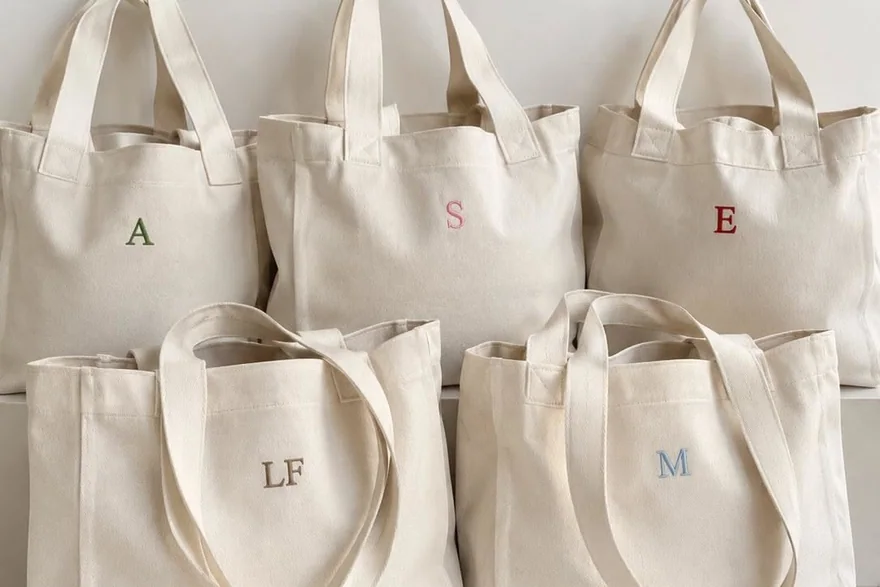
A beauty subscription box cosmetic bag is a pouch, makeup bag or vanity case that ships inside a recurring subscription parcel and is expected to keep being used long after the contents inside it are finished. It is bought as packaging and judged as product. That double life is what makes it awkward to specify, because the two roles optimise for different things: packaging wants a low unit cost and a flat, printable panel, while a product that the subscriber keeps for a year wants a coating that resists cracking, a closure that survives daily opening, and a print that does not rub off at the corners.
Three mechanical differences separate the subscription pouch from the same pouch sold at retail. First, it travels through a parcel network rather than sitting on a shelf, so it meets drop, compression and abrasion without any retail handling standard protecting it. Second, its decoration is date-specific, carrying a month name, a season or an edition number, which rules out one generic print covering the whole year. Third, its audience receives it repeatedly, so repetition itself becomes a defect: the twelfth bag has to feel different from the first without changing the tooling.
The category underneath is large enough that the specification decision sits inside a real market. Toiletry bags draw roughly 74,810 weekly Amazon searches according to ASINSIGHT 2026.07, and the phrase travel bag for toiletries draws about 110,000 monthly searches, so subscribers already understand the format before the box arrives. Typical unit price bands run $0.45 to $12.00 on Alibaba as of 2026.10, and typical marketplace minimums run 100 to 1,000 pieces, against a programme minimum of 500 pieces per style and colourway.
Four decisions decide whether a subscription bag programme works. How many drops a year the calendar commits to, and therefore how many separate runs have to clear the 500-piece minimum. Which decoration route matches the expected reuse life rather than the set-up budget. How the bag is protected in transit. And where in the unboxing sequence the bag sits, because a bag buried under loose filler has already lost the moment it was bought to create. Each of those decisions has a number attached to it, and the numbers interact rather than sitting side by side.
Monthly cadence and the twelve-drop production calendar
Cadence is the first decision because it sets everything else. A monthly box is twelve drops a year, a bi-monthly box is six, and a quarterly box is four. Since the minimum is 500 pieces per style and colourway, cadence decides how many separate production runs the year commits to, and therefore how much of the production calendar is occupied before a single unit is sold. The arithmetic is unforgiving: twelve sequential runs at the top of the 35-50 day bulk window would occupy more calendar days than the year contains, so a monthly programme cannot be run sequentially.
| Cadence | Drops per year | Production runs against the 500-piece minimum | Artwork cycles | Planning consequence |
|---|---|---|---|---|
| Monthly | 12 | 12 runs, each at 500 pieces minimum per style and colourway | 12 per year | Artwork must be locked before the previous drop despatches; no re-run window exists |
| Bi-monthly | 6 | 6 runs, allowing larger colour drops per run | 6 per year | One contingency window sits between consecutive runs for corrections |
| Quarterly | 4 | 4 runs with the highest volume per run | 4 per year | Most tolerant of complex construction and the 12-15 working day sampling route |
| Evergreen shell plus seasonal marker | 4 seasonal drops | 1 plain shell run plus 4 label or patch runs | 4 per year | Unsold seasonal markers can be written off without scrapping the bag |
The practical answer for a monthly programme is batching. Three or four months of bags are produced in one run, despatched to a fulfilment warehouse, and released one month at a time. If the bulk window is 35-50 days, a four-month block is committed roughly two months before its first release month, and the block has to be repeat-ordered three times a year. This is the single most important piece of subscription arithmetic: the sampling window and the bulk window have to be added to each other, then doubled, because the next block starts before the current one finishes shipping.
Batching changes the artwork problem rather than removing it. Four months of artwork have to be approved at the same time, which means the design team works further ahead than on a retail calendar, and a late change to month three affects a production block that has already started. Buyers who run monthly programmes successfully usually lock artwork for a whole quarter at once and accept that the last month of the block is less responsive to trends than the first. The alternative, twelve separate runs, is available only if volumes are high enough to clear the 500-piece minimum twelve times and the production calendar can absorb the overlap.
Volume planning starts from subscriber count, not from unit price. A box with 4,000 subscribers needs 4,000 bags per drop, which is eight times the 500-piece minimum and comfortably one run. A box with 700 subscribers needs 700 bags per drop, which meets the minimum with modest headroom and means the cost of a colourway change is low but the cost of a mistake is high, because there is no buffer stock to draw on. Below the minimum, the choice is between paying for a larger run and holding stock, or standardising the shell and changing only the marker.
Shipping-abuse resistance: what the parcel actually does to the bag
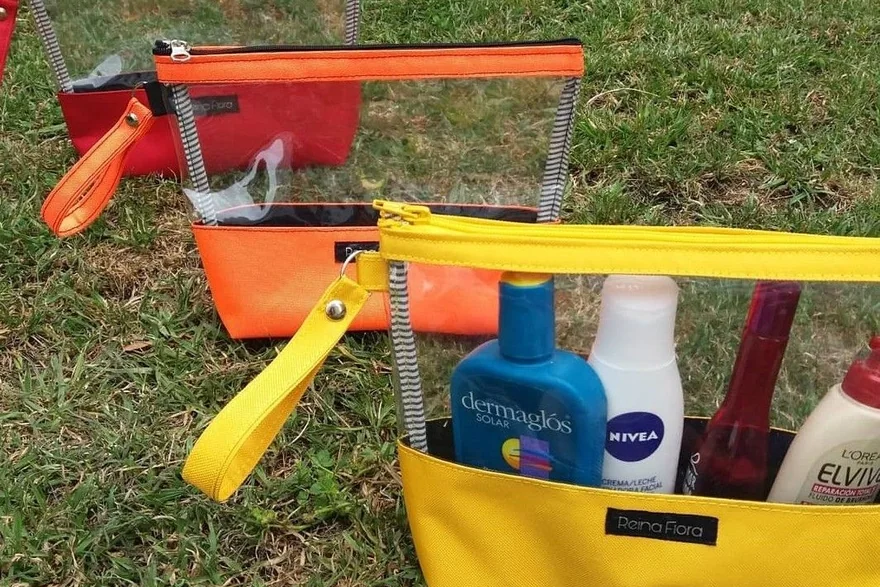
Retail packaging is protected by handling standards. Parcel packaging is not. A subscription pouch sits inside a corrugated mailer that will be dropped, stacked, conveyed, sorted and possibly left in a non-climate-controlled vehicle. The bag is usually the most durable item in the box, which is exactly why brand owners are tempted to under-specify it; the failure shows up not as a broken bag but as a scuffed print, a creased panel or a zipper that catches, all of which read as cheapness on camera.
Coating behaviour is the most common failure. A TPU or PU laminate over a 210D to 600D polyester base can craze or crack where the bag is folded flat for packing, particularly if the fold line is the same one the subscriber uses every day. Specifying a coating that stays flexible at low temperature matters for any box shipping into a cold market. Coated-fabric behaviour can be checked against the test methods described in ASTM D751, which covers adhesion and flexibility of coated fabrics. Where the programme ships into a cold market, ask for the flexibility check to be run at a low temperature as well as at ambient, because a laminate that passes at room temperature can still craze in winter transit.
- Coating adhesion at the fold: the laminate must not craze where the bag is folded flat for packing or where the subscriber refolds it daily.
- Zipper cycling under load: a #5 nylon coil with a moulded puller should run cleanly after several hundred open-close cycles on a stuffed bag; zipper terminology is defined in ASTM D2053.
- Corner and base abrasion: bound internal seams and a reinforced base panel stop the printed face scuffing against the corrugated mailer.
- Print rub resistance: agree a dry and wet rub cycle count and an acceptable colour-transfer rating before bulk starts, not after.
- Compression recovery: the bag must return to shape after a sustained period under stacked carton load, or the packing line ships a creased product.
- Lining seam strength: a wipe-clean PEVA or TPU lining should hold a point load at the seam without splitting when the bag is overfilled.
Outer carton specification does most of the protective work. A 5-ply corrugated shipper holding 60 to 100 individually polybagged pouches, with the bag laid flat rather than folded around a hard insert, removes most scuff risk before any coating decision is made. Bag-in-bag packing, where the pouch is nested inside a printed paper sleeve rather than printed directly, transfers the transit risk from the reusable item to a disposable one and is the cheapest insurance available to a monthly programme. Both approaches cost less than upgrading the shell fabric, and both can be validated during sampling rather than discovered in month three.
Because there is no universal parcel-handling standard for soft goods, most subscription operators write their own in-house transit protocol and hold the production partner to it. A typical buyer-defined protocol runs a drop sequence on a packed carton, a sustained compression hold under stacked load, and a visual check for coating crazing, print transfer and zipper tracking afterwards. The value is not the exact drop height; it is that the same protocol runs on the approval sample and on a random draw from bulk, so the comparison means something at the AQL 2.5 inspection under ISO 2859-1. Testing the packed configuration matters more than testing the bag alone, because most damage occurs where the bag meets the corrugated.
Print cost versus reuse life, and the unboxing sequence
Decoration is where subscription programmes most often lose money in the wrong place. A cheap print on a bag the subscriber keeps for a year costs more per month of brand exposure than an expensive print on the same bag. The correct measure is cost per month of reuse: divide the decoration cost by the number of months the bag stays in service, and the ranking of the print methods changes. A transfer that costs twice as much per unit but stays legible for twelve months beats a screen print that fades in four.
| Decoration route | Set-up requirement | Durability across reuse | Unit cost character (illustrative planning range) | Cadence fit |
|---|---|---|---|---|
| Screen print on a flat panel | One screen per colour per design | Strong on flat panels, weaker across fold lines | Low unit, moderate set-up; plan in the lower third of the $0.45-$12.00 band | Monthly designs built from one or two spot colours |
| Heat-transfer film | Digital, no screens | Moderate; edges can lift after repeated rubbing | Low set-up, mid unit cost | Twelve different monthly artworks on one shared shell |
| Dye-sublimation on polyester | No set-up, full-panel coverage | Very strong; colour sits inside the fibre rather than on it | Mid unit cost | Photographic or gradient seasonal artwork |
| Woven label on the side seam | Label loom set-up per design | Excellent; unaffected by surface abrasion | Small add-on per unit | Evergreen shell carrying a changeable month or edition marker |
| Embroidery | Digitising per design | Excellent, but adds stiffness to light shells | Higher unit cost; plan in the upper third of the band | Quarterly or annual special editions rather than monthly drops |
Recycled content is a live question for subscription buyers, because the bag is the one part of the parcel the subscriber keeps. Where a recycled claim is made on the shell fabric, it should be traceable to a transaction certificate rather than printed as a decorative logo. The Global Recycled Standard covers recycled input and chain of custody, and the GOTS framework covers organic fibre content alongside processing and social criteria. Buyers should ask which scope the certificate covers, because a certificate for yarn does not automatically cover a finished printed pouch.
Write the reveal order into the packing instruction: lid lift, tissue fold, printed face orientation, pull direction, lining colour reveal, then contents nesting. If the sequence is only described verbally to the fulfilment team, drop four will not look like drop one.
The unboxing sequence is a specification, not a mood. It has six decisions in it: which way the printed face points when the lid lifts, whether the pouch is nested in tissue or standing loose, which direction the puller faces, what colour the lining is relative to the shell, whether the contents sit inside the bag or beside it, and whether there is a card or insert that names the edition. Each of those can be written as a line in the packing instruction with a tolerance, and each of them is visible in the subscriber's video. Programmes that leave them to the packing line produce twelve drops that look like twelve different brands.
Timing binds the whole thing together. Sampling takes 6-10 working days, or 12-15 working days for complex constructions, and bulk production runs 35-50 days after sample approval. Adding the two gives the minimum planning horizon for a single drop, and a batched programme needs that horizon plus the overlap for the next block. On top sit ocean transit, customs clearance and the receipt-to-release window at the fulfilment centre. None of those steps can be compressed by urgency, which is why the only reliable lever a subscription planner has is the date on which artwork is locked.
The B2B Customisation View
Most delays on cosmetic pouches, vanity cases and beauty organisers trace back to one unanswered question in the brief, so the first working session is spent removing ambiguity rather than choosing colours.
The numbers a buyer can plan around: 500 pieces minimum per style and colourway, 6–10 working days to a first sample (12–15 where tooling or moulding is involved), 35–50 days to bulk completion, AQL 2.5 under ISO 2859-1 at final inspection, FOB Xiamen terms, T/T 30/70 payment.
QUANZHOU JUNYUAN BAGS operates as the custom bag specialist on the file, managing the parts of the process that brands rarely resource in-house: shade matching, component sourcing and pre-shipment inspection.
Which Brand Types Benefit Most
Subscription operators are the obvious beneficiaries, but the useful distinction is between operator types. A box with several thousand subscribers and a stable theme can carry a different colourway each quarter and treat the bag as a collectible, which justifies a higher unit cost and turns the pouch into a reason to stay subscribed. A box with under a thousand subscribers is better served by one evergreen shell running all year with a changeable woven month marker, because the 500-piece minimum per style and colourway is cleared once rather than twelve times and the risk of unsold date-specific stock disappears. Start-up brands testing a subscription line should run the first two drops on a stock shell with a single-colour transfer before committing to custom tooling, since the first drop is where the unboxing sequence gets debugged. Established beauty brands can use the bag as the membership marker for a paid tier, where the pouch signals belonging rather than functioning as packaging. Retailers running a beauty club, e-commerce sellers bundling sample kits, and gift or hospitality buyers sending welcome kits all benefit from the same evergreen-shell logic, because none of them wants to hold stock printed with a month that has already passed.
- Established beauty brands launching a subscription tier: match the pouch shell to the master-brand palette so the subscription item looks like a product extension rather than a giveaway.
- Retailers running a paid beauty club: use the bag as the membership marker, with the edition number woven into the side seam so renewals are visible.
- E-commerce sellers bundling sample kits: a 20 x 13 x 7 cm pouch ships in a standard mailer and doubles as the reason to keep the empty kit.
- Gift and hospitality buyers: an evergreen shell with a neutral lining carries over across occasions, so leftover stock is not written off.
- Subscription boxes with a strong sustainability position: recycled shell plus a traceable certificate, with the claim printed on the care label rather than the outer face.
- Boxes shipping into cold climates: specify a low-temperature-flexible coating to avoid crazing at the pack fold during winter transit.
Frequently Asked Questions
What makes a subscription-box cosmetic bag different from a retail cosmetic bag?
A retail bag is handled by store staff, displayed open and judged on a shelf. A subscription bag is packed flat, dropped through a parcel network and judged in the subscriber's first ninety seconds at home. It therefore needs coating flexibility at the fold, corner abrasion resistance against the corrugated mailer, and a print that survives rubbing rather than one that only looks good under retail lighting.
How should a 12-month subscription programme be batched against the 35-50 day bulk window?
Twelve sequential runs would occupy more calendar days than the year contains, so a monthly programme has to be batched. Three or four months of bags are produced in one run, despatched to a fulfilment warehouse and released monthly. Each block needs its sampling window added to its bulk window, and blocks overlap, so the planning horizon is roughly two production windows ahead of the first release.
Which shell fabric survives parcel transit best for a monthly pouch?
A TPU or PU laminate over a 300D to 600D polyester base, in the 180 to 260 g/m² range, gives a good balance of scuff resistance and fold flexibility. Heavier canvas looks substantial but creases at the pack fold. Light 190T lining-weight polyester is too thin for a bag expected to survive a year of reuse.
When must monthly artwork be locked for a drop to land on schedule?
Work backwards from the despatch date. Bulk production runs 35-50 days after sample approval, and sampling takes 6-10 working days, or 12-15 working days for complex constructions. Artwork has to be final before sampling starts, because a design change after approval restarts the clock. In a batched programme, four months of artwork lock together, two production windows before the first drop.
Can every month have its own colourway under the 500-piece minimum?
Only if the subscriber count clears 500 pieces for each month's colourway, because the minimum applies per style and colourway. A box with 700 subscribers can technically commission twelve colourways, but each becomes a separate run with no buffer stock. The safer structure is one shell colourway per quarter with a changeable woven or printed month marker.
Which print method holds up if a subscriber keeps using the bag for a full year?
Dye-sublimation on a polyester shell lasts longest because the colour sits inside the fibre rather than sitting on top of it. Embroidery and woven labels are effectively permanent but carry higher unit cost, and embroidery stiffens light shells. Screen print is durable on flat panels and weak across fold lines. Heat-transfer film is economical for twelve different artworks, but its edges can lift after sustained rubbing, which is why the rub test threshold matters more for transfer than for the other routes.
How is print abrasion checked before a full subscription run ships?
Agree a rub test with a defined cycle count and an acceptable colour-transfer rating before bulk begins, then run the same test on the approval sample and on a random draw from the finished shipment. AATCC publishes the standard rubbing and colour-transfer test methods used for this purpose, and the result belongs in the inspection report alongside the AQL 2.5 findings.
What carton specification reduces transit damage on subscription pouches?
A 5-ply corrugated shipper holding 60 to 100 individually polybagged pouches, packed flat rather than folded around a rigid insert, removes most scuff risk. Cartons should be filled to capacity so contents cannot shift, and the printed face of each pouch should point the same way so abrasion on one face is consistent and detectable.
Should each subscription pouch be individually polybagged?
Yes for printed pouches, because the polybag prevents print-to-print transfer during transit, keeps the printed face clean for the unboxing moment and protects the coating from abrasion against the corrugated. Where the programme has a plastic-reduction commitment, a paper sleeve or a tissue wrap is a workable alternative, but it should be tested for print transfer and scuff during sampling rather than discovered after the first drop arrives.
How does an evergreen shell with a changeable label reduce subscription risk?
Only the marker is date-specific, so unsold stock from a finished drop is a small label write-off rather than a container of unshippable printed bags. The shell run clears the 500-piece minimum once, and subsequent months are small label or patch runs. This structure suits boxes under roughly 1,500 subscribers better than twelve custom colourways.
Which defect classes belong in the AQL 2.5 inspection for a printed subscription pouch?
Four classes beyond the usual sewn-goods checks: print registration and coverage, coating appearance at folds, zipper tracking and puller attachment, and lining cleanliness. Each needs an agreed acceptance threshold and an agreed inspection method, because ISO 2859-1 governs how many units are sampled, not what counts as a defect. Inspection runs to AQL 2.5 under ISO 2859-1.
How is the unboxing sequence documented so every monthly drop looks identical?
Write it as numbered packing instructions with a photograph for each step: lid orientation, tissue fold, printed face direction, puller direction, lining reveal, contents nesting, insert placement. Include a tolerance statement describing what counts as acceptable variation, and reissue the document whenever the artwork or the pack-out changes. Verbal briefings to the fulfilment team rarely survive staff turnover across twelve drops.
What happens to leftover printed subscription stock once a drop ends?
Date-specific printed pouches have little resale value after the month passes. The usual routes are bundling them into a back-catalogue or welcome kit where the month name is not visible, selling them as a multi-pack without the date promise, or planning the overrun percentage lower from the start. Prevention through evergreen shells is cheaper than any disposal route.
How do FOB Xiamen terms apply when several months ship in one consolidated consignment?
FOB Xiamen means the seller's responsibility ends when goods are loaded on board at Xiamen; freight, insurance, clearance and inland delivery to the fulfilment warehouse sit with the buyer. For a consolidated multi-month block, the buyer takes on warehouse holding cost for the months not yet released, which should be weighed against the saving from running one production block instead of three. Payment is T/T 30 deposit and 70 against bill of lading, so the deposit falls when the production slot is confirmed and the balance before the parcel is despatched.
People Also Ask
Are custom cosmetic bags worth the cost for a subscription box?
They are worth it when measured as cost per month of reuse rather than cost per unit. A printed pouch that stays in a subscriber's bathroom for twelve months delivers more brand exposure than a printed paperboard insert discarded in a minute. The economics weaken below roughly 500 subscribers, where the per-style and per-colourway minimum forces stock the programme may not move.
How many cosmetic bags does a subscription box need per year?
One bag per subscriber per drop, plus an overrun allowance for damage and for new subscriber growth within the block. A monthly box with 2,000 subscribers needs roughly 24,000 bags a year before allowance. Because the minimum is 500 pieces per style and colourway, most programmes batch three or four months into one production block to keep run counts manageable.
What size cosmetic bag fits a standard subscription mailer?
A flat pouch around 20 x 13 cm with a 6 to 7 cm gusset lies flat in a standard letterbox-friendly mailer without forcing the corrugated to bow. Larger structured vanity cases around 23 x 15 x 9 cm need a deeper box and usually push the parcel into a higher shipping weight band, which changes the economics more than the bag cost does.
Can subscription cosmetic bags be made from certified recycled fabric?
Yes, but the certificate scope has to cover the finished article, not only the yarn or the greige fabric. A recycled claim should be traceable to a transaction certificate issued under a recognised chain-of-custody standard, and the printed and laminated stages must fall inside that chain. Ask for the certificate number and check the product category before approving artwork that mentions recycled content.
Request a Sample or a Written Quotation
Send the silhouette, dimensions, material preference and logo artwork, and the programme team will return a written quotation with MOQ, sampling window, bulk lead time and inspection standard.
Email: service@junyuanbags.com · WhatsApp: +86 177 5002 0688