AliExpress vs Made-in-China for Cosmetic Bag Sourcing
Executive Summary
AliExpress and Made-in-China serve different buying jobs, and the direct answer is that AliExpress is a retail-style marketplace for ready-made cosmetic bags bought in ones, tens or hundreds, while Made-in-China is a business-to-business sourcing marketplace used to commission made-to-order programmes, typically at 500 pieces per style and colourway. A buyer validating a print idea or filling a gift order belongs on the first; a brand owner who needs a specified 600-denier shell, a matched Pantone, a custom zipper puller and a retail barcode belongs on the second. They are not substitutes, and many programmes use both in sequence.
Cost is where the confusion starts. A marketplace unit price of $1.80-$4.50 looks cheaper than a custom programme quoted at $2.60-$6.80, but the first buys whatever is already packed, while the second buys a documented specification, an approved pre-production sample and an inspection right before the balance payment. Buyers should compare landed cost per sellable unit after freight, relabelling, rejects and re-photography, not the sticker price on the listing.
What each channel actually sells
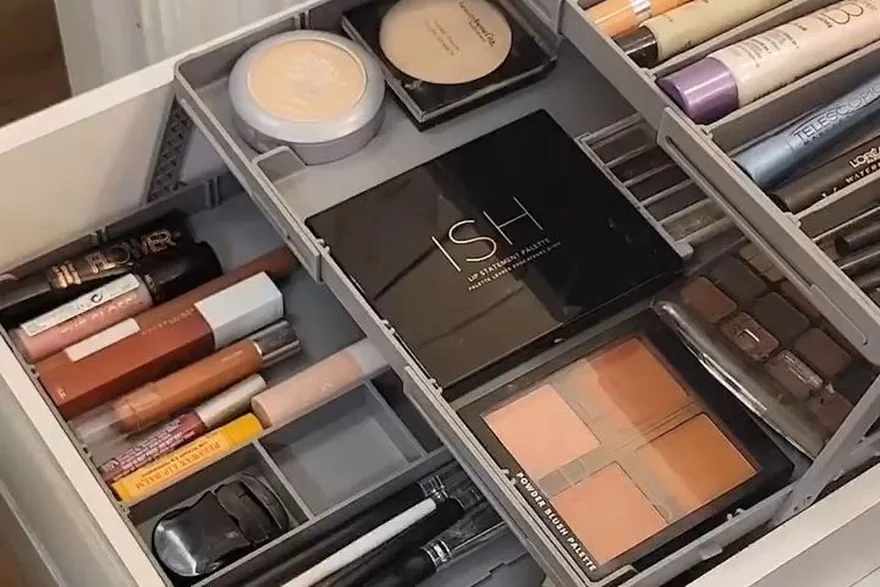
AliExpress is a retail-facing marketplace: listings are priced per piece or per small lot, dispatched by parcel, and paid for at checkout with platform buyer protection attached to the transaction. Made-in-China is a business-to-business sourcing marketplace where a buyer publishes a requirement, exchanges a written specification, receives a quotation against that specification and then commissions production. The difference is contractual rather than technical - one purchase acquires goods that already exist, the other acquires the right to have goods made.
Demand for the category explains why both channels thrive. Toiletry bag searches run at roughly 74,810 per week on Amazon (ASINSIGHT 2026.07), "travel bag for toiletries" around 110,000 per month, and "custom makeup bag" between 5,400 and 6,600 per month. Sellers chasing that demand split into two groups: those who need stock this week, and those who need a repeatable product they can put a name on. The first group buys from a marketplace listing; the second commissions a programme.
- Fabric mill and dye lot, so a second order can shade-differ from the first by a visible margin
- Compliance documentation, because test reports are not issued against an anonymous stock lot
- Construction detail such as stitch density, interlining weight and seam binding
- Packing - polybag gauge, carton count and barcode - which is fixed by the lot
- Continuity, since a listing can be delisted between one order and the next
None of that is a defect of the channel; it is what buying stock production means. Marketplace purchasing is efficient when the requirement is speed and variety rather than a repeatable specification. It becomes expensive once a brand tries to build a range on top of it, because every re-order is a fresh search and every shade difference turns into a return or a one-star review.
A useful test is the re-order question. If the same SKU will be bought again twice or more within a year, at the same size, colour and print, the listing is not the right home for it - a written specification is. If the SKU is a one-time gift, a sample for photography, or a test of ten prints at thirty pieces each, the marketplace wins on both speed and total cash outlay, and the buyer should not feel obliged to commission anything.
Unit economics: the price band is not the whole cost
Marketplace unit prices for cosmetic pouches typically sit between $1.80 and $4.50, while a specified 500-piece run in 600-denier polyester with a branded lining quotes between $2.60 and $6.80. Alibaba listings in October 2026 showed a broad band of $0.45 to $12.00 per unit, with business-to-business minimums commonly quoted between 100 and 1,000 pieces. None of those numbers is comparable until freight, branding, rejects and re-order risk are added to both sides of the sheet.
| Cost line | Marketplace purchase | Made-to-order programme at 500 pcs |
|---|---|---|
| Sticker unit price | $1.80-$4.50 for a stock pouch | $2.60-$6.80 for a specified 600-denier build |
| Tooling and setup | None charged | $0-$180 one-off for a moulded puller or print screen |
| Sampling | Not available | 6-10 working days standard, 12-15 for complex constructions |
| Brand application | $0.35-$0.90 per piece applied after import | $0.05-$0.25 per piece sewn in during assembly |
| Reject allowance | 3-8% absorbed silently by the buyer | Defined at AQL 2.5 under ISO 2859-1 with a re-screen remedy |
| Freight per unit | $1.10-$2.40 by parcel on small lots | $0.18-$0.55 by sea in cartons of 60-120 pieces |
| Re-order continuity | Re-search each time, with shade risk | Golden sample retained and matched on repeat runs |
Worked on 500 units, a $0.60 higher unit price costs $300. A silent 6% reject rate on a $4.00 marketplace unit costs $120 in goods plus replacement freight, and it surfaces only after the listing has been photographed and advertised. A $180 tooling fee for a custom puller amortises to $0.36 per unit on the first run and to nothing on the second. Volume therefore decides the comparison: below roughly 200 pieces, parcel freight and zero setup make the marketplace cheaper; above it, consolidated cartons and in-line branding usually win.
- Compare landed cost per sellable unit: sticker price plus freight, relabelling, rejects and re-photography.
- At 500 pieces a $0.60 unit premium is $300, while a 6% reject rate on a $4.00 unit is $120 plus freight.
- One-off tooling of $150-$180 amortises to $0.30-$0.36 per unit on the first run and vanishes on re-orders.
- Parcel freight of $1.10-$2.40 per unit beats sea only while the shipment stays small.
Minimum quantity compounds by colourway, which surprises first-time buyers. A 500-piece minimum applies per style and per colourway, so a three-colour launch is 1,500 pieces, not 500. That is precisely where marketplace buying looks attractive again, since a stock lot can be split across colours freely. The decision to make is whether the range needs three colours at launch or one hero colourway with the remaining two held until the second run; many first programmes launch single-colour for this reason alone. A second 500-piece run of an existing colourway usually quotes at or below the first, because patterns and any tooling already exist.
Payment structure differs as well. Marketplace checkout takes the full amount up front against a platform protection window, typically 15-30 days from delivery confirmation. A made-to-order programme runs on T/T terms of 30% deposit and 70% against bill of lading, shipped FOB Xiamen, so the majority of the money moves only after documents exist and the goods have been offered for inspection. For a buyer committing to 500 pieces, that difference is most of the working capital in the business.
How far the specification can go on each channel
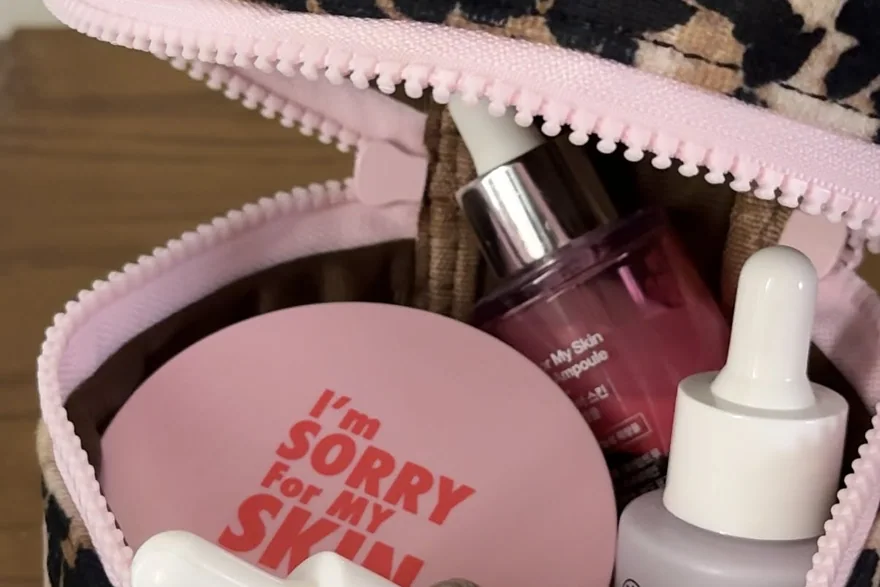
The practical limit of a marketplace order is the stock card. The buyer selects a size from the standard range - 20 x 12 x 8 cm flat pouches, 24 x 16 x 10 cm boxy cases, 26 x 18 x 12 cm hanging kits - and a colour from whatever the lot happened to be dyed in. A made-to-order programme begins from a blank sheet: fabric at a stated weight in grams per square metre, coating at a stated film thickness, zipper at a stated gauge, and branding placed on a drawing before a single piece is cut.
| Specification element | Marketplace listing | Made-to-order programme |
|---|---|---|
| Shell fabric | As stocked, usually 190T to 300D, weight undisclosed | 300D, 420D, 600D or 900D with g/m² stated on the spec sheet |
| Coating | PVC or PU as available in the lot | PU or TPU at a stated film thickness, or uncoated with a DWR finish |
| Colour | Stock colour card only | Pantone-matched lab dips approved before bulk cutting |
| Zipper | #3 or #5 coil nylon as stocked | #3, #5 or #8 with specified tape, slider and puller geometry |
| Branding | Heat-transfer applied after purchase | Woven label, silicone badge, debossed patch or screen print on the drawing |
| Compliance file | Not provided by default | Test reports issued against the ordering entity on request |
| Packing | Polybag as supplied | Polybag gauge, barcode, carton count of 60-120 and carton dimensions specified |
Two rows decide most downstream outcomes. Fabric weight drives the hand and shape retention of an unstructured pouch: 300-denier polyester at roughly 120 g/m² collapses when empty, while 600-denier at roughly 210 g/m² stands up on a shelf and photographs better. Zipper gauge and slider quality drive the majority of field failures, and buyers specifying hardware should use standard terminology - ASTM D2053 defines zipper terms so that a quotation for a #5 coil zipper means the same thing to both parties.
Print method is the second fork. Screen printing carries a setup charge per colour and suits runs of 500 upward; digital printing removes the setup and suits multi-colour art at any quantity; sublimation requires a polyester shell of at least 65% polyester content to take the dye. Marketplace stock prints carry none of these choices. A brand that wants its artwork on the shell, its label inside the lining and its barcode on the polybag is specifying three operations, which is a production programme whether or not the buyer thinks of it that way.
Compliance is the third divider, and the one with legal weight. A stock lot has no test file attached to the buyer's legal entity, so a retailer requesting REACH evidence or an OEKO-TEX certificate receives nothing usable. A commissioned programme can specify that reports be issued against the ordering entity, which is what a marketplace compliance team or a customs request will ask to see. Without that link, the sentence "it passed testing" cannot be evidenced to anyone who matters.
Sellers testing ten prints at thirty pieces each, hoteliers replacing forty lost amenity pouches, and subscription boxes that change contents monthly are better served by stock lots than by a custom run. The crossover arrives when a SKU is expected to re-order more than twice, or when a label has to be sewn in during assembly rather than stuck on afterwards.
Verification, inspection and payment before money moves
Verification on a business-to-business marketplace is a document exercise before it is a price exercise. A buyer checks the business licence, the entity name that will appear on the invoice and any third-party verification of the production site - SGS-verified floor space, line count and machine count are the specifics that separate a real operation from a listing that merely looks large. Sample evaluation follows: a pre-production sample made to the written specification, measured against the drawing, then retained as the golden reference for the bulk run and every re-order after it.
- Approve a pre-production sample and keep it as the golden reference for every later run.
- Book inspection to AQL 2.5 under ISO 2859-1 before the balance payment, not after shipment.
- Ship FOB Xiamen so freight, insurance and customs handling stay with the buyer's nominated forwarder.
- Pay T/T 30% deposit and 70% against bill of lading so most funds move only after documents exist.
- Request test reports naming the ordering entity rather than a generic mill certificate for the fabric.
Inspection standard matters more than inspection theatre. A single agreed sampling plan such as AQL 2.5 under ISO 2859-1 gives both sides the same accept and reject numbers, so a 500-piece run has a defined sample size and a defined defect allowance instead of an argument about what looks acceptable. Inspection before the balance release is the only version with leverage; inspection after shipment produces a report, not a remedy.
Timeline planning follows the same logic. Sampling runs 6-10 working days for a straightforward pouch and 12-15 working days for complex constructions such as a moulded EVA case or a multi-compartment hanging kit. Bulk production runs 35-50 days after sample approval. A buyer who needs goods on a shelf in eight weeks should reverse the calendar: roughly three weeks of sampling and approval, then seven weeks of production, then transit, before the drop date - which is longer than any marketplace parcel but produces a product nobody else can list.
Marketplace protection is not weaker, only different. The platform holds funds, the buyer raises a dispute inside a fixed window with photographs, and a refund follows without a contract ever being signed. That mechanism works well on a $60 order and poorly on a $2,600 production run, where the remedy required is a re-screen, a remake or a partial credit rather than a refund of the whole. The protection should match the size of the commitment.
Two quotations for the same-looking pouch can differ by 30% and still describe different products. Before accepting the lower one, a buyer should set them side by side and check four lines: fabric weight in grams per square metre, coating type and thickness, zipper gauge and slider, and whether laboratory reports are included. Where a line is blank on the cheaper quotation, it has rarely been omitted by accident - it has been priced out, and the difference will appear later as returns rather than as savings.
A practical sequence is 20-60 pieces from marketplace listings to photograph, list and validate demand, then a 500-piece made-to-order run of the winning design with corrected dimensions, a sewn-in label and a written carton spec. The first stage costs little and produces real listing data; the second produces margin and continuity.
The B2B Customisation View
The brief for makeup bags and toiletry bags should state the tolerances that matter: acceptable shade drift, stitch density, and the defect threshold at final inspection.
Programme data for this category: minimum order quantity 500 pieces per style and colourway, sampling in 6–10 working days (12–15 working days for complex constructions), bulk production 35–50 days after sample approval, final random inspection at AQL 2.5 under ISO 2859-1, FOB Xiamen, T/T 30/70.
This is the model that lets a small brand launch makeup bags and toiletry bags with the same inspection discipline a large retailer would demand.
Which Brand Types Benefit Most
Buyer types diverge sharply on which channel fits, and the dividing line is evidence rather than size. Start-up beauty brands benefit most from the two-stage path, because the first constraint is proof of demand rather than unit cost: thirty marketplace pieces across three candidate sizes generate listing photographs, review data and a returns rate before any 500-piece commitment is signed. Established brands with a live colour standard and a registered mark belong in made-to-order from the first unit, since a stock lot cannot be Pantone-matched and cannot carry branding under the brand owner's control. Retailers and catalogue buyers sit between the two: seasonal gift programmes with a fixed drop date need the 35-50 day bulk window and a specified carton, while top-up orders of a proven pouch are cheaper from stock. E-commerce sellers running bundles and promotions treat marketplace stock as inventory held on someone else's shelf. Gift and hospitality buyers - hotel amenity kits, airline pouches, subscription fillers - usually need 200-800 units of one design at one size, which is made-to-order territory from the moment a logo or a fill dimension is specified. Sourcing and programme-management companies such as QUANZHOU JUNYUAN BAGS coordinate the specification, sampling and inspection side of that second stage; enquiries go to service@junyuanbags.com. Whichever route a buyer chooses, the written specification is the durable asset: it is what makes a second quotation comparable and a second production run repeatable.
- Start-up brand: 20-60 marketplace pieces for demand testing, then a 500-piece run of the winner
- Established brand: made-to-order only, with a golden sample and entity-named test reports
- Retailer or catalogue: seasonal made-to-order drops, stock lots for mid-season top-ups
- E-commerce seller: marketplace stock while the SKU is unproven, custom run once it re-orders twice
- Gift and hospitality: made-to-order at 500 pieces per colourway once a logo or fill size is fixed
Frequently Asked Questions
Is a $1.20 cosmetic pouch on AliExpress actually cheaper than a 500-piece custom run?
Only at low volume. Add parcel freight of $1.10-$2.40 per unit, after-import labelling at $0.35-$0.90, and a 3-8% silent reject rate, and the $1.20 pouch lands near $3.00-$4.50. A specified 500-piece run quoting $2.60-$6.80 includes the sewn-in label, a carton spec and an inspection right, so the crossover usually falls between 200 and 400 units depending on freight distance and how much of the shipment proves sellable.
What is the smallest quantity that justifies a made-to-order cosmetic bag programme?
The commercial minimum is 500 pieces per style and colourway, which is also the point at which sea freight and in-line branding start to pay. Below about 200 pieces, parcel shipping and zero setup make stock purchasing cheaper. Between 200 and 500, buyers should price both routes including freight and rejects and choose on the landed figure. A second trigger is specification: once a buyer needs a Pantone match, a stated fabric weight or a sewn-in label, stock cannot deliver it at any quantity.
Can a buyer legally apply a private-label logo to a cosmetic bag bought from a marketplace?
A buyer may brand goods they own, but a heat-transfer or sew-on label applied after import costs $0.35-$0.90 per piece, can lift under heat, and does not change who made the product. The label also does not transfer any compliance documentation. Branding inside production costs $0.05-$0.25 per piece and appears on the specification, which is the version a retailer compliance team recognises.
How long does sampling take compared with ordering a stock sample?
A stock sample arrives in the parcel with the order, typically 7-20 days depending on shipping method. A made-to-order sample takes 6-10 working days to produce for a standard pouch and 12-15 working days for complex constructions such as a moulded case or a multi-compartment hanging kit, plus transit. The trade is speed against a sample built to the buyer's own specification.
What happens if a 500-piece bulk shipment fails inspection at AQL 2.5?
A defined sampling plan under ISO 2859-1 produces an accept or reject number rather than an opinion. On rejection, the normal remedies are a 100% re-screen with rejects replaced, a rework of the specific defect, or a partial credit against the balance. Because terms are T/T 30 deposit and 70 against bill of lading, the buyer still holds most of the money at the point of inspection.
Do marketplace cosmetic bags come with REACH or OEKO-TEX documentation?
Generally no. A stock lot is not tested against the buyer's legal entity, so there is no certificate naming the brand owner to show a retailer or customs authority. A commissioned programme can require test reports issued against the ordering entity, and buyers selling into the EU should ask for REACH evidence on coated fabrics and metal hardware before the deposit is paid.
How is an FOB Xiamen quotation different from a delivered marketplace parcel price?
FOB Xiamen covers the goods and their loading onto the vessel; freight, insurance, duties and inland delivery sit with the buyer's nominated forwarder. A delivered parcel price bundles all of that in at a retail shipping rate. Comparing the two requires adding $0.18-$0.55 per unit sea freight and clearance costs to the FOB price, and normalising both quotations to one Incoterm before judging which is cheaper.
Why does a re-ordered marketplace pouch sometimes shade-match poorly?
Stock lots come from whichever mill run was available, so dye lot, fabric weight and even zipper tape colour can change between orders with no notice to the buyer. On a shelf or in a bundle, a second batch that differs by a visible margin generates returns. Made-to-order programmes avoid this by retaining a golden sample and matching lab dips to it.
What fabric weight should be specified for a structured cosmetic bag?
For a pouch that must stand up empty, 600-denier polyester at roughly 210 g/m² with a light interlining is the usual starting point. A 300-denier shell at roughly 120 g/m² is lighter and cheaper but collapses. Where a coated look is wanted, PU or TPU film thickness should be stated on the spec sheet rather than left to the mill's standard.
Can a buyer request a custom zipper puller on a 500-piece run?
Yes, and it is one of the cheapest ways to differentiate a bag. A moulded puller typically carries a one-off tooling cost of $0-$180 and adds well under $0.10 per unit on a 500-piece run. Standard zipper terminology under ASTM D2053 should be used, and puller geometry and attachment method belong on the tech pack, because a moulded puller cannot be adjusted once the tool is cut.
How much should a buyer budget for branding a cosmetic bag in production?
A woven label sewn into a lining seam costs roughly $0.05-$0.25 per piece depending on size and weave density; a silicone or TPU badge costs more; a debossed patch costs more again. Screen printing carries a setup charge per colour, so budget that separately from the per-piece figure. On a 500-piece run, $0.30-$0.80 per unit covers most branding combinations before any moulded hardware is specified.
When does sea freight beat parcel shipping for cosmetic bags?
Parcel rates of $1.10-$2.40 per unit remain competitive while a shipment is a few dozen pieces. Once cartons are consolidated - typically 60-120 pouches per carton depending on size - sea freight drops to roughly $0.18-$0.55 per unit. The practical crossover is around 150-250 pieces, earlier for bulky hanging kits with wire hooks and later for flat pouches that nest tightly.
What does T/T 30/70 protect that a marketplace checkout does not?
The split keeps 70% of the value with the buyer until documents exist, which creates leverage for inspection and remedy on a production run. Marketplace checkout takes 100% up front and relies on a refund window instead. On a $60 order a refund is the right remedy; on a $2,600 run the right remedy is a rework, which only a held balance can motivate.
How does a buyer verify a Made-in-China listing before paying a deposit?
Check the business licence and the legal entity that will issue the invoice, look for third-party verification of the site such as SGS-verified floor space and line count, request a pre-production sample built to the written specification, and confirm that test reports can be issued against the ordering entity. A supplier unwilling to name the invoicing entity is a reason to stop.
What carton and packing details belong on a cosmetic bag purchase order?
State pieces per carton, usually 60-120 for pouches, carton dimensions and board grade, polybag gauge and whether it is vented, barcode placement and symbology, and any drop-test or stacking expectation. Also state whether cartons are strapped or banded, since loose cartons shift, and whether individual pieces are tissue-wrapped, because coated shells scuff when packed tightly through a hot season.
People Also Ask
Which is better for a start-up cosmetics brand, AliExpress or Made-in-China?
Most start-ups should use both in sequence. Buy 20-60 marketplace pieces across a few sizes and prints to photograph, list and measure demand, then commission a 500-piece run of the winning design with corrected dimensions and a sewn-in label. Going straight to custom before any demand data exists risks 500 units of an unproven product; staying on stock lots forever blocks margin and continuity.
Can cosmetic bags bought from AliExpress be private-labelled and resold?
They can be resold, and a label can be applied, but the buyer should understand the limits: after-import labelling costs $0.35-$0.90 per piece, no compliance documentation transfers, and the supplier can delist the item at any point. For a single bundle or gift order that is acceptable; for a SKU intended to re-order, a specified production run is the safer structure.
How much does it cost to have cosmetic bags made to order?
Alibaba listings in October 2026 showed a band of $0.45 to $12.00 per unit, with a specified 600-denier pouch typically quoting $2.60-$6.80 at 500 pieces. Add $150-$180 one-off tooling if a moulded puller or print screen is required, plus $0.05-$0.25 per piece for a sewn-in label and $0.18-$0.55 per unit for sea freight, and compare the landed total rather than the sticker price.
How long does cosmetic bag production take from sample to shipment?
Allow 6-10 working days for a standard sample and 12-15 working days for complex constructions, then 35-50 days of bulk production after sample approval, then transit. A buyer targeting a fixed drop date should reverse the calendar from the shelf date, because sampling revisions are the step most often underestimated - each revision round restarts the clock. Two weeks of contingency on top usually absorbs one revision without moving the launch.
Request a Sample or a Written Quotation
Send the silhouette, dimensions, material preference and logo artwork, and the programme team will return a written quotation with MOQ, sampling window, bulk lead time and inspection standard.
Email: service@junyuanbags.com · WhatsApp: +86 177 5002 0688