Airline Amenity Kit Bags: Custom Cosmetic Pouches for Airlines
Executive Summary
An airline amenity kit bag is specified by three limits rather than by styling: contents must clear carry-on liquid screening, the empty pouch has to stay inside a per-seat weight and cost budget, and the construction has to match how many sectors the passenger will reuse it for. In practice that means 20 x 13 x 6 cm at 55-90 g for short-haul economy, 24 x 17 x 8 cm at 130-190 g for business class, and contents presented in 30-50 ml tubes rather than nominal 100 ml bottles so several items sit side by side on the pouch floor.
The second decision is arithmetic. Kits are drawn against seats flown, so a 180-seat narrowbody at 82% load factor needs about 148 kits per departure and roughly 4,400 per month at one daily rotation, while the pouch itself accounts for 25-40% of landed kit cost once contents, filling labour and documents are counted. Programme terms stay constant regardless of cabin: 500 pieces per style and colourway minimum, 6-10 working days sampling, 35-50 days bulk after sample approval, AQL 2.5 inspection, FOB Xiamen.
What an Airline Amenity Kit Bag Actually Specifies
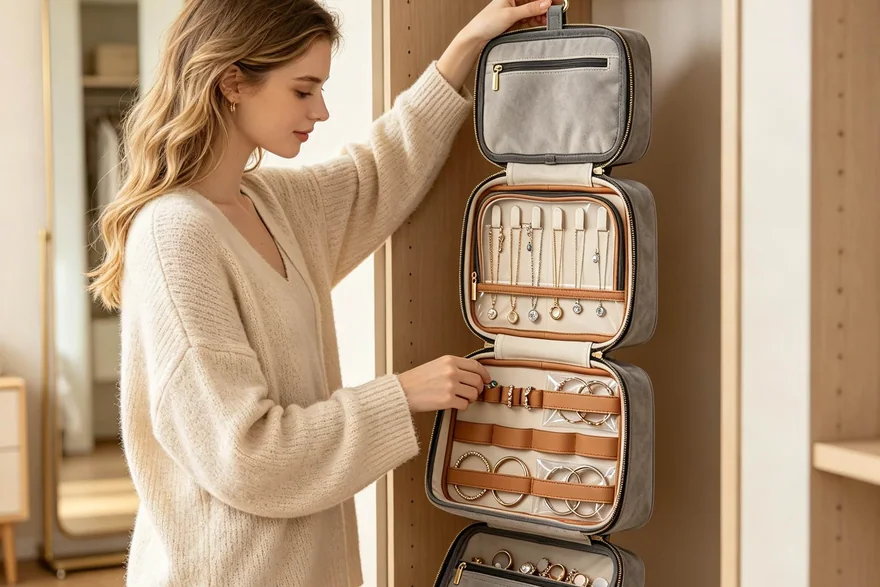
An airline amenity kit bag is the closed pouch that carries travel-size toiletries, a dental kit, an eye mask, earplugs or socks to a passenger seat. It looks like a retail cosmetic pouch, but it is specified against different numbers: cost per passenger carried, a load factor that moves month to month, and a cabin security regime that decides what may sit inside the pouch at all. A short-haul economy kit carries four to six items inside roughly 20 x 13 x 6 cm of closed space; a long-haul business kit carries nine to thirteen items inside roughly 24 x 17 x 8 cm. The economy pouch is expected to survive one flight and possibly the taxi to a hotel; the premium pouch is expected to survive being carried home and refilled for years.
- Volume is planned per seat flown, not per kit bought: a 180-seat narrowbody at 82% load factor draws about 148 kits per departure.
- The pouch itself is usually 25-40% of landed kit cost, with the remainder in contents, filling labour and the documents that travel with them.
- Draw patterns differ by cabin, so economy stock depletes per flight while premium stock depletes per occupied long-haul seat.
- Empty pouch weight is budgeted in grams per seat, which is why airlines and their catering partners weigh build-ups before approving a sample.
- Home reuse expectation rewires every material decision, from zipper chain size to whether the interior gets a wipe-clean coating at all.
Contents, not the pouch, cause most failures at the checkpoint. Carry-on screening rules such as the TSA 3-1-1 liquids rule cap each liquids container at 100 ml (3.4 oz) and require all containers to fit inside one transparent quart bag of roughly 18 x 20 cm laid flat. A well-designed pouch therefore holds 30-50 ml tubes rather than nominal 100 ml bottles, because a filled 100 ml bottle occupies about 4.5 x 4.5 cm of floor area and three of them consume nearly a third of the usable base of a short-haul pouch.
Screening limits read the stated capacity of a container, not how full it is, so a 100 ml bottle holding 25 ml still counts as 100 ml. Specifying 30-50 ml tubes filled to 20-35 g trims 15-30 g from every kit without removing anything the passenger will actually use.
How Route Class Sets the Pouch Specification
Route class is the fastest way to settle size, weight and unit cost before any fabric is chosen. Short-haul economy routes reward light, cheap constructions because the kit is consumed once and discarded; long-haul premium routes reward structures and linings that survive years of bathroom use, because the pouch becomes a travelling advertisement for the cabin. The table below sets out a working ladder that buyers can adapt; the boundaries are deliberately overlapping, since a two-hour domestic business cabin often takes the premium economy pouch rather than a full business wash bag.
| Route class | Closed pouch size (cm) | Empty pouch weight (g) | Item count | Target pouch cost (USD) | Draw and reuse pattern |
|---|---|---|---|---|---|
| Short-haul economy | 20 x 13 x 6 | 55-90 | 4-6 | $0.45-$1.20 | Per departing flight; single journey use |
| Long-haul economy | 22 x 15 x 7 | 85-120 | 6-9 | $1.10-$2.40 | Per occupied seat above about 6 hours; often reused once |
| Premium economy | 23 x 16 x 7.5 | 110-150 | 7-10 | $2.10-$4.30 | Per occupied seat; passenger takes it home |
| Business class | 24 x 17 x 8 | 130-190 | 9-13 | $3.20-$7.50 | Per occupied seat; refilled for years at home |
| First class or suite | 26 x 19 x 9 | 180-260 | 11-15 | $7.50-$12.00 | Per occupied seat; retail-grade construction expected |
Two details move a pouch between rows faster than anything else. The first is structure: adding a 2 mm EVA laminated foam panel between outer fabric and lining adds 18-35 g and roughly $0.25-$0.55 to unit cost, but it also lets the pouch stand upright on a tray table, which is what premium passengers judge within the first ten seconds of opening a kit. The second is finish: a bound internal seam, a rolled edge or a piping cord turns a flat pouch into a case, and each of those adds one operation to the routing and one more place for a thread to be trimmed badly.
Colour strategy deserves its own line in the plan. Minimum order quantities apply per style and per colourway, so a programme that wants one printed outer plus two solid alternatives is committing to three purchase order lines of 500 pieces each, not one order of 1,500. Airlines whose kits change artwork four times a year usually solve this by holding one construction and rotating the print, which keeps the sewing specification, pattern and pre-production sample stable and only revisits the artwork approval step each season.
Seasonality is the last piece. Northern-hemisphere carriers generally see draw rates peak in the third quarter and soften through January, so a single annual purchase order rarely matches the calendar. A practical approach is to place the base volume as one order covering roughly 70% of annual consumption and schedule two top-up releases against a rolling forecast, accepting longer freight lead times on the top-ups in exchange for not holding nine months of finished kits with contents ageing on the shelf.
A $1.80 pouch that forces every toothpaste tube down to 15 g to hit a weight target will cost more in reformulating and repacking than the $0.40 saved on fabric. Weigh the full build-up before freezing the specification.
Fabric, Coating and Closure Decisions for Inflight Pouches
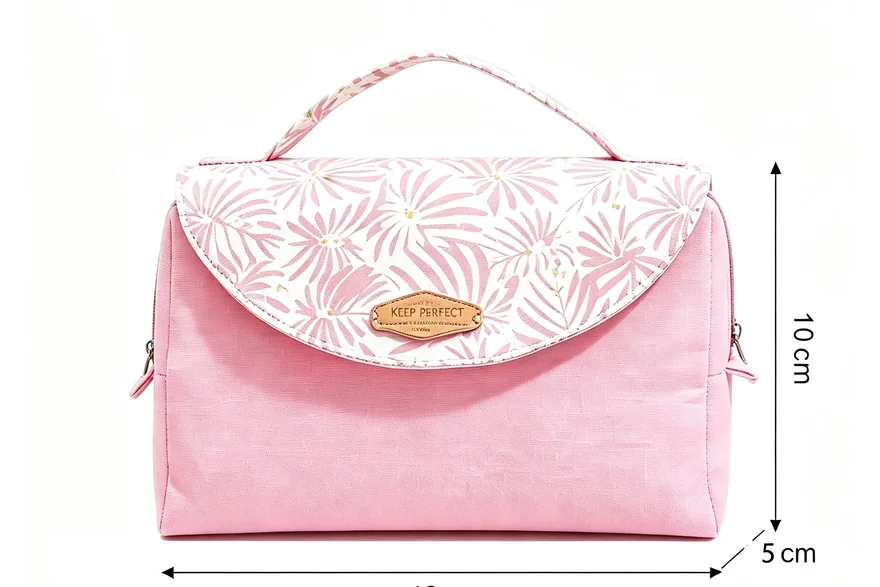
Fabric choice for an amenity pouch is a balance between abrasion life, hand feel, printed colour yield and the wipe-clean behaviour that cabin crew care about when a bottle leaks at altitude. The cheapest option is a laminated non-woven around 80-100 g/m², which costs very little and survives exactly one rotation; the most durable is a 420D nylon twill or a TPU-laminated ripstop that will outlive the aircraft interior. Between them sits the workhorse of economy programmes: 300D recycled polyester with a PU backing at roughly 180-220 g/m².
- Non-woven laminate at 80-100 g/m² suits single-use economy kits; abrasion life is typically 3,000-5,000 Martindale cycles.
- 300D recycled polyester with PU backing at 180-220 g/m² is the economy default, with 10,000-15,000 cycles before visible pilling.
- TPU-laminated 210D ripstop at about 150-170 g/m² gives a wipe-clean face and holds 20,000-30,000 cycles.
- 420D nylon twill at 240-280 g/m² is specified when the pouch is expected to be reused at home for more than a year.
- Recycled content claims should map to a recognised chain-of-custody scheme so the print claim survives a brand audit.
- Interior linings should be a contrasting tone, because light linings show mascara and foundation marks within two flights.
- Seam construction matters as much as fabric: bound seams add 4-6 g but stop frayed threads appearing at the corners.
Closures are specified badly more often than fabrics, usually because nobody names the parts. Zipper components have precise definitions in ASTM D2053 zipper terminology, and using those terms on a specification removes most argument: chain width (number 3 versus number 5), coil versus moulded tooth, tape material, slider type and whether the pull is a moulded tag or a die-cast one. A number 3 nylon coil with a plain slider stops a short-haul pouch at roughly $0.12-$0.28 for the closure; a number 5 metal chain with a branded pull adds $0.45-$1.10 and is what turns a business-class pouch into something passengers keep.
Decoration follows the same logic as the rest of the cost sheet. Screen printing suits flat panels and simple marks at around $0.08-$0.20 per pouch for one colour; heat transfer supports photographic artwork and gradients at $0.18-$0.45; woven labels cost $0.06-$0.15 and survive as many washes as the pouch does; embroidery on a padded front panel ranges from $0.35 for a small mark with 6,000 stitches to over $1.00 once coverage exceeds about 12,000 stitches and the panel needs backing stabiliser. A debossed PU patch has become common on premium kits because it reads well under cabin lighting without adding visible stitch holes.
Wet items deserve a small dedicated space. A 0.15 mm PEVA or TPU-lined side pocket of about 12 x 10 cm costs $0.10-$0.25 and keeps a half-used toothpaste tube away from the eye mask, which is the single most common reason passengers remember a kit badly. Where recycled or coated materials are used with claims attached, the chain-of-custody documentation behind claims such as the Global Recycled Standard should be requested at sample stage rather than after the bulk fabric has been dyed.
Compliance Documents and Delivery Logistics for Kit Programmes
An amenity kit crosses more regulatory boundaries than a retail pouch, because the bag, its contents and the printed artwork are assessed separately and often by different teams inside the buyer's organisation. None of the documents is difficult to obtain, but several take weeks, and a missing certificate at the filling stage can idle a line that has already been booked. Requesting them at sample stage rather than at shipment is the cheapest risk control available to any programme coordinator.
| Document or checkpoint | What it covers | Typical scope on a kit programme | When it is needed |
|---|---|---|---|
| REACH declaration | Restricted substances across all bag components and printed inks | One declaration per component family, refreshed when coatings or inks change | Before first shipment, reviewed annually |
| OEKO-TEX Standard 100 | Tested harmful substances in textile layers, linings and thread | Certificate valid for one year covering fabric, webbing and lining | Renewal started 4-6 weeks before expiry |
| Colour fastness report | Crocking, wash and light behaviour of dyed or printed fabric | One report per colourway, issued in roughly 4-5 working days | With every new colourway or print change |
| Fill-line hygiene audit | Hygiene conditions where contents are packed into the pouch | Conducted by the buyer or its agent before the first filling run | Before first fill, then every 6-12 months |
| Inspection against ISO 2859-1 | Statistical sampling of finished pouches at AQL 2.5 | Sample size read from the lot-size table at General Inspection Level II | At each bulk lot, before release |
Inspection math deserves a worked example rather than a slogan. Sampling procedures are set out in ISO 2859-1 sampling procedures, and at AQL 2.5 with General Inspection Level II the sample size follows the lot size: a lot of 10,001-35,000 pieces draws a code letter M with 315 pieces inspected and an acceptance number of 14; a lot of 35,001-150,000 draws code letter N with 500 pieces inspected and an acceptance number of 21. Buyers who ask for tighter acceptance on appearance defects should define the defect list at the same time, since visual standards such as print registration within 1.5 mm are not part of the standard itself.
Schedule is dictated by the slowest component, which is almost always the artwork-led printed fabric rather than the sewing line. Sampling runs 6-10 working days for a straightforward pouch and 12-15 working days where a construction includes moulded panels, welded seams or multicomponent closures. Bulk production takes 35-50 days after sample approval. Shipment is quoted FOB Xiamen, payment T/T with a 30% deposit and 70% against the bill of lading, and a purchase order is placed per style and colourway with a 500-piece minimum on each.
- Forecast nine to twelve months of draw at sample stage so that fabric dye lots can be booked in one run.
- Hold 6-10% buffer stock against forecast error, since a 5% load-factor surprise on one daily rotation consumes several thousand kits.
- Require contents to carry expiry dates at least 24 months beyond the last planned draw date.
- Pack to a catering or fulfilment hub rather than to an airport, using carton counts such as 200 pouches per 60 x 40 x 40 cm export carton.
- Print lot codes on the pouch as well as the carton so that a defect discovered months later can be traced back to a dye lot.
Termination planning is usually forgotten until a route closes. Build language into the purchase agreement covering partly used printed fabric, components bought specifically for the programme and finished kits inside their shelf life, and set a review point every quarter. Kits that cannot be reissued on the same carrier can often be redirected to another route family if the print is generic enough, which is another argument for keeping route-specific detail on a removable label rather than in the fabric print itself.
The B2B Customisation View
A well-run cosmetic bags programme is a documentation exercise as much as a sewing exercise, and the documents are what keep the first shipment identical to the thousandth.
Budgeting and scheduling inputs: MOQ 500 per style and colourway; sampling 6–10 working days, extended to 12–15 for lined, moulded or hardware-heavy builds; bulk 35–50 days; pre-shipment inspection at AQL 2.5 per ISO 2859-1; FOB Xiamen; T/T 30/70.
The practical outcome for the buyer is a single accountable counterpart holding cost, quality and calendar together across the life of the programme.
Which Brand Types Benefit Most
Different buyer types enter airline amenity programmes from different directions and each should ask for a different first sample. A start-up brand building a licence agreement with an airline or its catering integrator usually wins on speed and artwork novelty, so a single 22 x 15 x 7 cm pouch in printed 300D recycled polyester is the realistic entry: it can be sampled in 6-10 working days, it sits near the bottom of the $0.45-$12.00 unit price band, and it gives the airline a visible sustainability story without change to its filling line. An established brand already supplying retail has the opposite leverage, because its existing wash-bag pattern can be reissued in a smaller size with minimal development, cutting sampling effort and letting unit cost drop by 8-15% through pattern reuse rather than material downgrading. A print-led design can be turned in 6-10 working days and reissued each season at 500 pieces per colourway, which suits a route network that refreshes artwork two to four times a year. Across every buyer type the same three parameters decide feasibility: closed dimensions, empty weight per seat and whether the pouch is engineered for one flight or for years of reuse.
- Start-up brands: one economy pouch in printed recycled polyester, 500 pieces, emphasis on artwork turnaround rather than exotic constructions.
- Established brands: reuse an existing retail wash-bag pattern scaled down to 22-24 cm width, keeping hardware identical across both channels.
- Retailers and duty-free buyers: retail-grade lining, bound seams, hangtag loop and barcode placement agreed before artwork sign-off.
- E-commerce sellers: keep one neutral base pouch in stock and vary printed panels in 500-piece lots, so listings can multiply without new tooling.
- Hospitality and gifting buyers: the same spec works for welcome kits, so consolidate volumes with the airline line to reach better unit pricing.
Frequently Asked Questions
How many amenity kits does one daily narrowbody rotation consume in a month?
Roughly 4,400 kits per month. A 180-seat narrowbody at 82% load factor issues about 148 kits per departure; one daily rotation each way and back gives one departure per day per route, so the monthly figure is about 4,440. Buyers should add 6-10% buffer because published load factors move: a three-point improvement in load factor on a daily rotation adds around 160 kits a month, which is why top-up releases are usually scheduled twice a year rather than once.
What pouch dimensions suit a short-haul economy amenity kit?
About 20 x 13 x 6 cm closed, which yields 1.1-1.4 litres of usable space after seam allowances and lining are deducted. That envelope holds a 30 ml tube, a toothbrush and paste set, an eye mask folded once and a small dental kit without forcing packs to stand upright. Anything shallower than 5 cm cannot take a folded eye mask beside two tubes; anything wider than 22 cm starts competing with a personal item inside a 40 x 20 x 25 cm sizer.
Why do amenity kit contents usually weigh more than the pouch itself?
Because the pouch is engineered light on purpose. A short-haul economy pouch runs 55-90 g while four to six contents add 120-220 g, so the bag represents around a quarter of total kit weight and 25-40% of landed cost. This ratio drives the whole weight-reduction conversation: removing 10 g from every content item saves more onboard weight than shaving 10 g from a pouch that is already near the bottom of its fabric range.
How does the 500-piece minimum apply when an airline wants three colourway options?
Minimum order quantity is 500 pieces per style and per colourway, so three colourways of one style mean three purchase order lines of 500 pieces each, totalling 1,500. Buyers frequently solve this by holding one neutral shell and rotating printed panels, which keeps the sewing specification constant across seasons. Where volume genuinely is seasonal, splitting a single annual order into a base release of 70% plus two top-up releases is usually cheaper than three separate set-ups.
What sample size does AQL 2.5 under ISO 2859-1 draw on a 50,000-piece pouch lot?
A lot of 35,001-150,000 pieces takes code letter N at General Inspection Level II, giving 500 pieces inspected with an acceptance number of 21 and a rejection number of 22 at AQL 2.5. Buyers often tighten this on cosmetics-relevant defects by adding a zero-tolerance critical list covering broken sliders, untrimmed thread ends longer than 3 mm and ink transfer on light linings, none of which is covered by the ISO tables themselves.
Which fabric survives three months of continuous rotation on a long-haul route?
A PU-backed 300D recycled polyester at 180-220 g/m², giving roughly 10,000-15,000 Martindale cycles before visible pilling, is usually enough for a pouch that is reused once or twice. Where the pouch is intended to travel home with the passenger, a 420D nylon twill at 240-280 g/m² or a TPU-laminated ripstop with 20,000-30,000 cycles is a better match. Non-woven laminates at 80-100 g/m² should be limited to single-use economy draw.
Should an airline launder and reuse economy pouches instead of buying single-use ones?
Rarely, once labour is counted. Washing, inspecting and repacking a $1.00 pouch typically costs $0.45-$0.75 per cycle in handling alone before transport back to the line, which only becomes economical if the route returns to the same catering hub within 24 hours and the pouch construction tolerates repeated machine washing. Most programmes therefore place single-use construction in economy and reserve launderable designs for premium cabins where replacement cost exceeds the handling cost easily.
How should the closure be written onto a specification to avoid disputes later?
Name every component using standard zipper terminology rather than relying on a sample reference alone: chain size, whether the chain is coil or moulded, tape material and width, slider type, pull shape and stop type. Recording those attributes prevents the common substitution of a number 3 chain for the specified number 5, which alone accounts for a visible 20-30% difference in perceived quality on premium kits and changes closure cost from about $0.20 to over $0.80.
What should buyers request regarding recycled content claims on kit fabric?
A traceability certificate covering the specific fabric lot, not a generic mill statement, plus the scheme name printed on the pouch matching the certificate scope. Testing and renewal come on a one-year cycle, so a claim that cannot be documented will fail a brand audit mid-programme and can force a reprint of the artwork. Ask for the certificate at sample stage, because eligibility is established before dyeing rather than after.
How long should a buyer allow from artwork sign-off to first kits on board?
Plan 55-75 days plus freight: 6-10 working days for sampling a straightforward pouch, or 12-15 days if the construction includes moulded panels or welded seams, then 35-50 days of bulk production after sample approval, then inspection, filling and onward logistics to the catering hub. Printed panels are usually critical path, so artwork sign-off triggers fabric procurement and everything else follows that date.
What carton configuration works when kits ship to a catering hub rather than an airport?
A 200-piece carton at roughly 60 x 40 x 40 cm is typical for economy pouches around 22 x 15 x 7 cm, giving a manageable cube per fill line rather than a palletised bulk pack. Cartons should carry the style code, colourway name, lot number and quantity on two faces, and the pouch itself should carry a small internal lot code so that a complaint raised months later can be traced to a specific production run.
Which labelling requirements apply to amenity cosmetics given away in the European Union?
Cosmetic contents placed on the EU market need responsible-person details, an ingredient list using INCI nomenclature, nominal content and durability or batch information, and the substance restrictions arising from EU REACH apply across all bag components as well. Because several jurisdictions may be involved on one route network, buyers usually require multilingual inserts and keep artwork changes to the insert rather than the pouch so that reprints stay cheap.
Can the same pouch be used across two route seasons to reduce tooling cost?
Yes, and it is usually the best saving available. Holding one construction while rotating print keeps the pattern, the pre-production sample and the sewing routing stable, so each new season only repeats artwork approval at around $0.08-$0.45 per pouch in print cost. Buyers should confirm that printed fabric lots are dyed in one run per season, because splitting a standard dye quantity into two lots can shift shade by enough to be visible across cabins.
What empty-weight target should a business-class wash bag carry?
130-190 g at roughly 24 x 17 x 8 cm is the working range. Below about 110 g the pouch tends to feel insubstantial to a passenger paying premium fares, largely because structure has been removed; above 210 g the weight starts to look wasteful and adds measurable uplift cost across hundreds of seats. A 2 mm foam panel between outer and lining adds 18-35 g but buys the self-standing behaviour that passengers associate with quality.
What happens to leftover printed fabric if a route closes mid-programme?
Whatever the purchase agreement says, so the agreement must say something. Practical clauses cover who owns partly used printed fabric, components bought specifically for the programme, and finished kits inside shelf life, plus a quarterly review point. Keeping route-specific detail on a removable label rather than in the fabric print keeps leftover stock transferable to another route family, which is often worth more than the price renegotiation that follows a cancellation.
People Also Ask
What size is an airline amenity kit bag?
Short-haul economy pouches close at about 20 x 13 x 6 cm, long-haul economy at 22 x 15 x 7 cm, business class at 24 x 17 x 8 cm and first-class wash bags at up to 26 x 19 x 9 cm. The driver is item count rather than preference: four to six items fit a one-litre envelope, while eleven to fifteen items need closer to 2.5 litres plus a structured panel so that bottles stay upright.
How much does a custom airline amenity pouch cost?
Unit cost tracks route class and sits inside the wider $0.45-$12.00 band seen across the category. Economy pouches with a number 3 coil zipper and printed panels land at $0.45-$1.20; premium designs with bound seams, a foam panel and a branded pull reach $3.20-$7.50. Decoration adds $0.08-$1.00 depending on stitch count or print method, and the pouch typically represents 25-40% of total landed kit cost.
Are airline amenity kits recyclable?
They can be specified for better end-of-life outcomes, though mixed-material designs limit what actually gets recycled. A mono-material polyester shell with polyester thread and a polyester zipper tape is far easier to process than a laminated non-woven or a foam-panelled case. Where recycled content is claimed, chain-of-custody documentation under a recognised scheme should accompany the fabric lot, and the claim should be verified before the bulk dye run.
Why are amenity kit toiletries so small?
Cabin screening limits each carry-on liquids container to 100 ml and expects all of them to fit inside one transparent quart bag about 18 x 20 cm flat, so large bottles cannot travel through the checkpoint regardless of how full they are. Specifying 30-50 ml tubes instead of nominal 100 ml bottles keeps several items side by side on the pouch floor and trims 15-30 g of unnecessary weight per kit.
Request a Sample or a Written Quotation
Send the silhouette, dimensions, material preference and logo artwork, and the programme team will return a written quotation with MOQ, sampling window, bulk lead time and inspection standard.
Email: service@junyuanbags.com · WhatsApp: +86 177 5002 0688